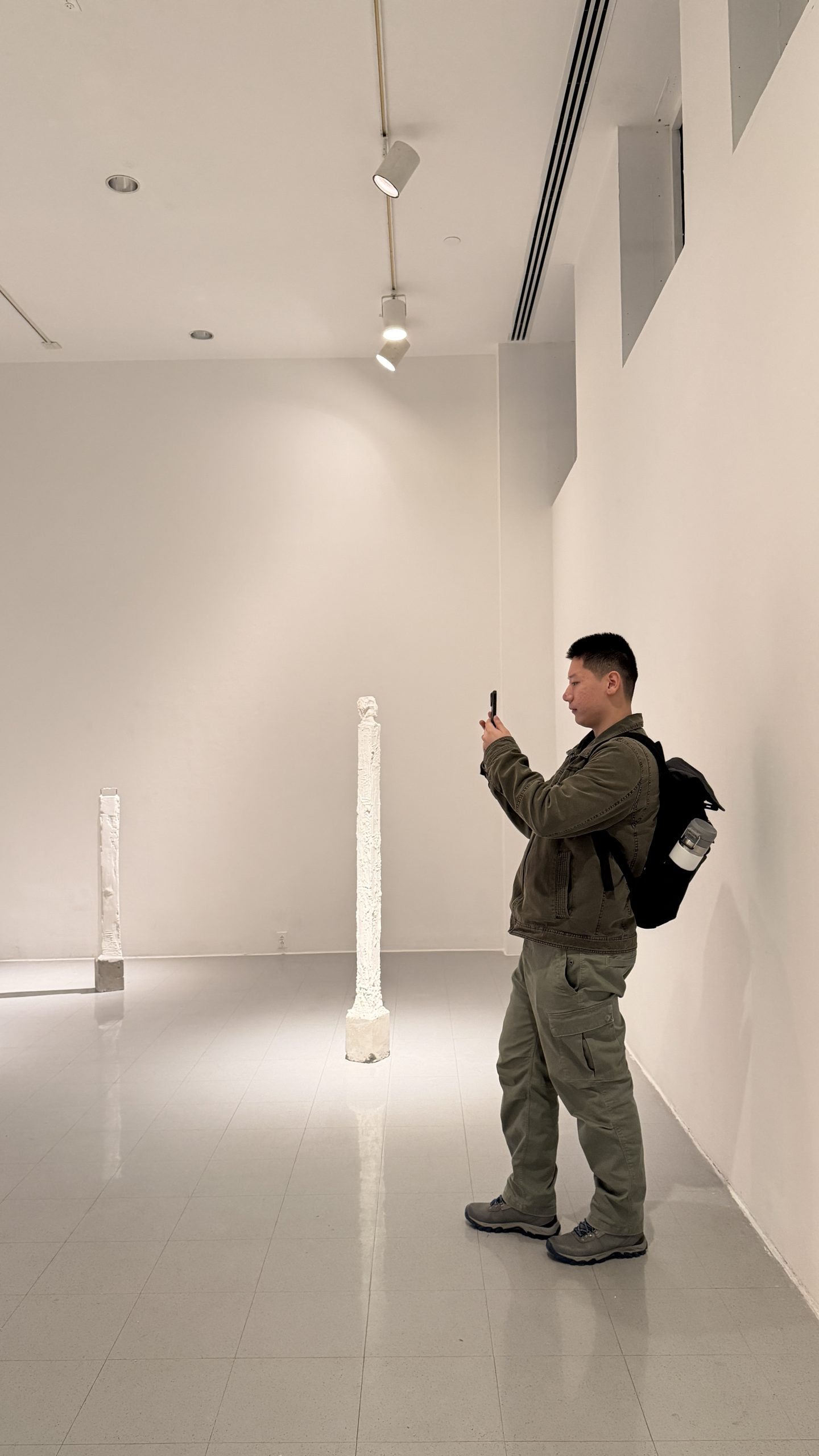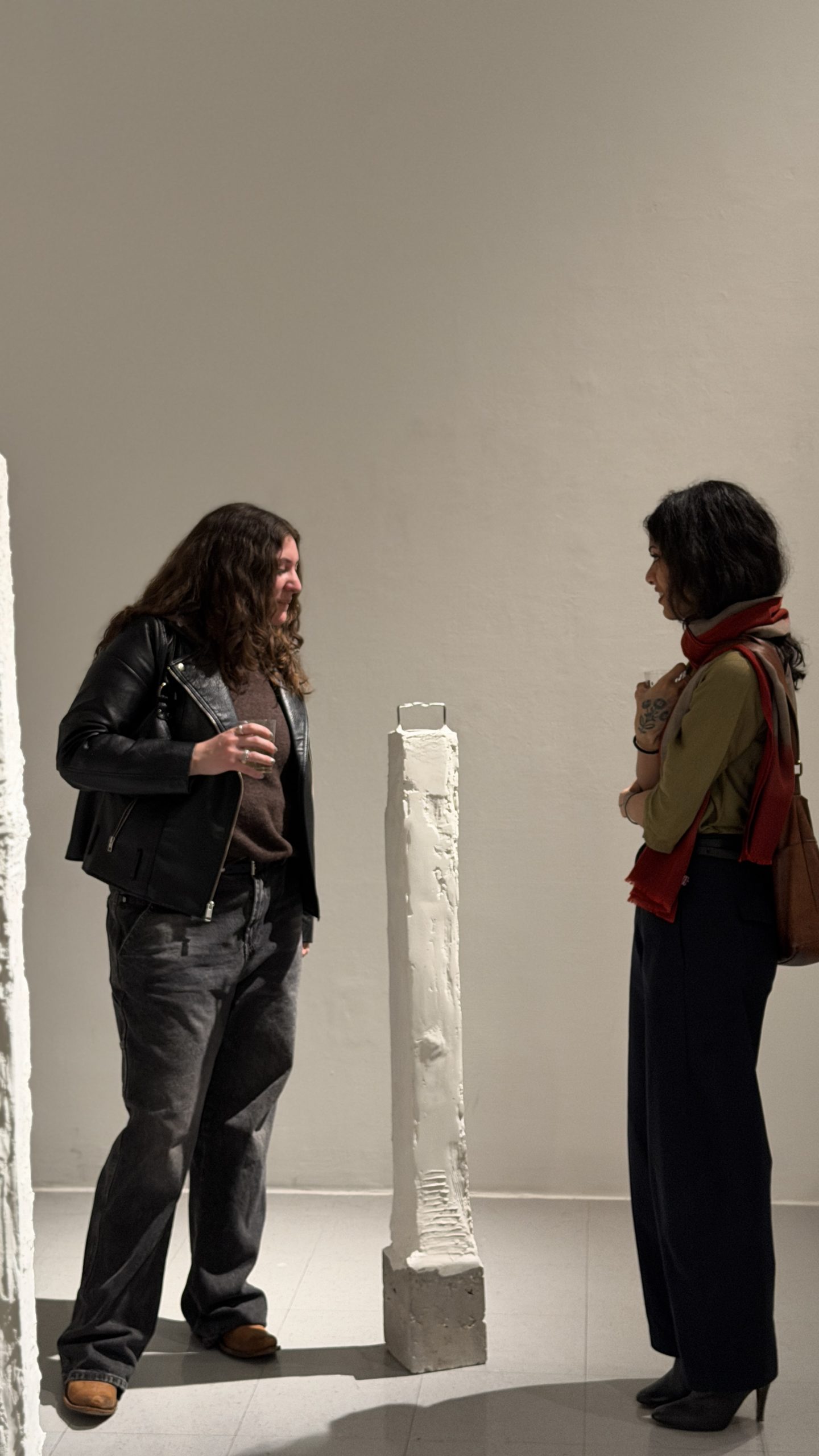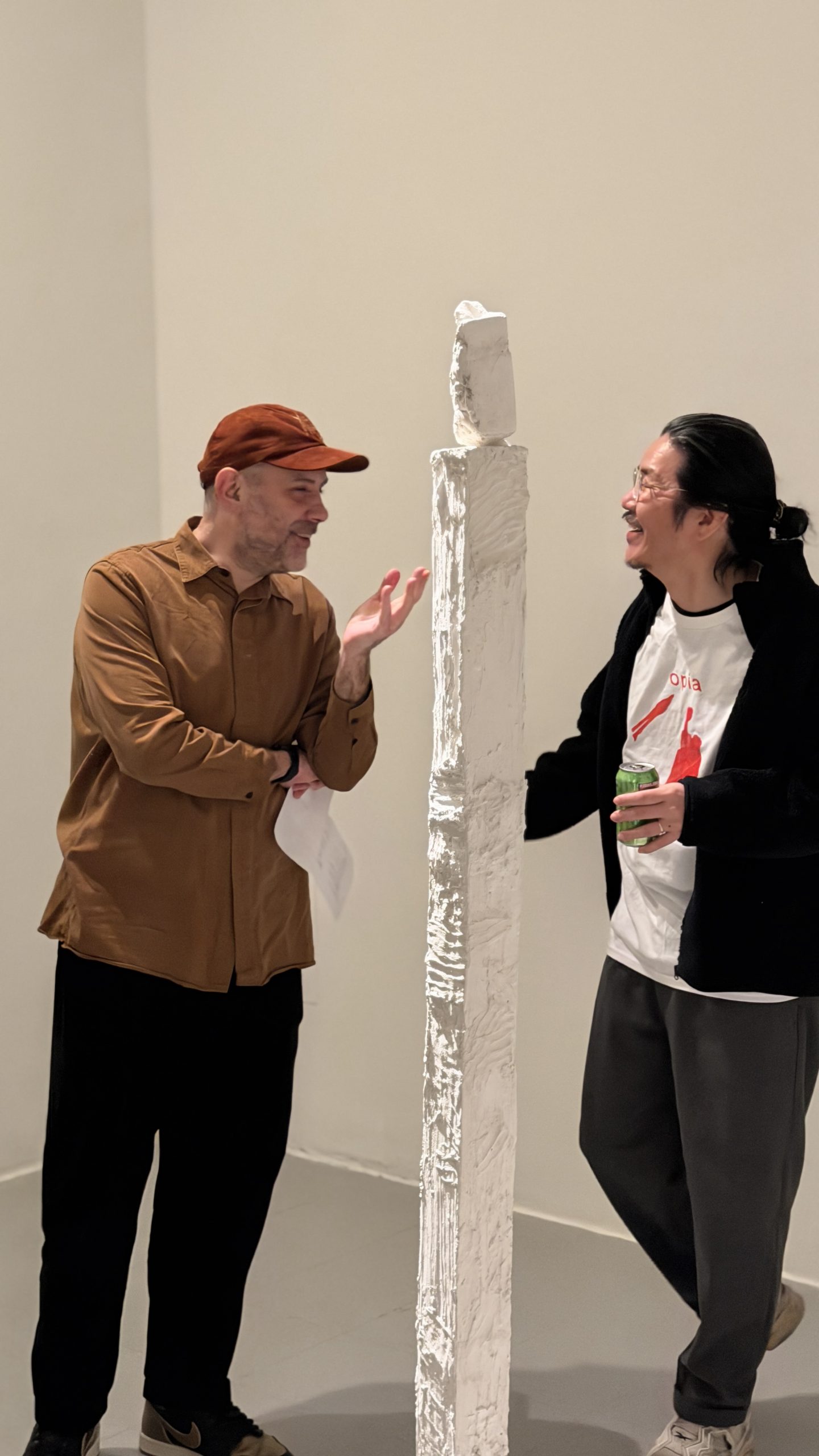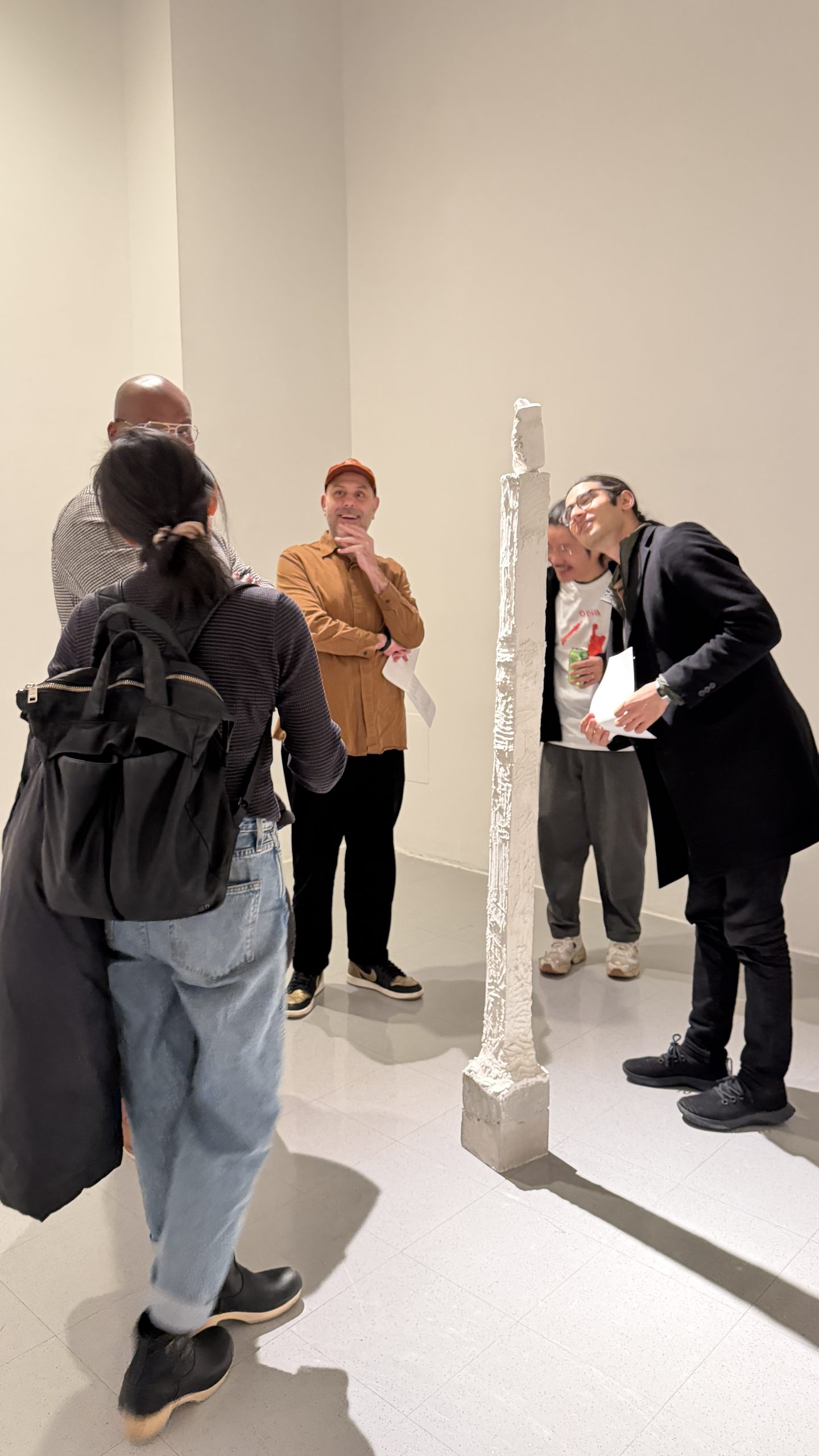
on Sue Huang’s Bodies of Flora

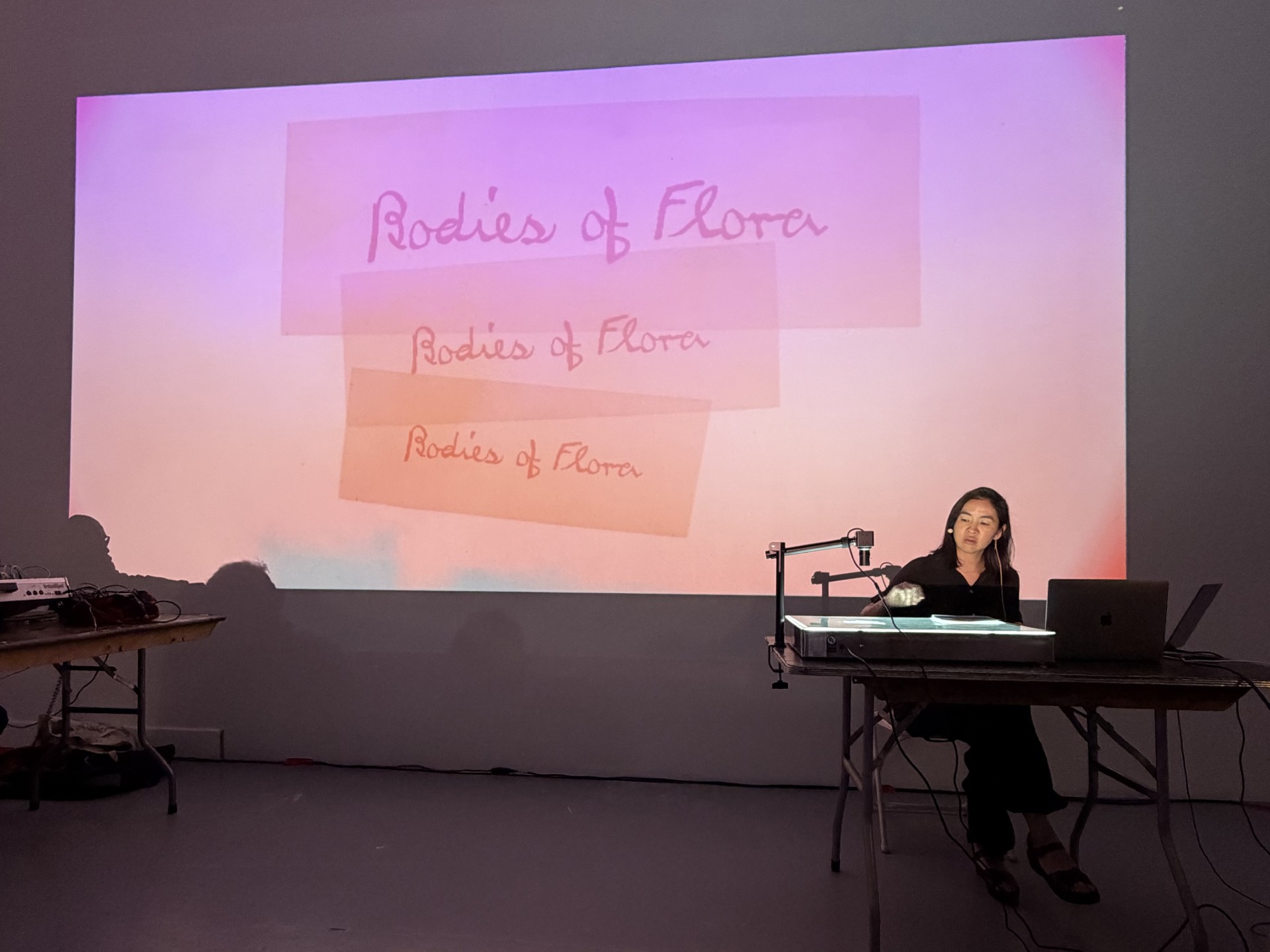
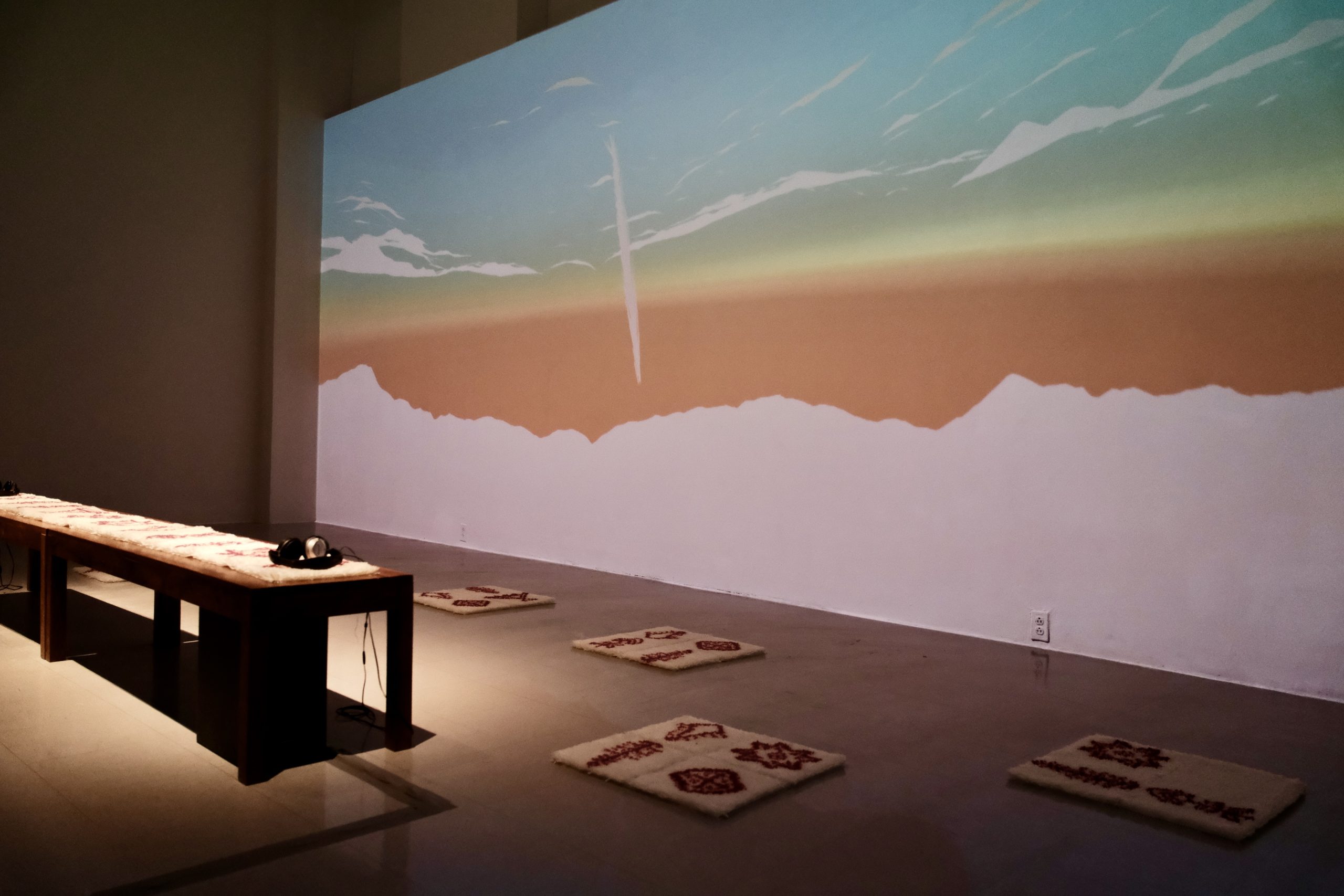
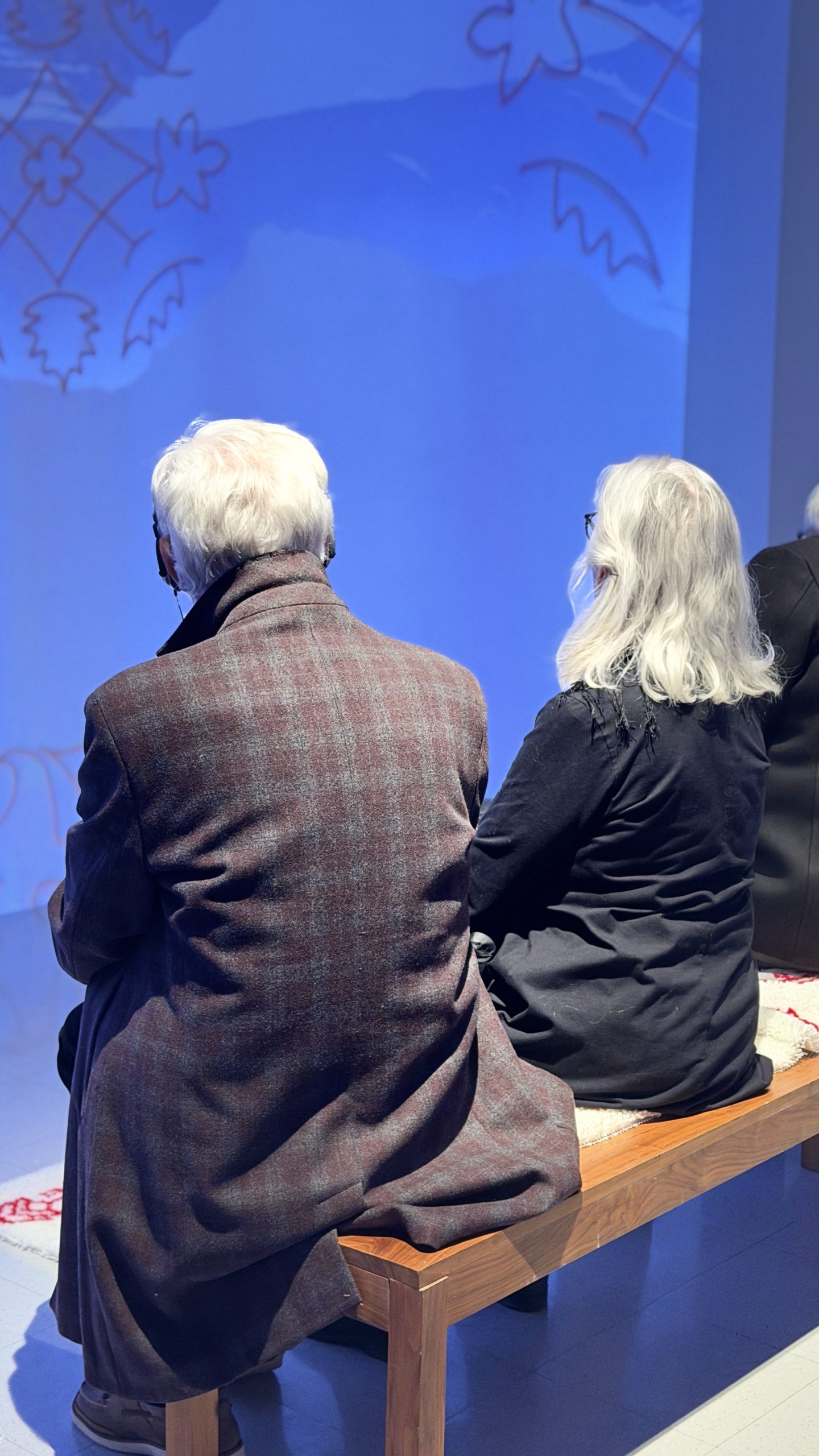
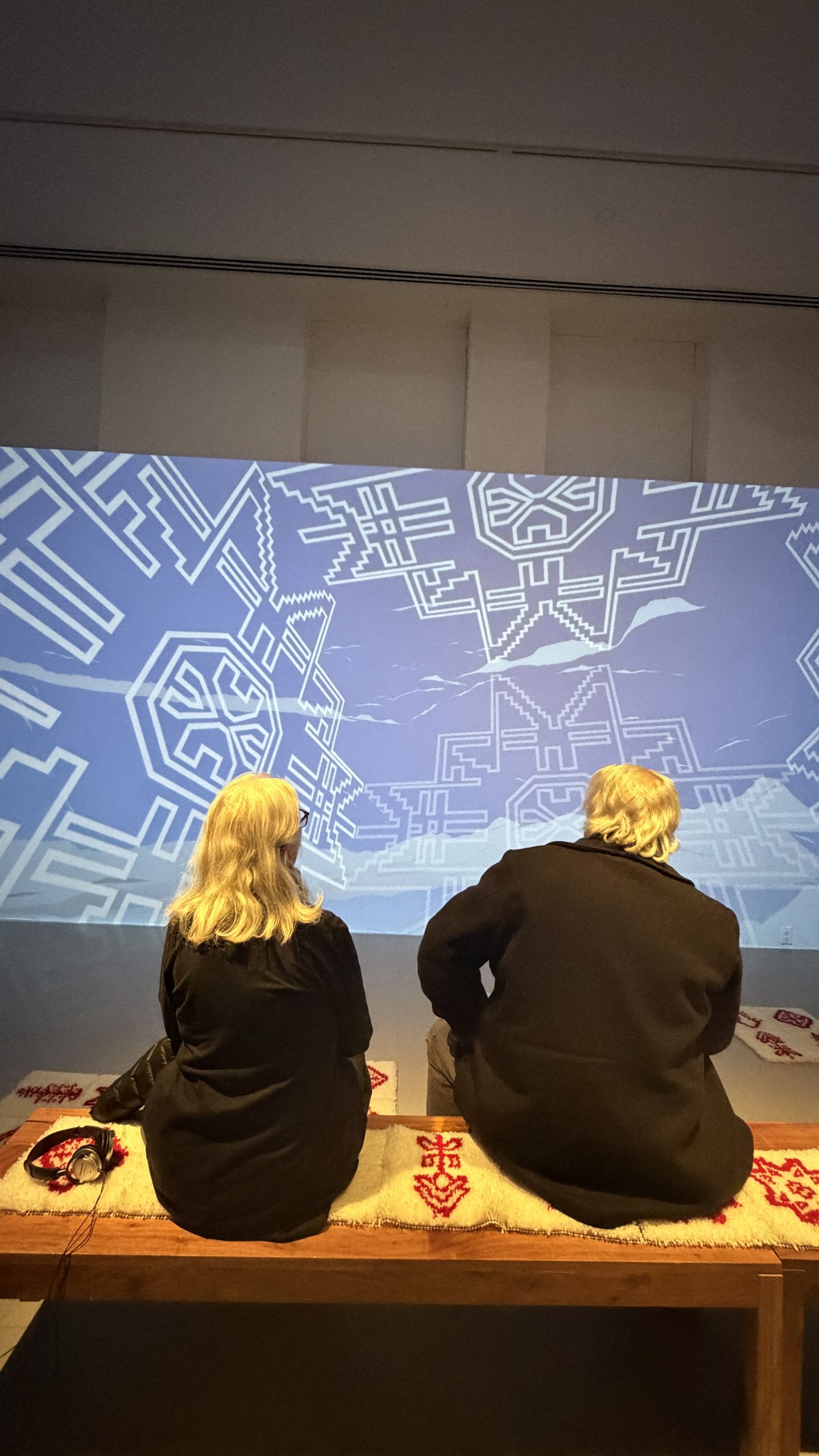
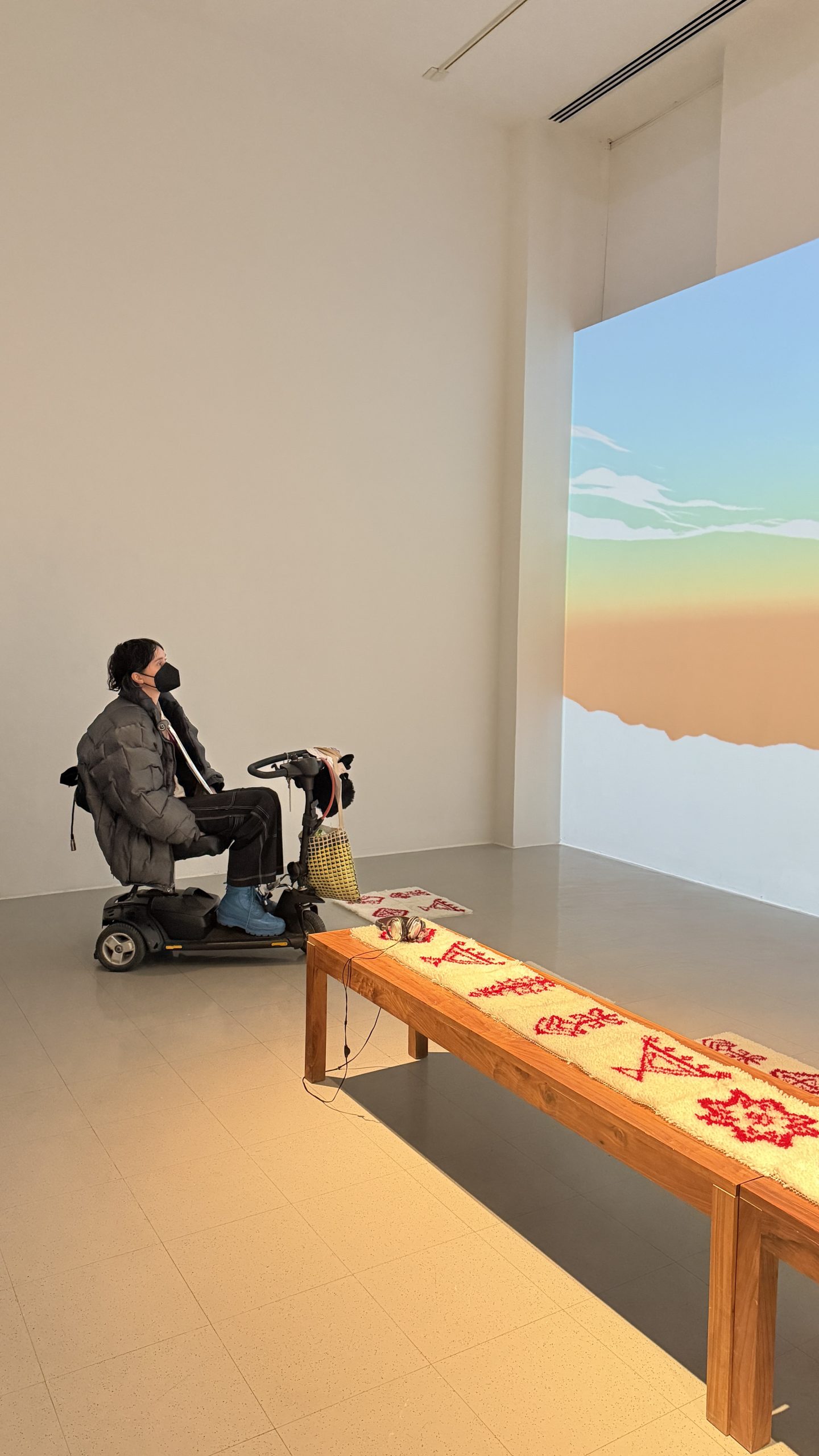
It was such a great pleasure to see Sue Huang’s Bodies of Flora last Friday evening at MANA Contemporary. It’s a brilliant collage in real time, gracefully put together, moving with ease between scientific inquiry and personal reflection, and also between archive and storytelling, preservation and memory.

Lorraine Daston writes that botanical nomenclature is “an art of transmission that makes a certain kind of science possible.” Daston’s work kept resonating in my mind while watching Sue’s performance. The naming, cataloging, and preservation of plant life are not simply scientific acts; they are also about memory and cultural practice. Bodies of Flora brings scientific record, autobiography, and artistic interpretation into the same live physical A/V space.

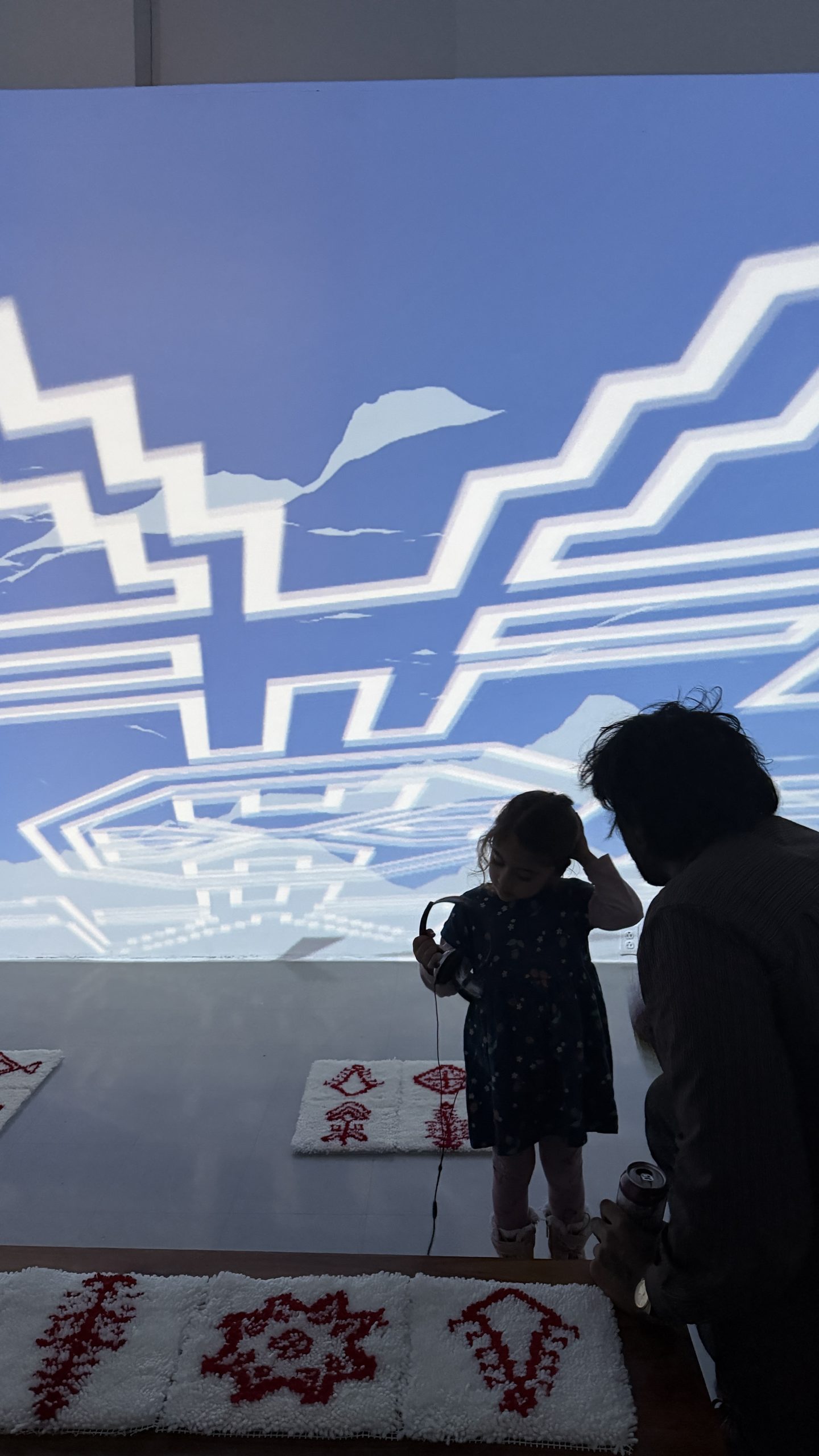
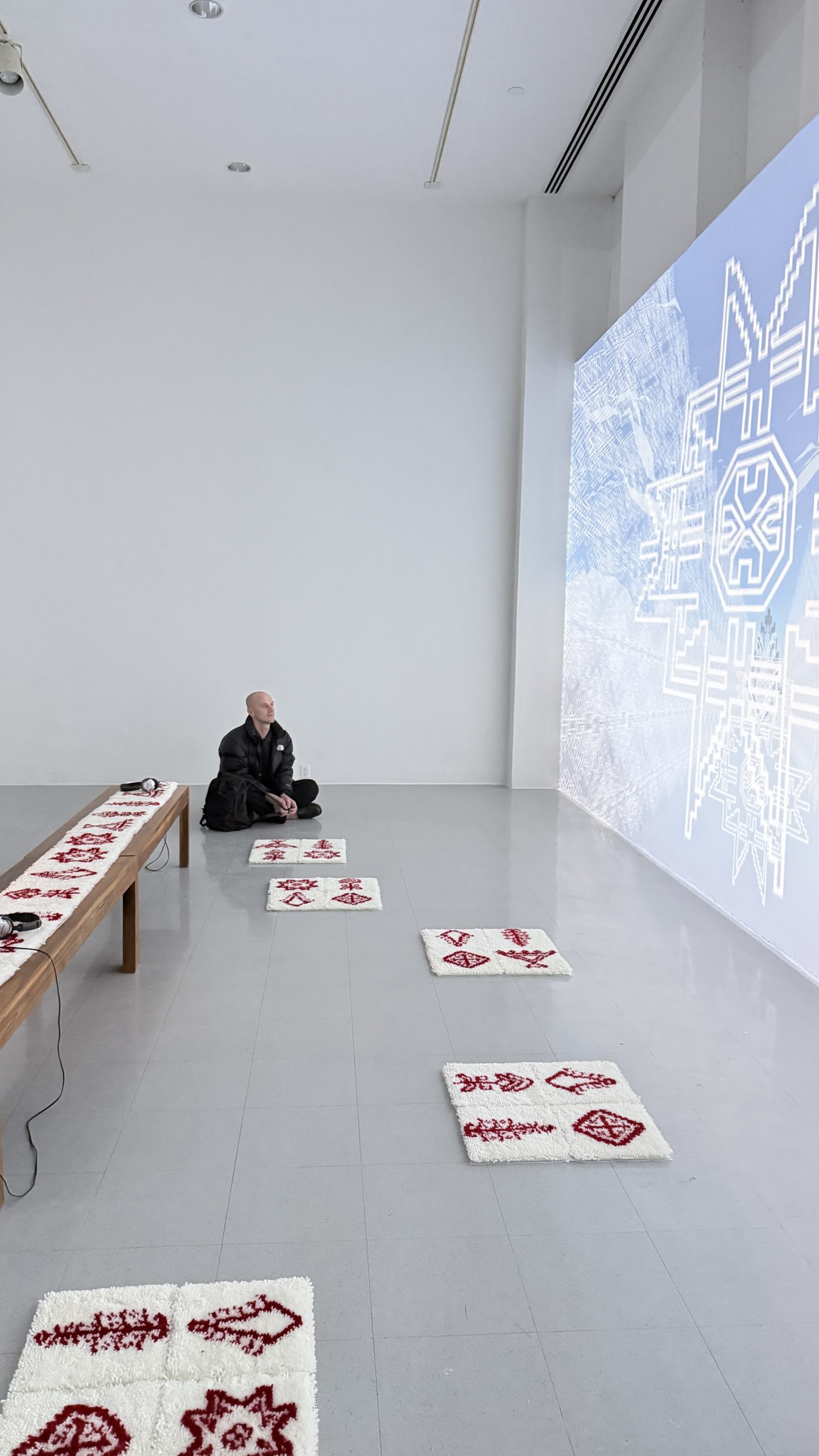
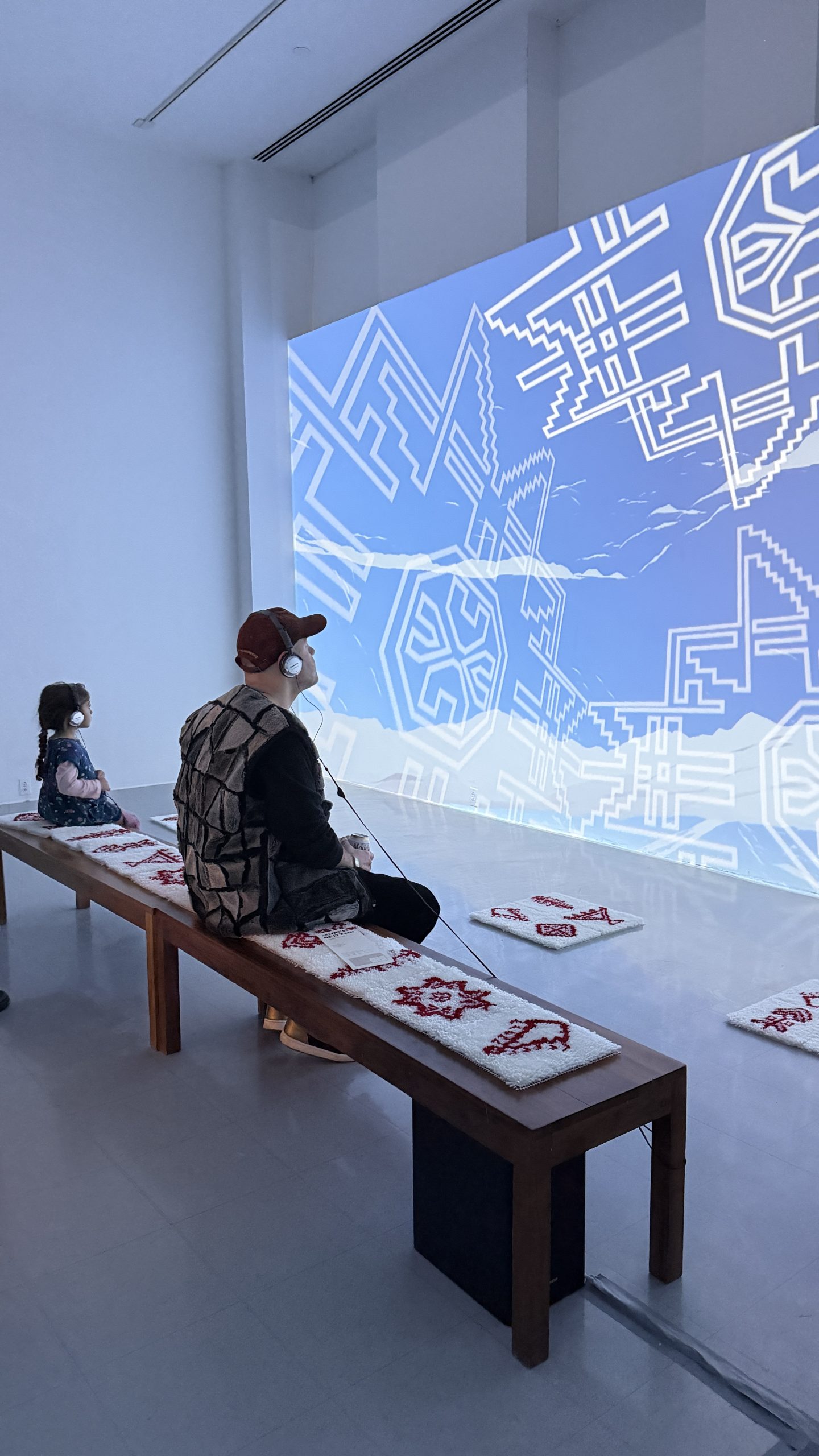
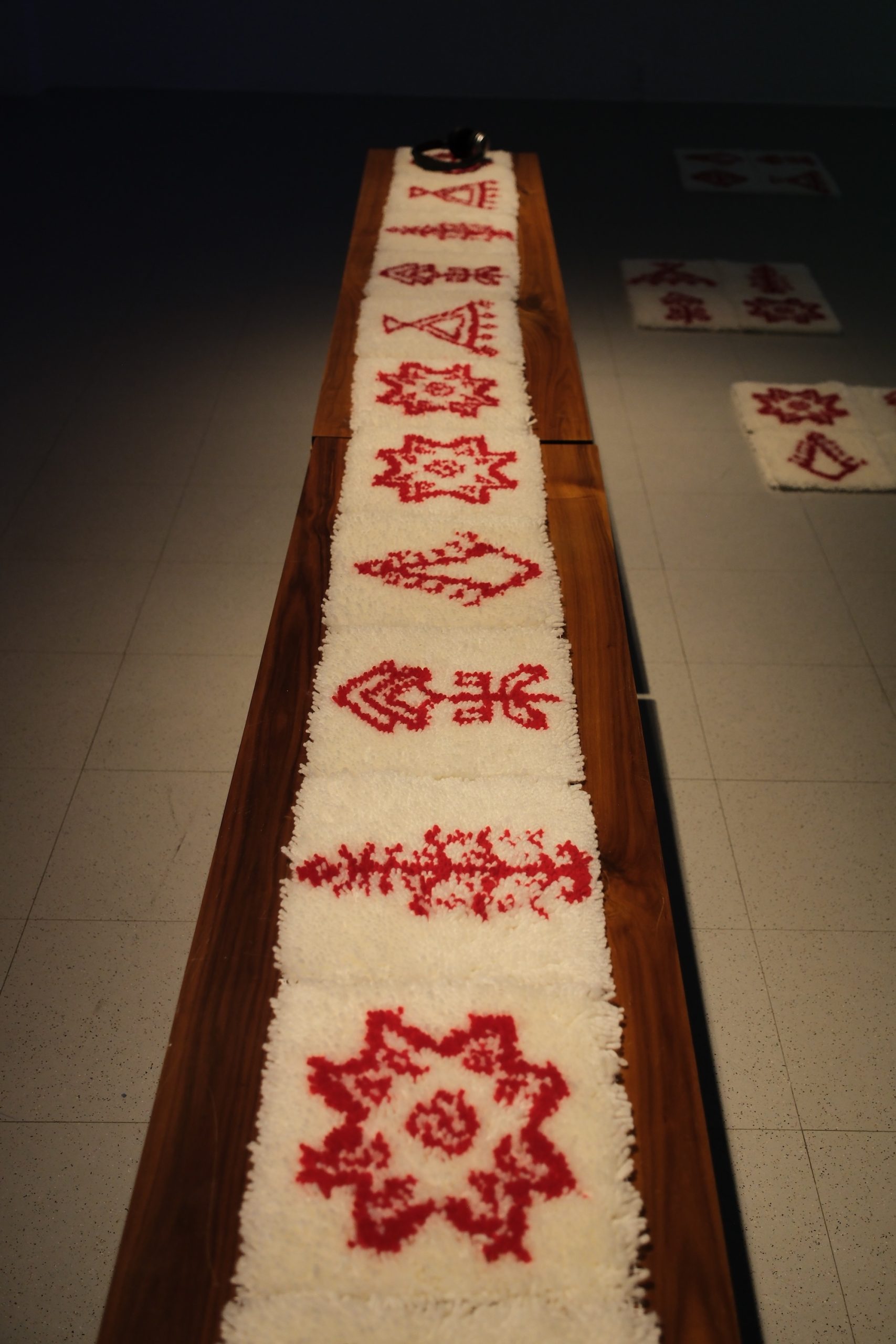
Using an electronic overhead projector, a lightbox with an overhead camera (10x zoom industrial camera often used for scientific magnification), layered with a video channel, Sue created a live visual field where analog and digital image-making sat comfortably together. The setup to evoked the conventional classroom teaching tools and also it was a visual and technical reference to the lightbox at the herbarium, that is the main device for digitizing the specimens. Transparencies contained printed and copied content at scales recalling 4×5 negatives, herbarium sheets, and library stack cards. Sue moved and composed through light by hand. Their tactile archival quality blurred the line between specimen and memory, between scientific preservation and personal reflection. Projection wasn’t used as spectacle, but as a working surface—a place where fragments could be handled, layered, narrated, and transformed. The sound design by Lee Tusman set the atmosphere with a restrained ambient drone. Sue’s storytelling voice, paired with her live gestures on the overhead surface, created a calm but deeply engaging rhythm that pulled the audience in.
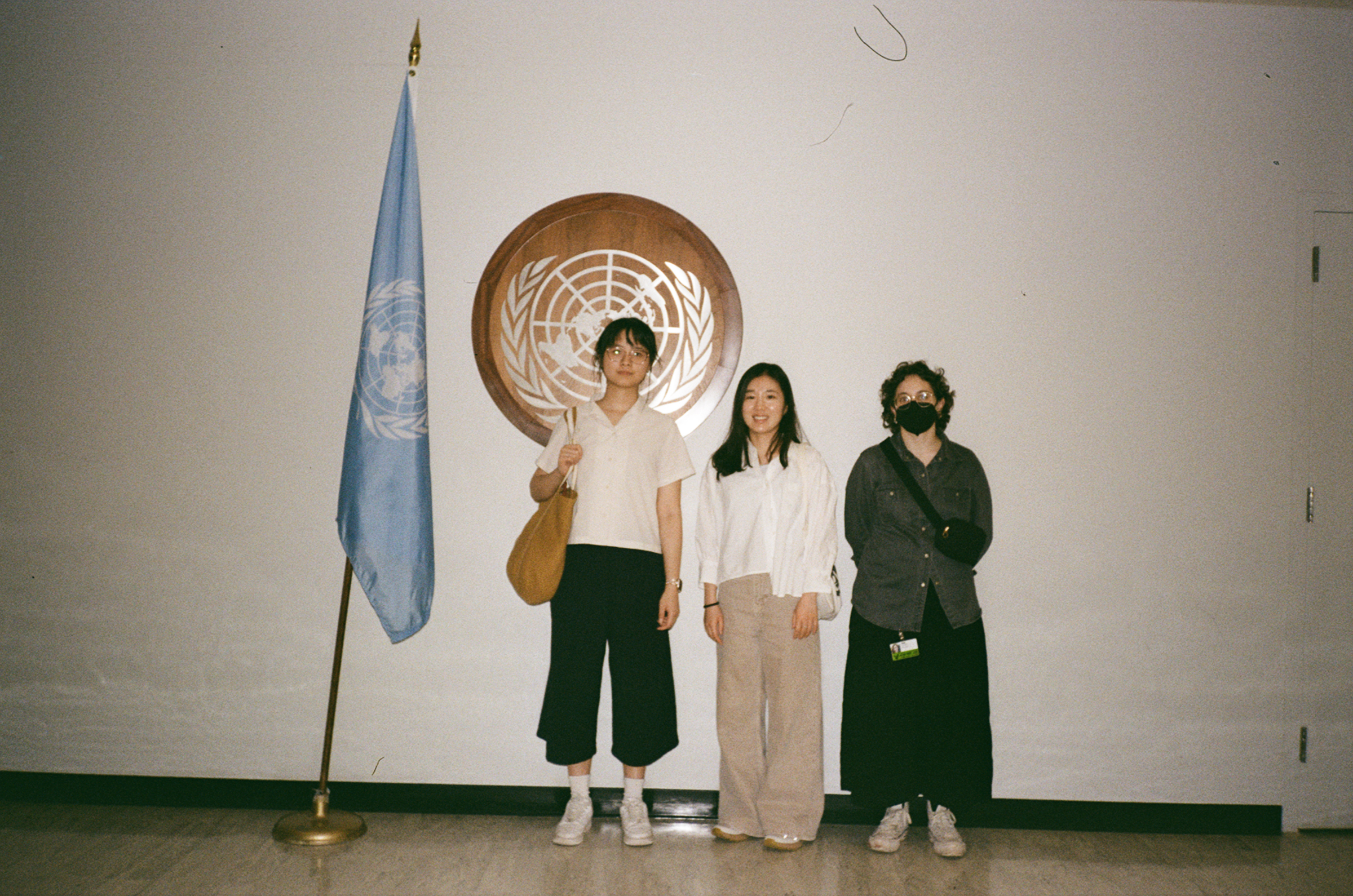
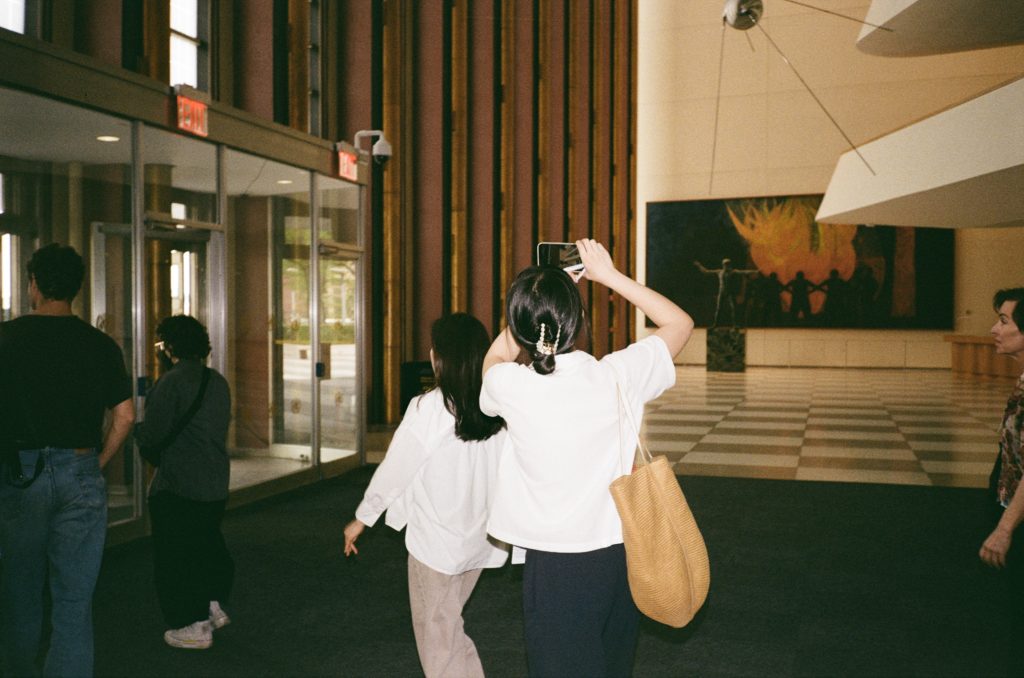
It was also so nice to see the broader community around the project. There were roughly twenty-five participants, including MFA in Design students from the last three cohorts. Among them was Asem Kiyalova, who also worked on the project as Sue’s assistant, alongside Anukriti Kaushik. Their contributions make visible another important aspect of Bodies of Flora that is transmission through teaching, collaboration, and shared making.

Carl Linnaeus defined the botanist as someone who can give one particular plant the right name, in a language understood around the world. Bodies of Flora gently expands that idea. It reminds us that our relationship to botanical life is shaped not only by naming, but also by image, touch, story, memory, and care.

Sue has created something intellectually rigorous, elegant, and quietly moving.

for more information about the project and the process:

A Botanical Resurrection: Professor to Visualize a Return of Vanished Flora


Designing Participatory Memory Practices

Ryan Stark Lilienthal, MGSA MFA in Design ‘2023


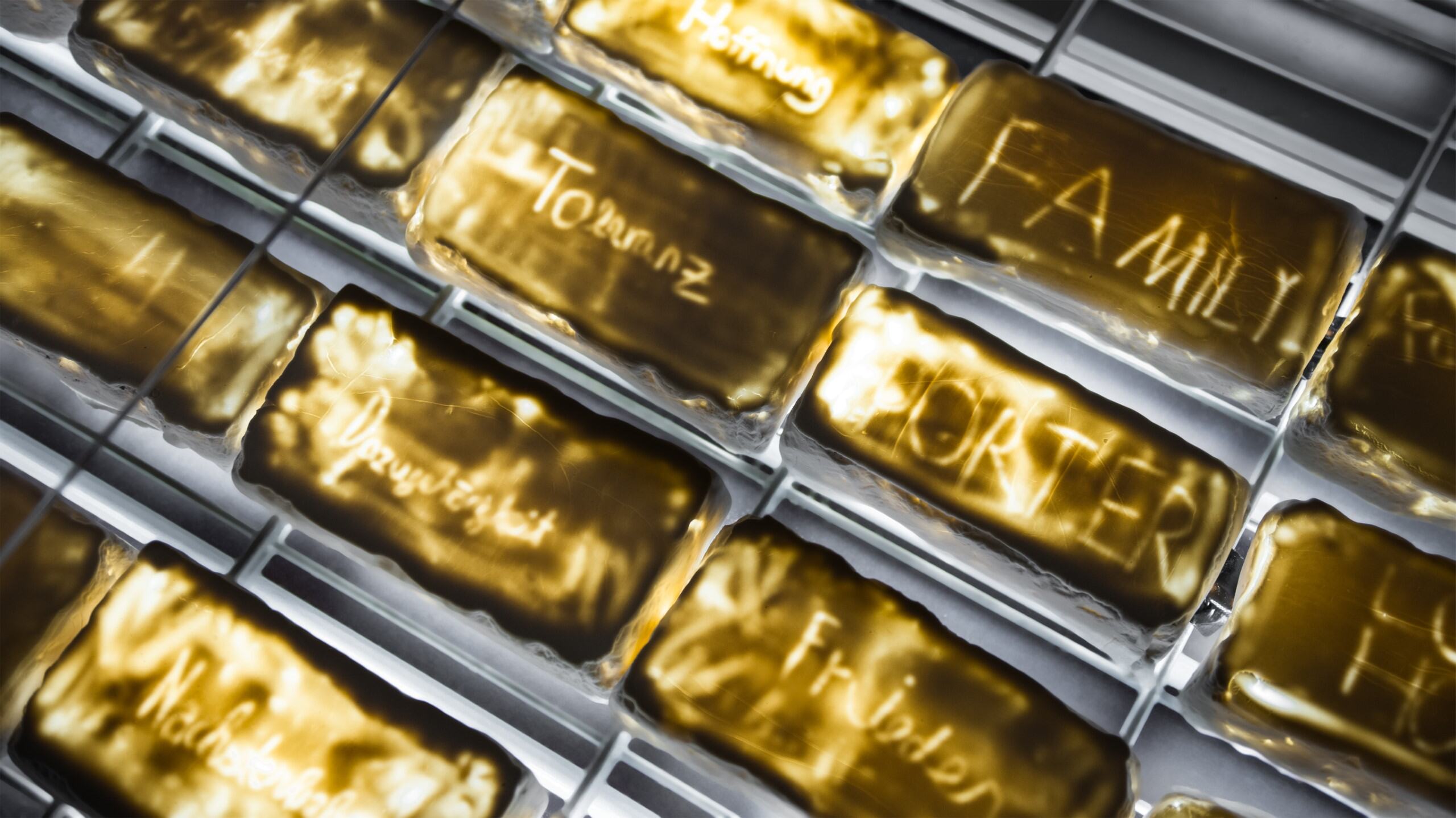
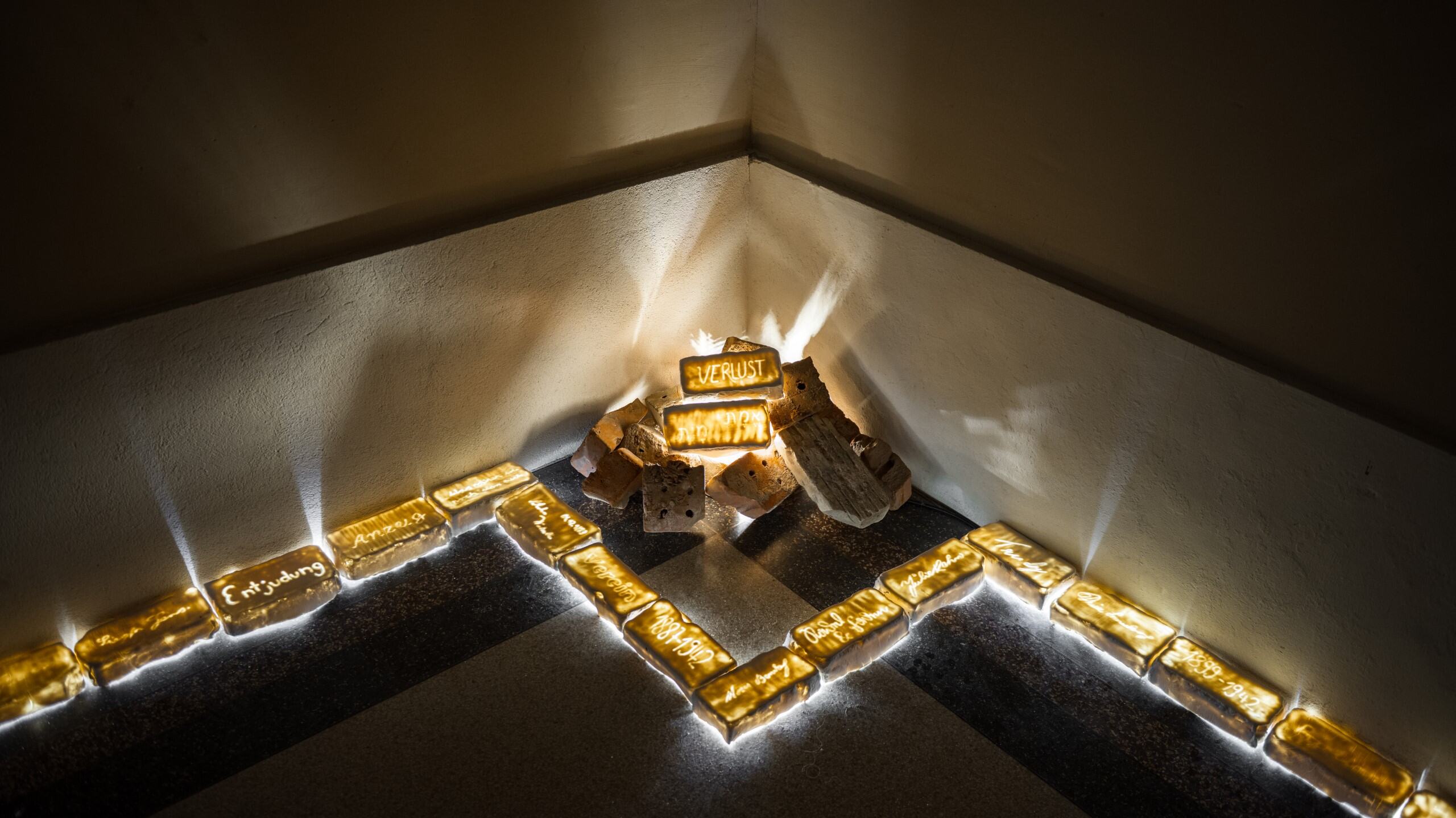
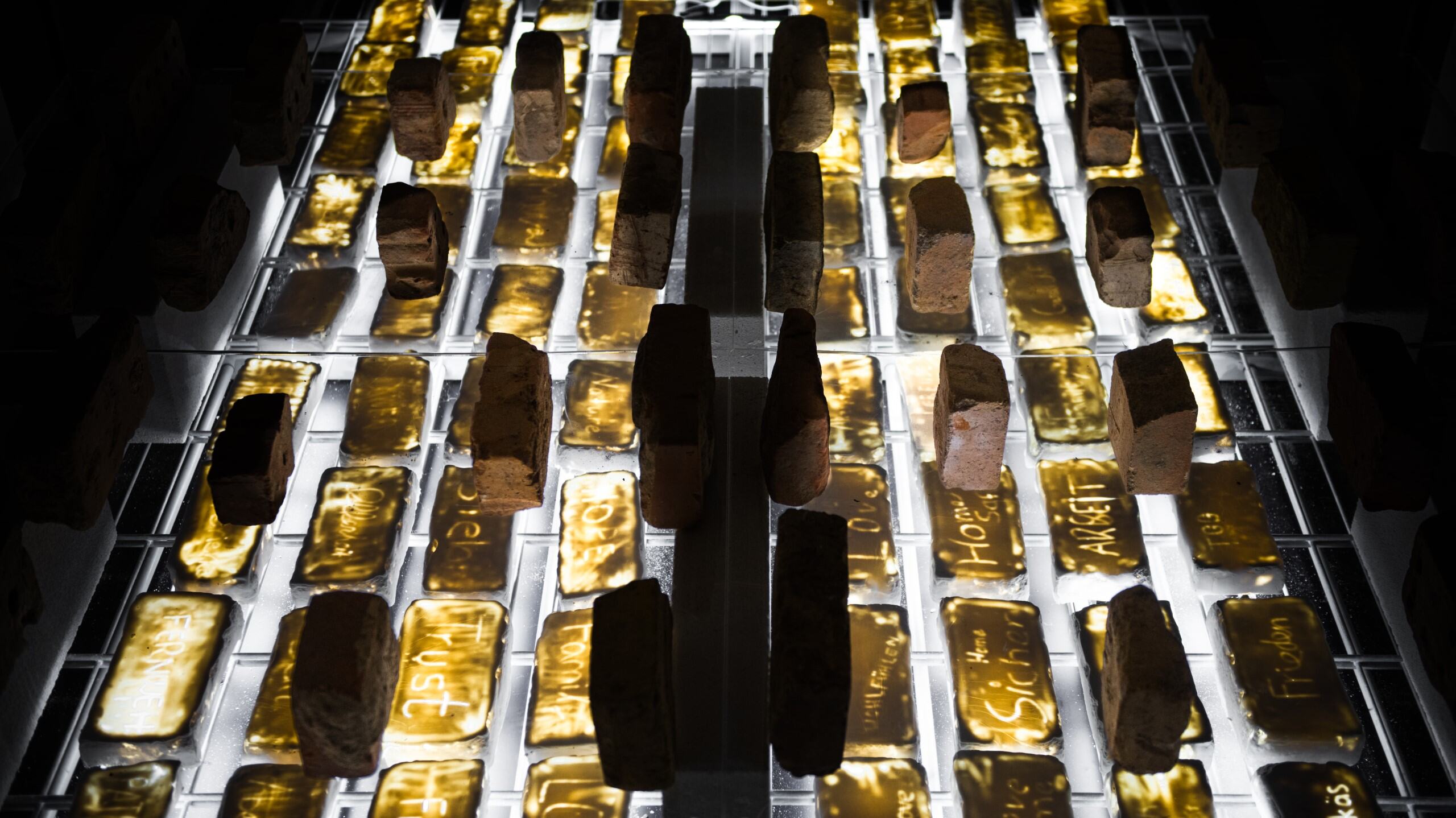
I recently returned from a two-month German-American Fulbright-funded installation project in Hesse, Germany conducted in collaboration with education science researchers at Goethe Universität Frankfurt am Main. The installation developed from  my MGSA MFA Design thesis and sought to cultivate interconnectedness, empathy, and belonging by employing new thinking about participatory memory practices that bring people from diverse backgrounds together. I designed interactive workshops involving approximately 150 German high school and elementary school students from six different schools. Through the workshops, students created illuminated porcelain bricks that then formed collaborative memory sculptures. The installation Tonwerk (Clay Factory) was exhibited for a month at the Hessisches State Archive in Darmstadt. The project examined forced labor during the Holocaust at the Tonwerk Heppenheim factory, close to the schools. Many of the students, and some of their teachers, had no understanding of what transpired in their communities. Some students also participated in a memorial design competition, while others researched Aryanized property taken from families who were deported to concentration and extermination camps. 

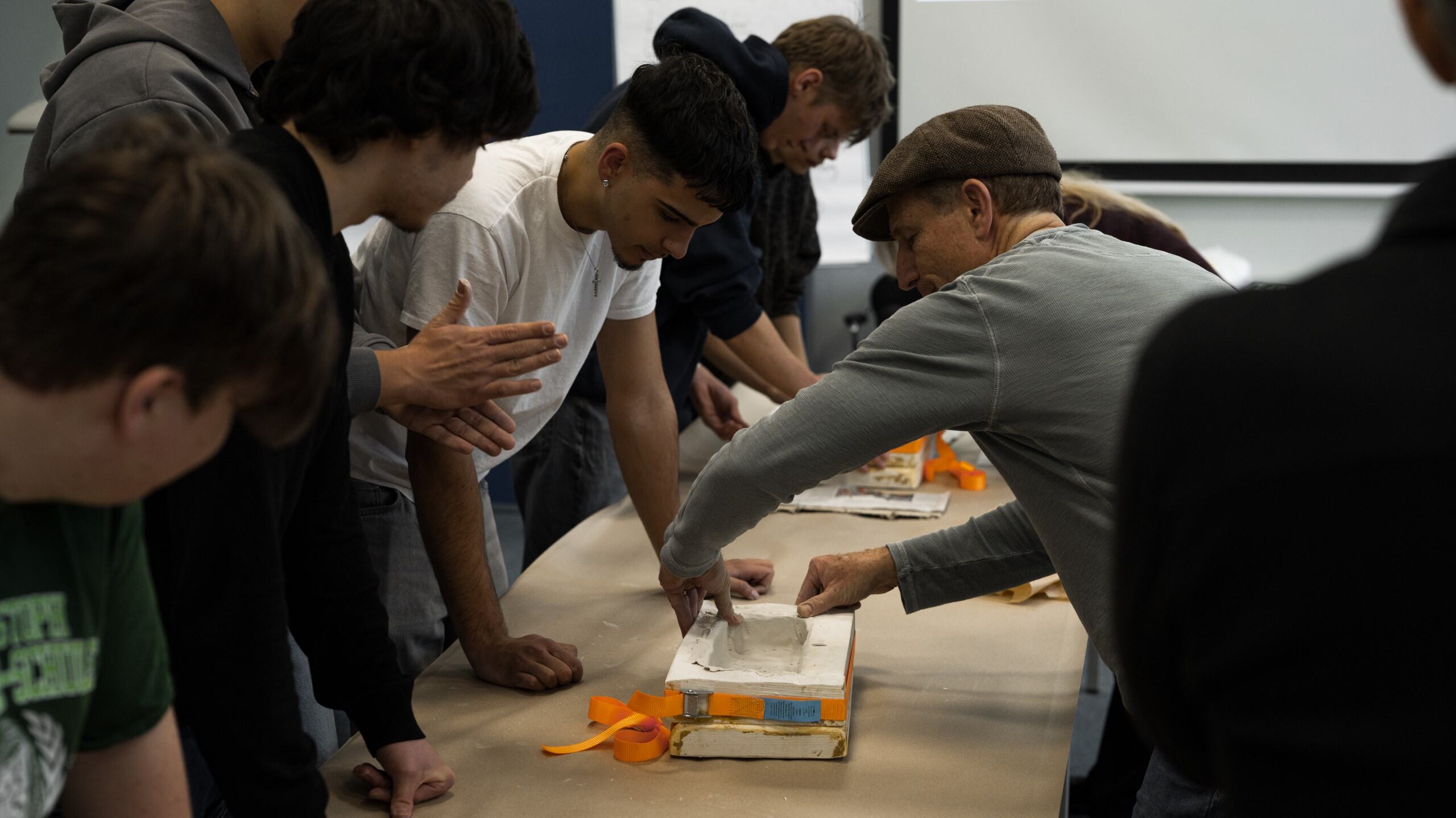
Ryan Lilienthal conducts brick-making workshop with Georg-Christoph-Lichtenberg-Schule Ober Ramstadt at the Hessisches Staatsarchiv

As its starting point, the installation drew inspiration from a 1990’s German high school student study into Tonwerk Heppenheim. In the process of extensively researching the abuse of forced laborers in producing ceramics, such as bricks, students cultivated an in-depth historical understanding of the Holocaust. I found the students’ research particularly meaningful, given that my grandmother’s uncle was one of the Tonwerk Heppenheim forced laborers before he was deported to Poland and murdered with his wife and son for being Jewish. With the earlier fact-based history project in mind, my intention in this participatory memory-based art installation sought to illuminate the emotional resonance that diverse communities can draw from the traumatic past of others. I realized during the study that the children of the immigrant and refugee communities in this region seemed particularly responsive to the project.

Memory studies scholars like Michael Rothberg, who explores multidirectional memory, encourage a shift from competing claims of victimhood between communities with traumatic pasts to learning from each other’s heritage of trauma. Similarly, Clint Smith in his 2022 study of Germany’s memory culture observes, “I learned that the way the country [Germany] remembers this genocide [the Holocaust] is the subject of ongoing debate—a debate that is highly relevant to fights about public memory taking place in the U.S.” (Smith, Clint, “Monuments to the Unthinkable: America still can’t figure out how to memorialize the sins of our history. What can we learn from Germany?”, The Atlantic, vol. 330, no. 5, 2022, pp. 22-41.)

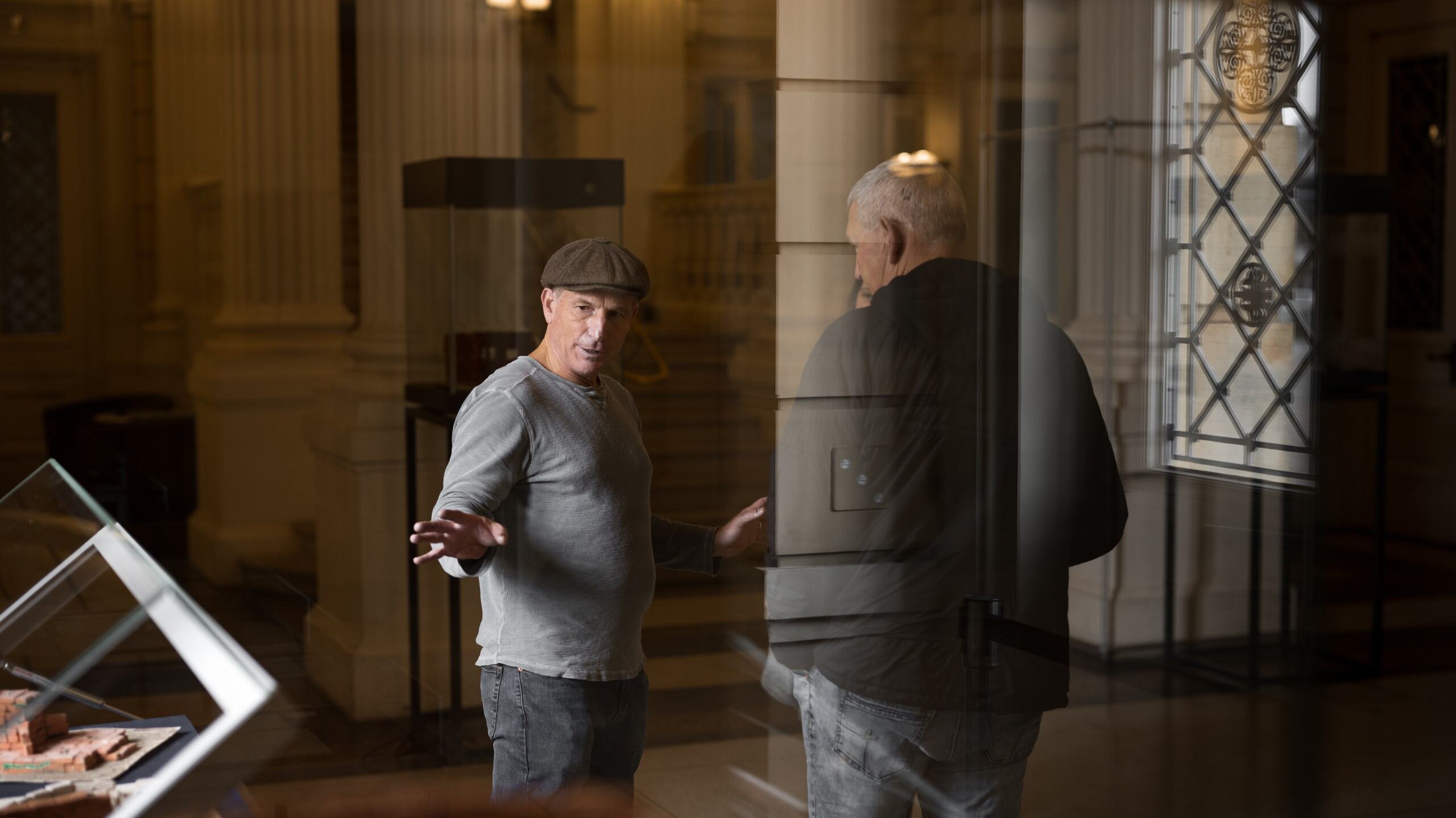
With the Hessisches Staatsarchiv Darmstadt staff, Ryan Lilienthal discusses installation layout.

The results of this project will further guide my own art and design practice and will hopefully elucidate and advance approaches to participatory memory practices and multidirectional memory used by others. Significant takeaways included the students’ attentive engagement in Holocaust memory work through non-traditional, tactile learning using clay to shape a purposeful remembrance experience. This qualitative observation applied equally across gender and age, from first-grade students to ninth through thirteenth-grade students–including Hauptschule, Realschule, and Gymnasium students. What’s more, native-born German students as well as refugee and immigrant students shared positive reflections on the meaning of the project to their own lives. 

Student-made illuminated porcelain bricks expressing words of belonging.

Georg-Christoph-Lichtenberg student-brick installation designed by the students with words, signatures, and information traced from Aryanization archive documents.

Original Tonwerk Heppenheim factory bricks suspended above student-made porcelain bricks.

Gratefully, I am participating in the upcoming Art Against Racism group exhibition, “Freedoms Reframed: Art on the Edge of the Constitution,” at the William Trenton House in Trenton, New Jersey, from June 13 to July 12, 2026. In this exhibit, I hope to bring lessons learned in Germany to help illuminate through art and design the freedom lost in the shadow of our Constitution.

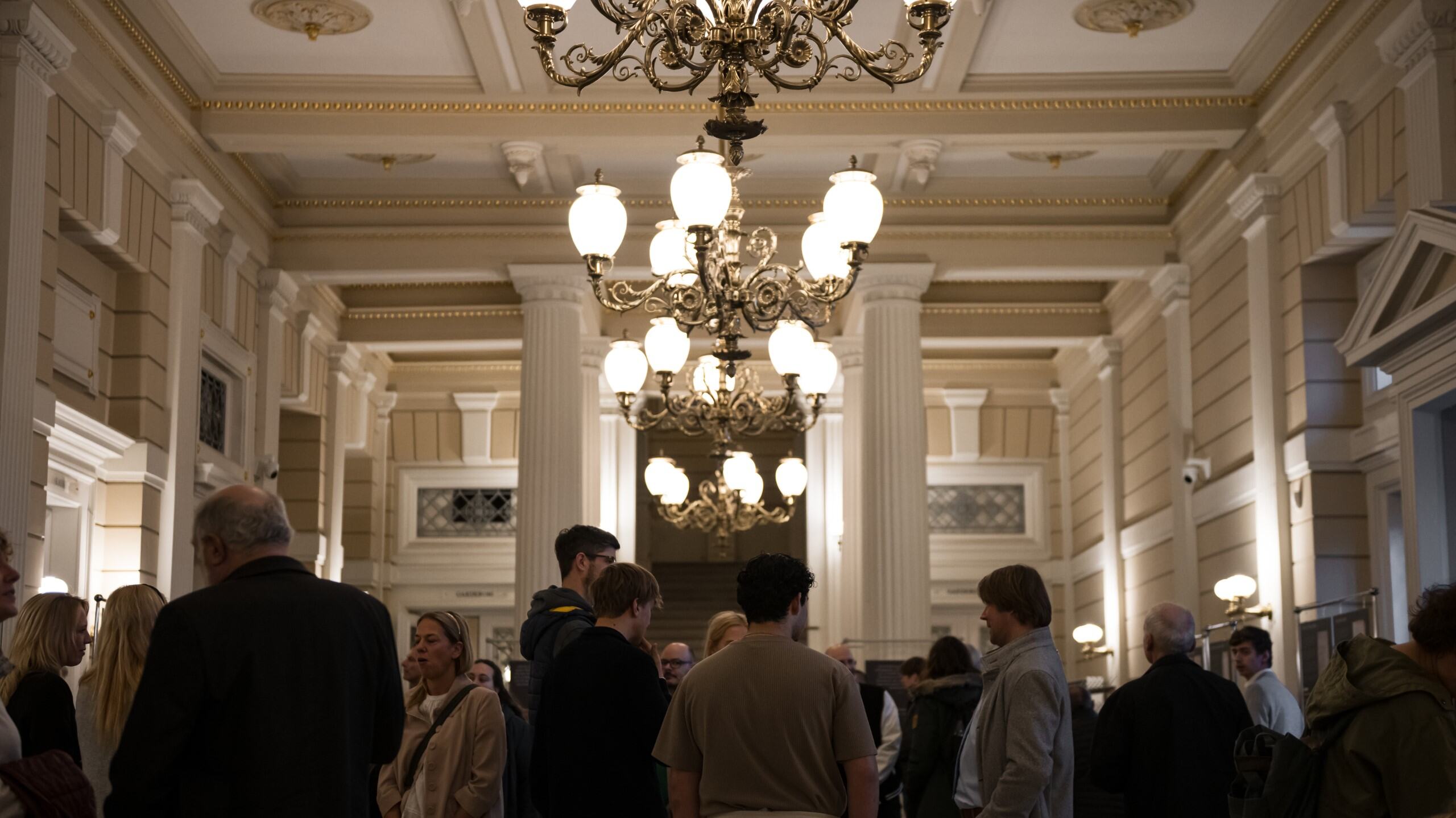
Tonwerk reception at the Hessisches Staatsarchiv Darmstadt.

All photographs by Konstanin Weber © HLA. Hessisches Staatsarchiv Darmstadt.

Design Lecture Series: Hilary Greenbaum

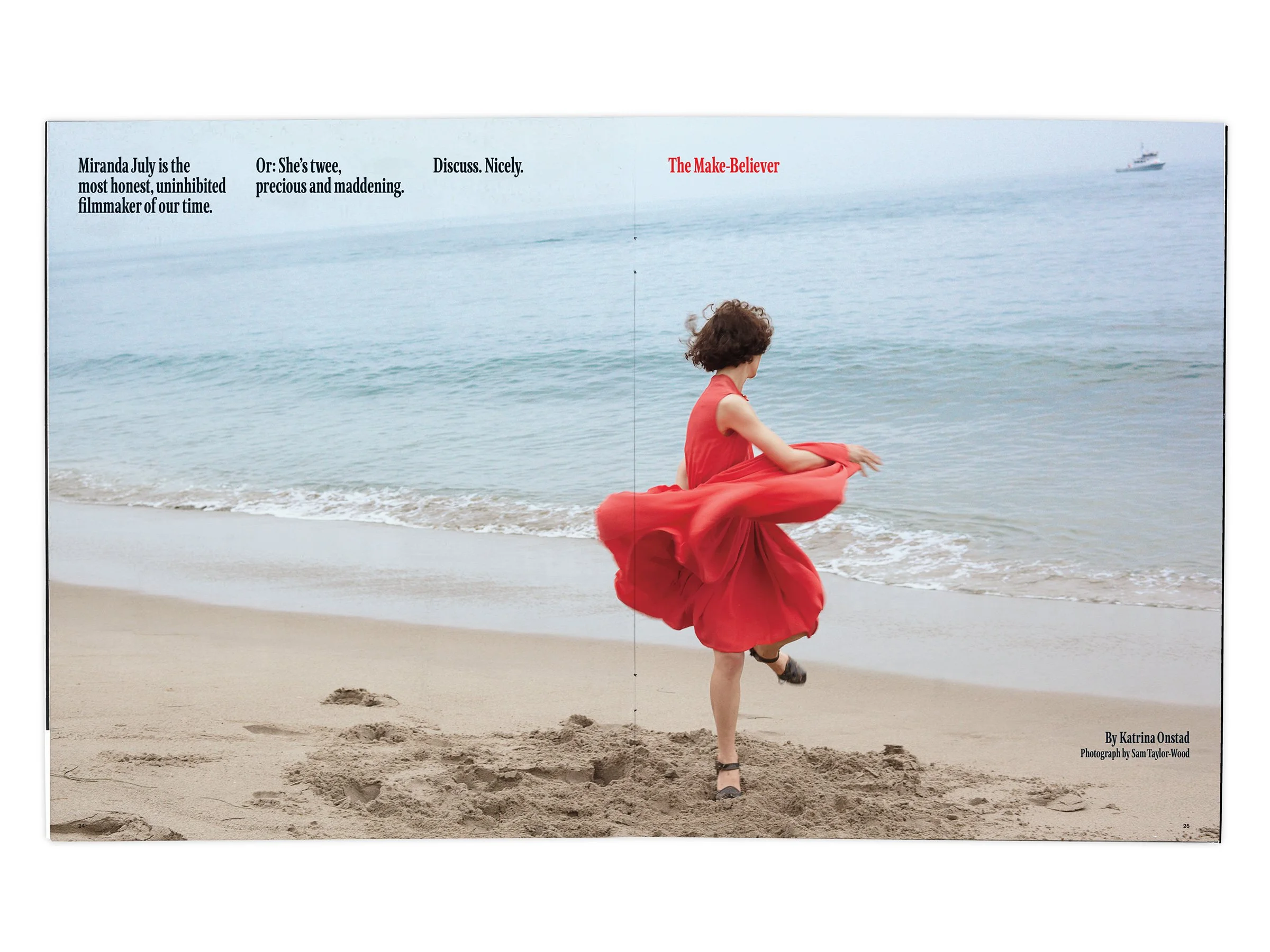
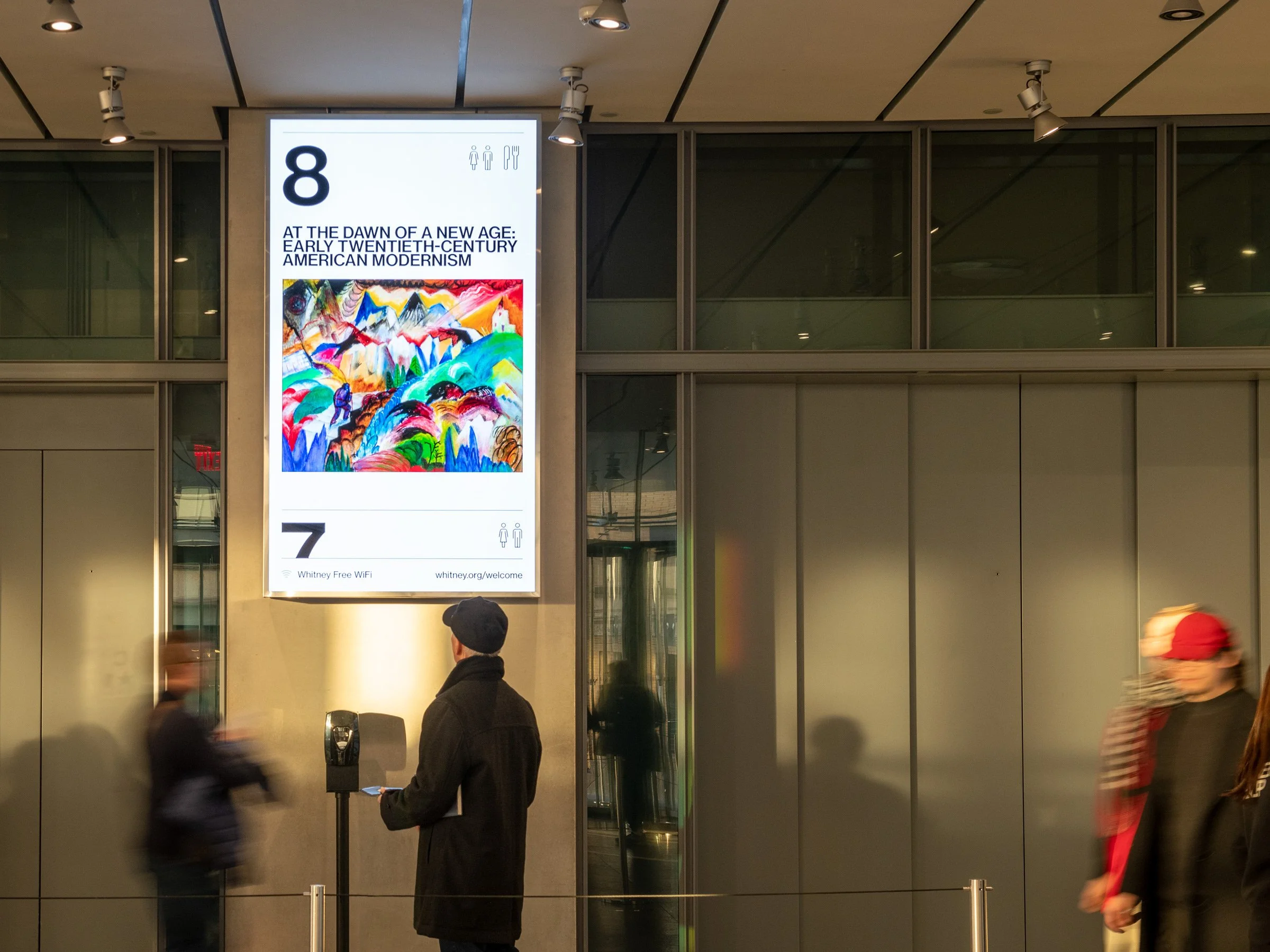
On March 10, the Mason Gross Design community welcomed Hilary Greenbaum, a New York–based creative director, designer, and writer who has led design and brand creative at the Whitney Museum of American Art since 2012. Prior to joining the Whitney, Greenbaum designed covers and feature stories for The New York Times Magazine and wrote the design column Who Made That?, which explored the overlooked designers behind everyday objects. Her work spans editorial design, institutional branding, exhibition graphics, and large-scale cultural campaigns.

In her talk, Greenbaum traced the trajectory of her career, beginning with her upbringing in New Jersey and her early education in design. She reflected on the contrast between modernist design training, where designers are expected to function as neutral transmitters of information, and the more experimental approaches she later encountered in graduate school at CalArts. This tension between clarity and expression became a recurring theme in her practice.

One of the projects she discussed from this period was Wilshire by 8, a thesis project that challenged the idea that information design is neutral. The project mapped Wilshire Boulevard in Los Angeles eight different ways using eight personality perspectives derived from the Myers-Briggs framework. By translating psychological traits into visual mapping strategies, Greenbaum demonstrated how perspective shapes the way information is organized and understood.

After graduate school, Greenbaum moved to New York and began working in editorial and exhibition design, producing books and gallery catalogs for artists. She later joined The New York Times Magazine, where she worked on weekly covers and feature stories and helped design the annual Year in Ideas issue. During this time she also created the blog series Who Made That?, which investigated the designers behind familiar objects and eventually became a recurring column in the printed magazine.

In 2012, Greenbaum joined the Whitney Museum of American Art as Director of Graphic Design. At the Whitney, her role expanded from editorial storytelling to overseeing the visual identity of a major cultural institution. She described how her team works across departments—from marketing and exhibitions to digital platforms and retail—ensuring that the museum’s visual language remains consistent across hundreds of projects each year.

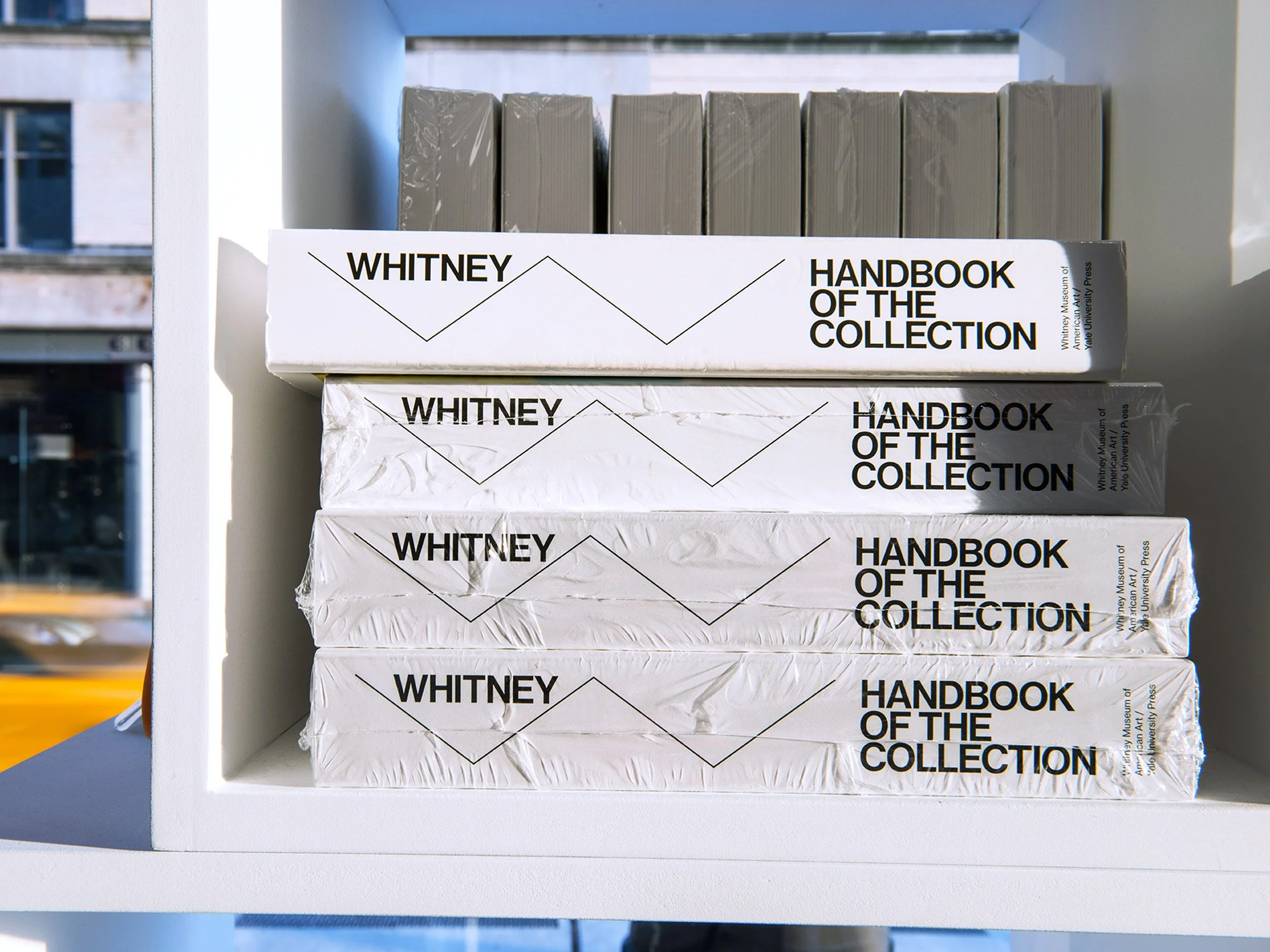
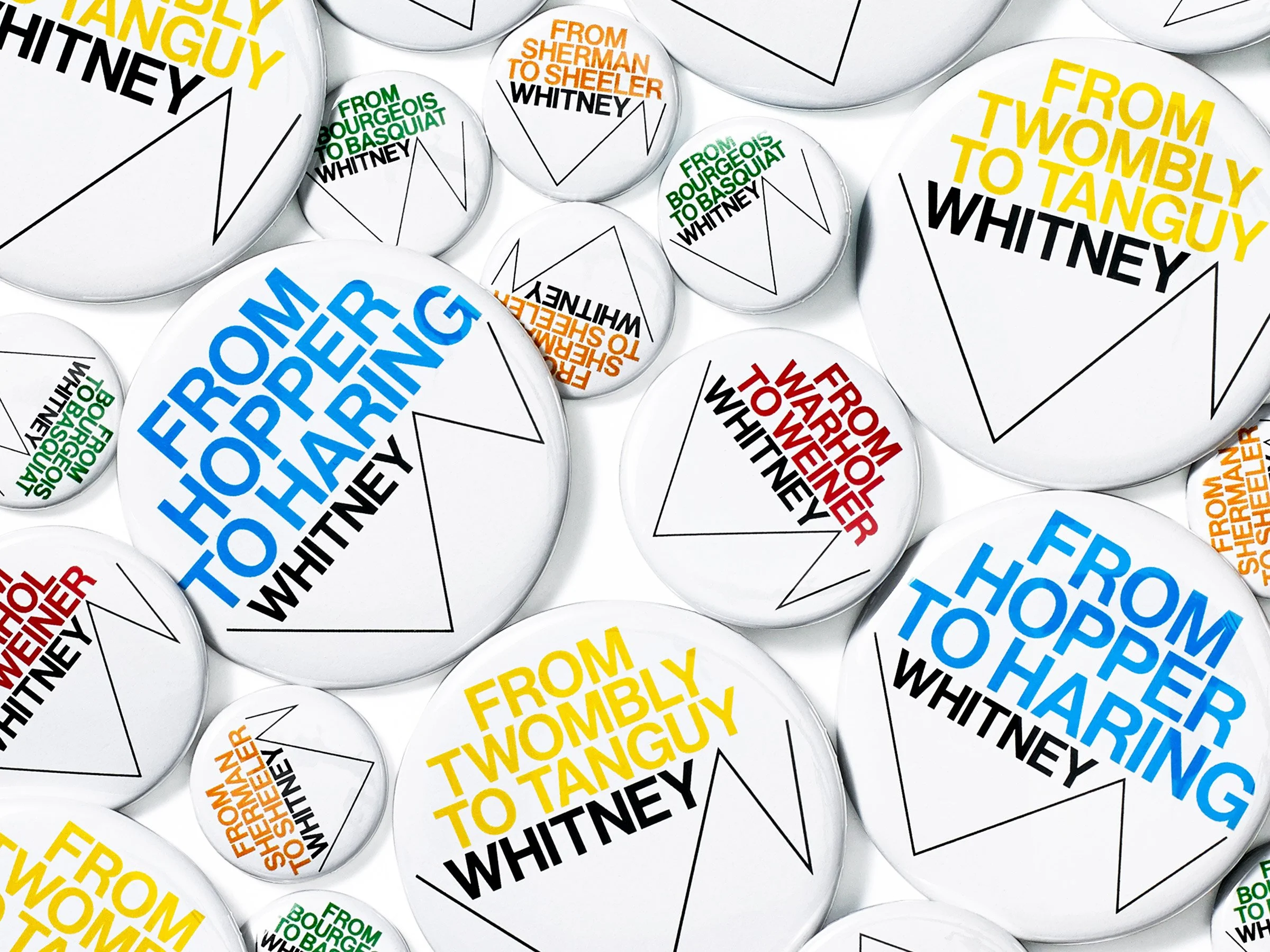
Central to the Whitney’s identity is the responsive W, a flexible logo system developed with the design studio Experimental Jetset. Rather than functioning as a fixed mark, the W adapts to the dimensions of the artwork or layout surrounding it. This approach reflects the museum’s mission to foreground artists and their work while allowing the institution’s identity to remain dynamic.

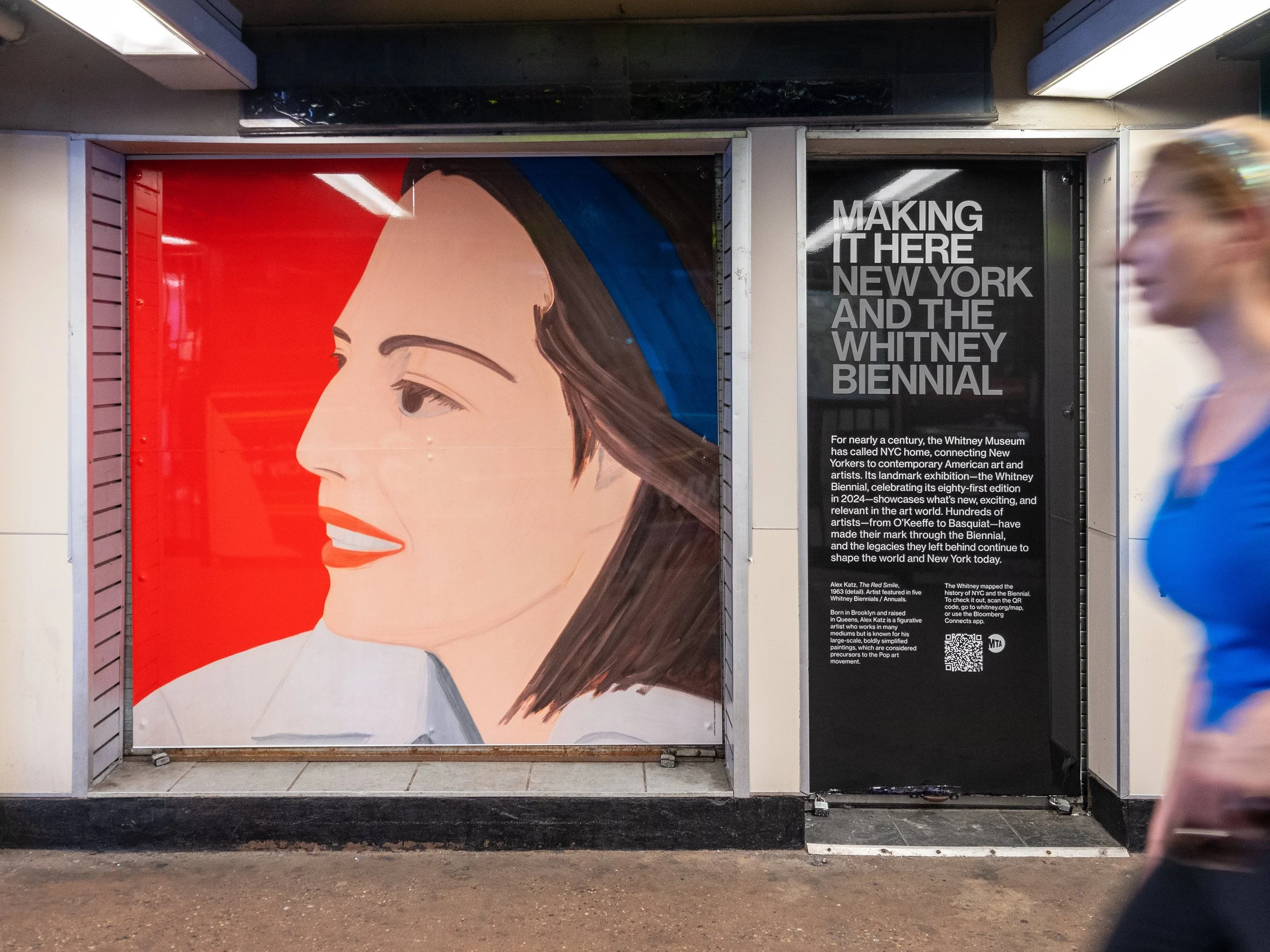
Greenbaum also shared examples of exhibition campaigns and graphic systems developed for shows at the museum, including projects that experimented with typography, color, and spatial graphics within the Whitney’s galleries. She discussed the challenge of designing the Whitney Biennial, an exhibition that often lacks finalized images during early promotion because many participating artists create new work specifically for the show. In response, her team developed flexible visual identities that can function both with and without artwork imagery.

Throughout the lecture, Greenbaum emphasized that design practice evolves through experimentation and adaptation. Moving between editorial publishing, journalism, and institutional design allowed her to develop a practice that balances systems thinking with creative interpretation.

She concluded by encouraging students to remain open to unexpected paths in their careers. Design, she suggested, is less about choosing a single discipline than about learning how to translate ideas across different contexts—whether that means designing a magazine spread, a museum identity, or the graphics that guide visitors through an exhibition space.

A SIMULTANEITY MARK: MFA Design Thesis Part 2

Reception: Feb 12, 6–9 pm

On view: Feb 12 – Feb 28


The second part of A Simultaneity Mark opened with a packed and animated reception, bringing together faculty, students, and visitors from across the Mason Gross community. The galleries carried a steady flow of conversations, with design and visual art audiences naturally overlapping throughout the evening. The event felt lively, social, and deeply engaged.

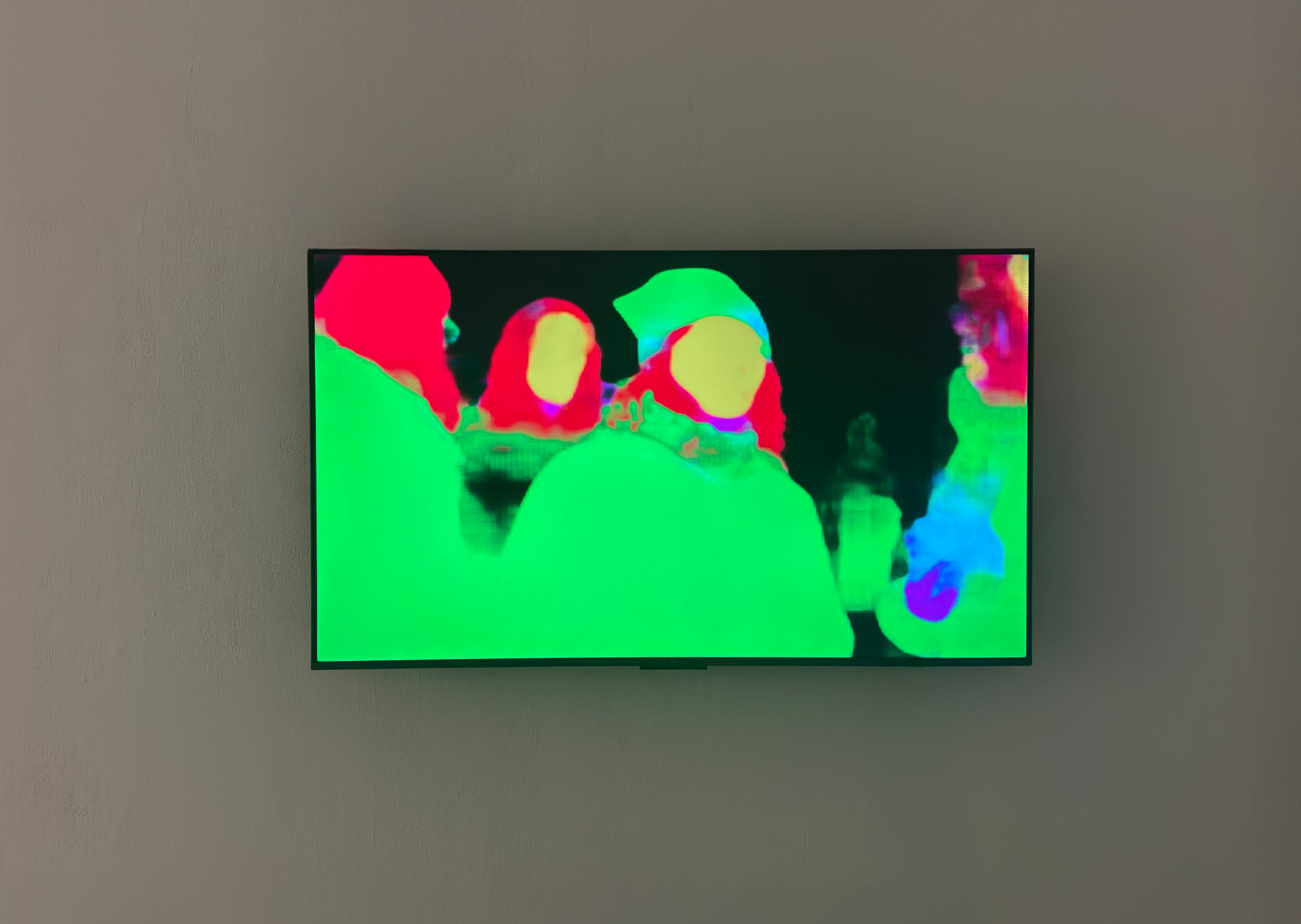
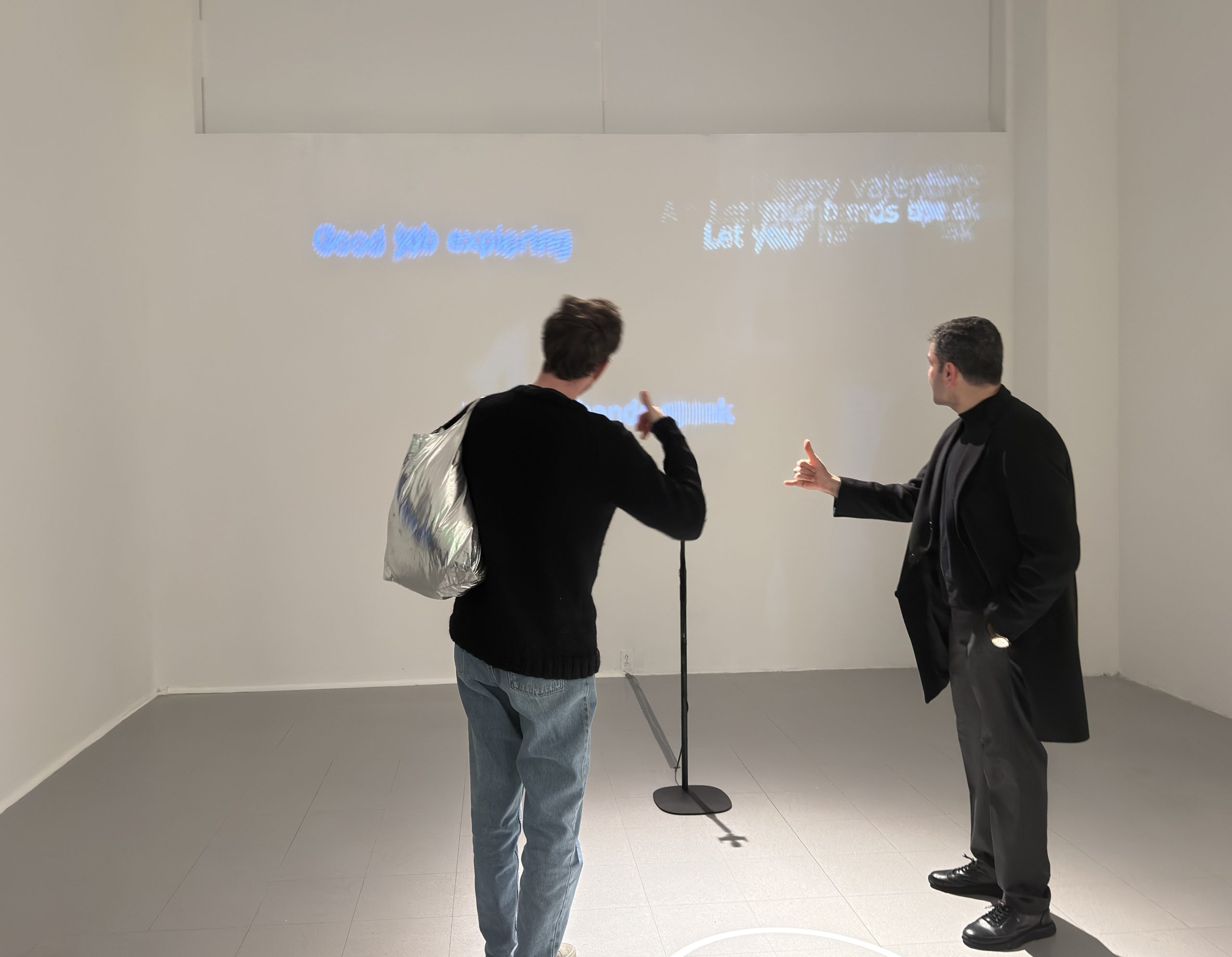
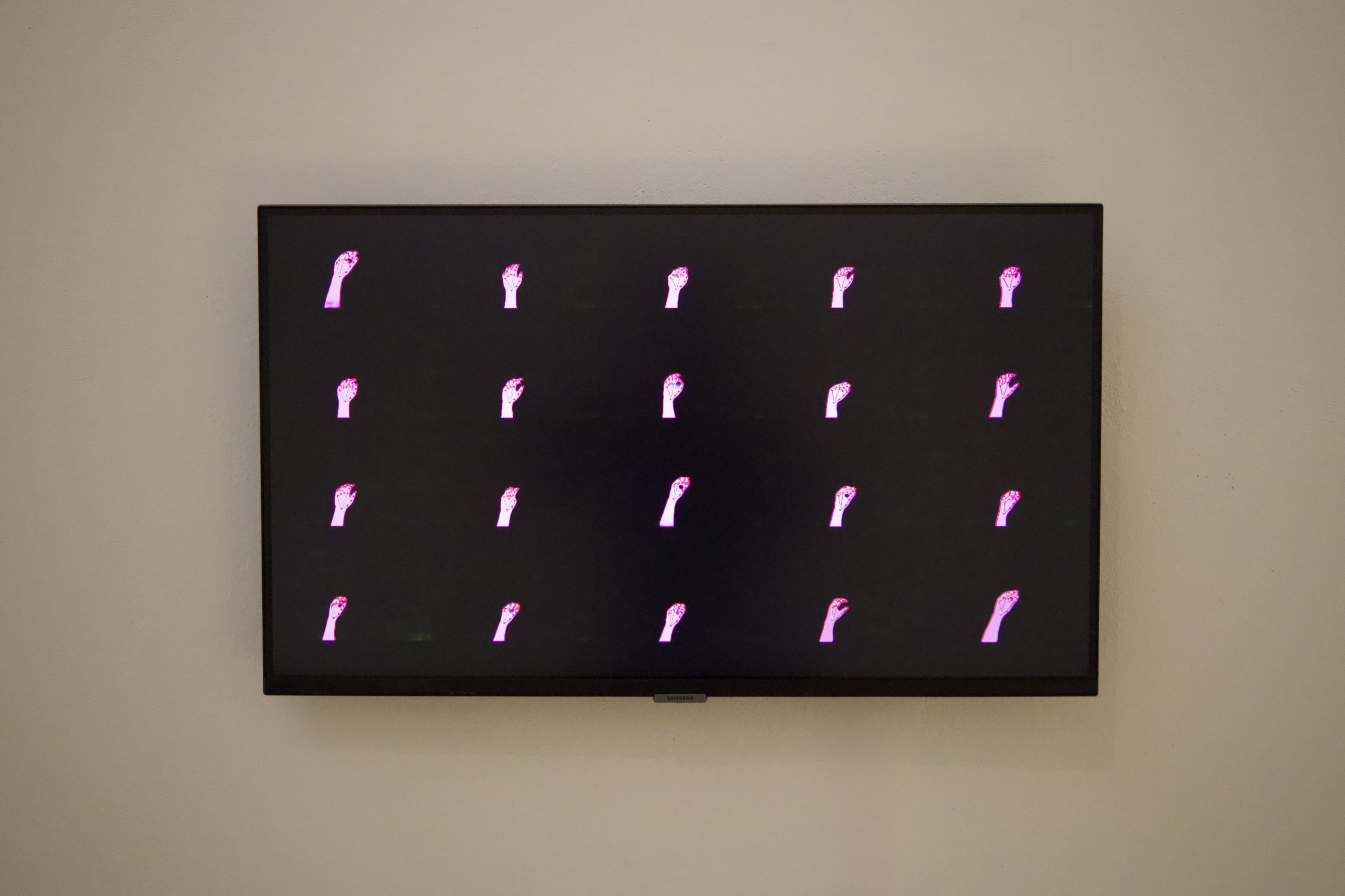
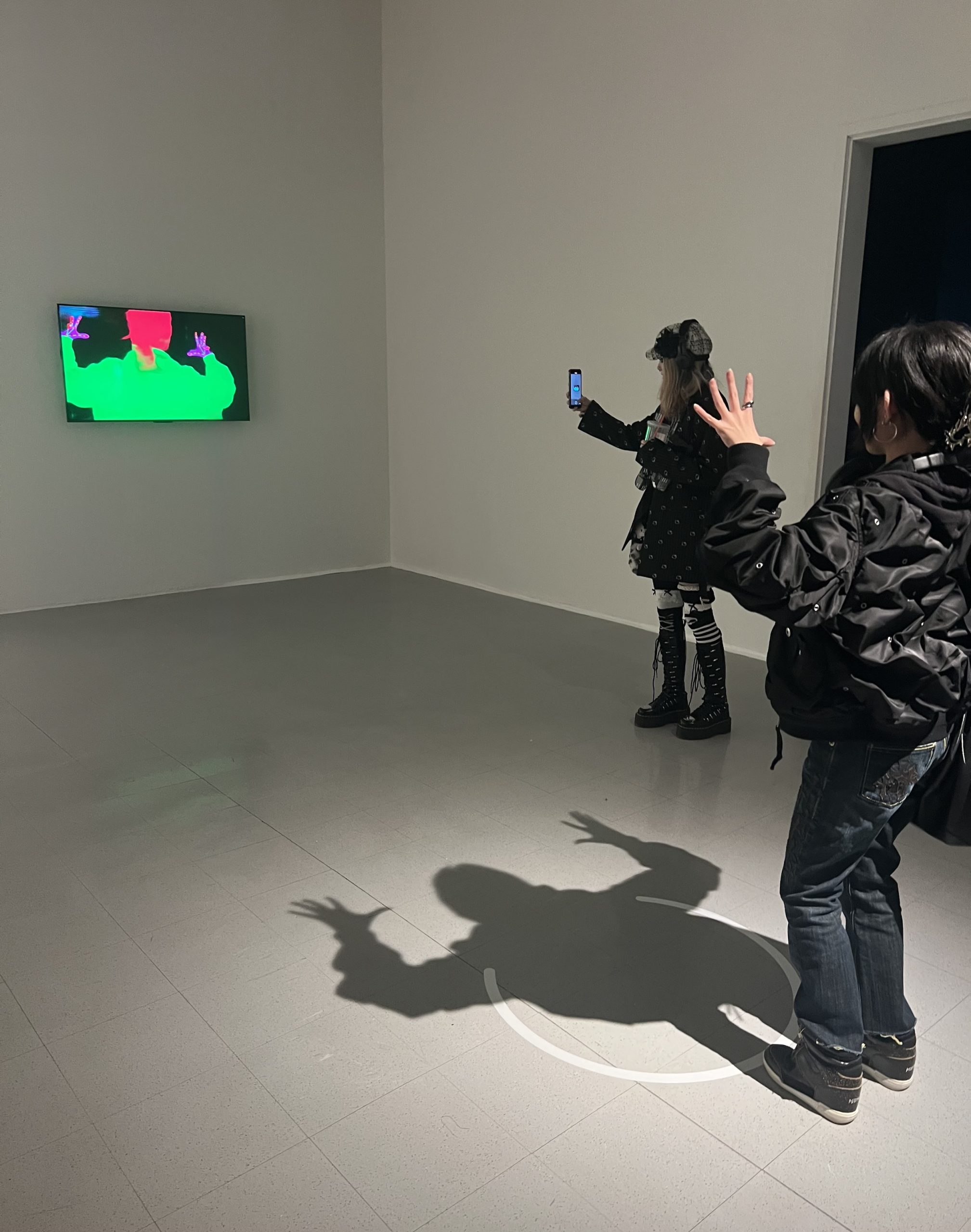
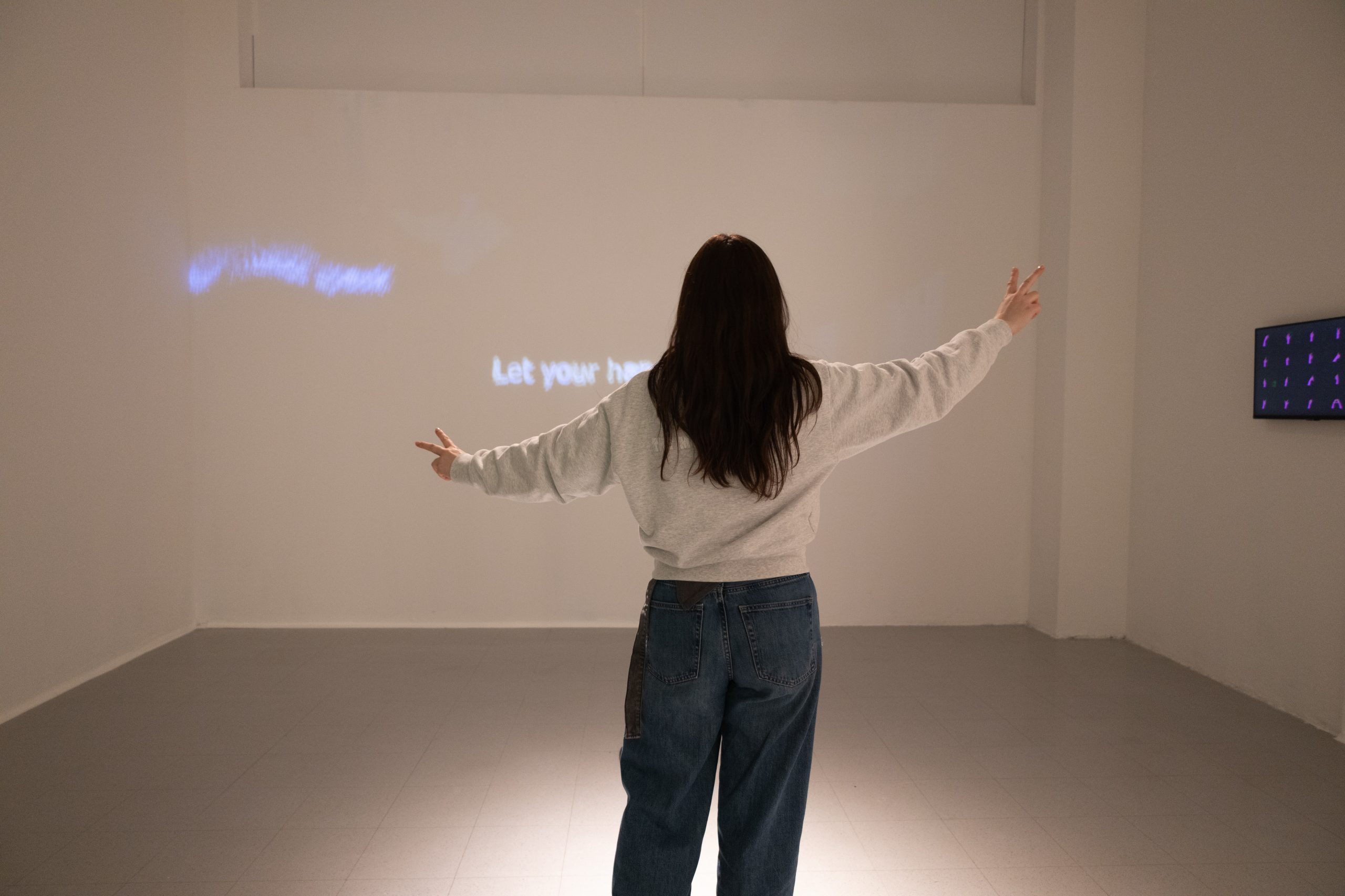
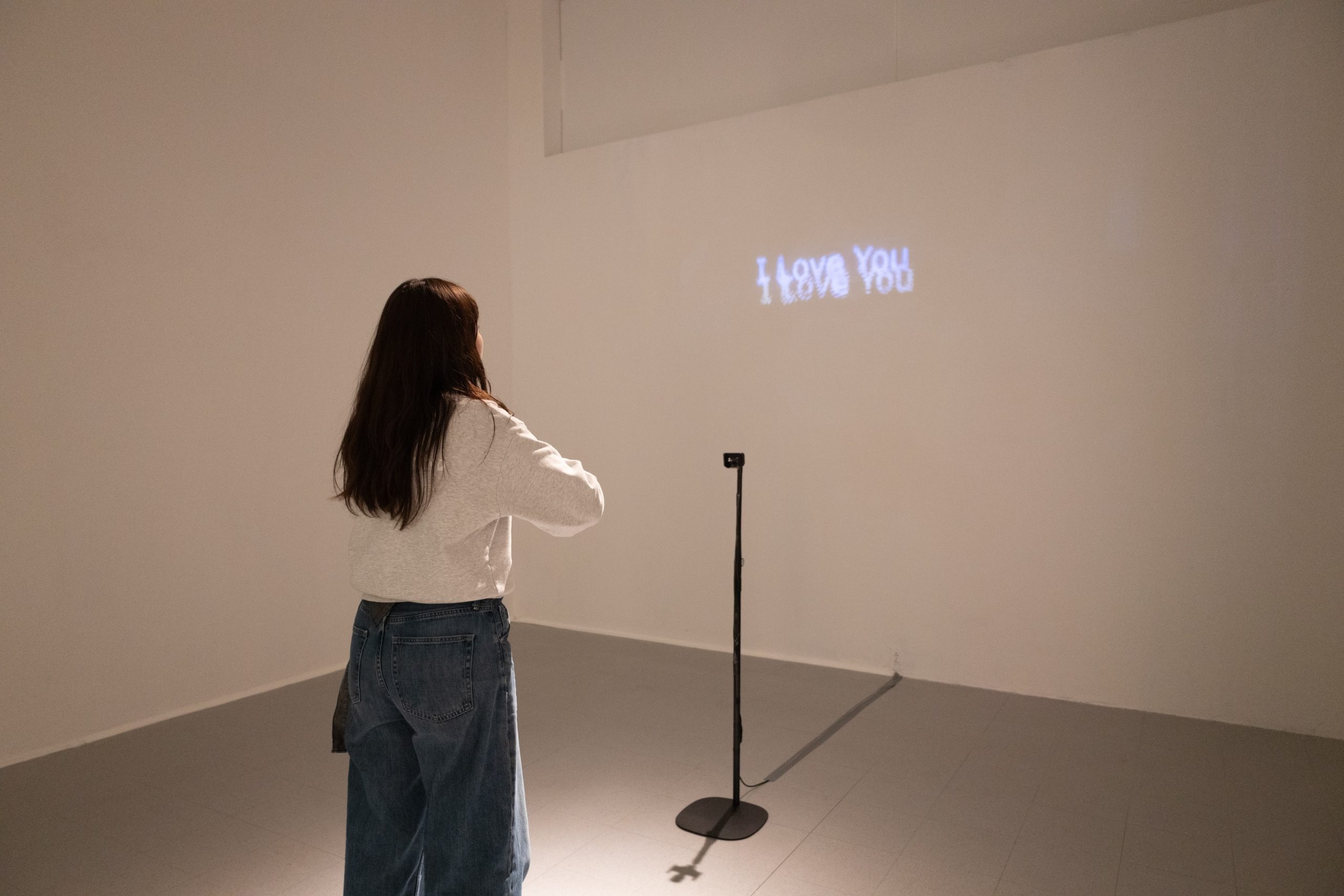
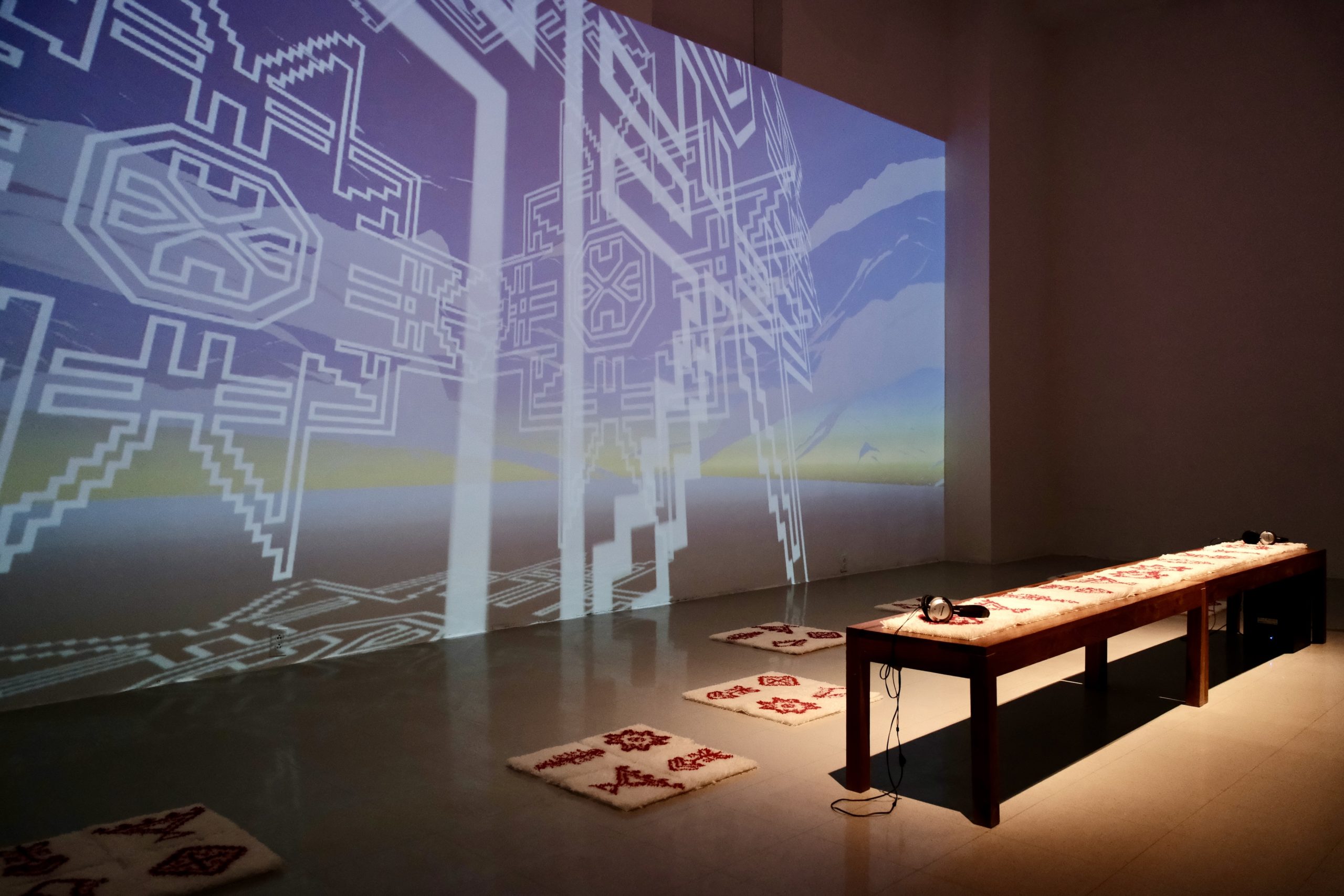
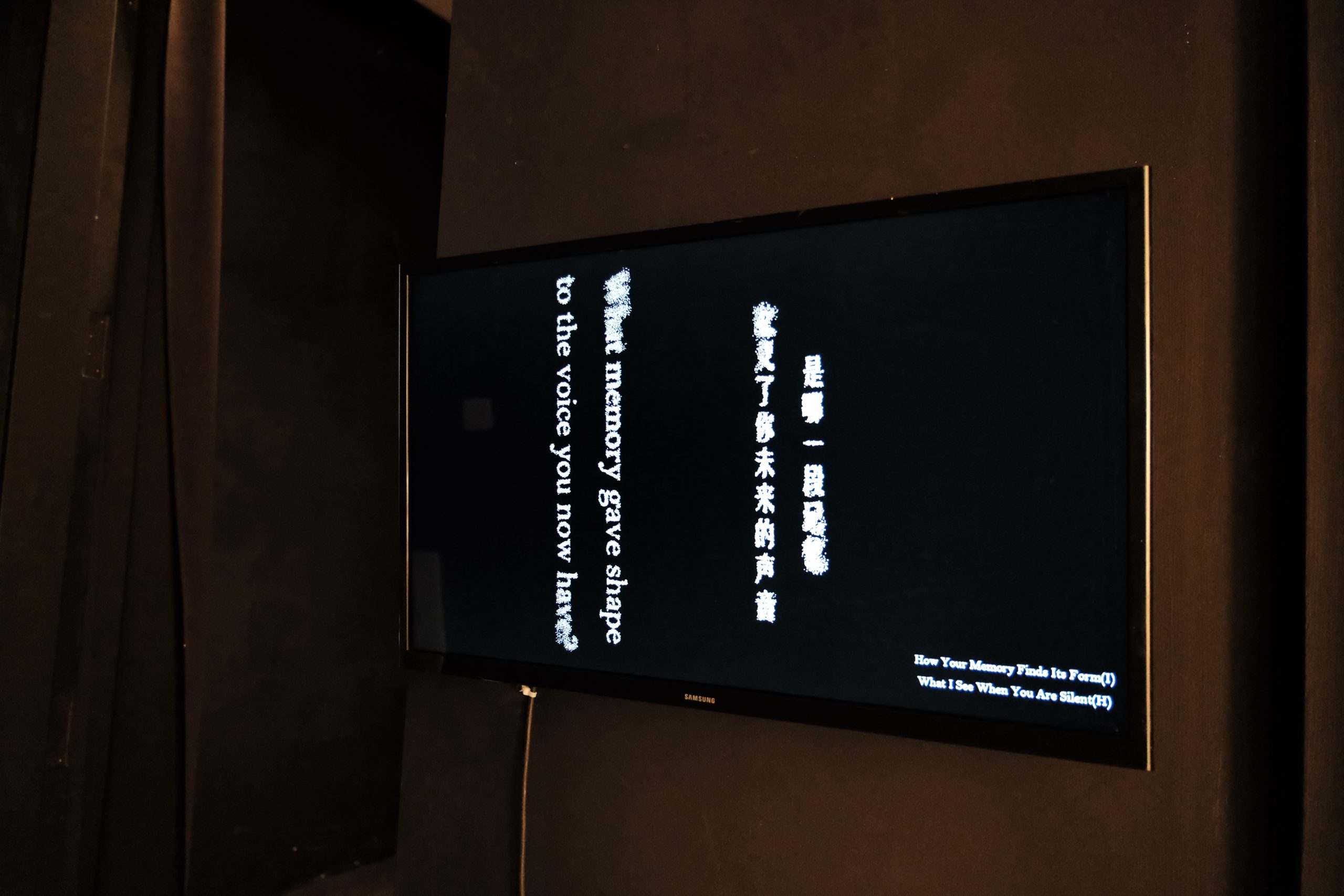
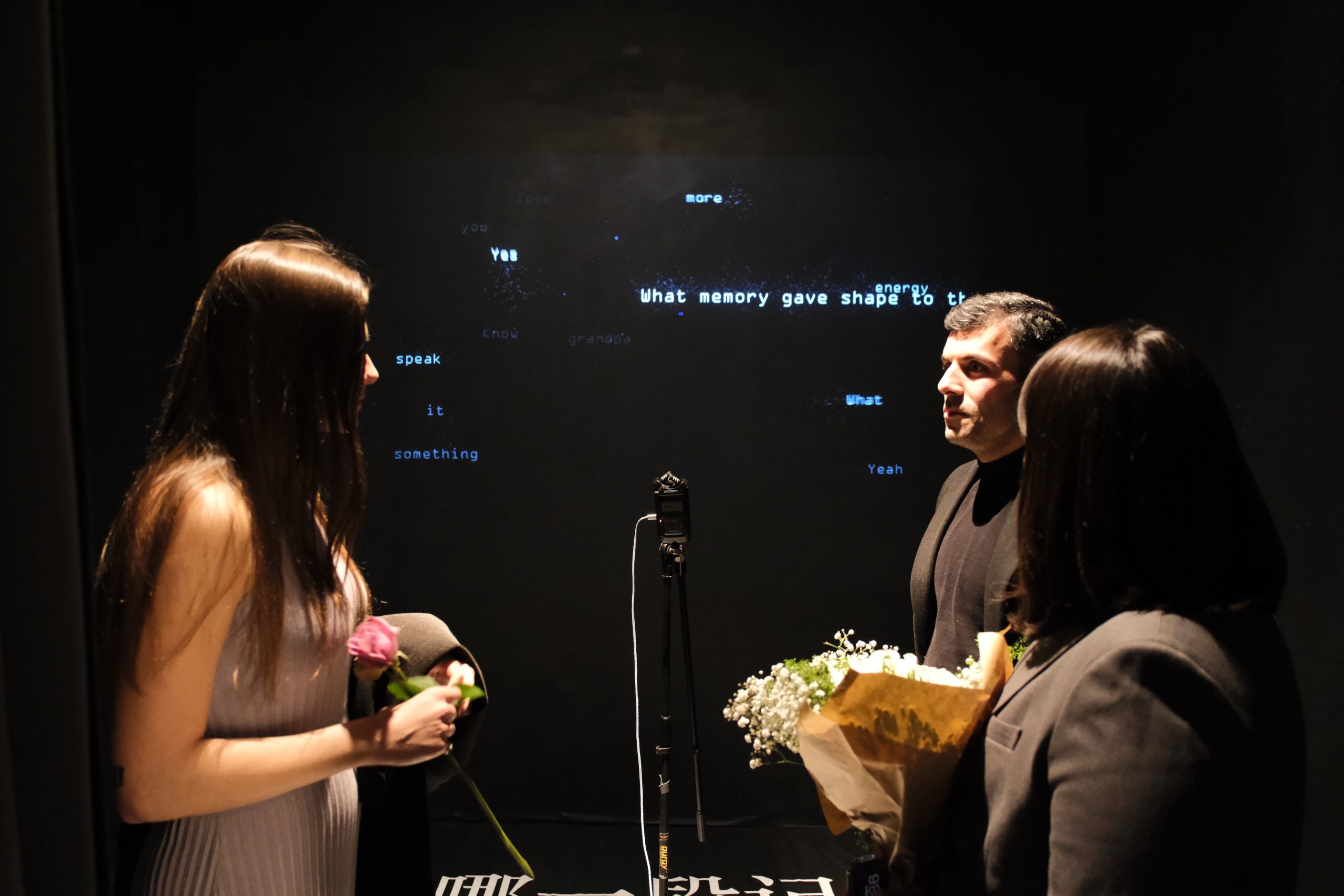
Each room constructed a different mode of experience. Chiyu Zheng’s interactive installation Gestic transformed subtle human hand movements into responsive texts, encouraging viewers to become aware of their own gestures and presence. Sabre introduced a shift in tempo, where Mahsa Masoumi’s work centered on duration, narrative, and repetition, drawing visitors into a slower, more reflective encounter shaped by image, sound, and pattern. Yuxuan Hu’s installations explored language perception and memory through generative imagery, producing visuals that appeared and dissolved in response to sound.

Beyond the design spaces, surrounding rooms of the gallery presented visual art works, creating a broader exhibition context and reinforcing the interdisciplinary atmosphere of the night. The exhibition remained open to the public through February 28, extending the reception’s energy into an ongoing viewing experience.


Chiyu Zheng

GESTIC

Material: Media Installation, TouchDesigner

Gestic translates everyday human gestures into live visual responses. Movement becomes a quiet language shaped by habit, culture, and presence.


Mahsa Masoumi

SABR

Material: Video with audio, latch-hook weaving

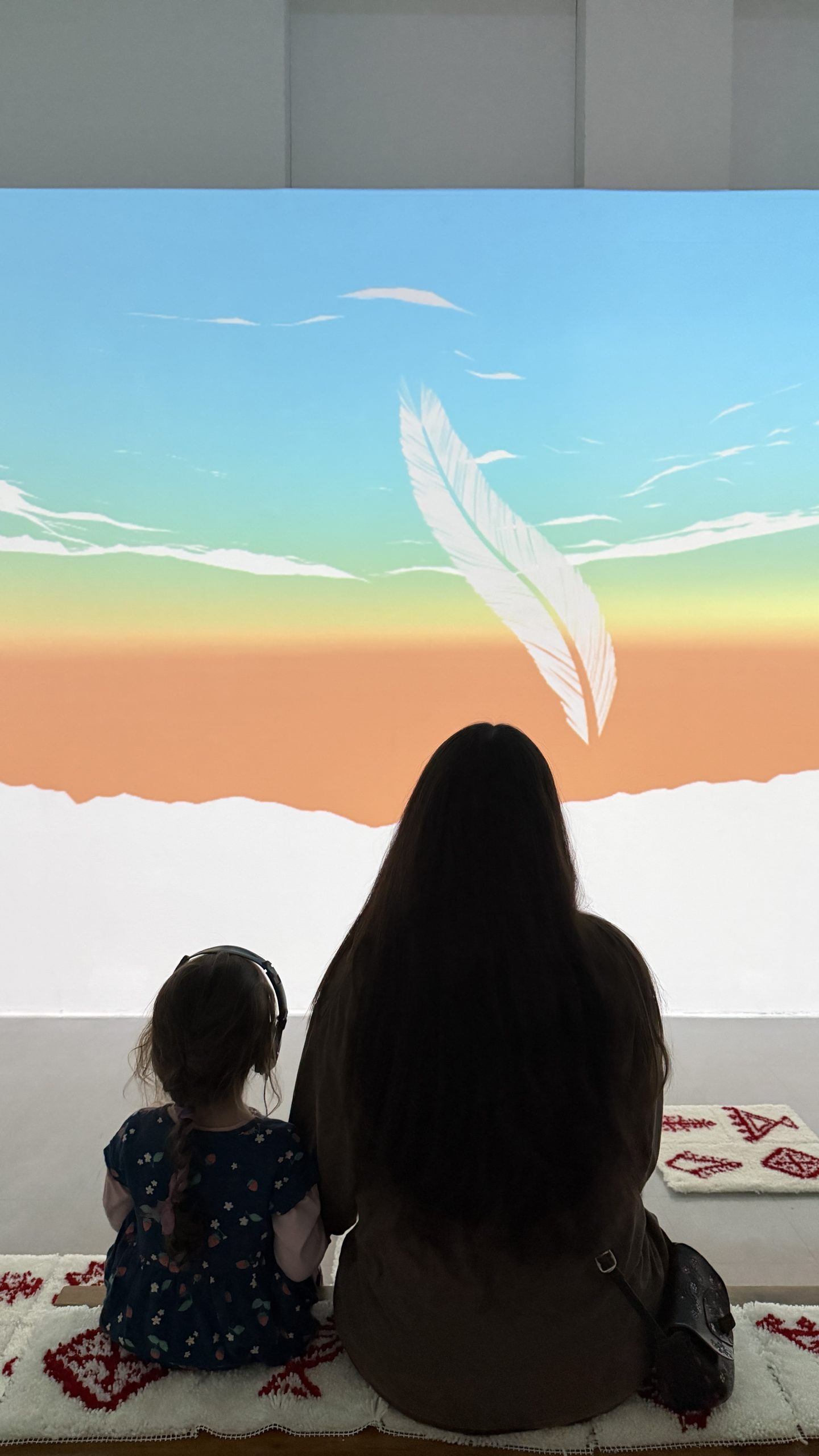
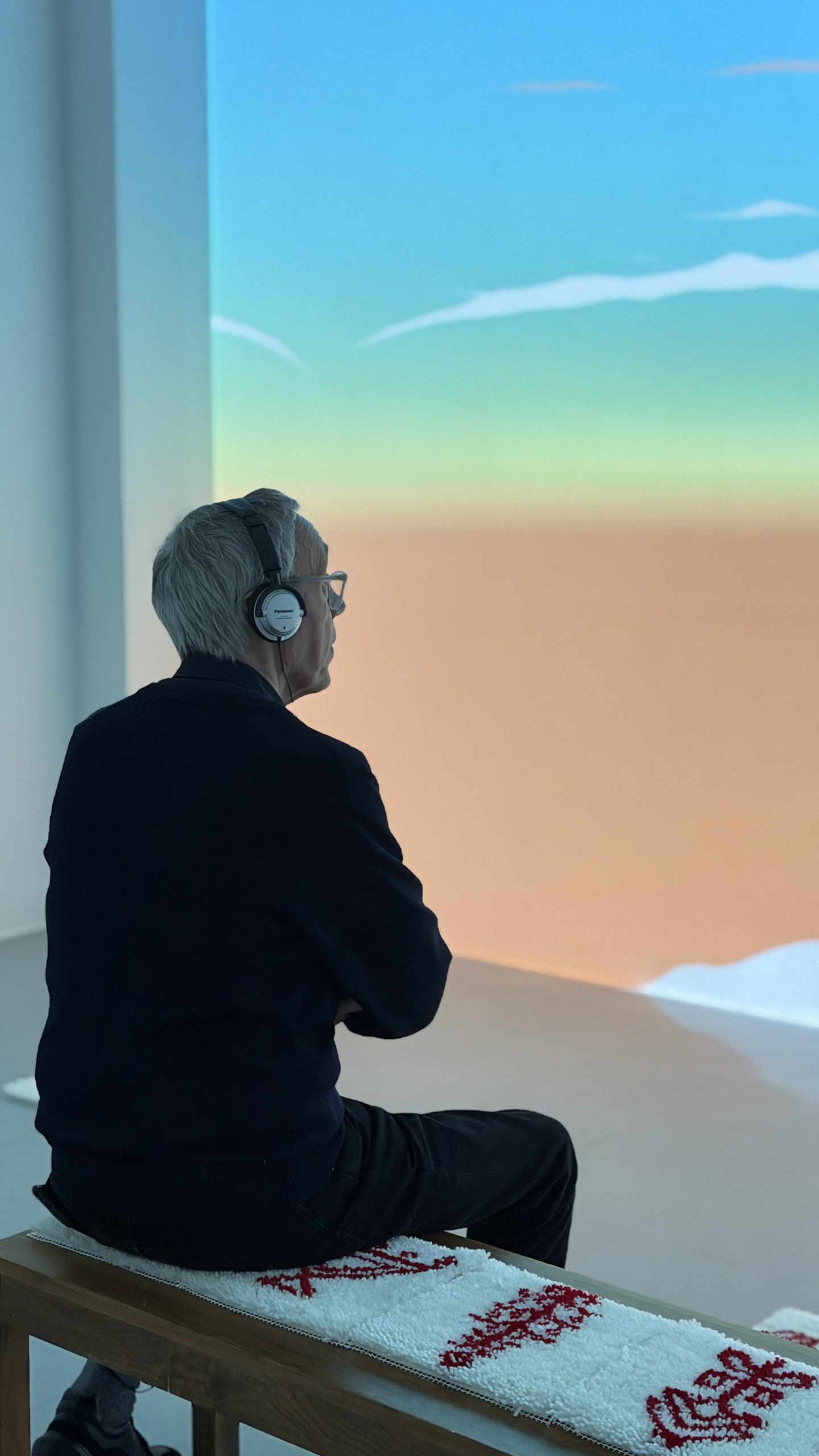
Sabr means patience. The work unfolds the traditional Persian story of Zaal and Simorgh through image, sound, pattern, and repetition, inviting viewers to linger with care, endurance, and time.


Yuxuan Hu

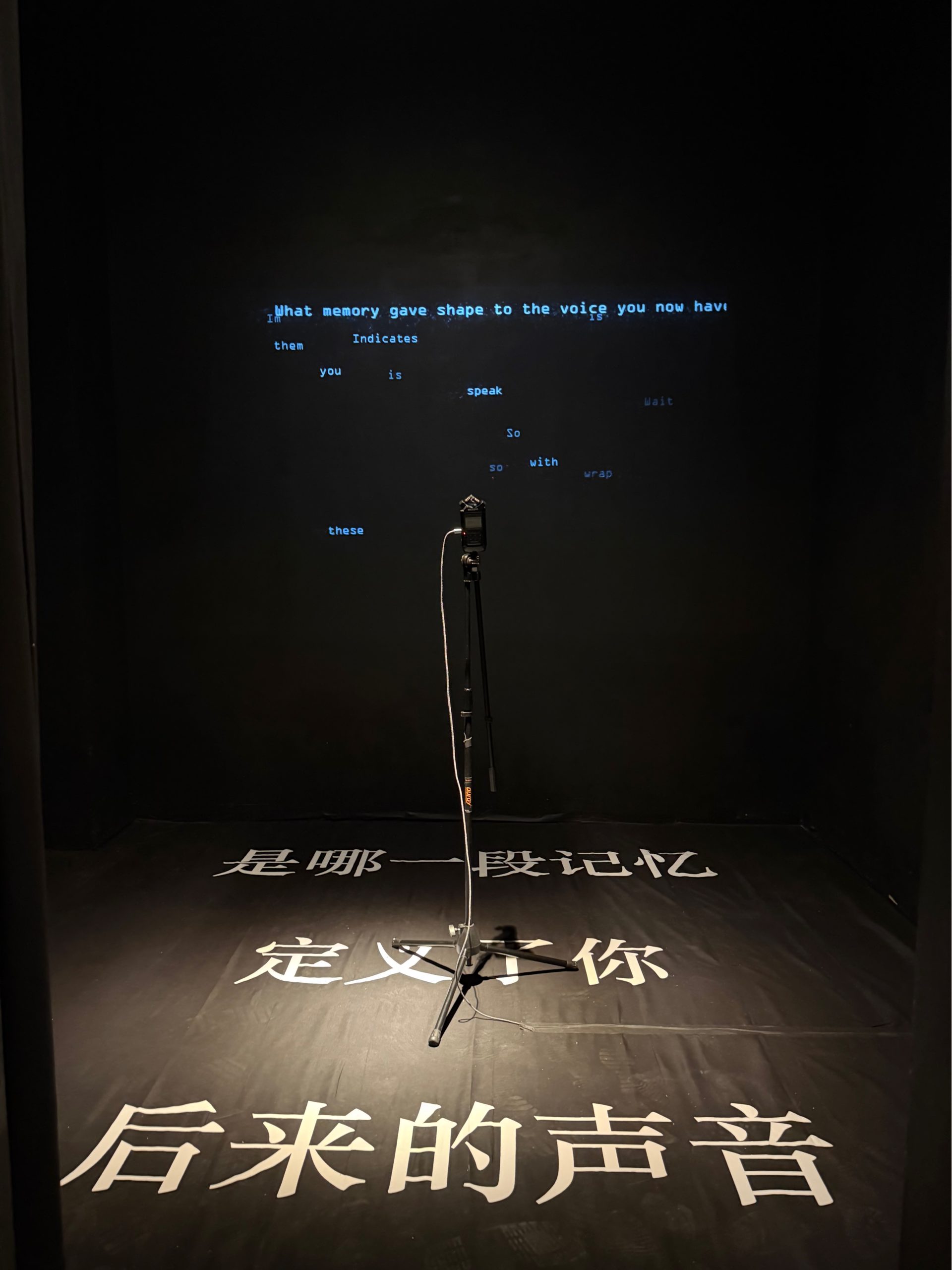
What I See When You Are Silent, and How Your Memory Finds Its Form

material: Installation, TouchDesigner, Python

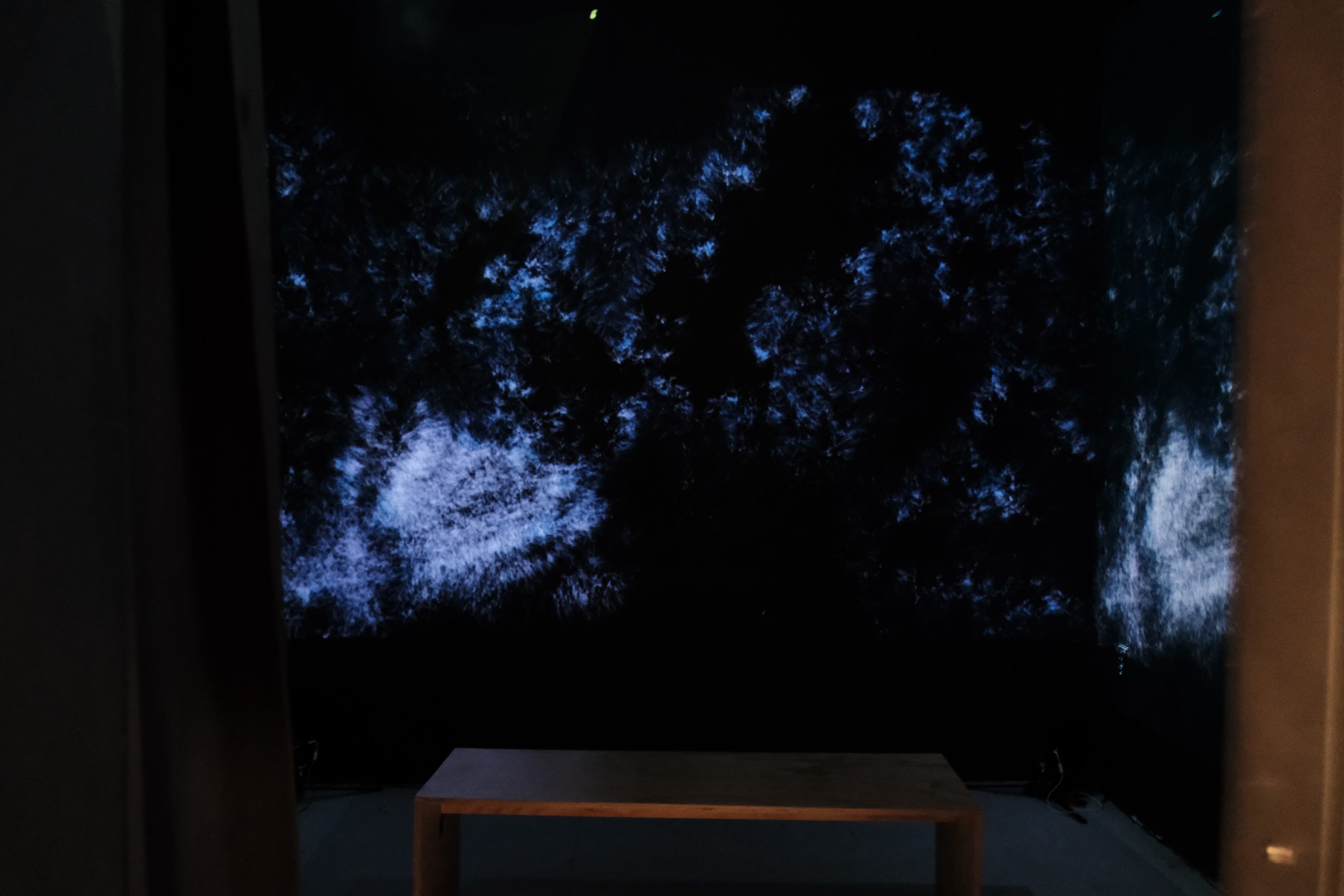
This project responds to sound by generating images that appear, linger, and fade. The work reflects on memory as something that remains, even after the digital form disappears.

A SIMULTANEITY MARK: MFA Design Thesis Part 1

Reception: Jan 21, 6–9 pm

On view: Jan 20 – Feb 05


The first part of the MFA Design Thesis exhibition “A Simultaneity Mark” opened in the Mason Gross Galleries with strong energy and a full room. Faculty, students, and visitors moved fluidly through the galleries, creating the kind of atmosphere shows hope for but rarely achieve. The event felt genuinely communal rather than ceremonial.

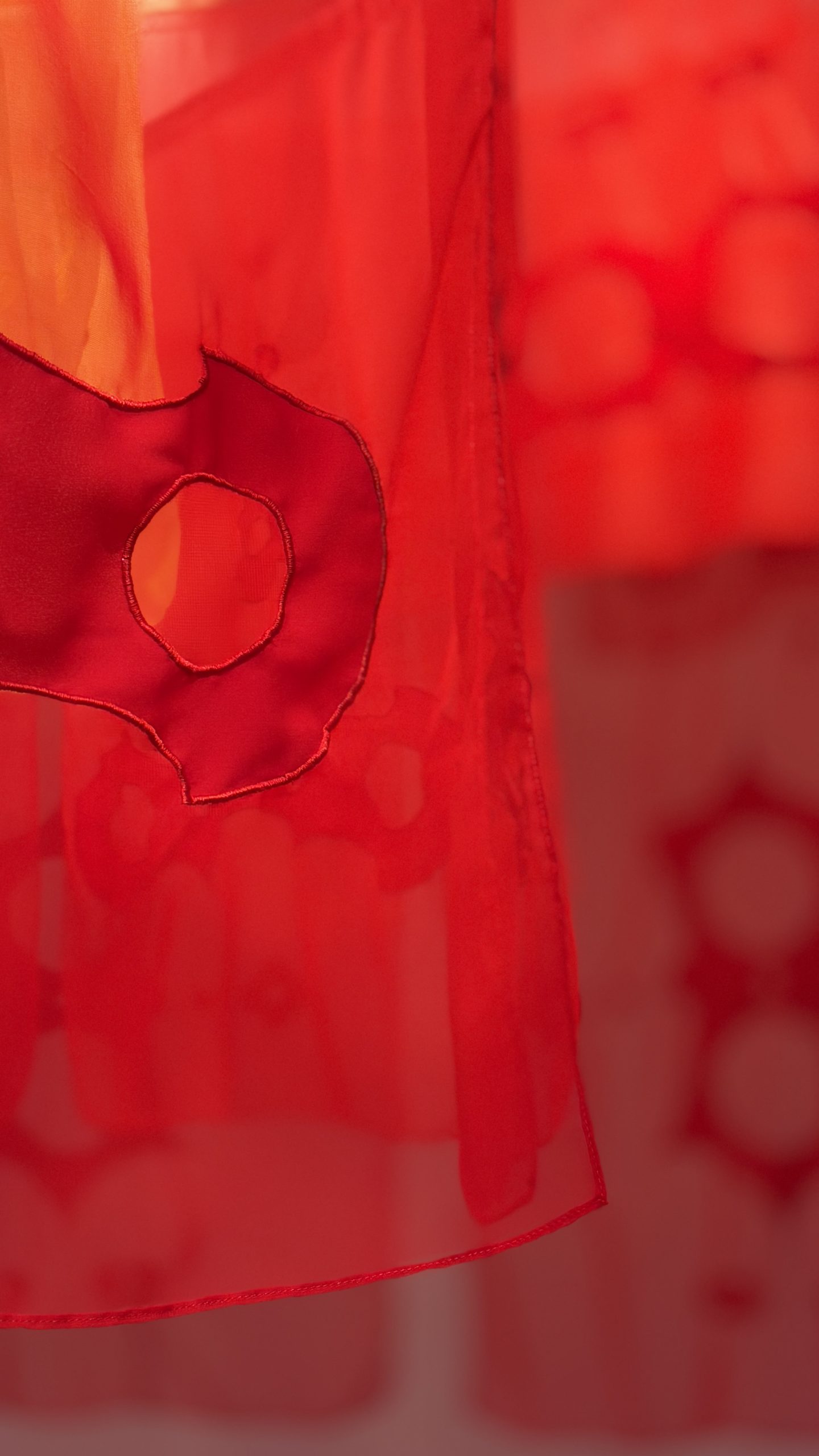
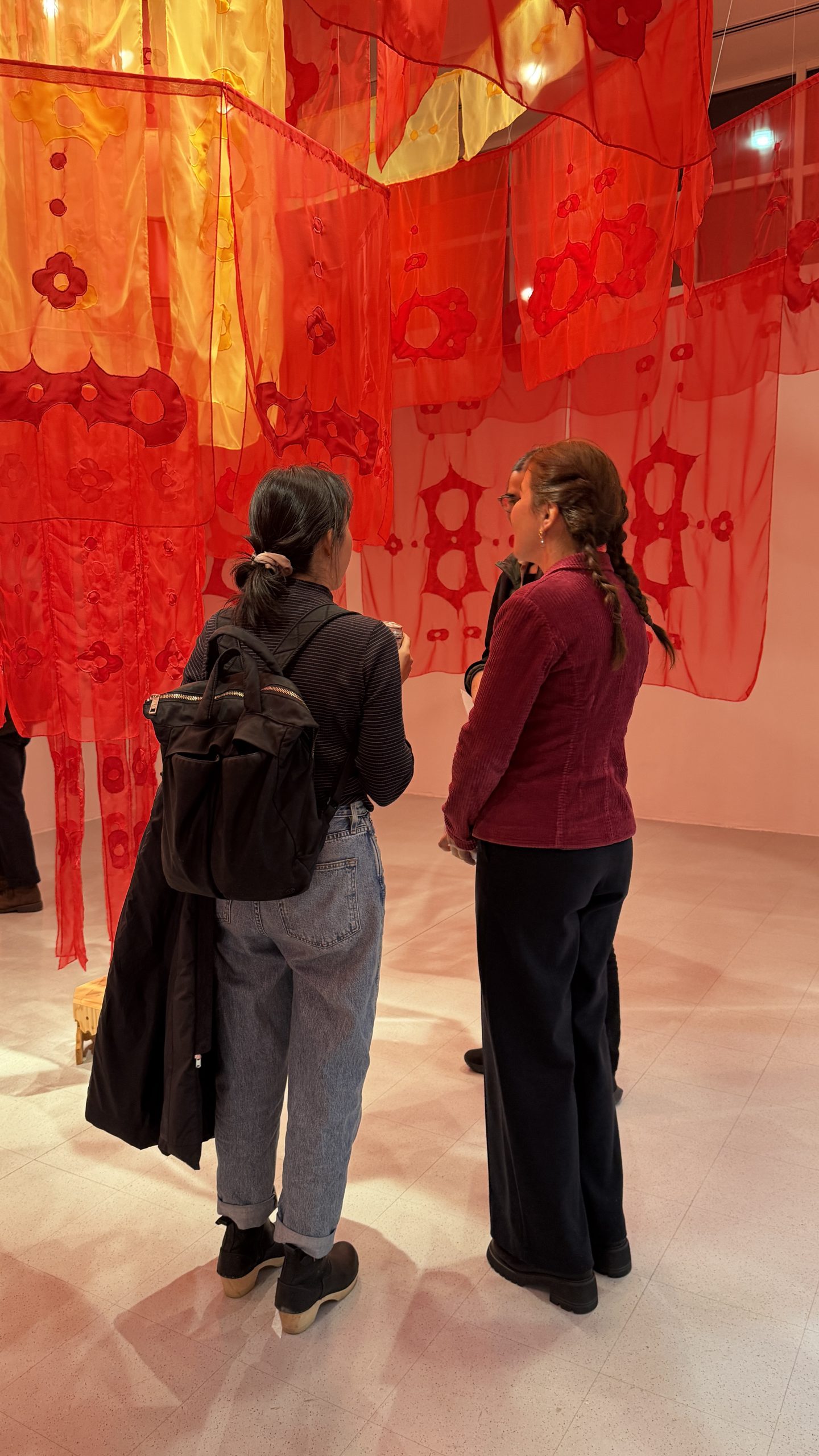
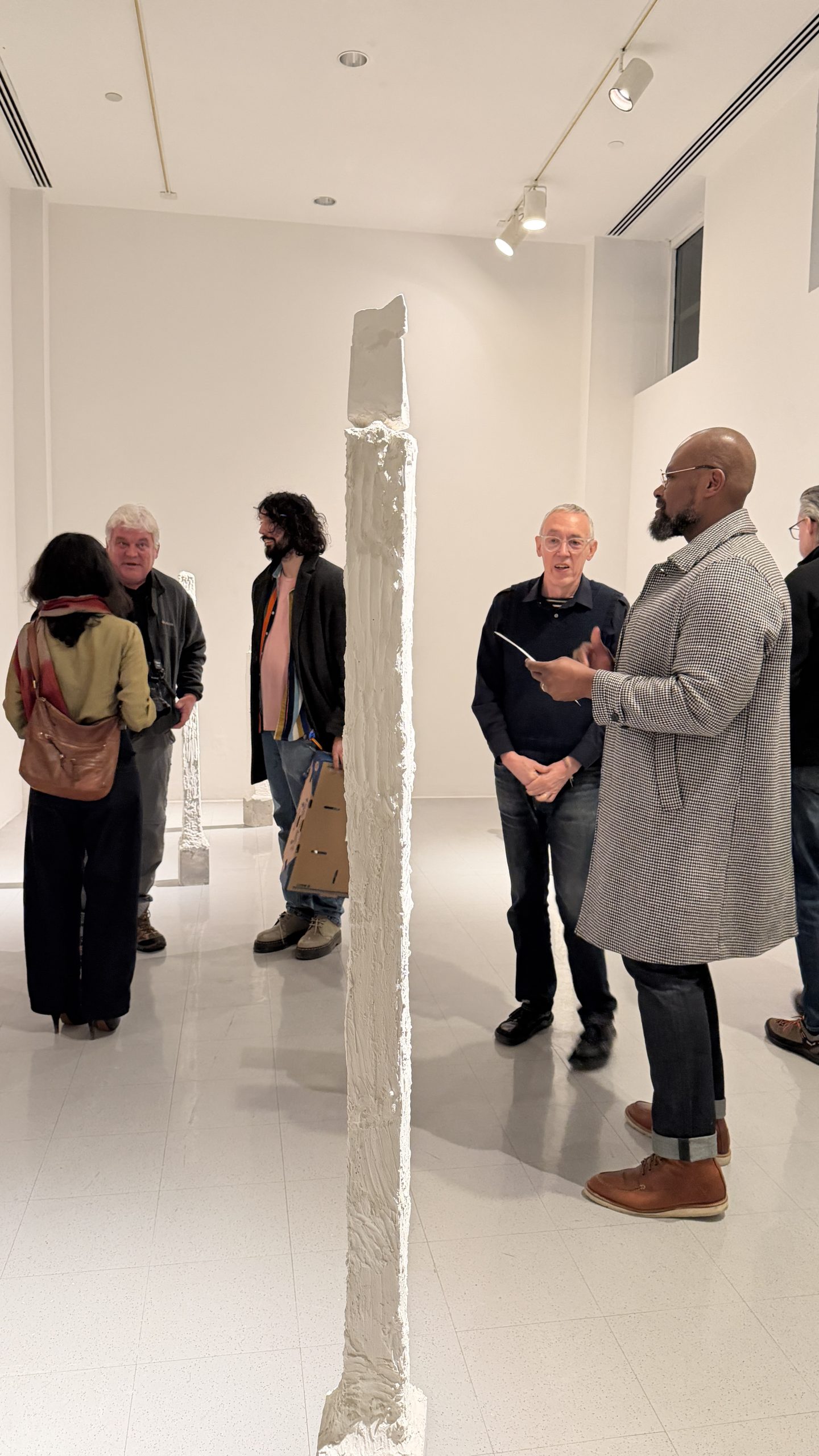
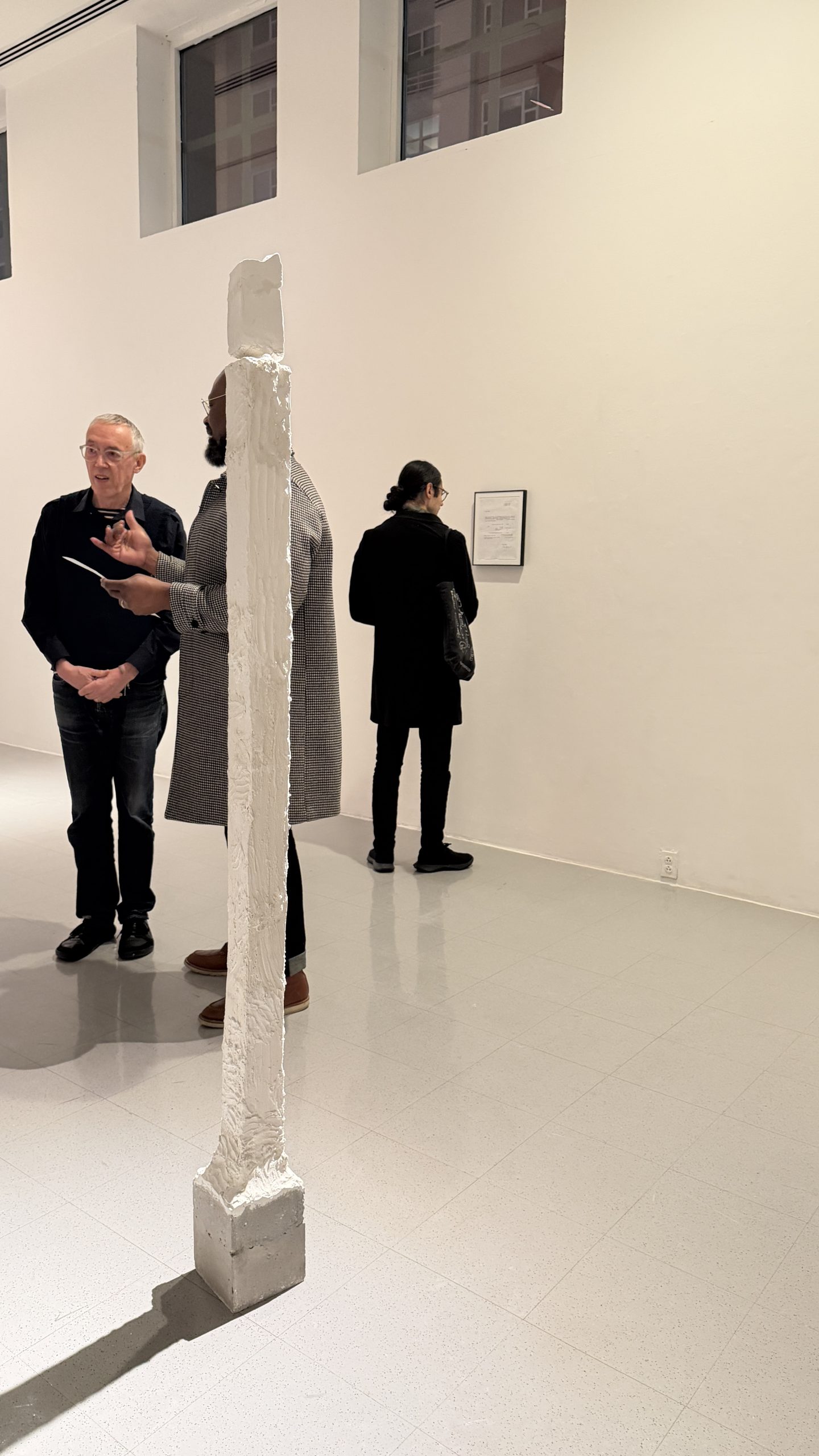
Each room carried a distinct spatial and visual character. Peyton Chiang’s installation title emphasized scale and material presence, drawing viewers into a work that unfolded through movement and proximity. Anukriti Kaushik’s title created a striking contrast, combining sculptural forms and printed elements that encouraged slower, more attentive looking. Asem Kiyalova’s work title introduced a different rhythm, where objects, surfaces, and projection intersected to produce a layered visual experience.

What made the night memorable was not just the individual projects, but the shared presence of the Mason Gross community as both graduate programs shared the galleries. Design and visual art audiences overlapped, conversations extended across disciplines, and the exhibition operated as a social as well as visual space. The show remained open to the public through February 5, sustaining that initial momentum beyond the reception.


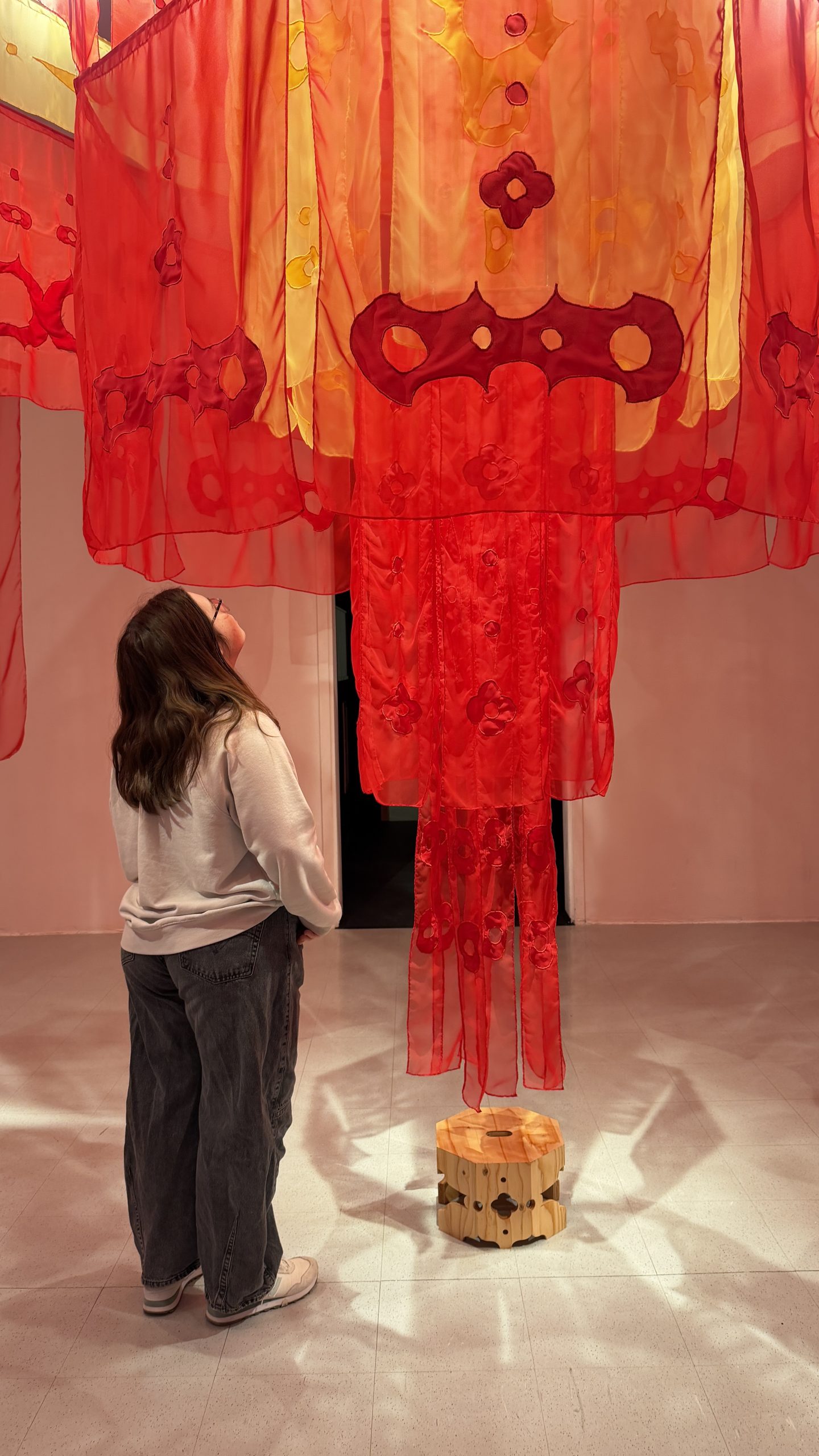
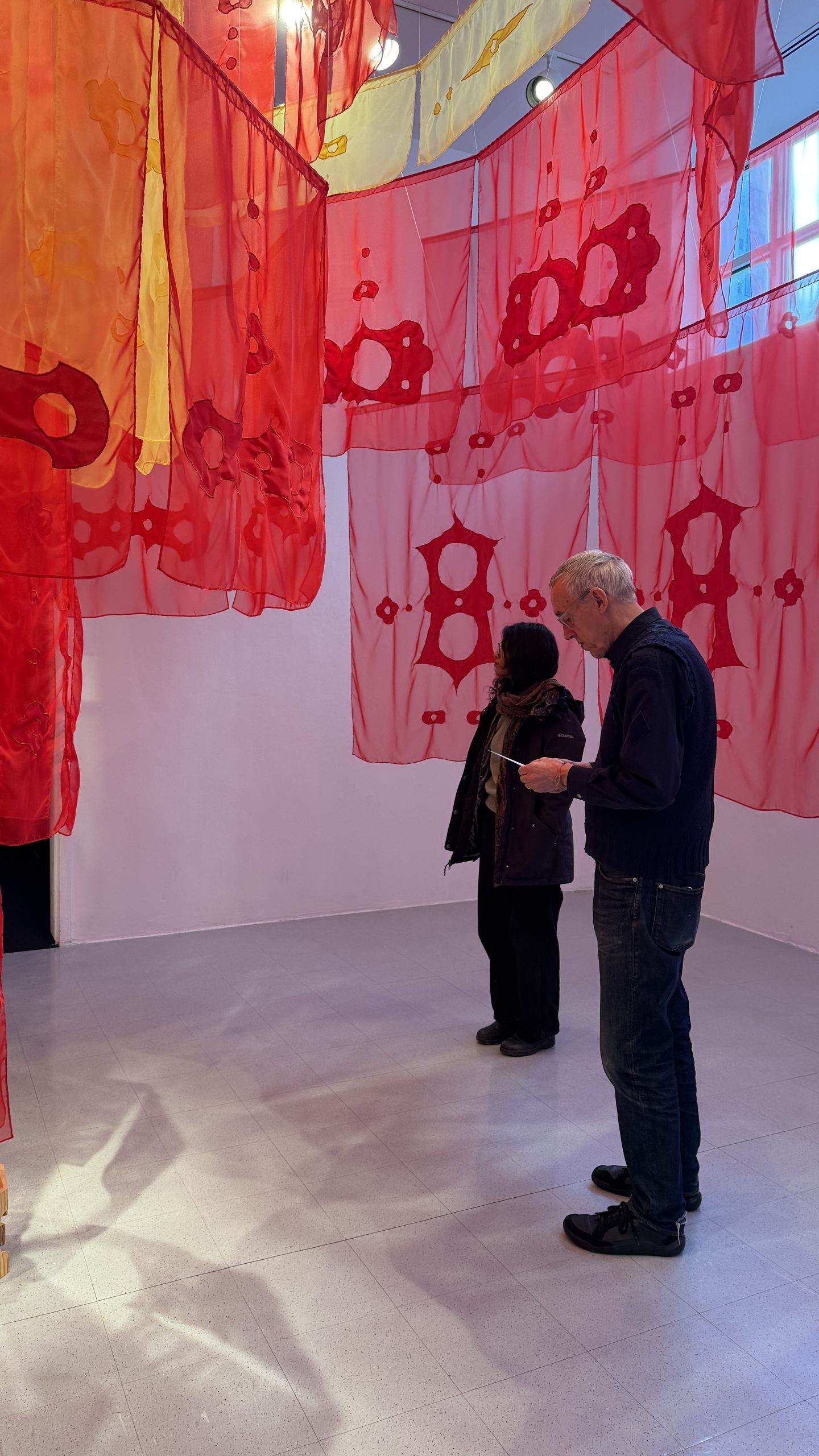
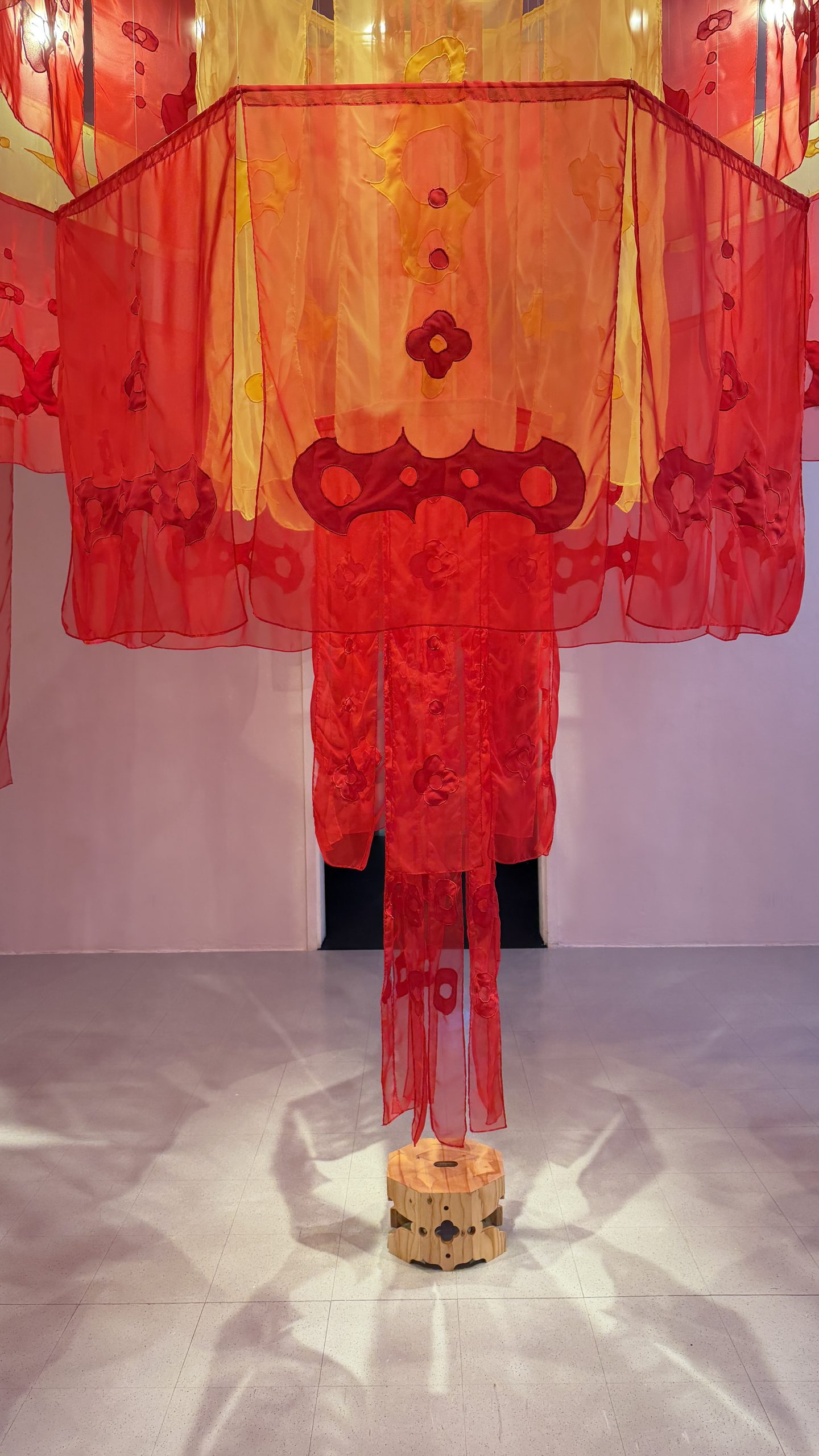
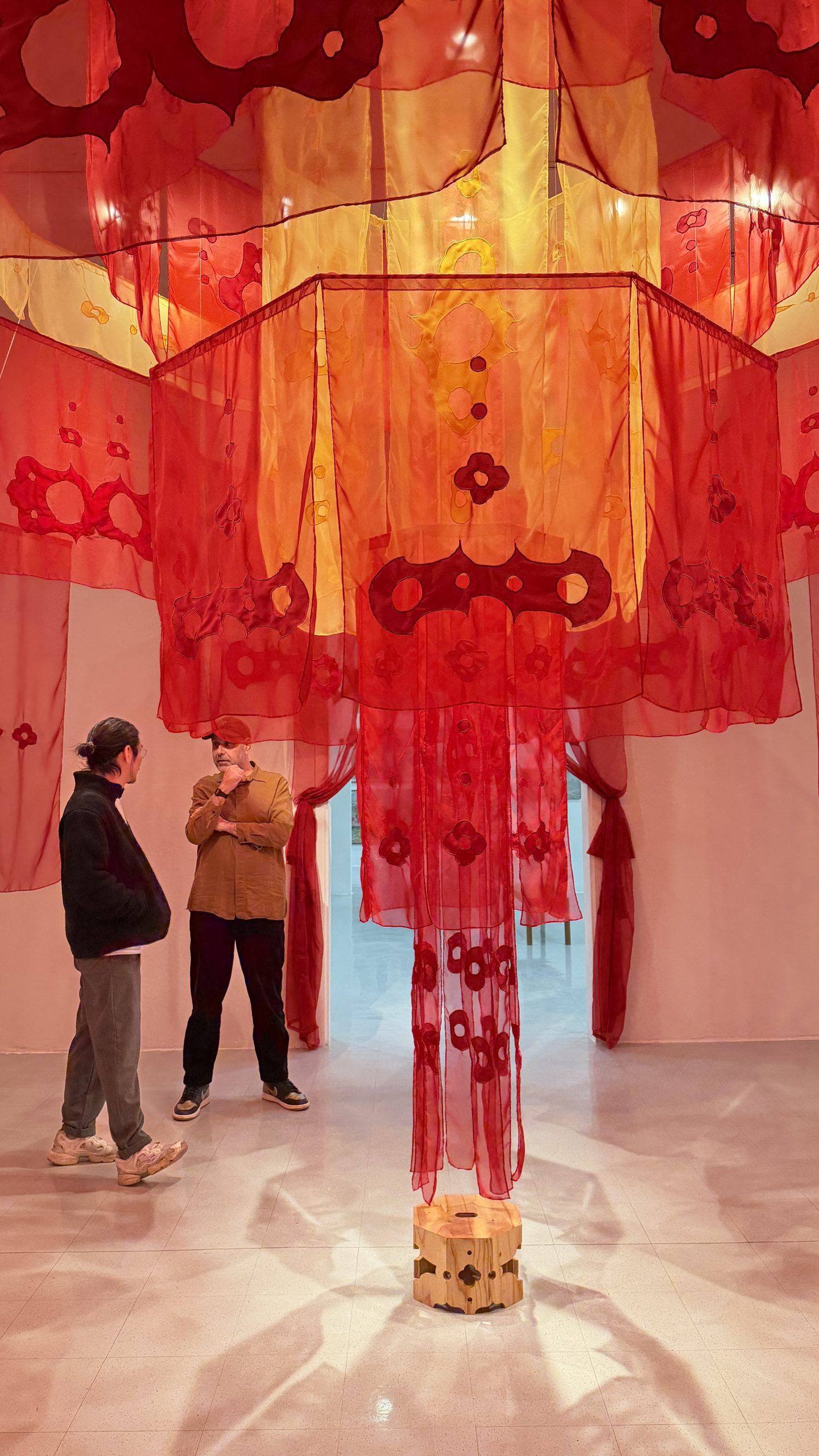
Peyton Chiang

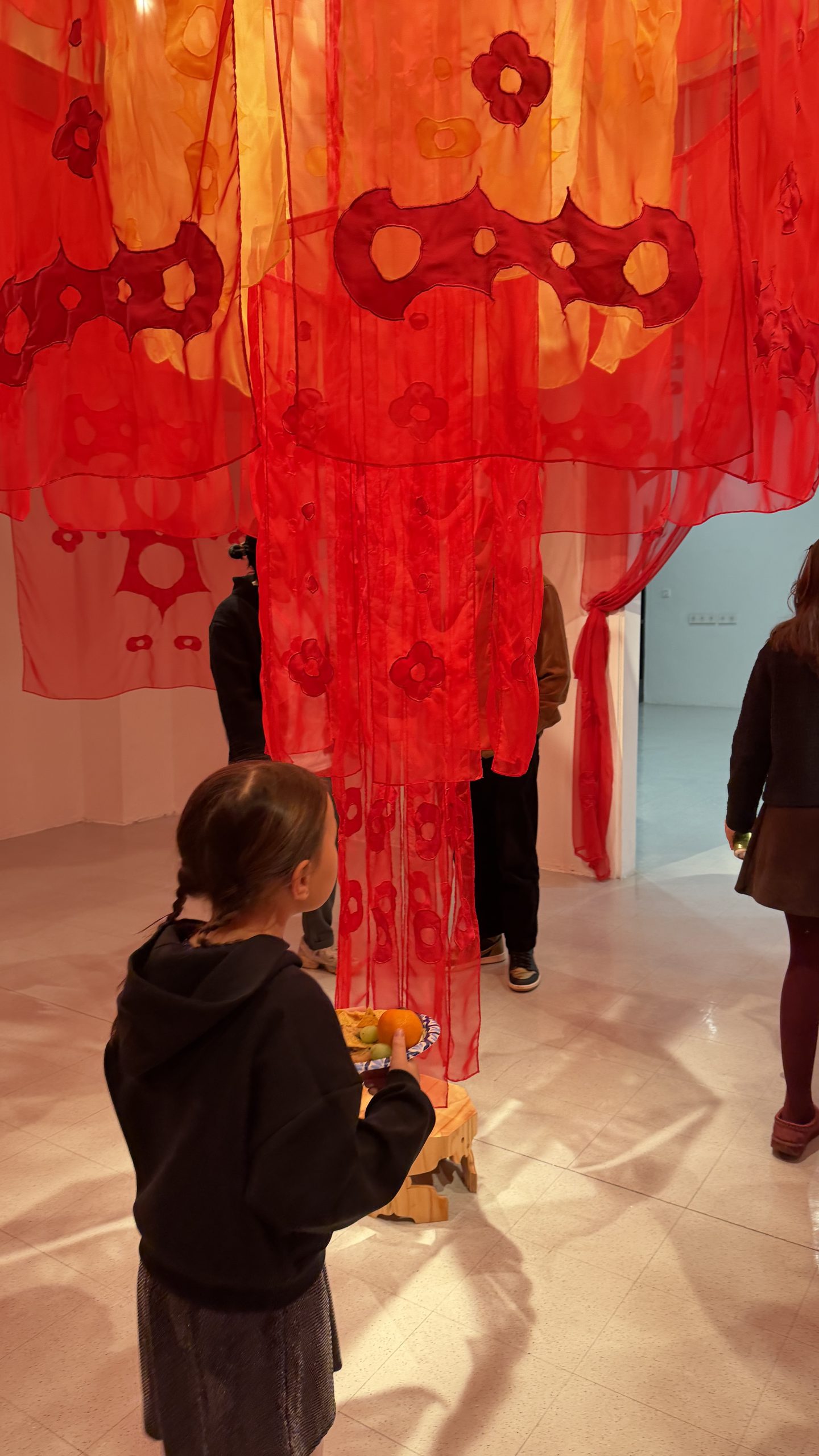
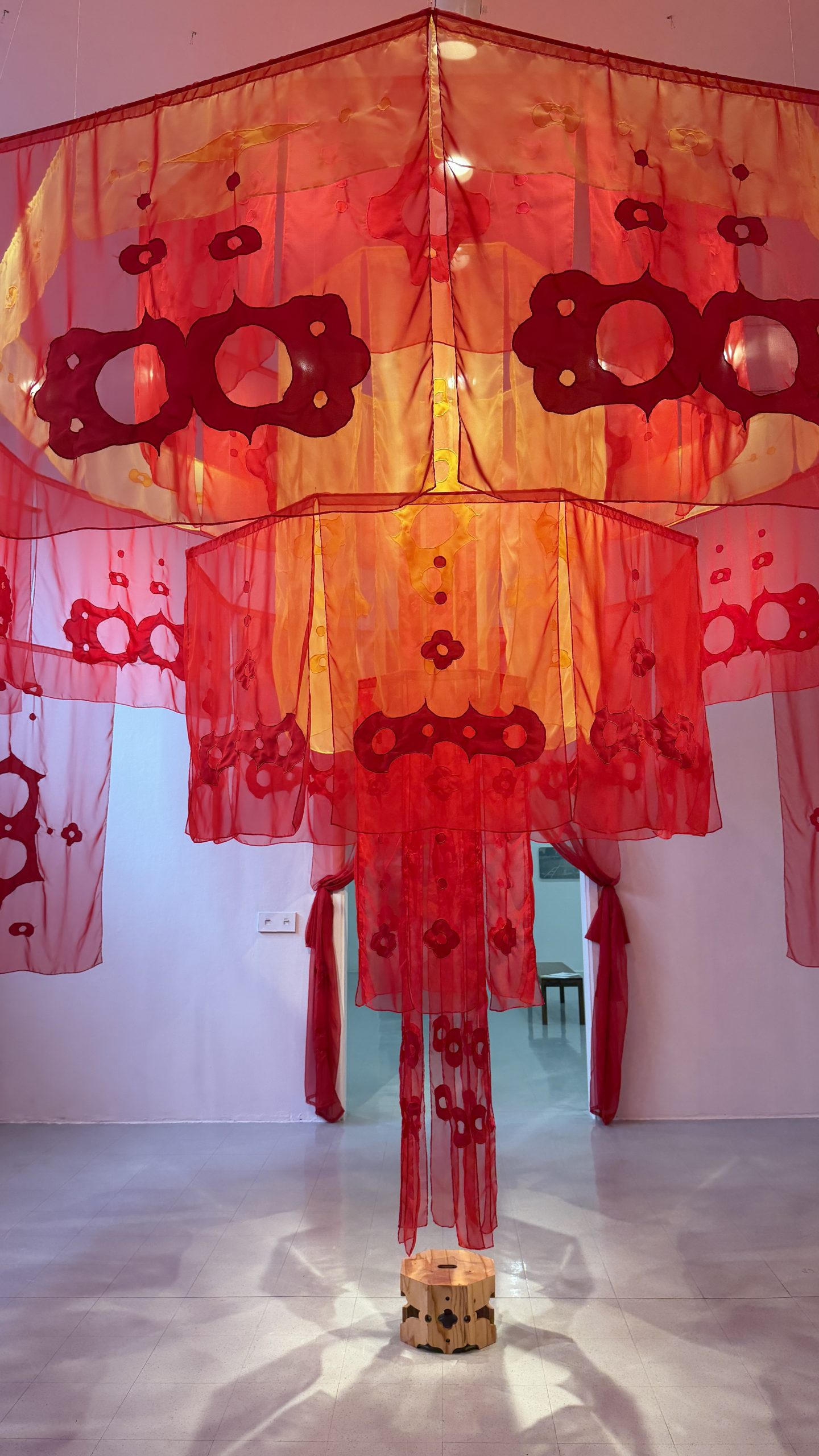
For Convening (we must remember the beauty of sharing each other’s wits), 2026

Polyester chiffon, double georgette, cotton thread (29 x 18 x 14 Feet)

For Care (within me there are many homes), 2026

Maintenance equipment, plywood stool, archival inkjet print, Durational performance


Anukriti Kaushik

Archron’s Dream, 2026

Laser print on paper (11 x 13.5 Inches)

Torso of Standing Female Figure, 2026

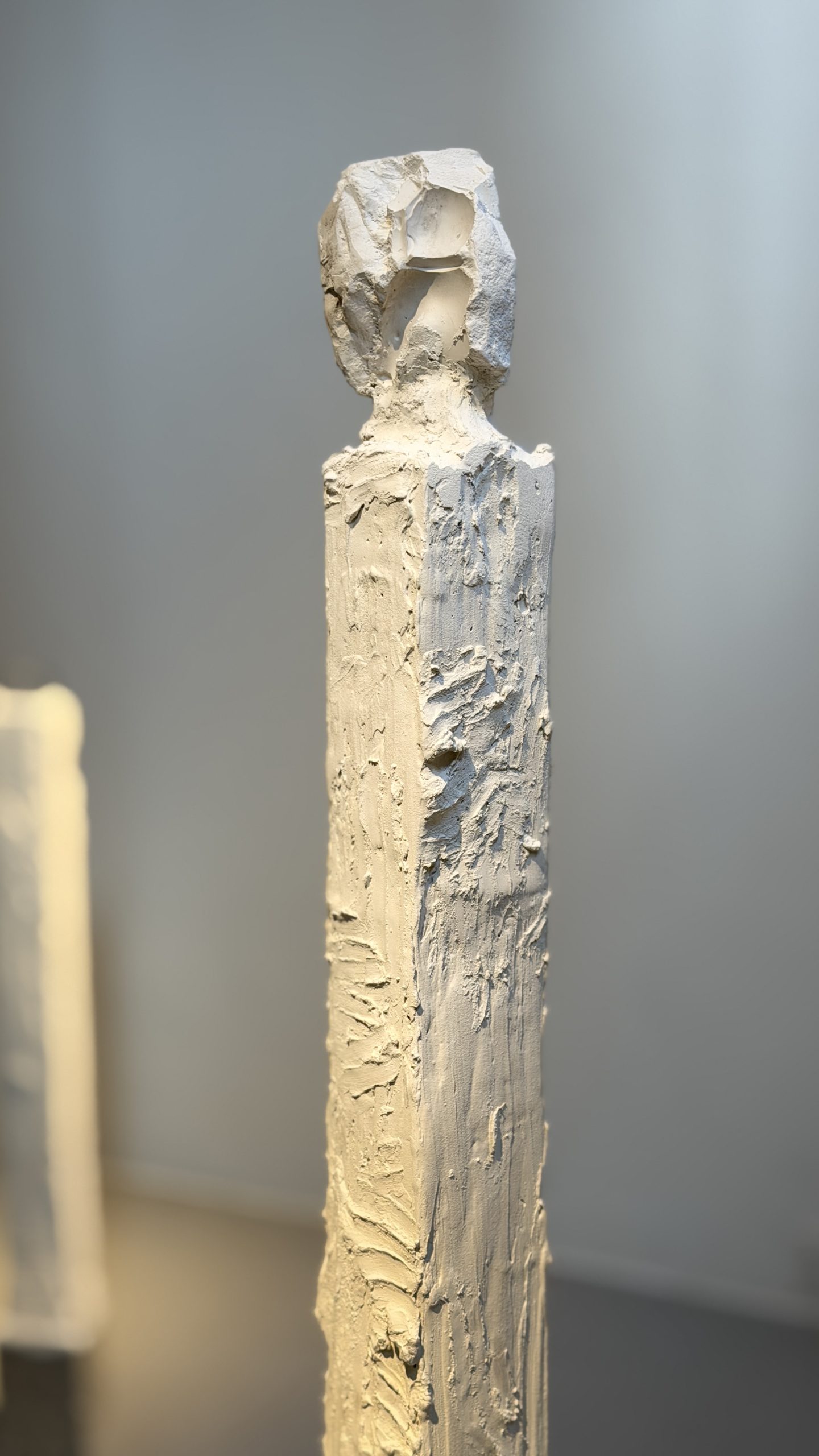
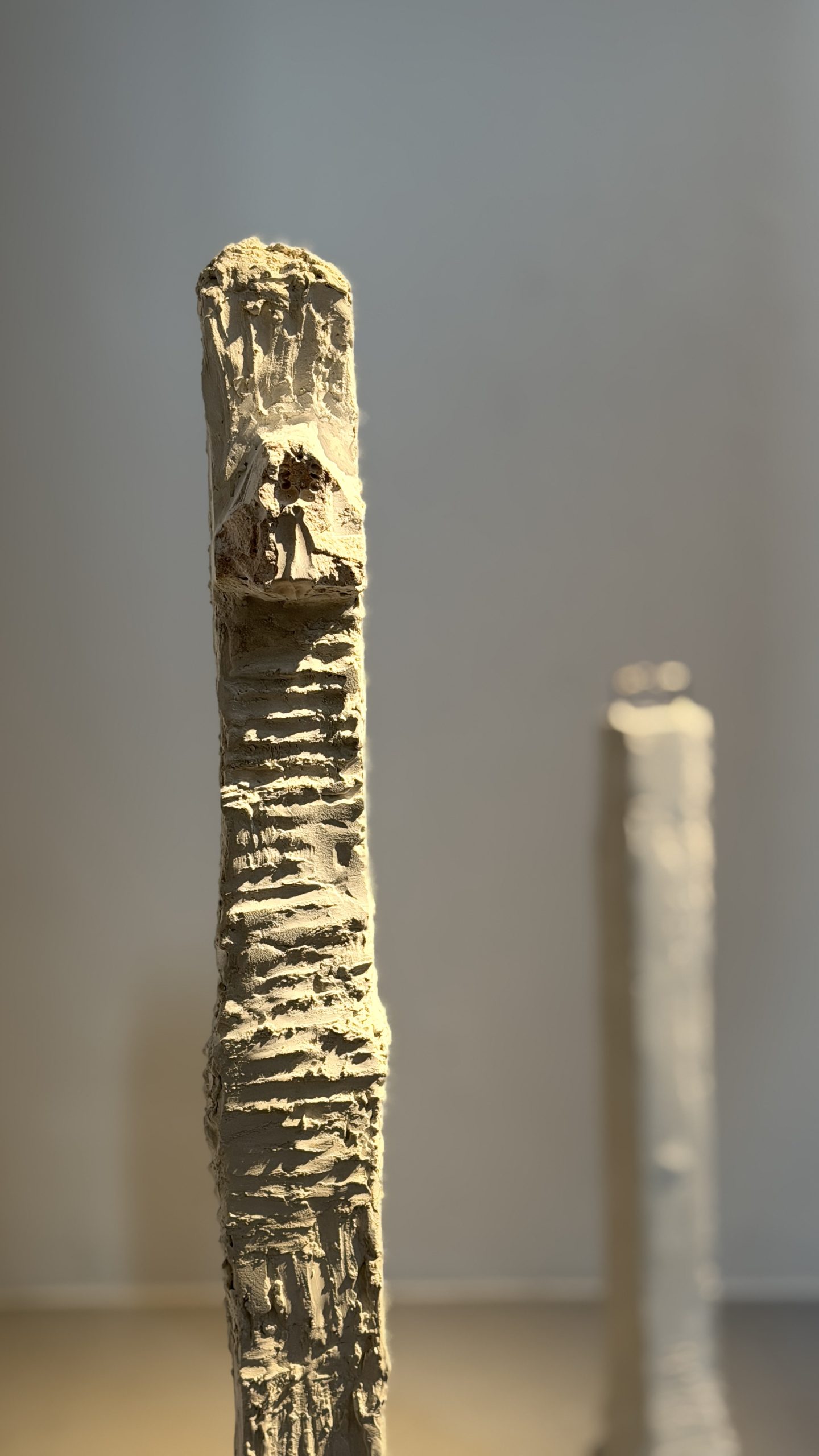
Plaster, concrete (6 x 6 x 70 Inches)

Head of Standing Female Figure, 2026

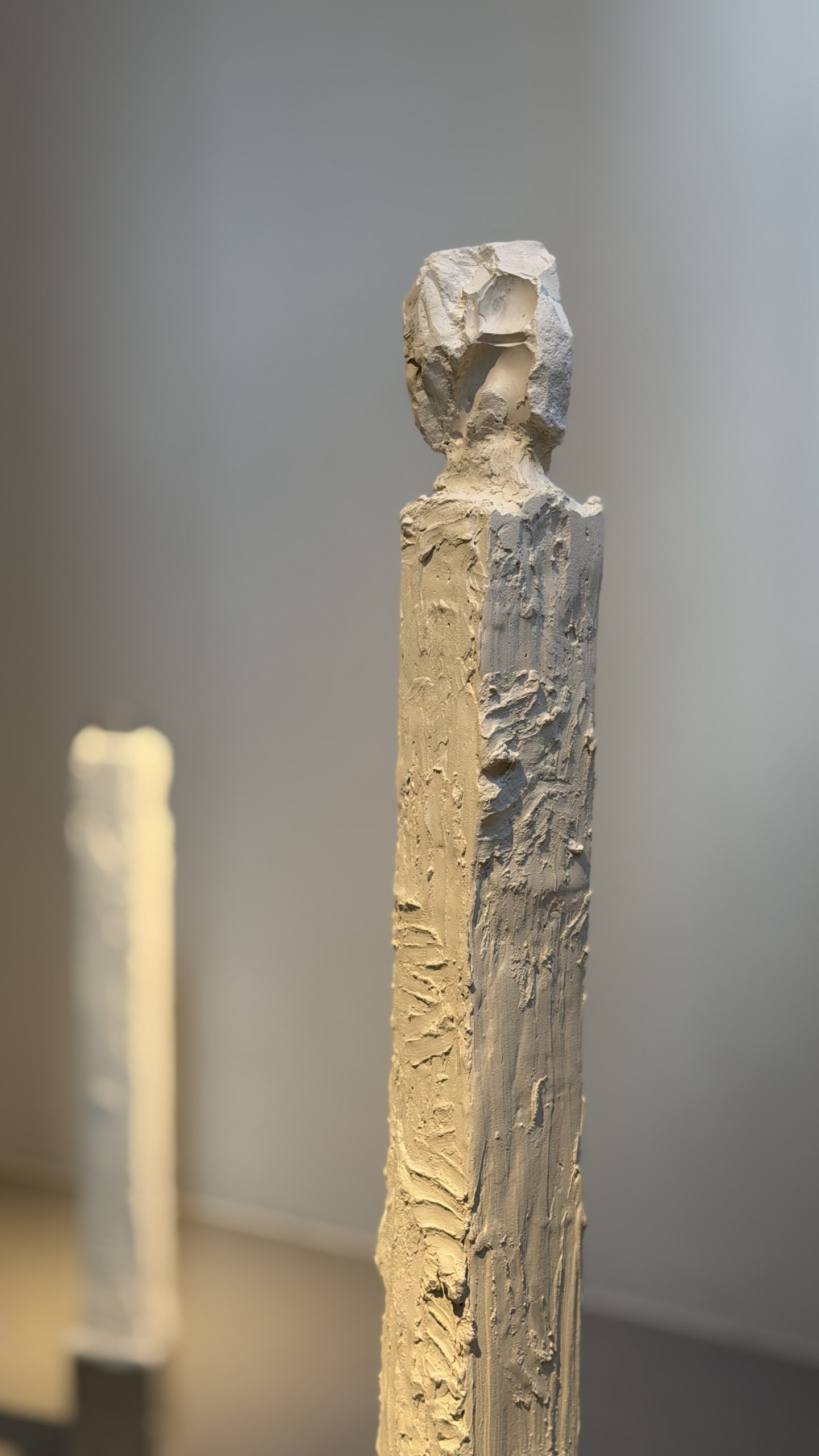
Plaster, concrete (6 x 6 x 67 Inches)

Seated Mother Goddess, 2026

Plaster, concrete (6×6 x 65 Inches)

Descent, 2026

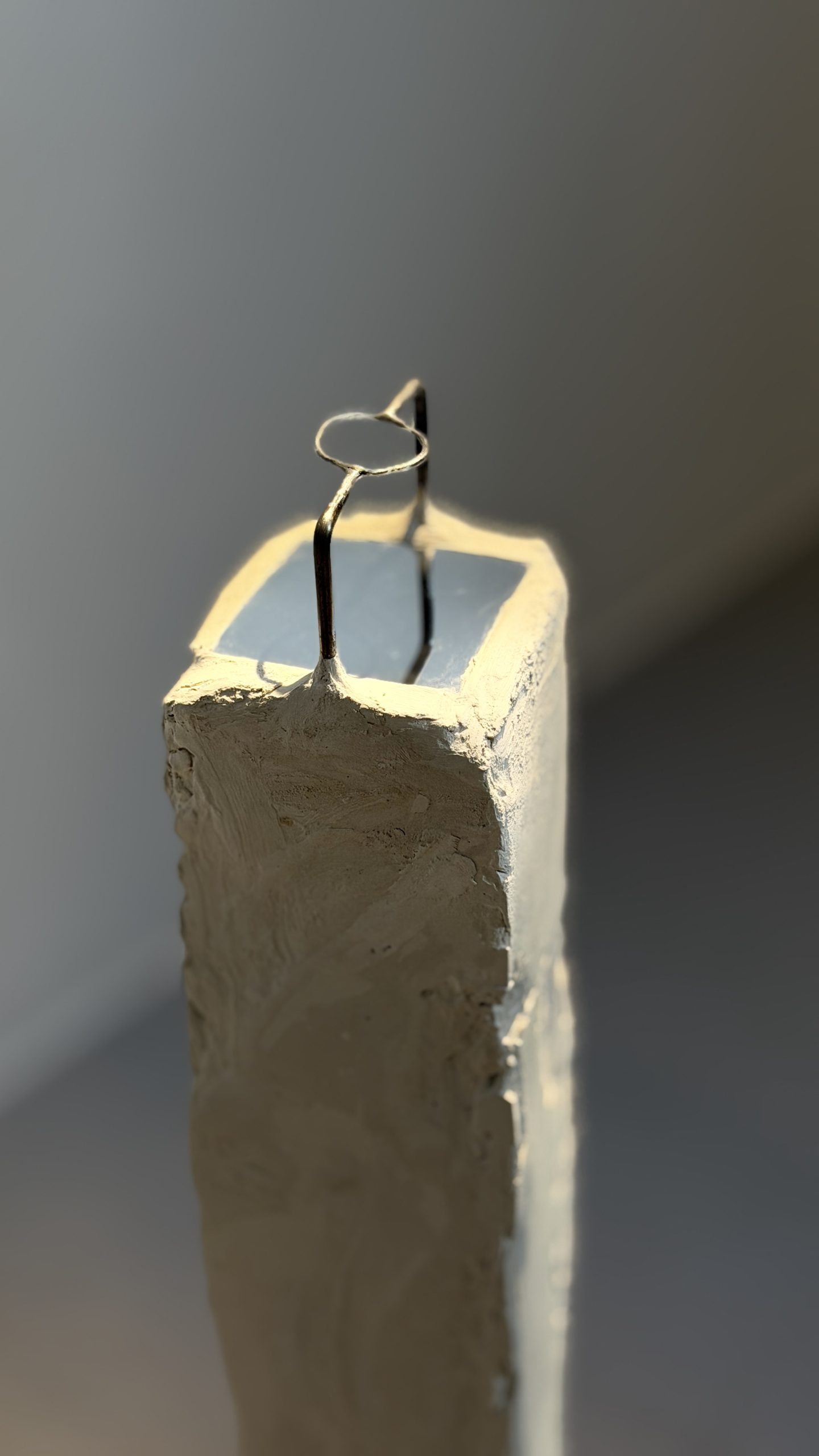
Found metal, mirror, plaster, concrete (6 x 6 x 50 Inches)


Asem Kiyalova

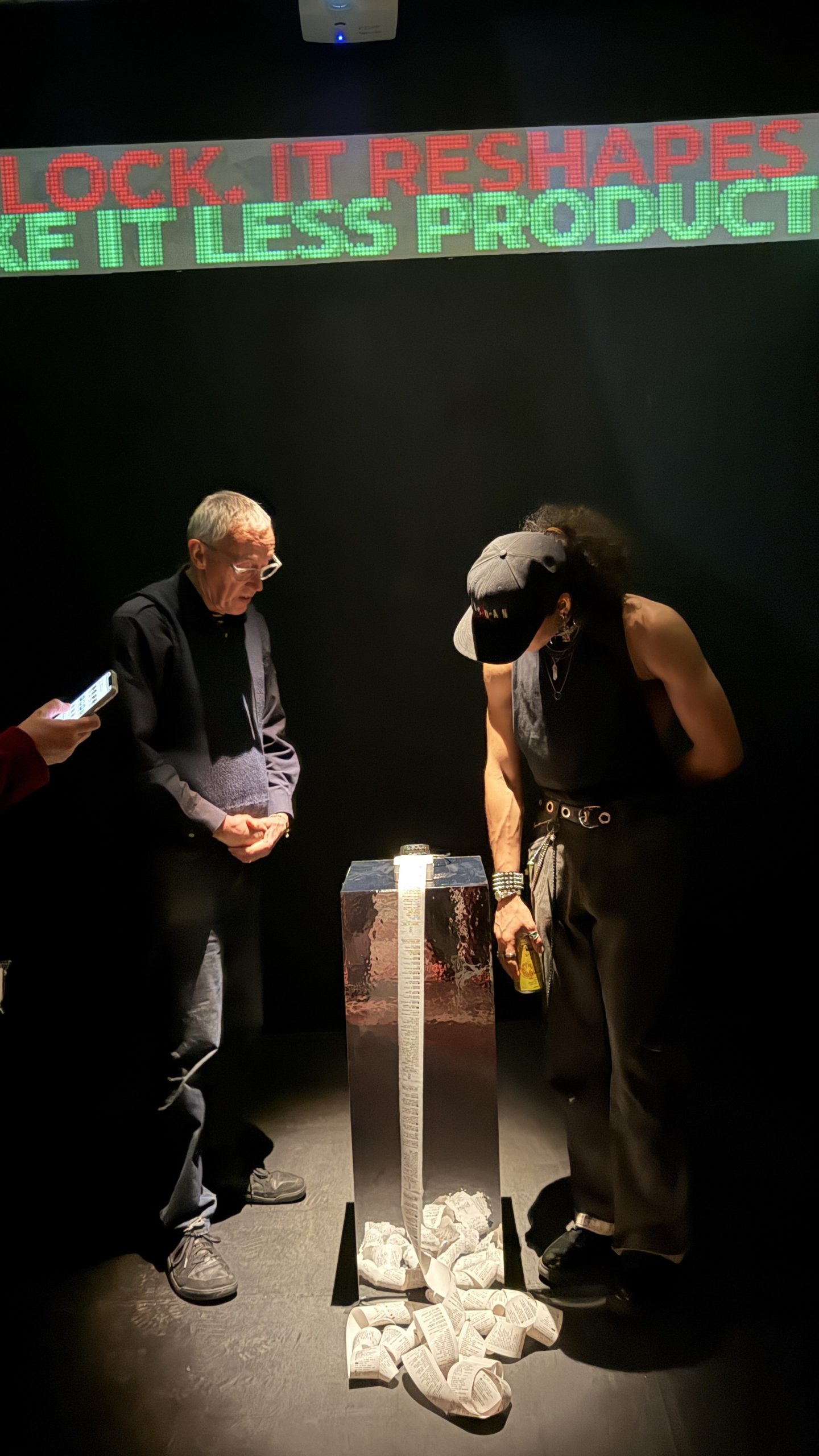
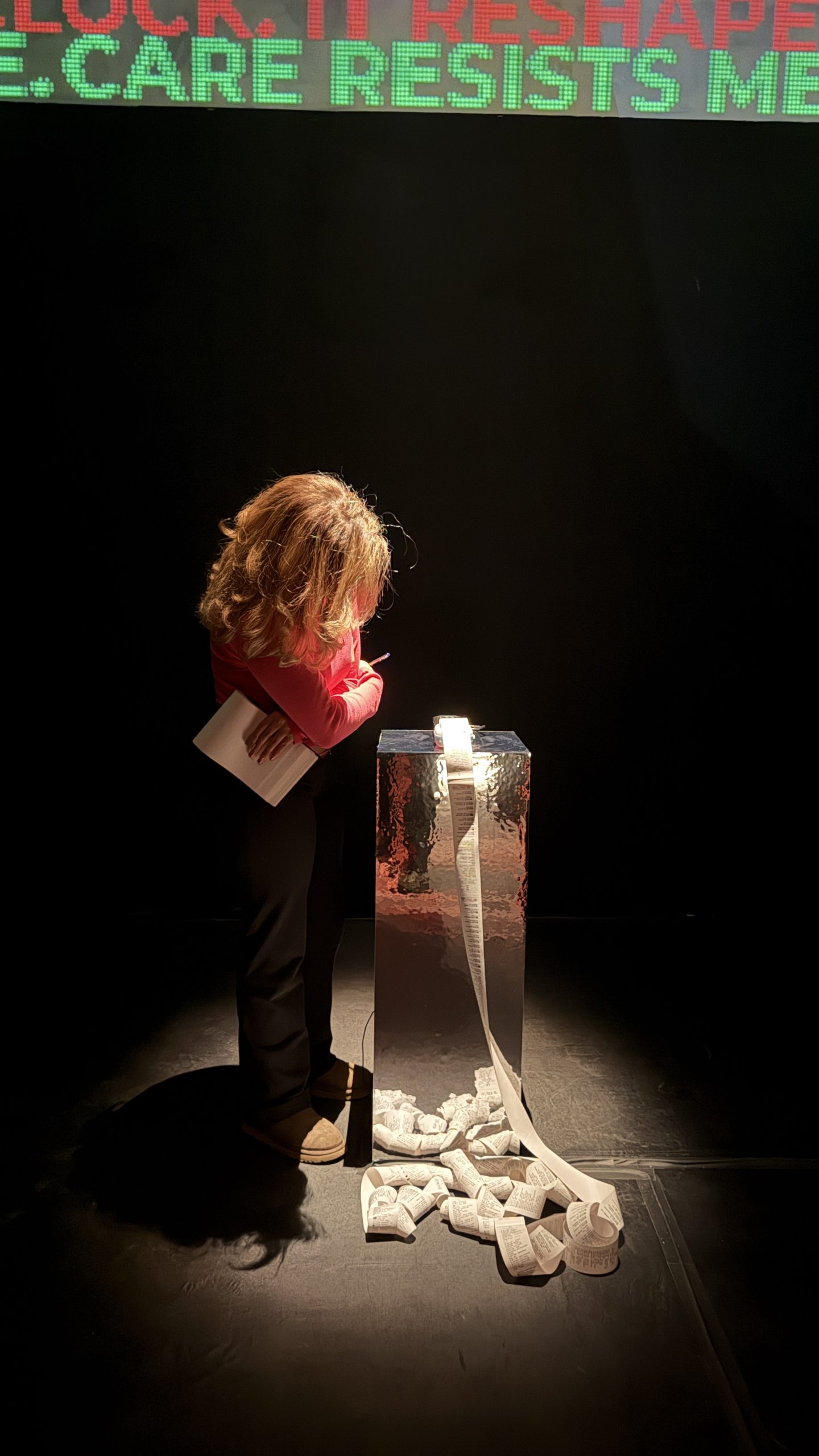
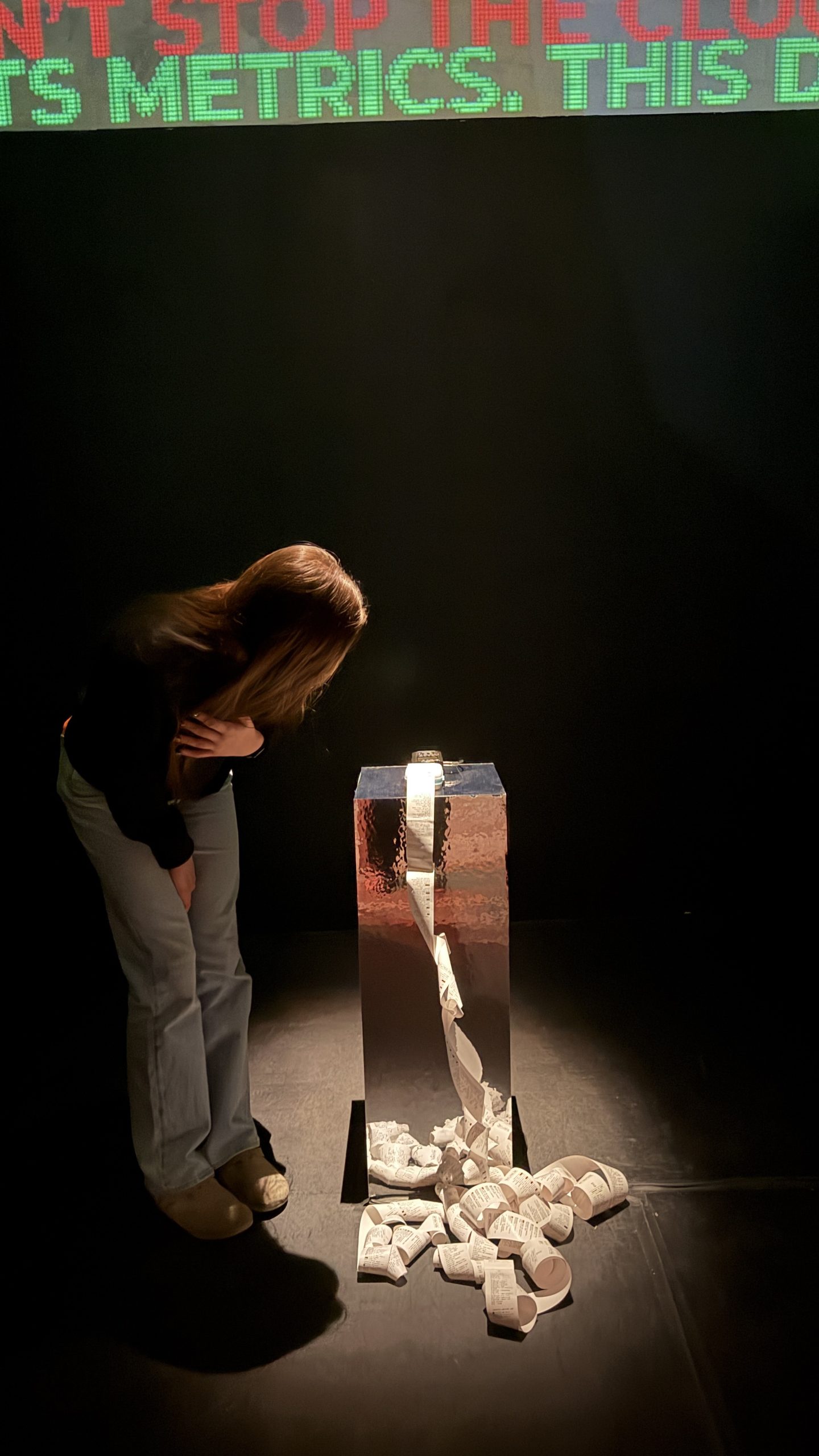
HELD AT ONCE, 2026

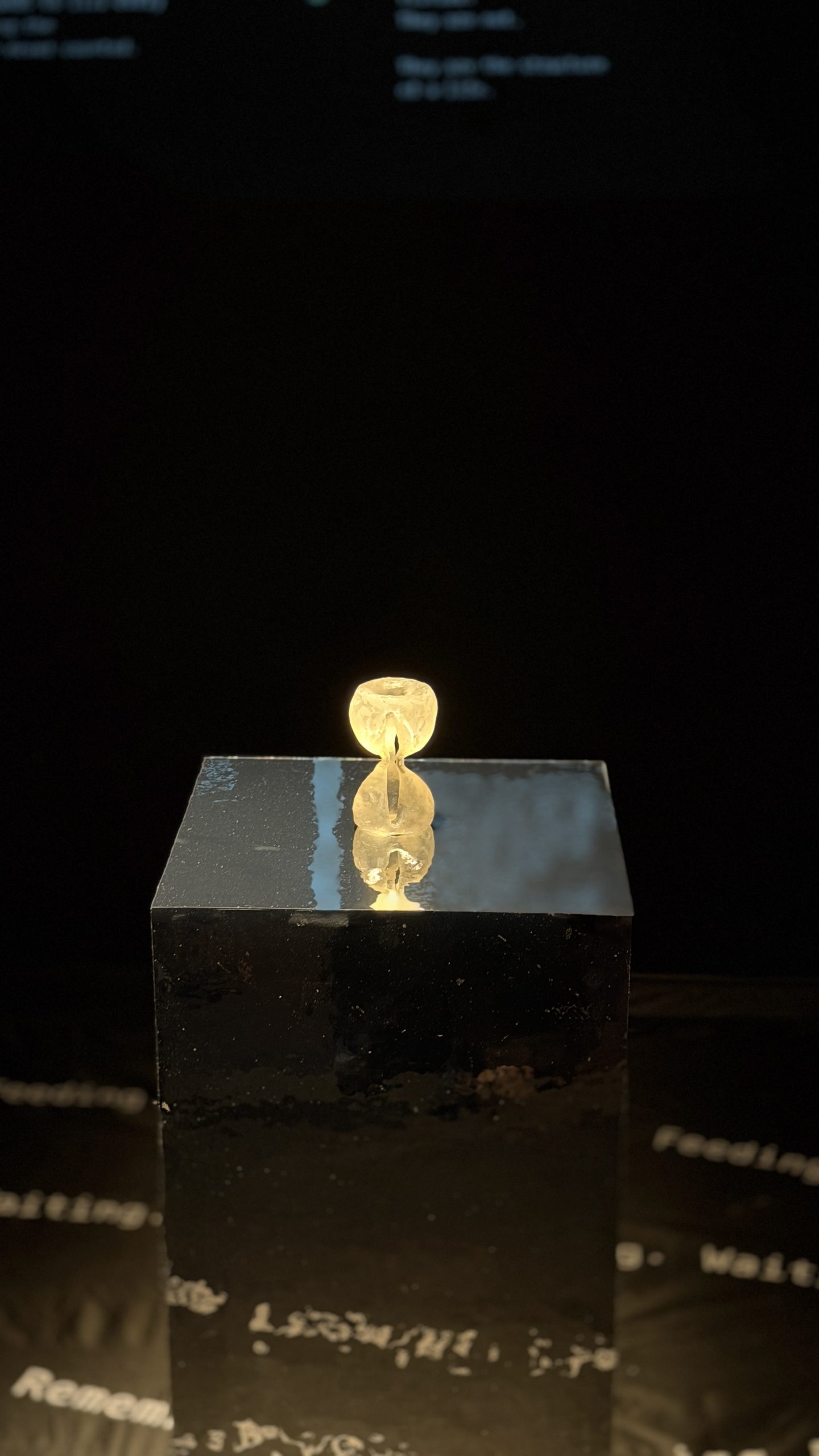
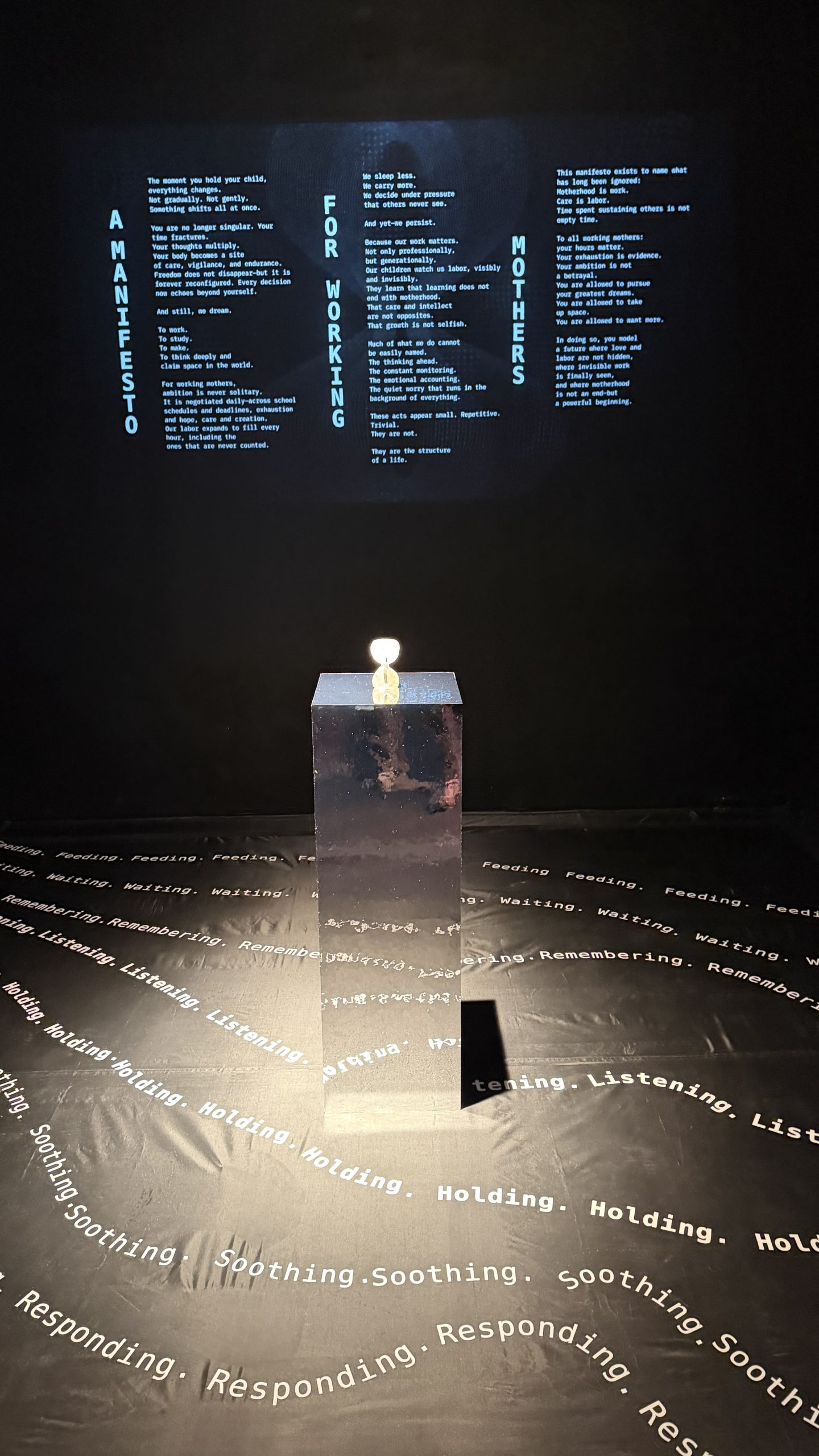
materials: 3D printed resin, Paper, Vinyl, Projection

MFA Design First-Year reviews

On December 8, 2025 the MFA Design first year candidates held their semester review, focused on projects completed in Design Studio 1 taught by Sue Huang. The goal of this review was for candidates to receive feedback from design faculty on their chosen project.

Qing Zeng (she/her)

LUNE is a third person 3D narrative game that explores how individuals with social anxiety disorder (S.A.D.) can learn, practice, and internalize social coping strategies through game play, and how these learned strategies may help them regulate emotions and navigate real-world social interactions.

Developed in Unreal Engine 5, the game combines interactive mechanics, environmental storytelling, and character-driven encourates to simulate moments of social tension, uncertainty, and emotional overload. Players engage with others through systems such as color -based resonances, gradual trust building, and keyword collection, which was inspired by cognitive behavioral therapy (C.B.T.) and exposure based coping techniques.

The visual assets were partially created in blender, with emphasis on symbolic character design and atmospheric environments that externalize internal emotional states. Rather than positioning S.A.D. as something to be “fixed,” LUNE frames it as as ongoing process of adaptation, learning, and self acceptance, using play as a low pressure space for emotional rehearsal and reflection.

Jung A Huh (she/her)

The Leisure Archive explores how notions of leisure have shifted from the Joseon Dynasty to the digital age by re-imagining historical figures through contemporary technologies. Using digital embroidery, A. I. image generation, A-Frame, and V.R., the work bridges past and future forms of leisure, questing how humans experience rest, play, and imagination across time.

The project combines handcrafted textures with virtual environments to create a hybrid space where embroidered bodies and digital worlds coexist. Through this process it reflects on the evolving relationship between human senses, craft, and machine-mediated experiences.

Ali El-Chaer (they/he)

Ali El-Chaer completed a short form publication, Tomorrow’s Grief, that compiled text, news articles, and posters about Palestine and Lebanon from 1982 to 2025. This publication was designed using Adobe InDesign. The intention was to collect and distribute the political posters and stories from or on the topic of Palestine and Lebanon as a way questioning our responsibility to people now.

Furthermore, El-Chaer held the goal of understanding dialectical materialism or historic materialism, as a means to understand the superstructures that distract us from real change and show opposition to the economic systems that continue to suffocate freedom. And perhaps by changing the future through new technologies and material change rather than by ideas alone, this remembered historical materialism and knowledge will inform us on how to change the nature of the past as well.