MFA Design First-Year reviews

On December 8, 2025 the MFA Design first year candidates held their semester review, focused on projects completed in Design Studio 1 taught by Sue Huang. The goal of this review was for candidates to receive feedback from design faculty on their chosen project.

Qing Zeng (she/her)

LUNE is a third person 3D narrative game that explores how individuals with social anxiety disorder (S.A.D.) can learn, practice, and internalize social coping strategies through game play, and how these learned strategies may help them regulate emotions and navigate real-world social interactions.

Developed in Unreal Engine 5, the game combines interactive mechanics, environmental storytelling, and character-driven encourates to simulate moments of social tension, uncertainty, and emotional overload. Players engage with others through systems such as color -based resonances, gradual trust building, and keyword collection, which was inspired by cognitive behavioral therapy (C.B.T.) and exposure based coping techniques.

The visual assets were partially created in blender, with emphasis on symbolic character design and atmospheric environments that externalize internal emotional states. Rather than positioning S.A.D. as something to be “fixed,” LUNE frames it as as ongoing process of adaptation, learning, and self acceptance, using play as a low pressure space for emotional rehearsal and reflection.

Jung A Huh (she/her)

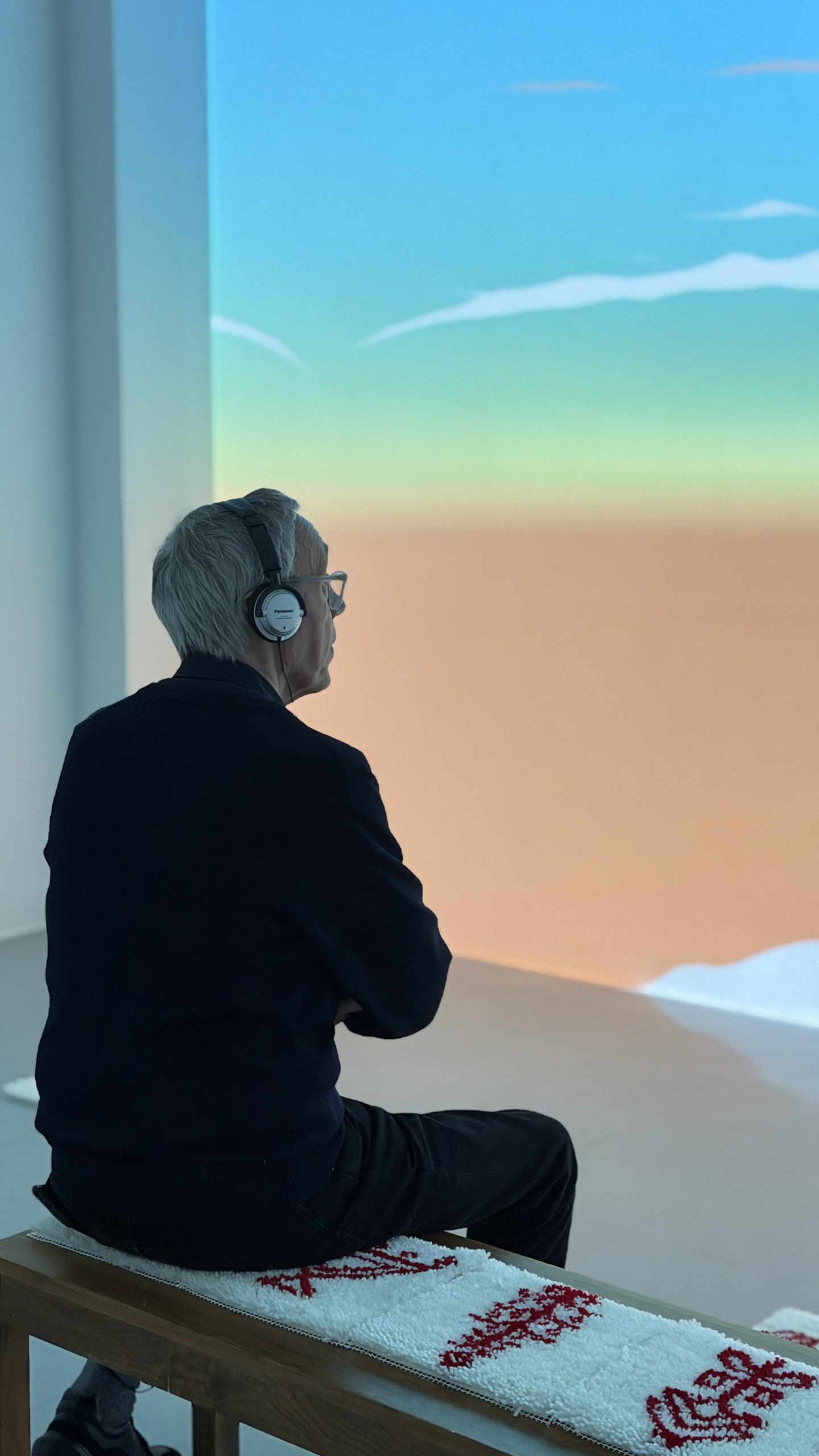
The Leisure Archive explores how notions of leisure have shifted from the Joseon Dynasty to the digital age by re-imagining historical figures through contemporary technologies. Using digital embroidery, A. I. image generation, A-Frame, and V.R., the work bridges past and future forms of leisure, questing how humans experience rest, play, and imagination across time.

The project combines handcrafted textures with virtual environments to create a hybrid space where embroidered bodies and digital worlds coexist. Through this process it reflects on the evolving relationship between human senses, craft, and machine-mediated experiences.

Ali El-Chaer (they/he)

Ali El-Chaer completed a short form publication, Tomorrow’s Grief, that compiled text, news articles, and posters about Palestine and Lebanon from 1982 to 2025. This publication was designed using Adobe InDesign. The intention was to collect and distribute the political posters and stories from or on the topic of Palestine and Lebanon as a way questioning our responsibility to people now.

Furthermore, El-Chaer held the goal of understanding dialectical materialism or historic materialism, as a means to understand the superstructures that distract us from real change and show opposition to the economic systems that continue to suffocate freedom. And perhaps by changing the future through new technologies and material change rather than by ideas alone, this remembered historical materialism and knowledge will inform us on how to change the nature of the past as well.  

MFA Design Second-Year reviews

December 4, 2025

On December 4th, the MFA Design second-year students held their semester review, focused on clarifying and strengthening the direction of their thesis projects ahead of the January–February exhibition period.

The goal of this review was to solidify and refine the aims and specifics of each thesis project, with particular attention to human interaction, physical presence, and exhibition display. Students were asked to present a proof of concept, prototype, mock-up, or work-in-progress at real scale. Rather than showing a complete thesis, the review emphasized testing how an audience might experience and engage with a portion of the work.


Chiyu Zheng

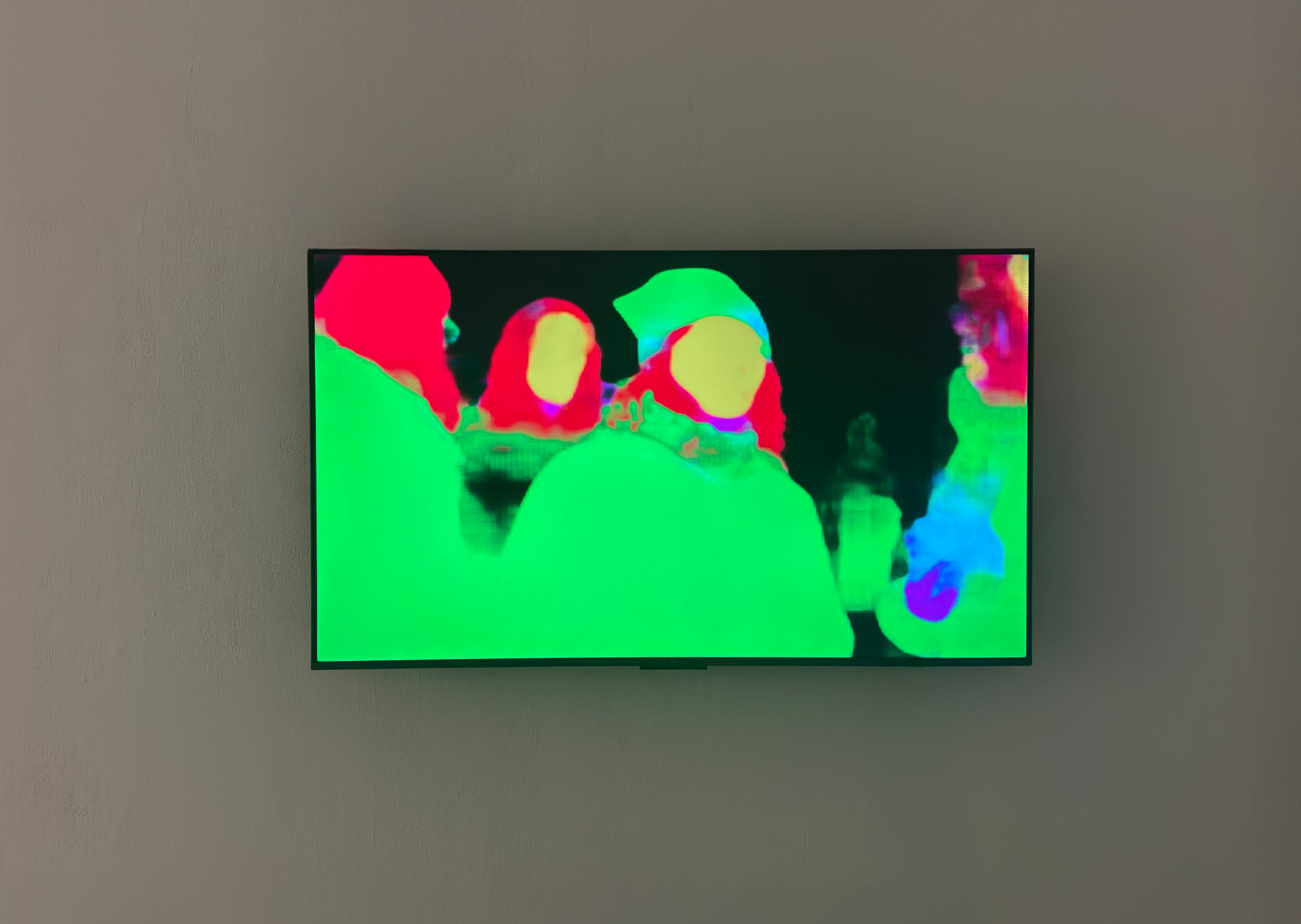
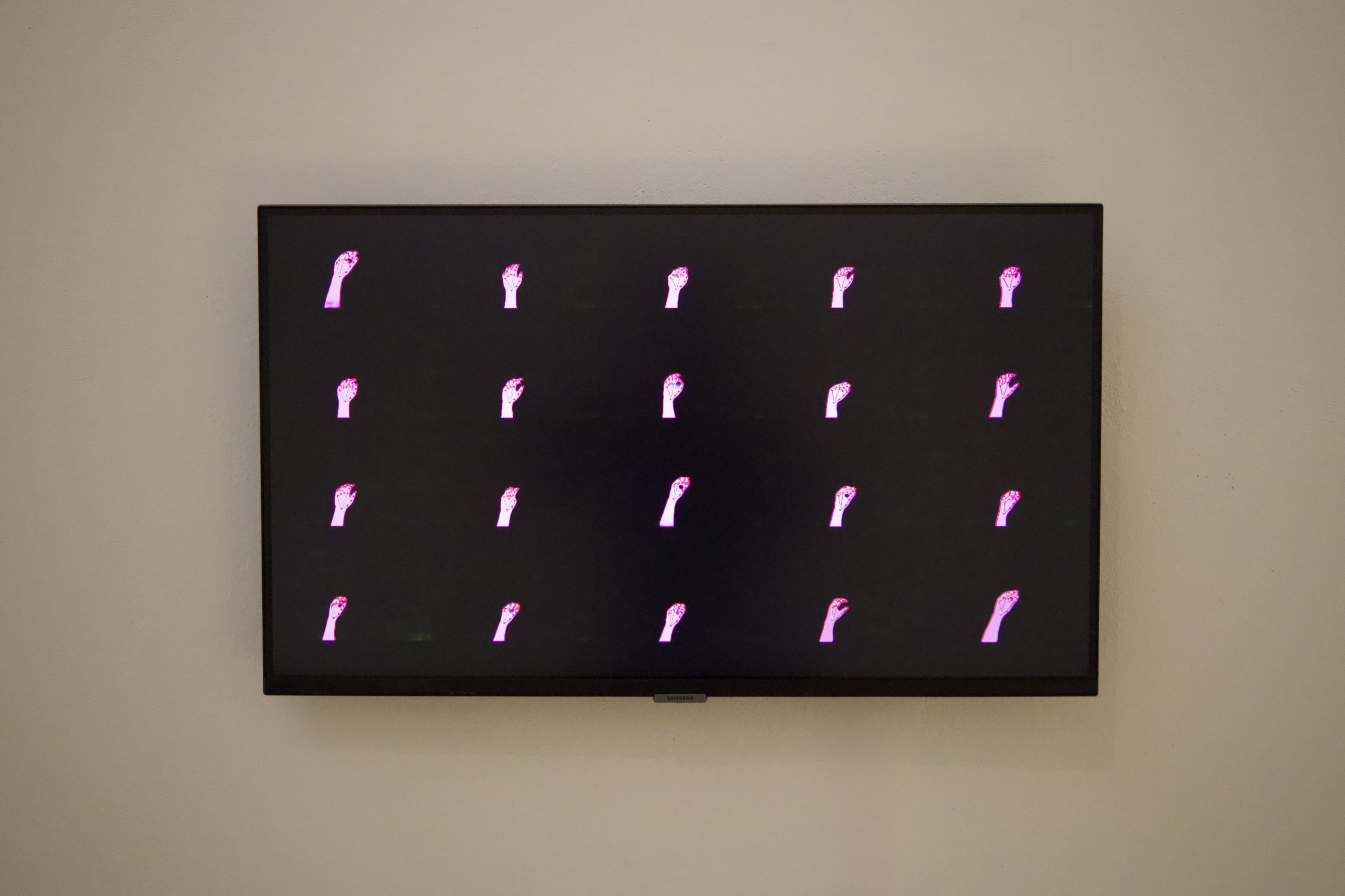
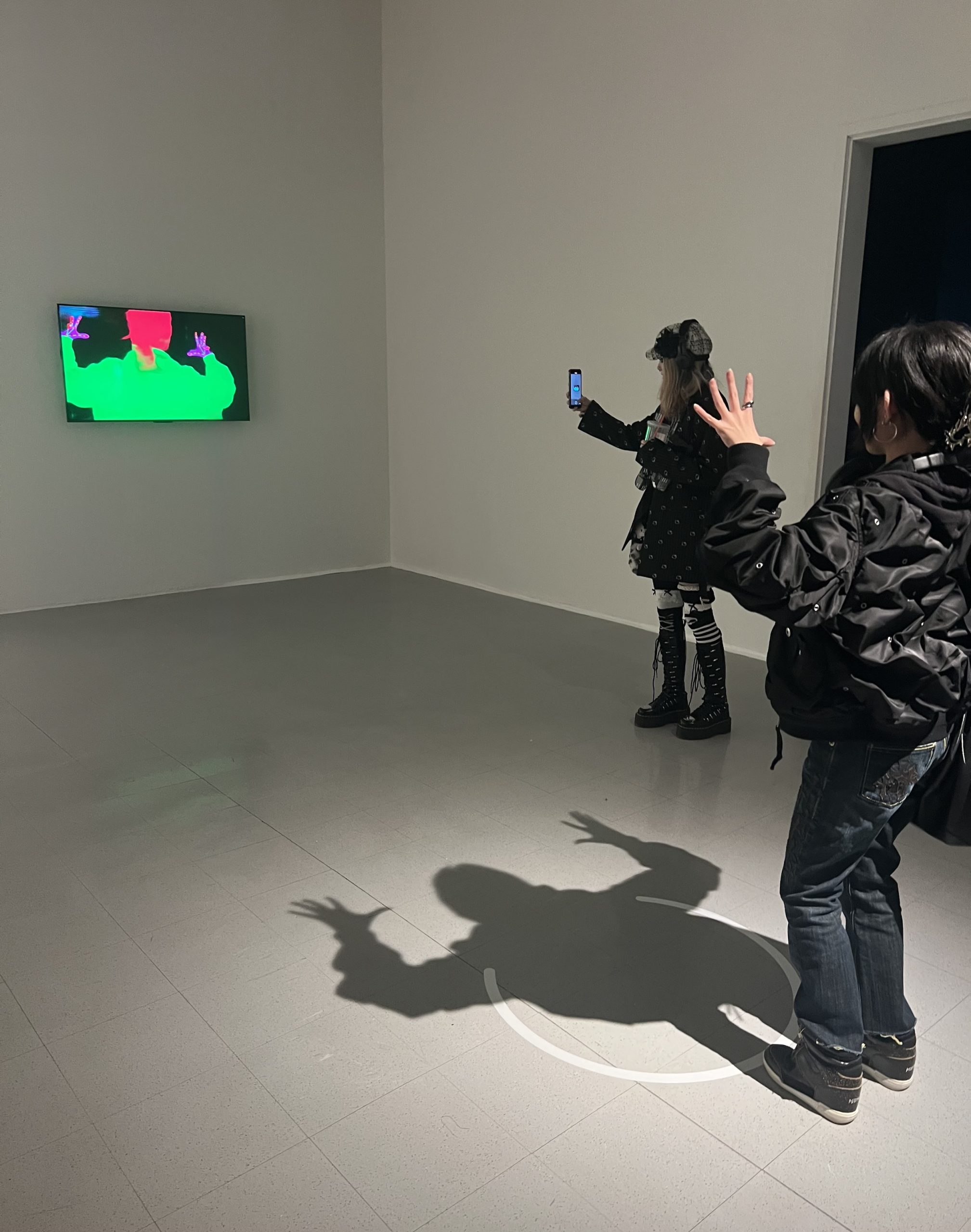
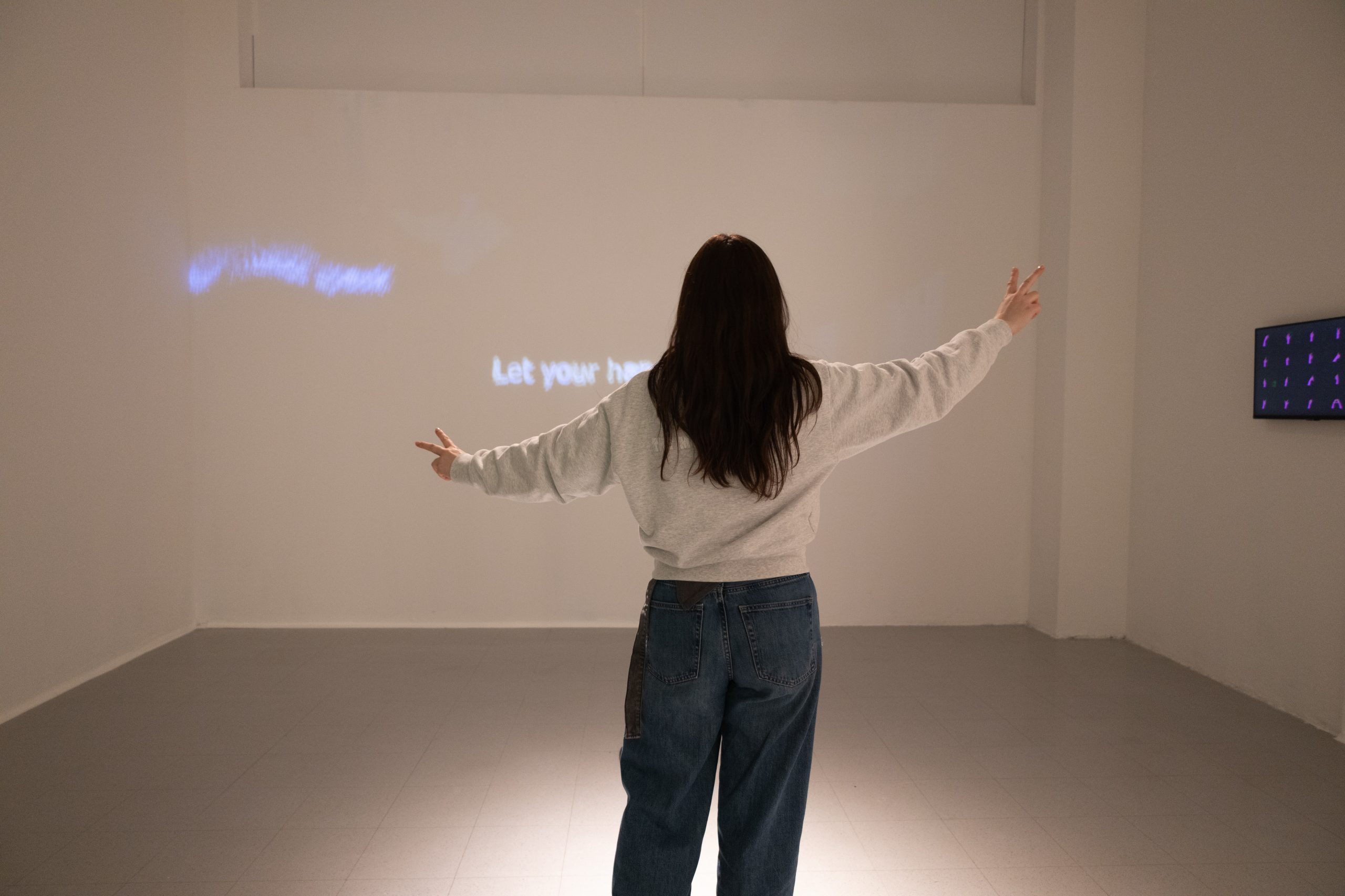
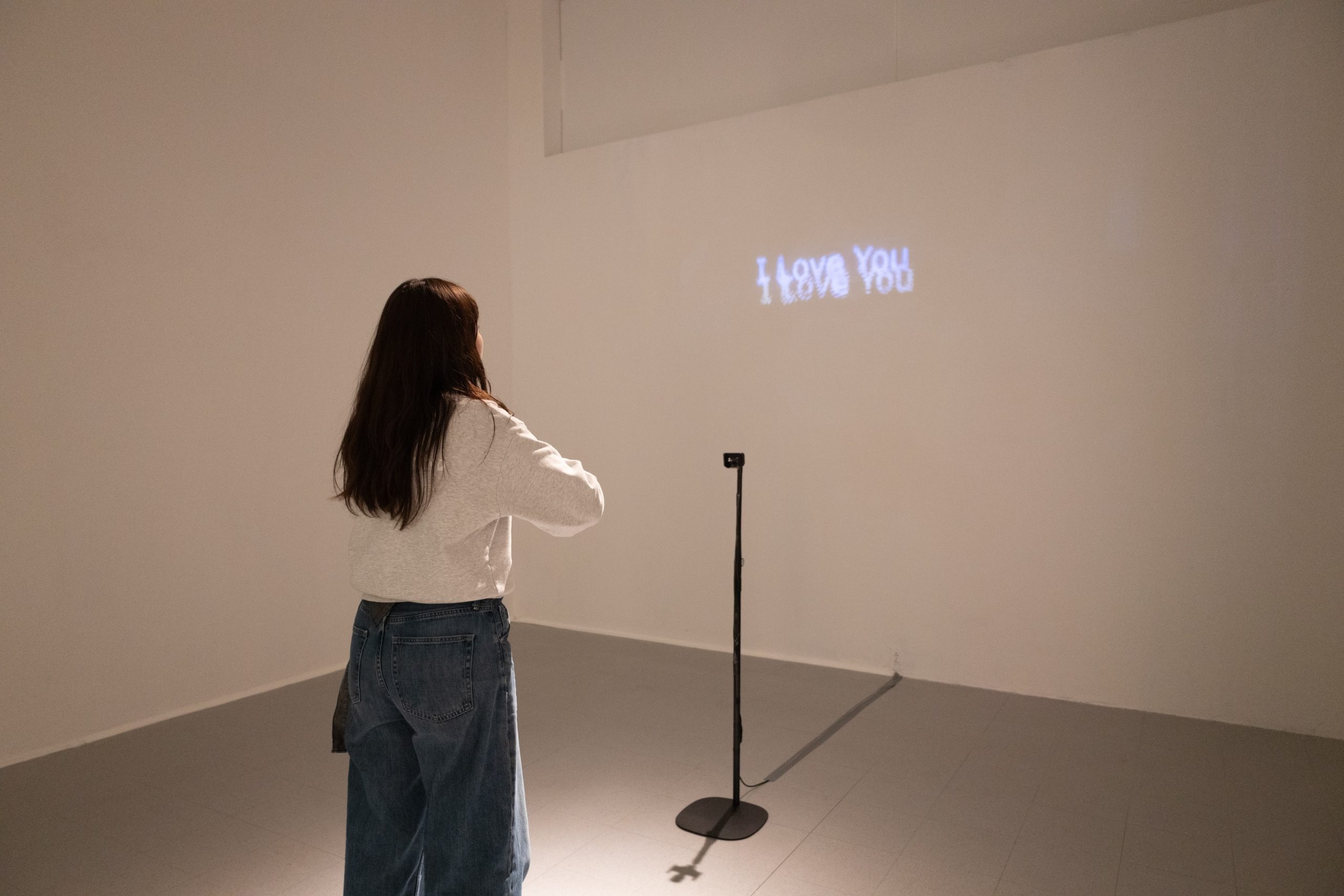
Presence invites participants to interact with an installation through full-body gestures rather than handheld devices. The project responds to how screen-based technologies train bodies to shrink into small, constrained postures. By asking participants to occupy space with their whole bodies, the work reframes technology as something expansive and physically engaging, restoring a sense of scale and presence often lost in digital interaction.


Peyton Chiang

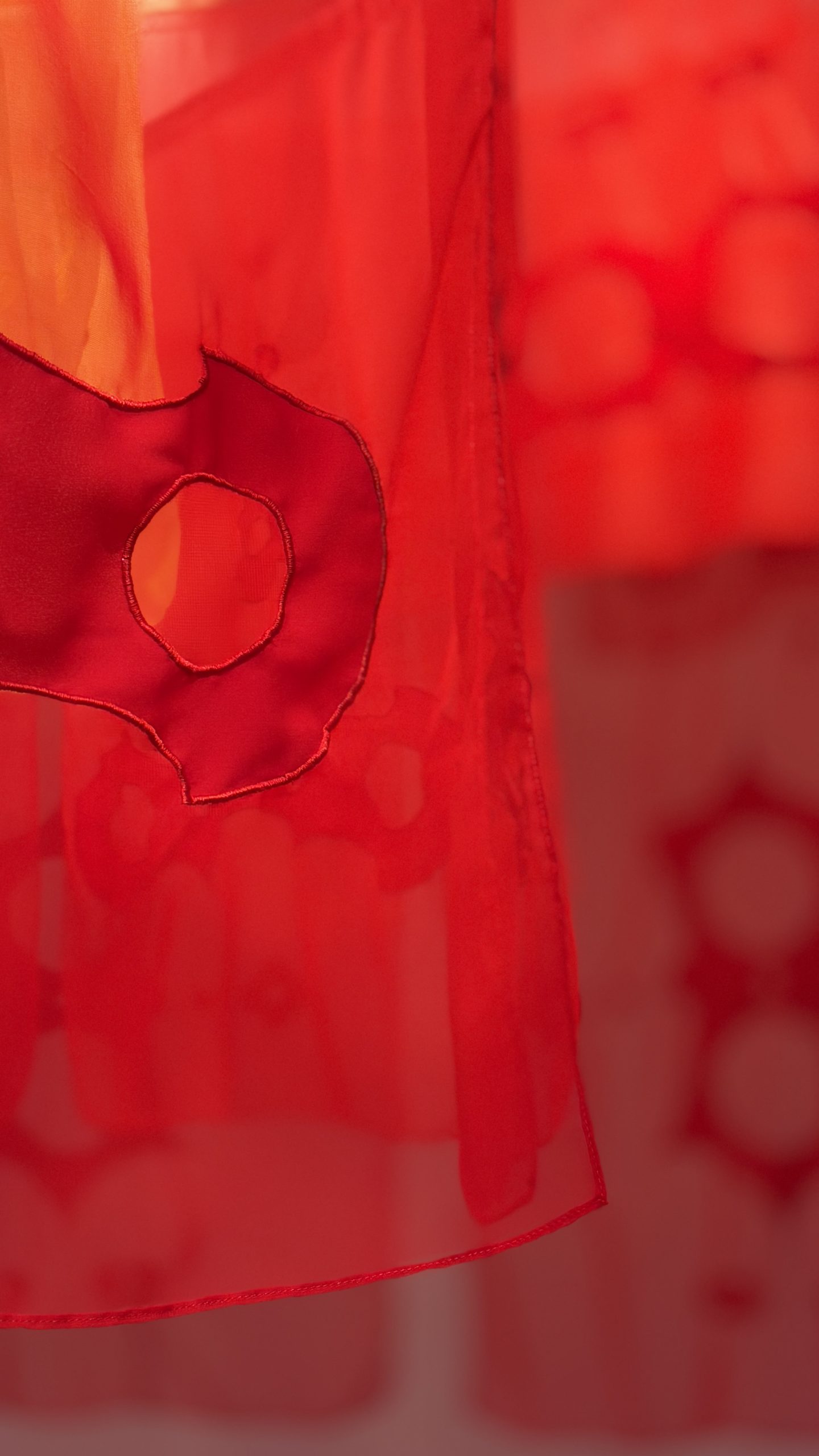
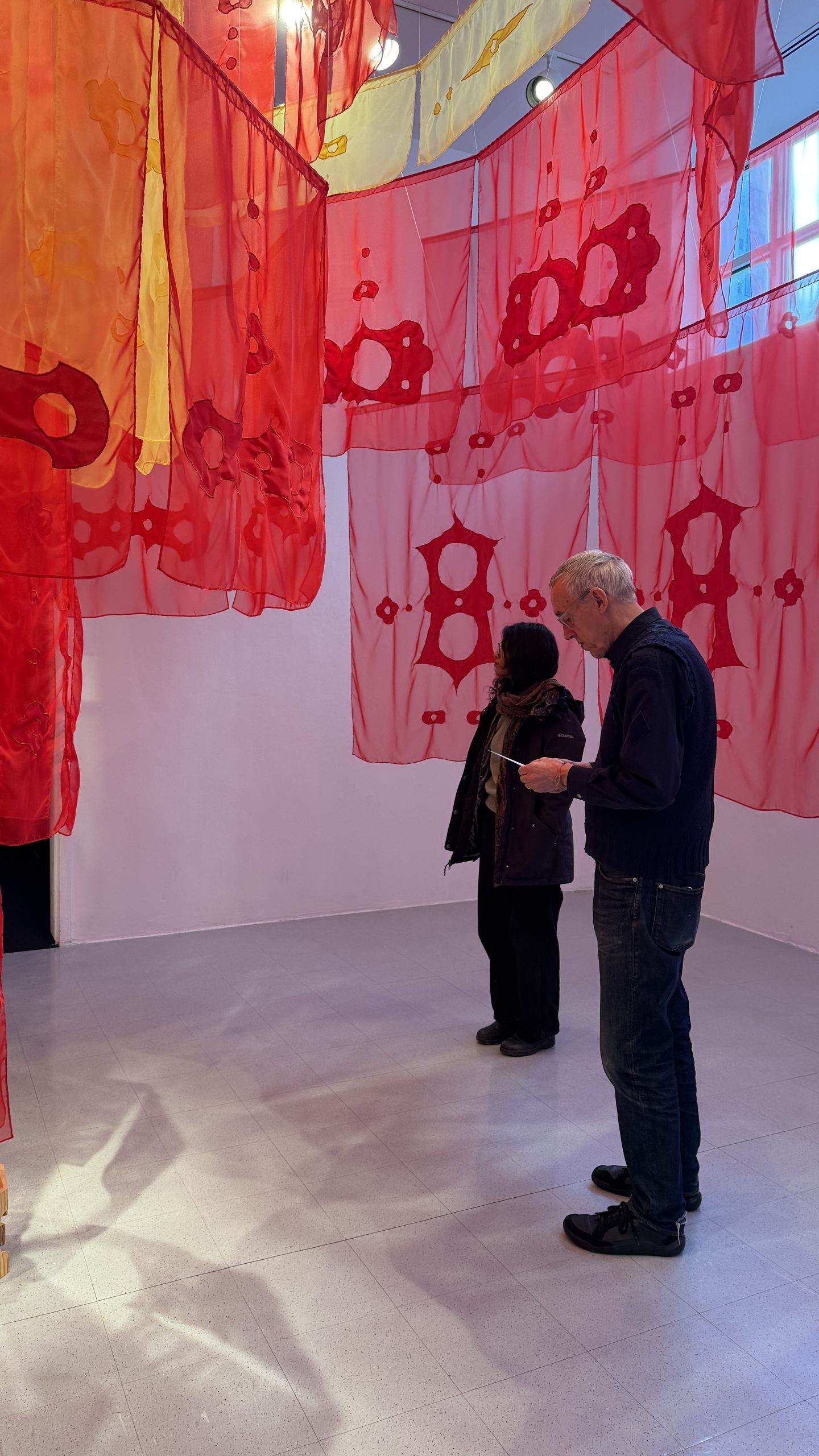
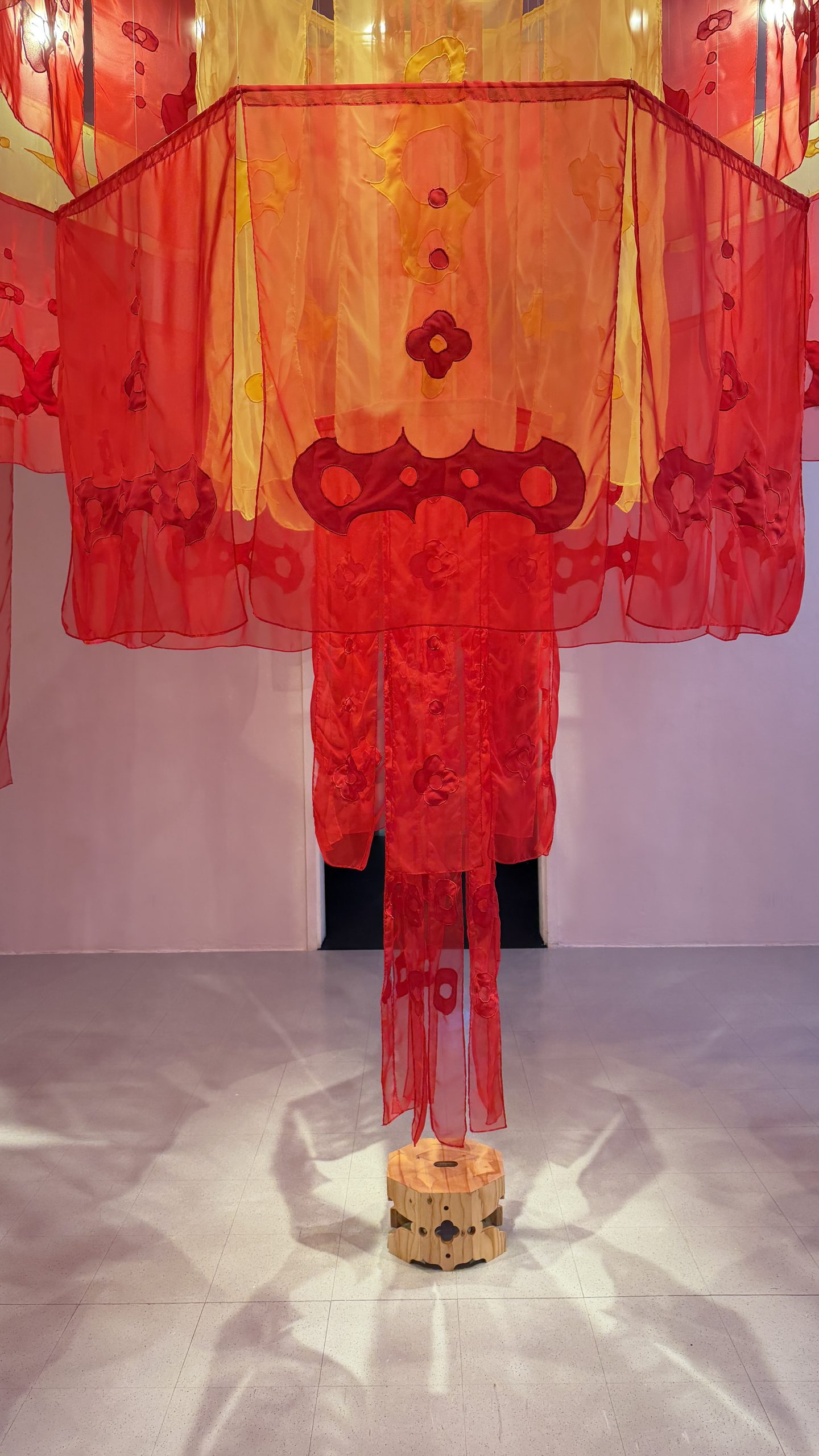
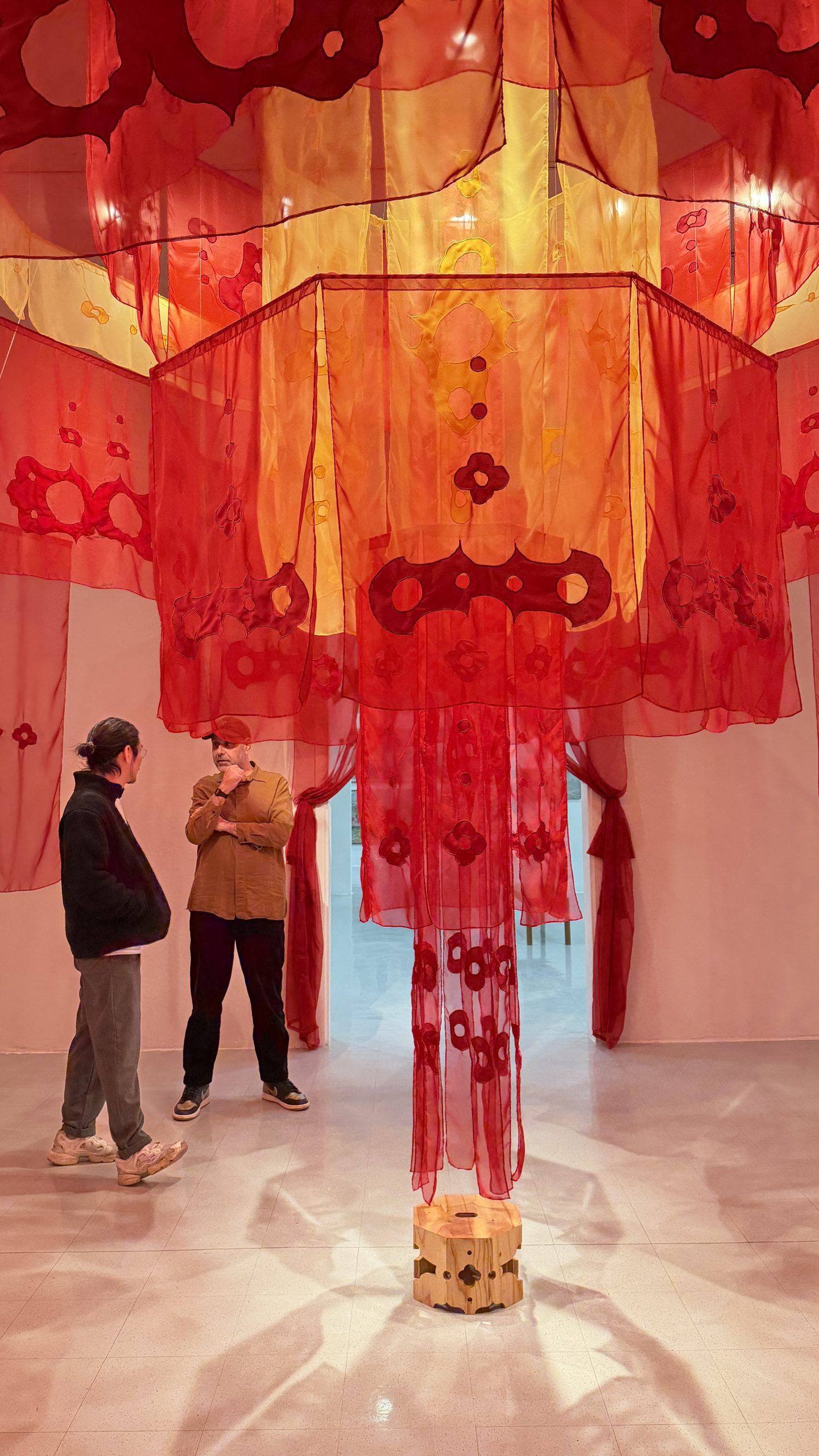
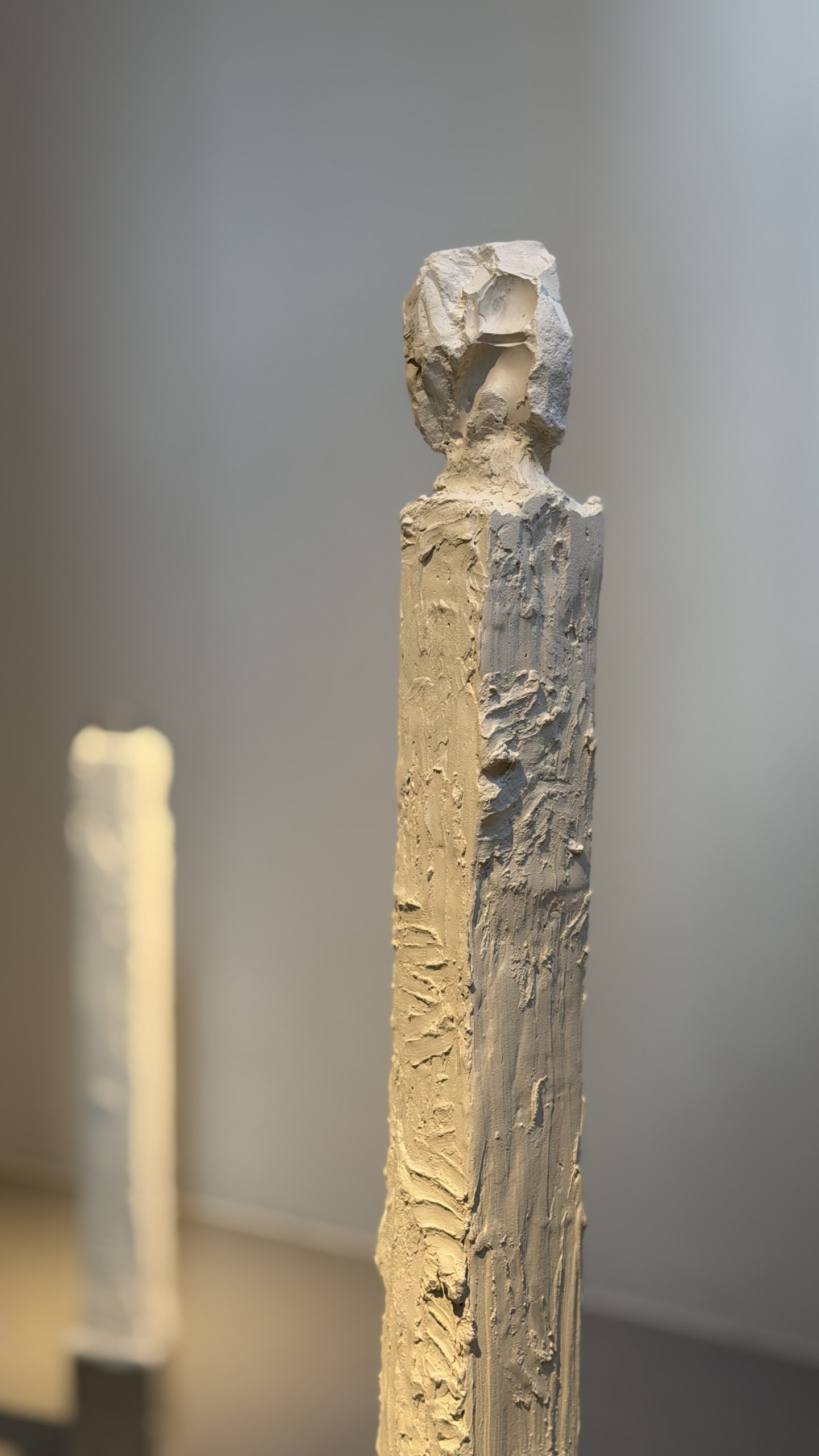
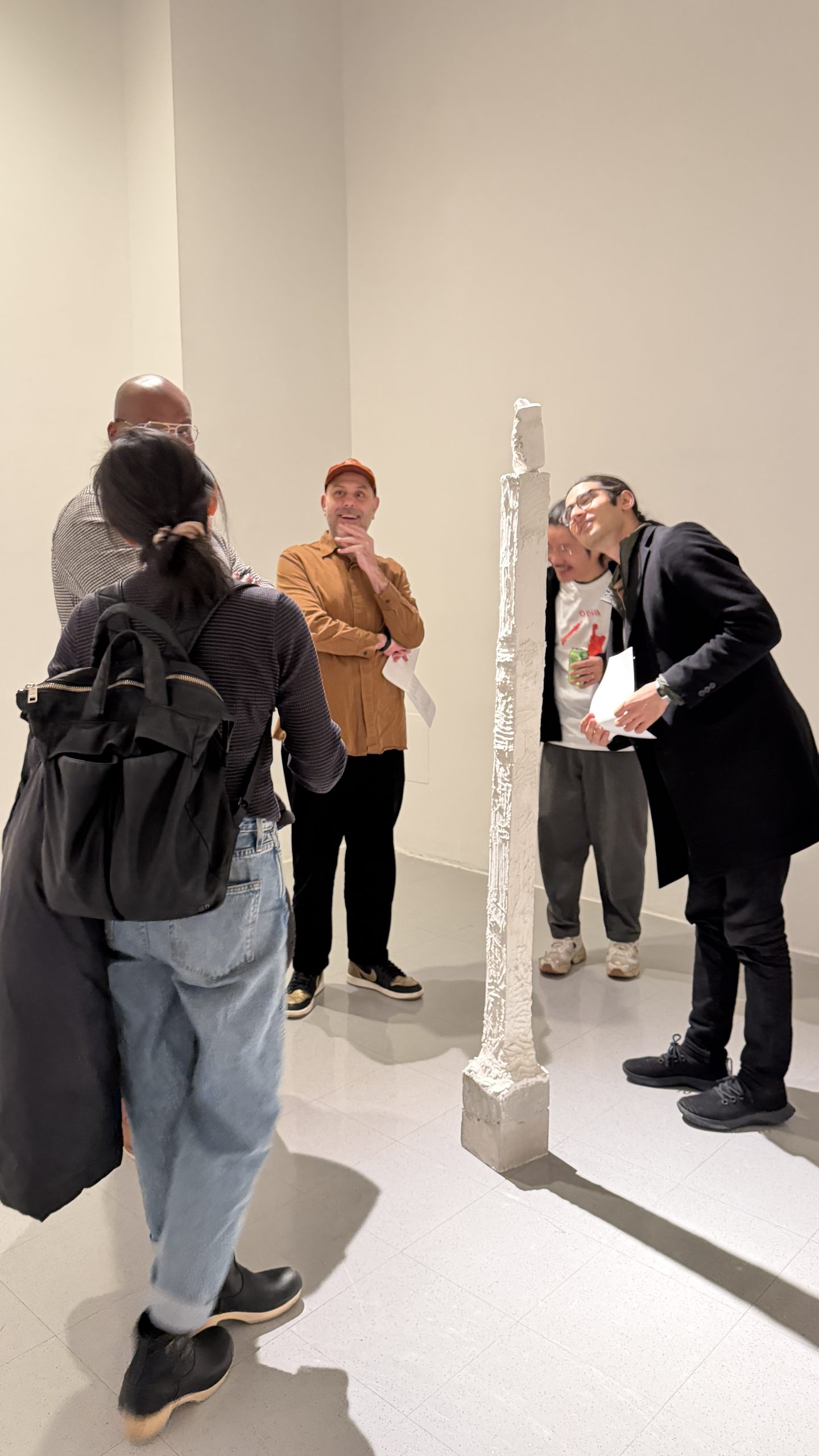
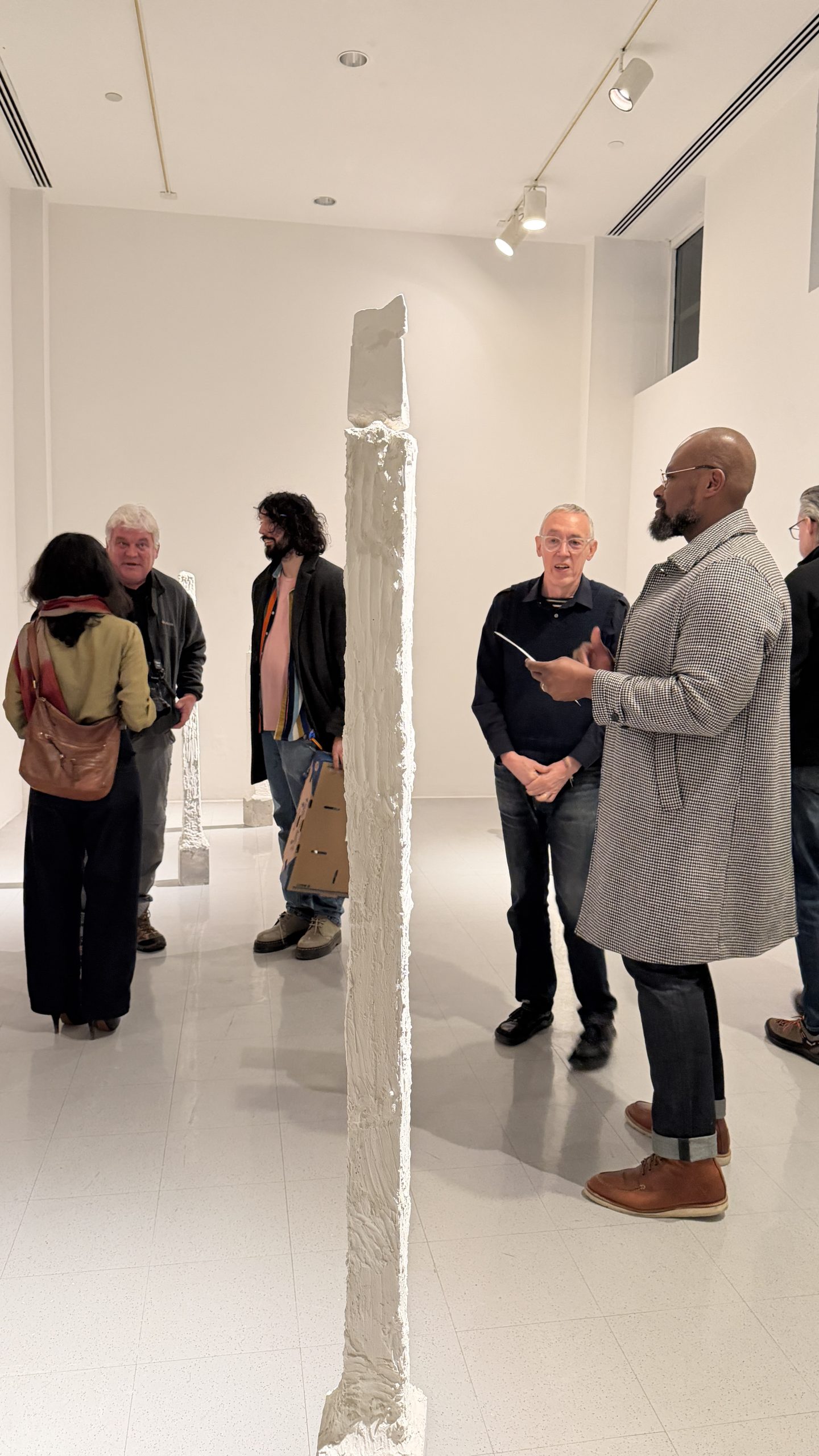
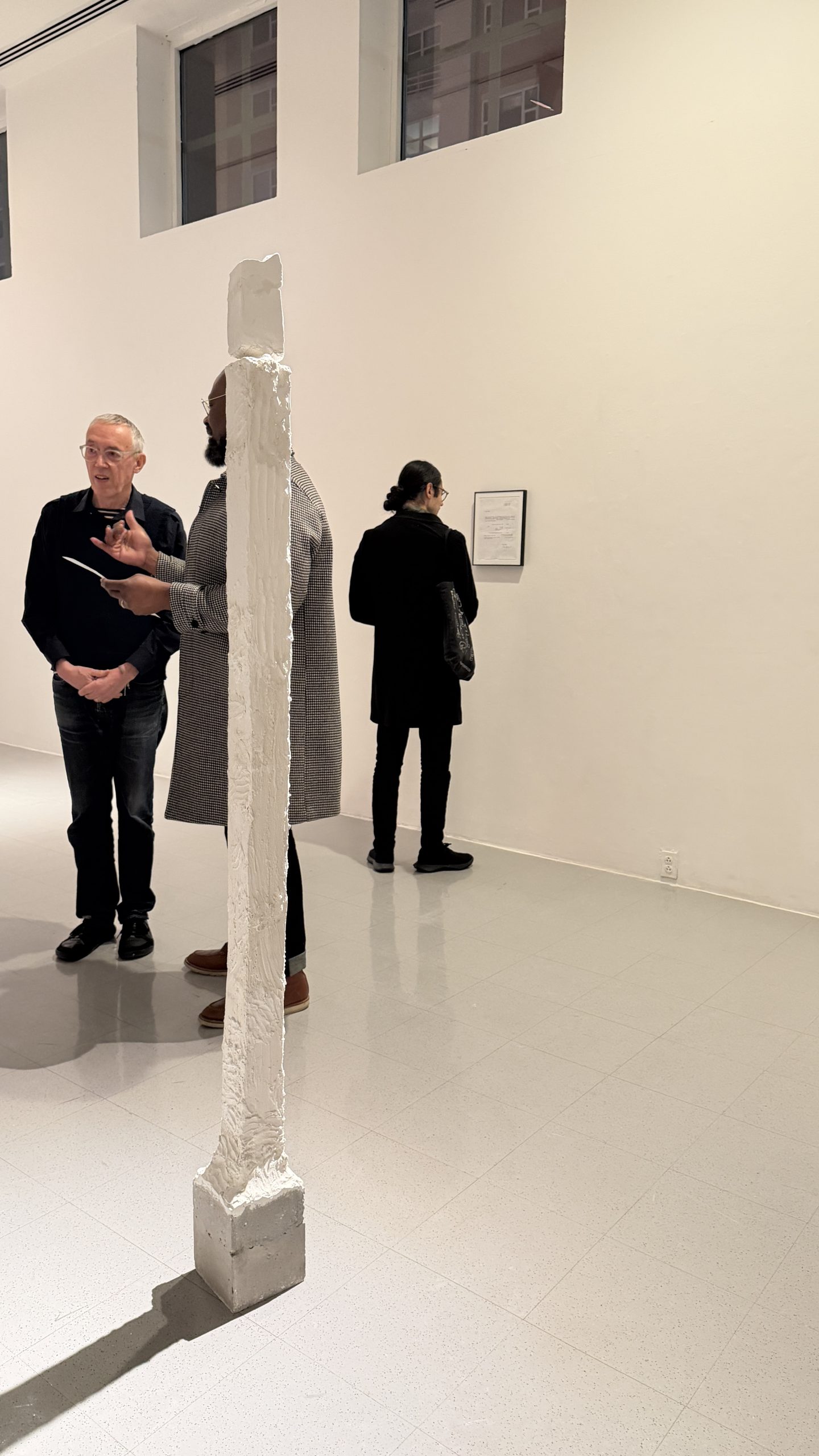
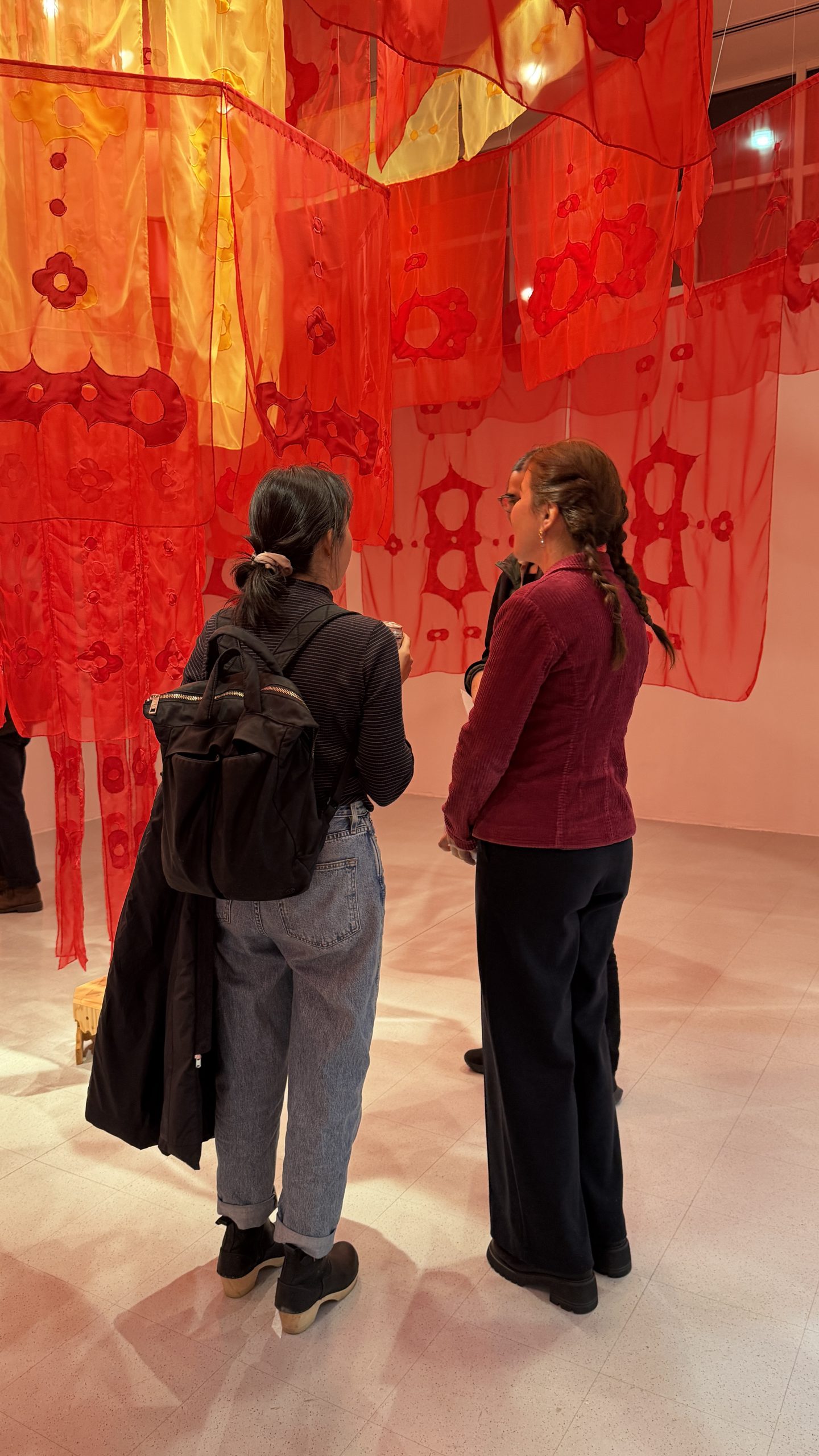
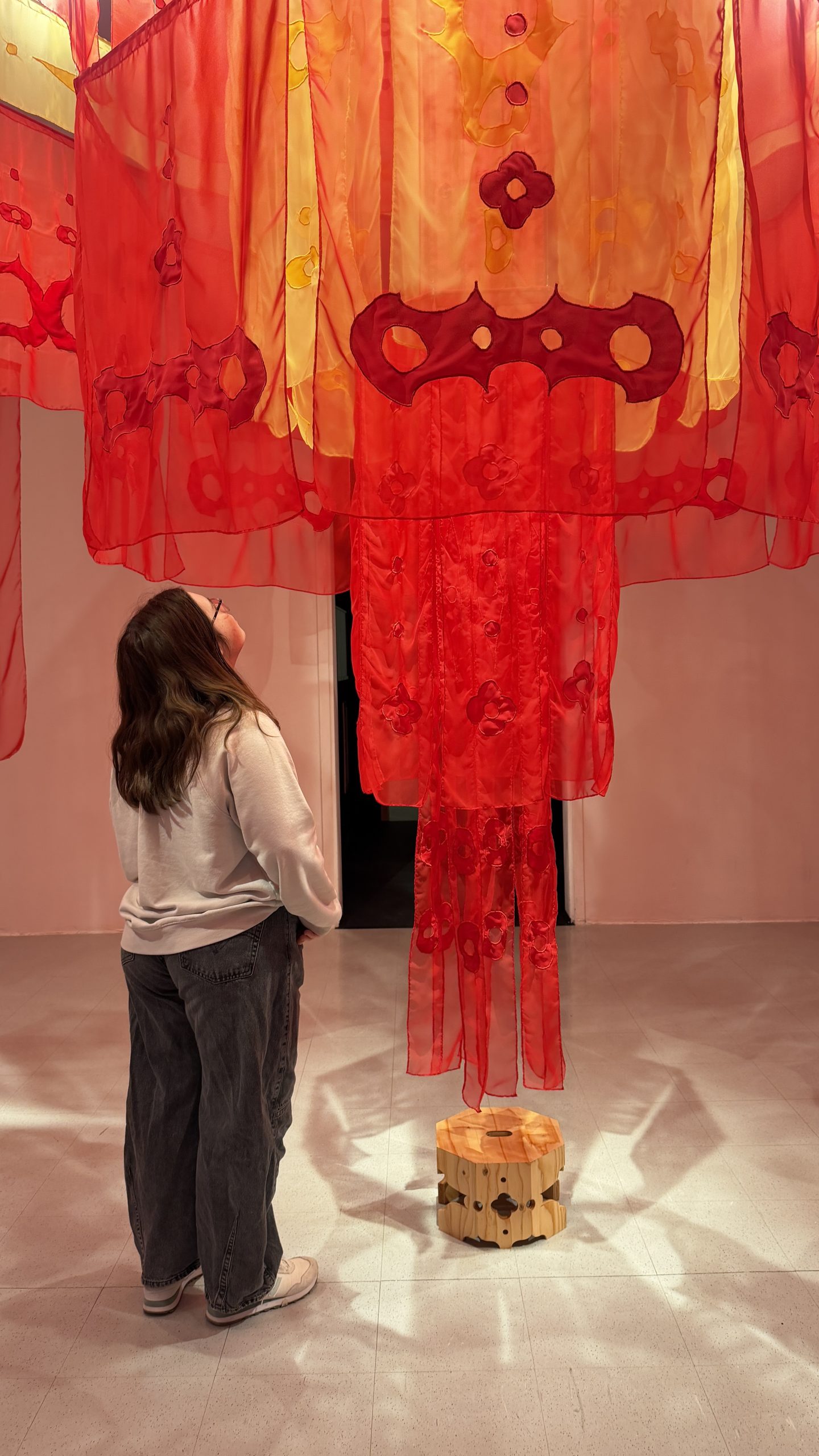
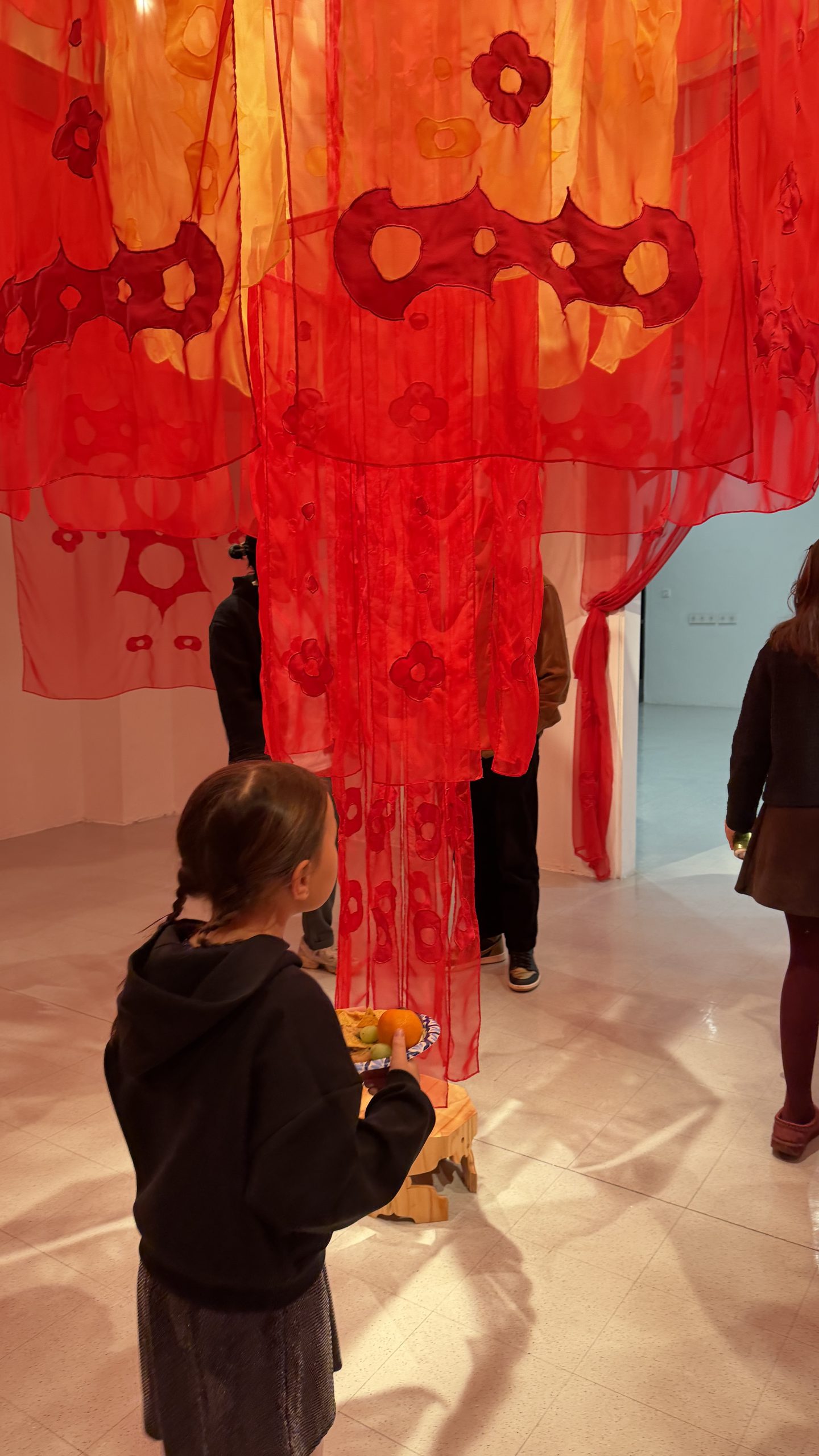
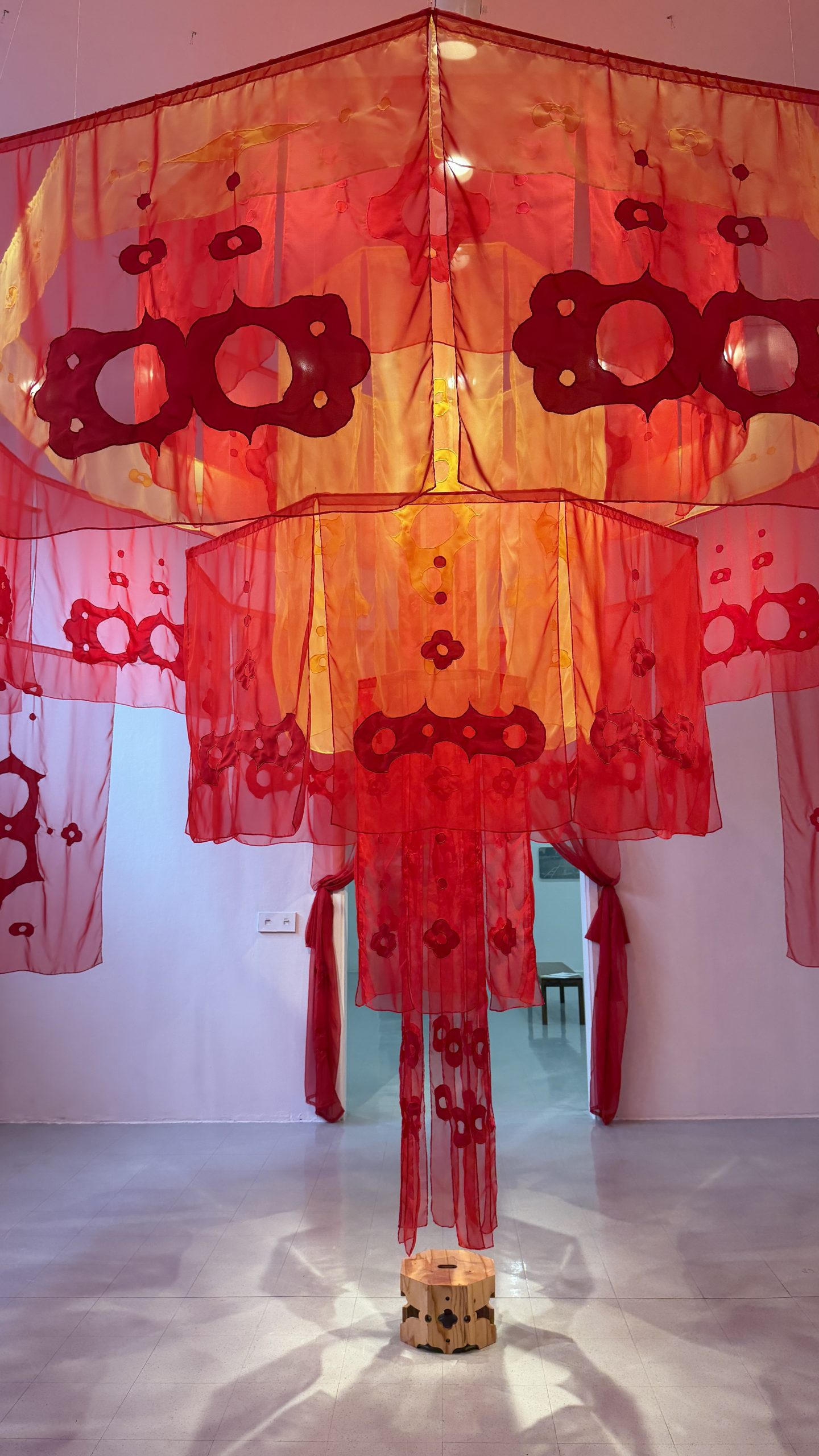
Peyton ’s thesis explores the relationship between corporeal beings and ancestral beings, examining how memory, ritual, and lineage move through physical form. His work draws from ancestral practices and material culture, translating them into sculptural and spatial experiments. Through layered structures and translucent materials, the project investigates how bodies act as vessels for inherited knowledge, belief, and presence. The work-in-progress installation presented at the review focused on scale, verticality, and atmosphere, offering a prototype for how audiences might physically encounter and move around these ancestral narratives.

Anukriti Kaushik

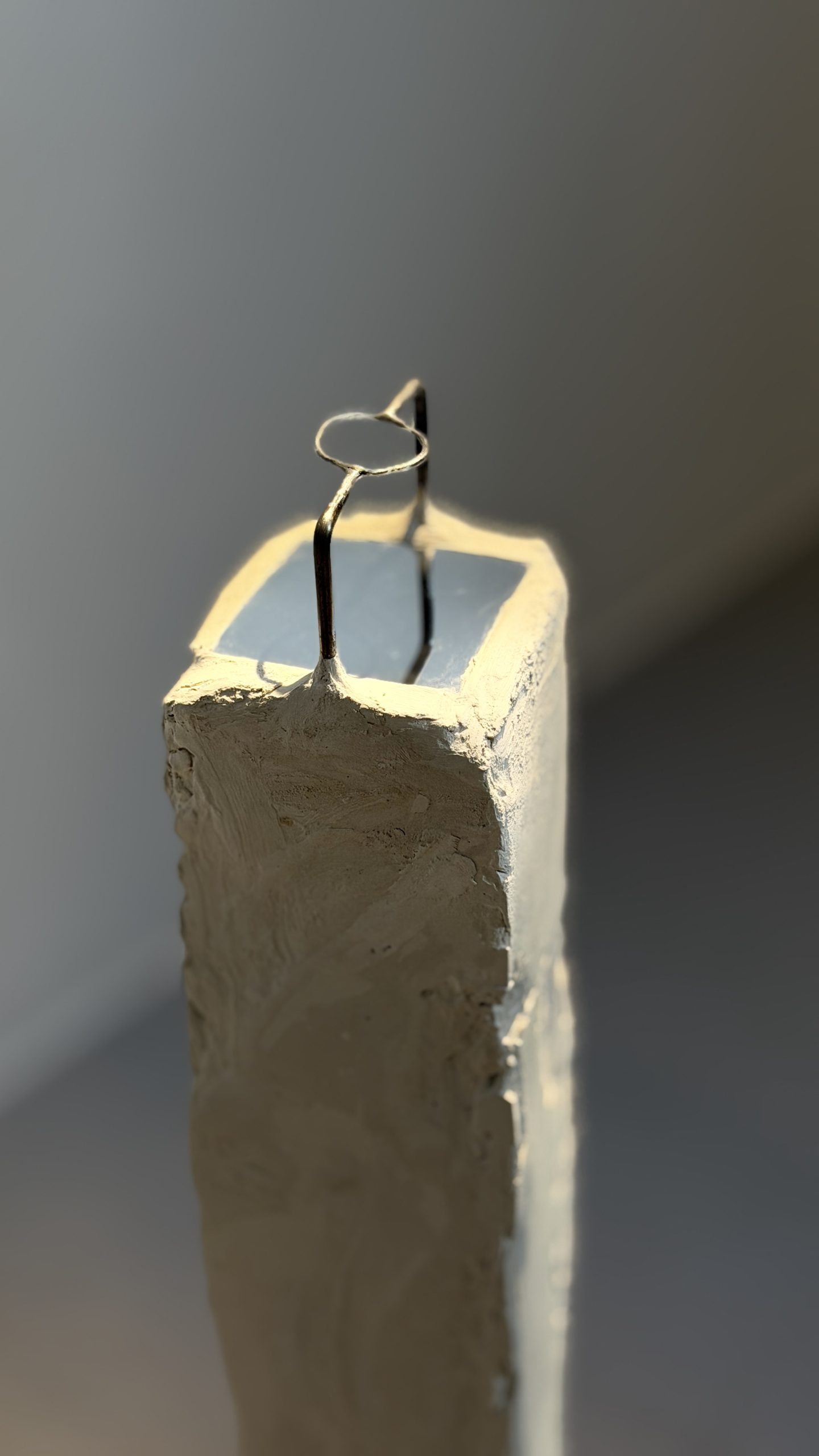
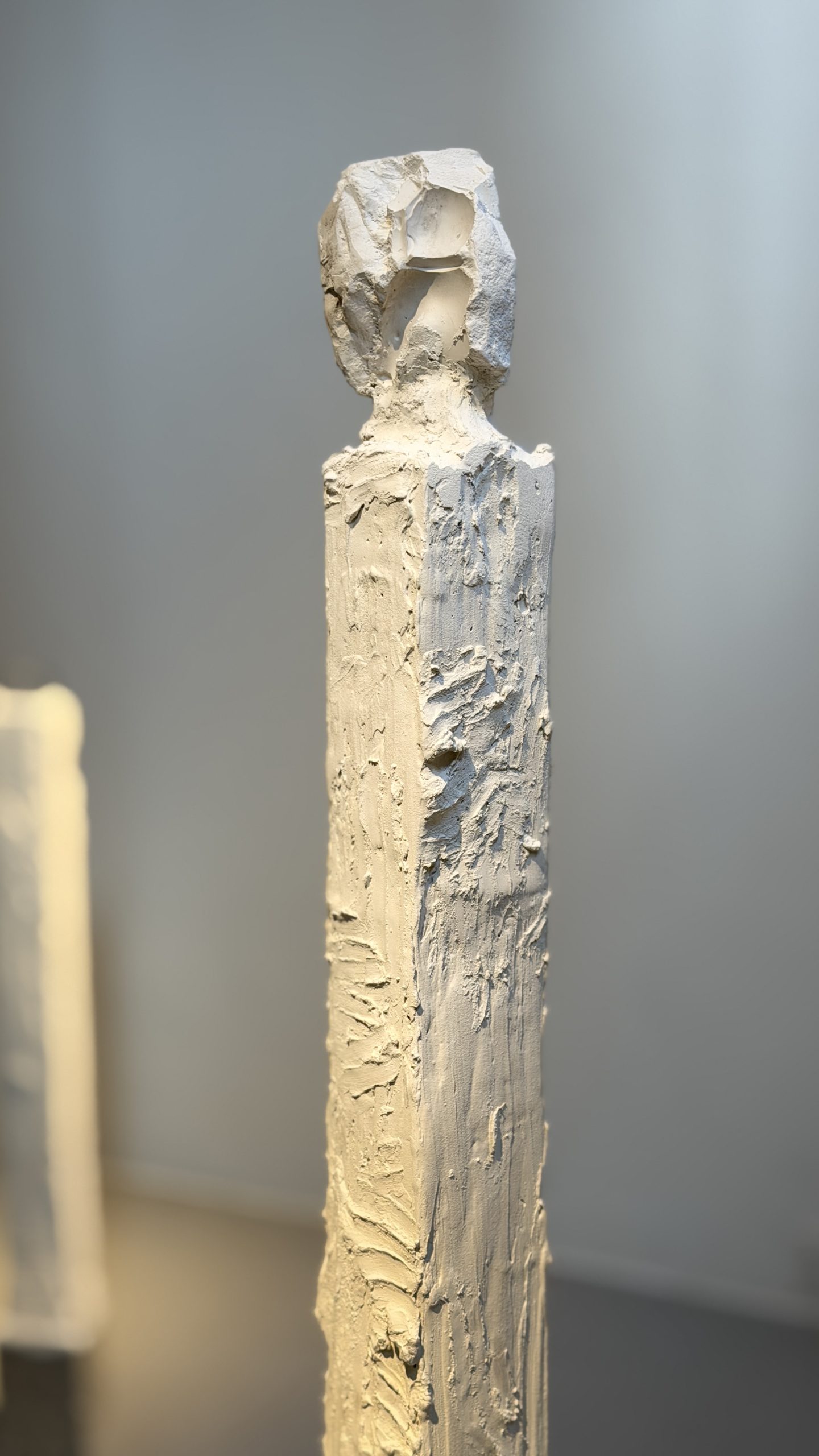
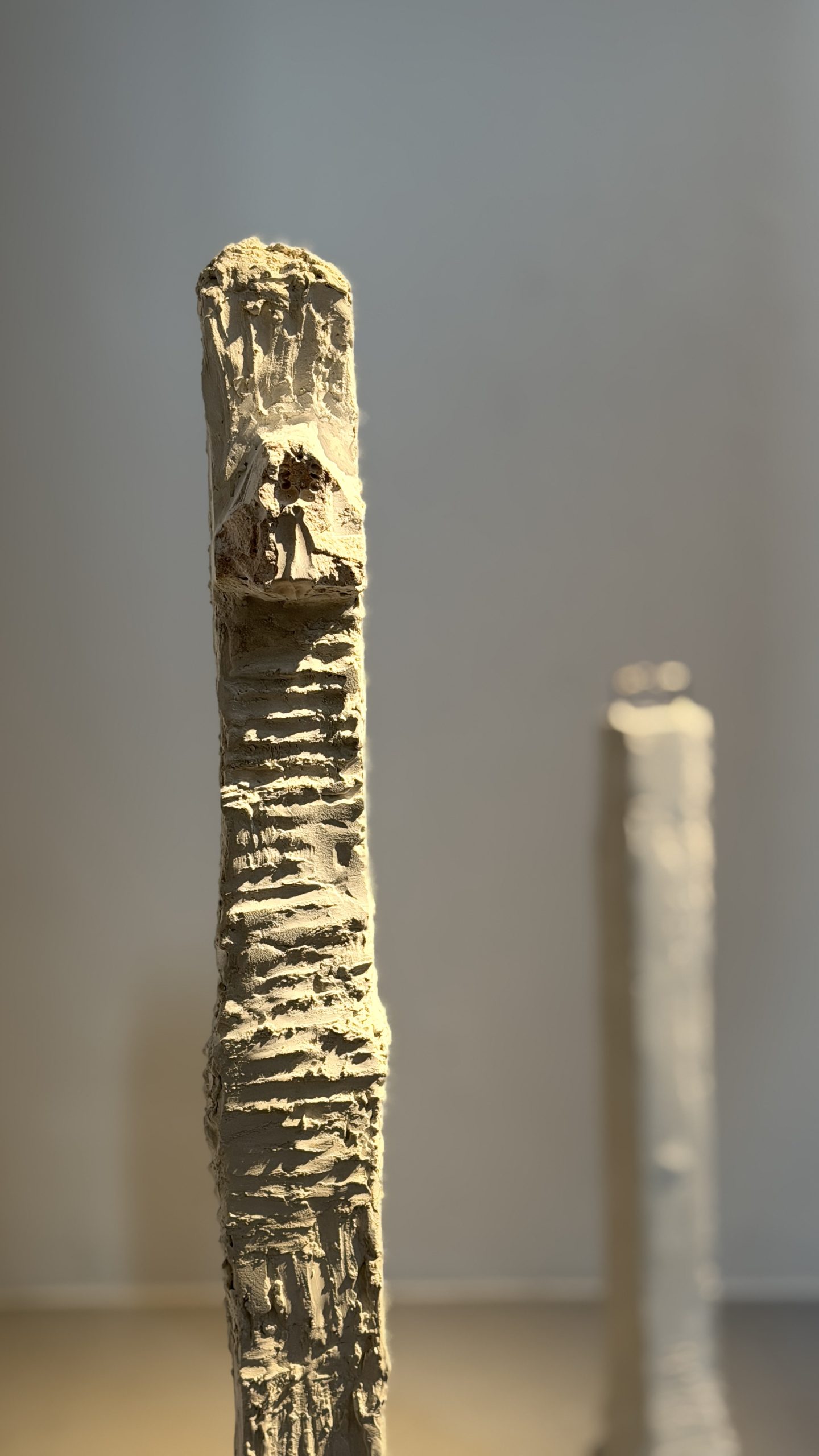
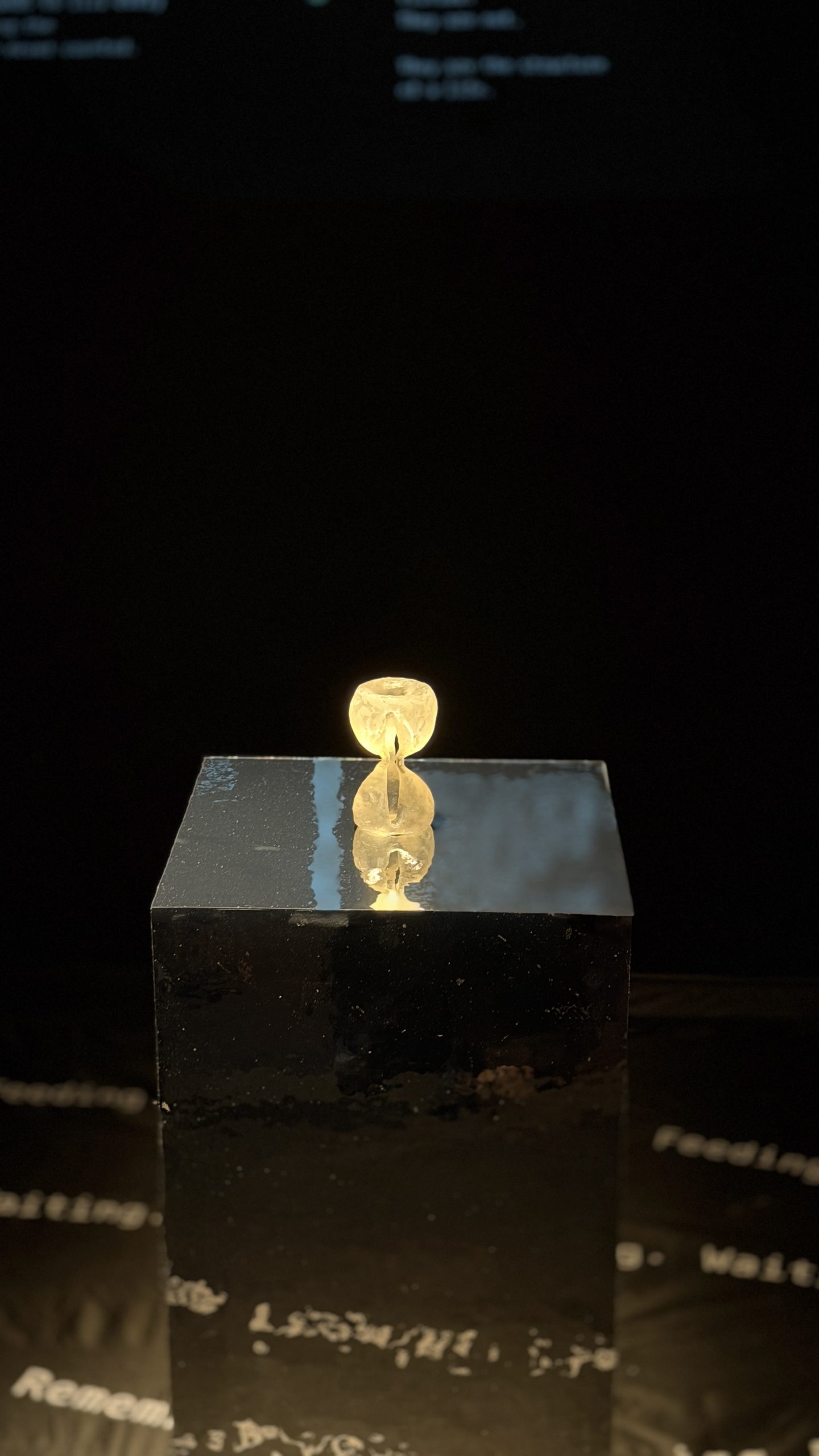
Anukriti’s project explores fertility figurines from the Indus Valley Civilization and how they shifted from everyday objects into museum artifacts. Working with archival material like excavation photos, maps, receipts, and letters, she looks at how repetition, documentation, and displacement change an object’s meaning. Through repeated sculptural reproductions, the figurines slowly transform again, breaking, mutating, and taking on new identities beyond their original role as symbols of fertility.


Yuxuan Hu

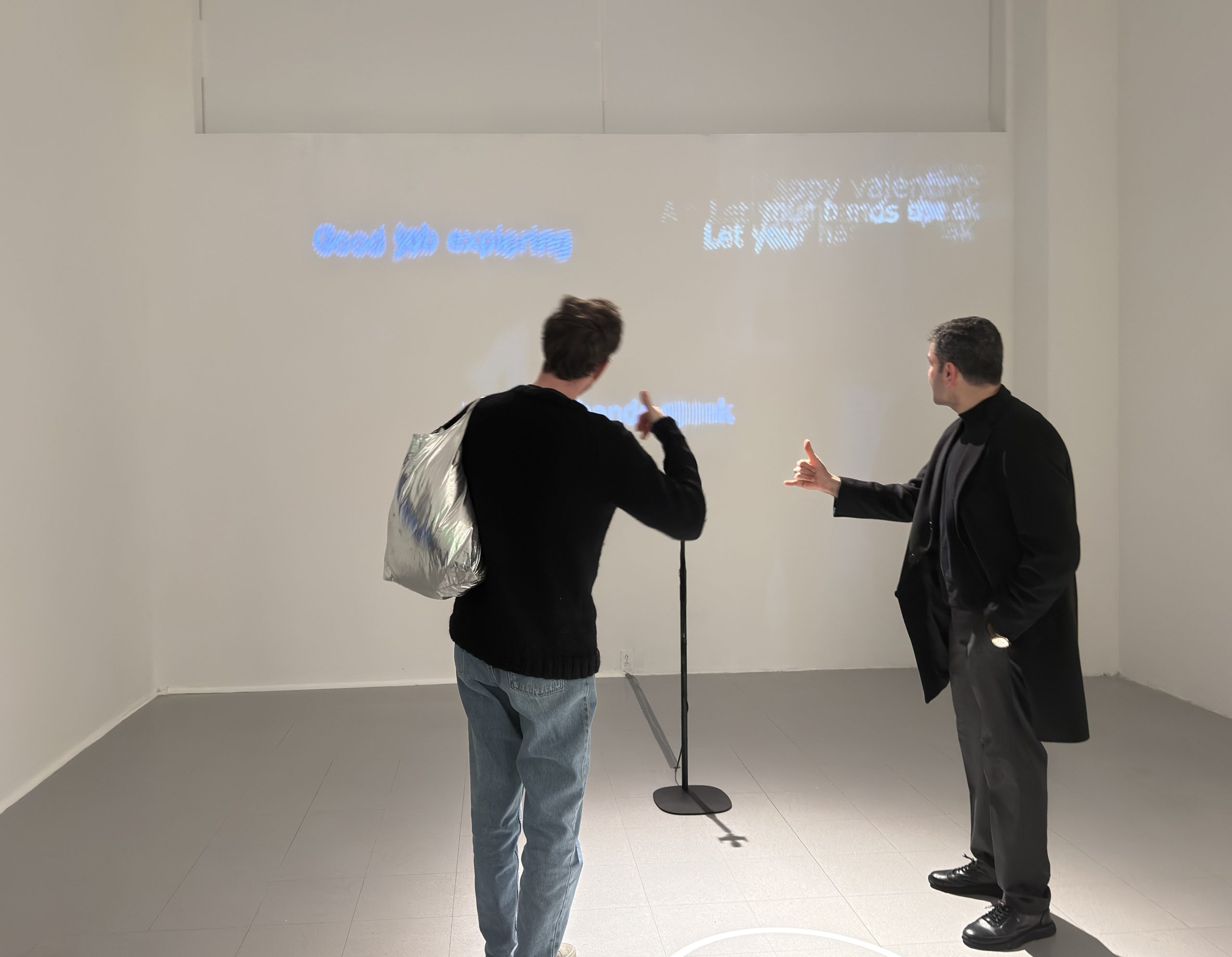
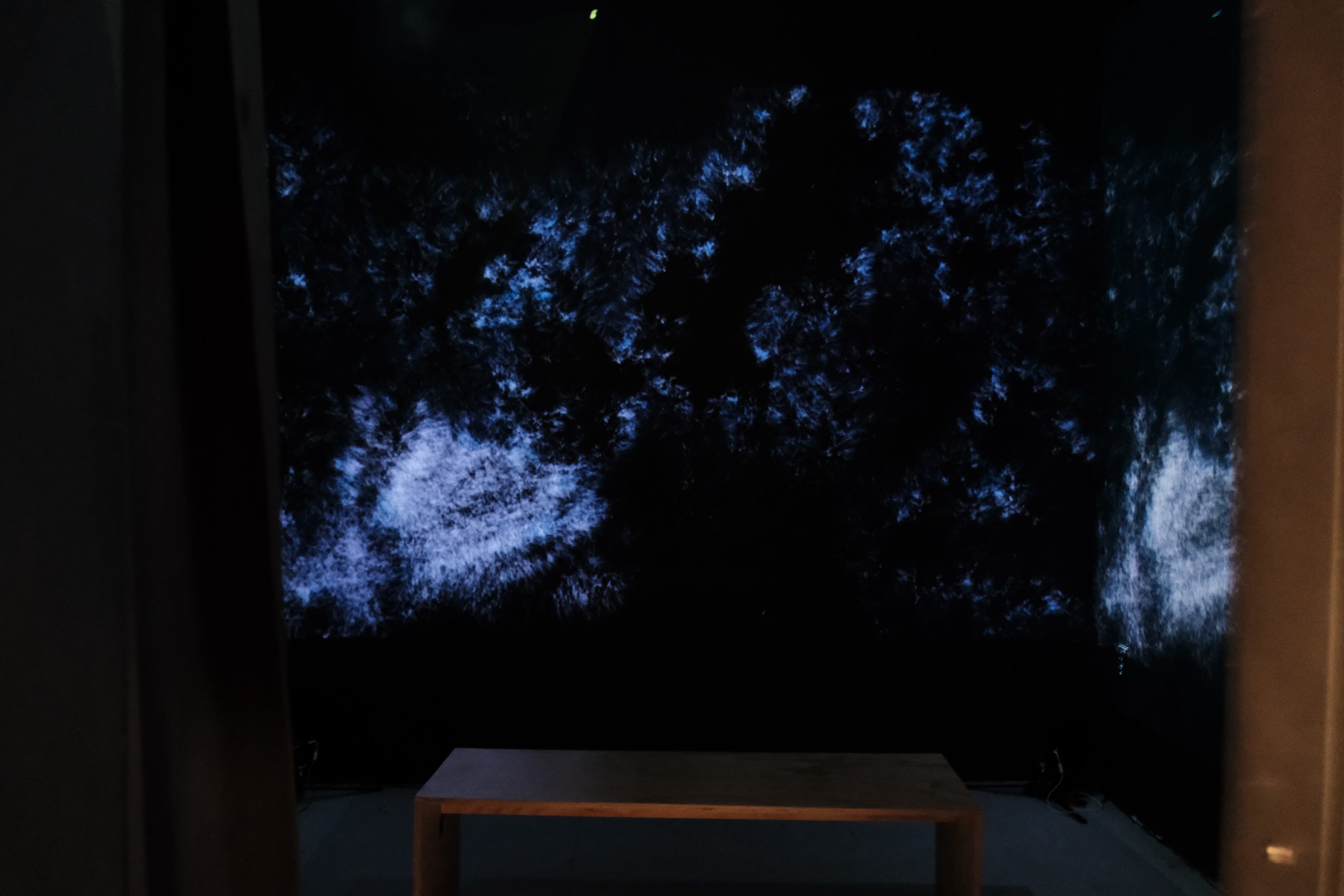
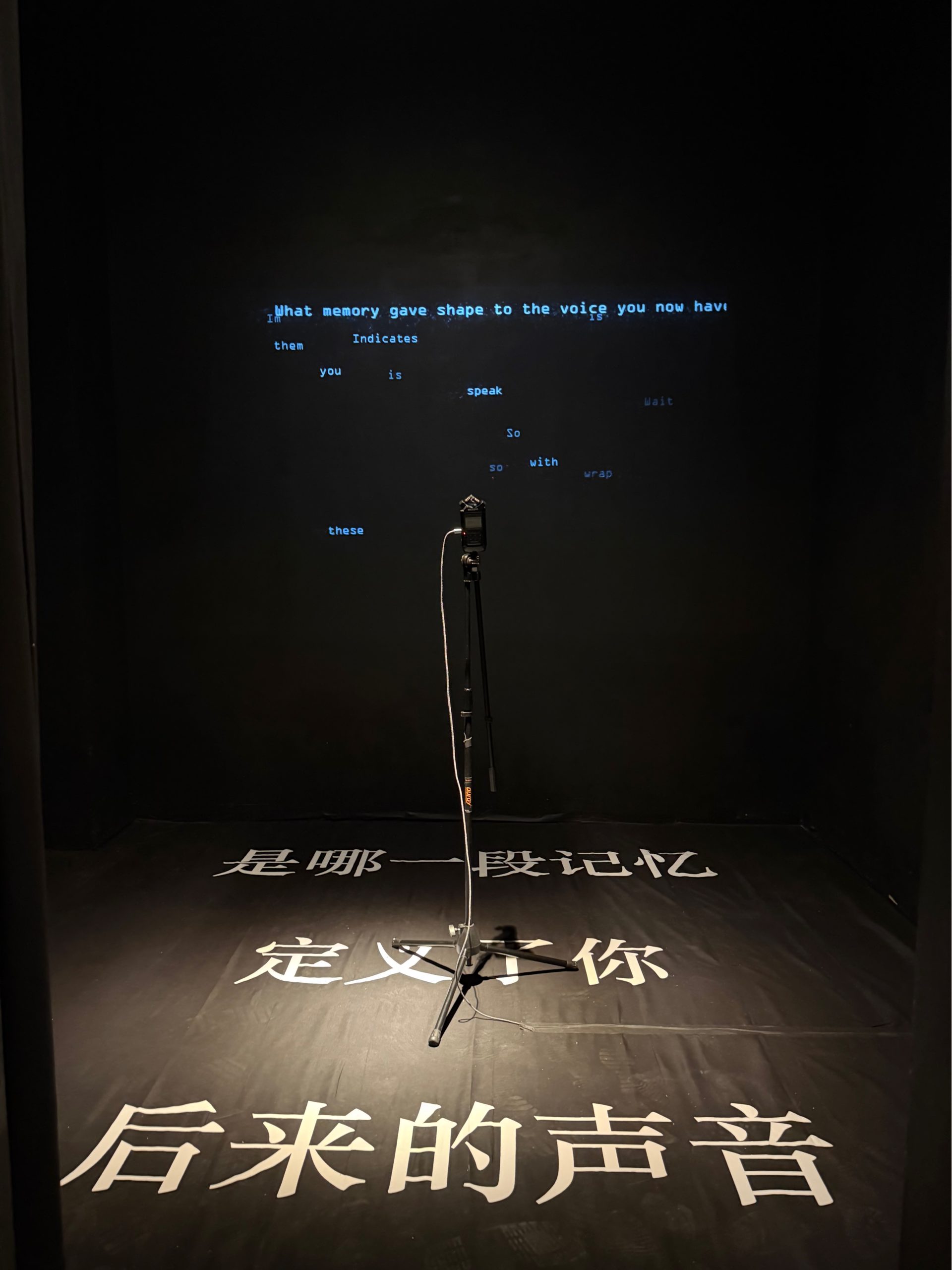
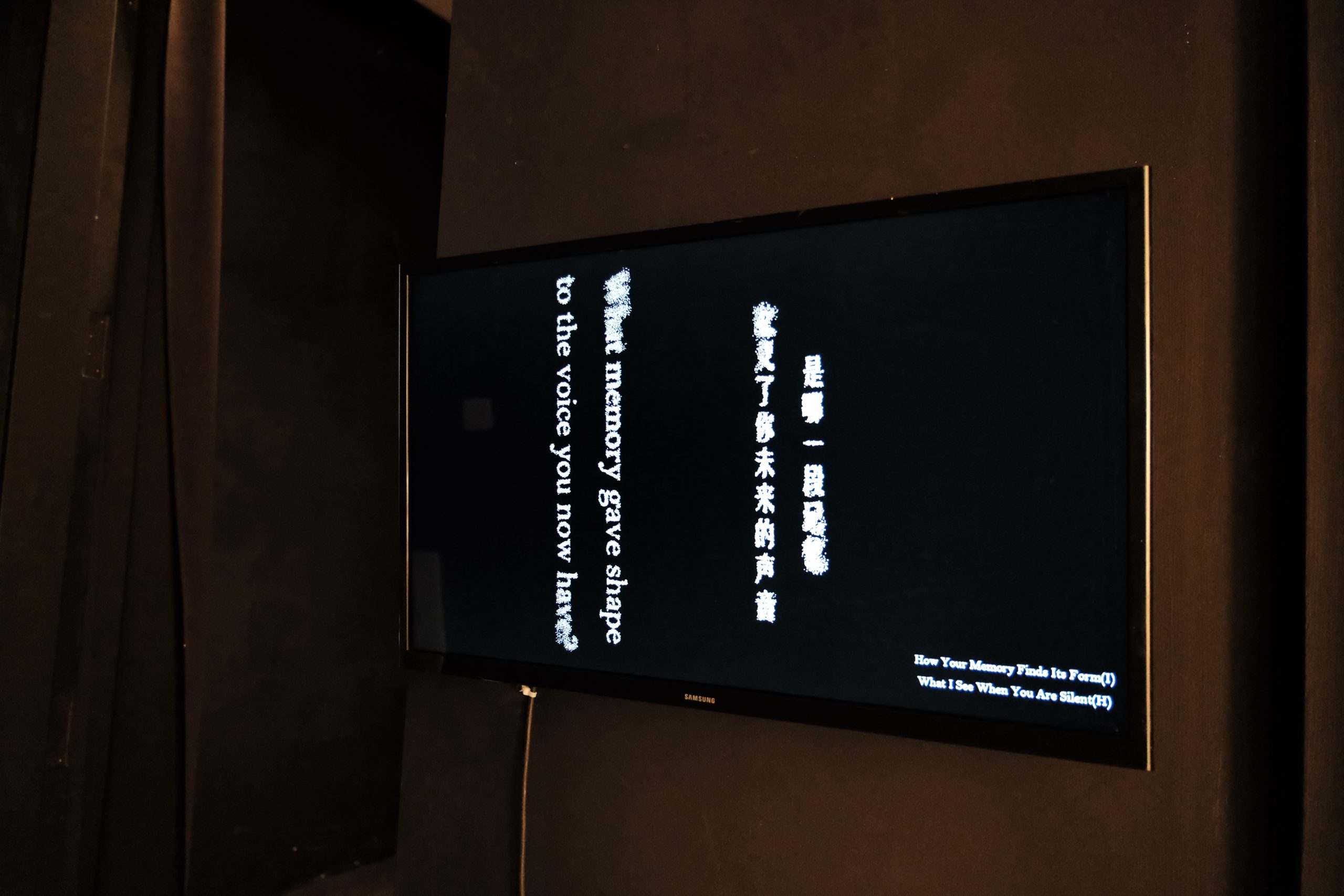
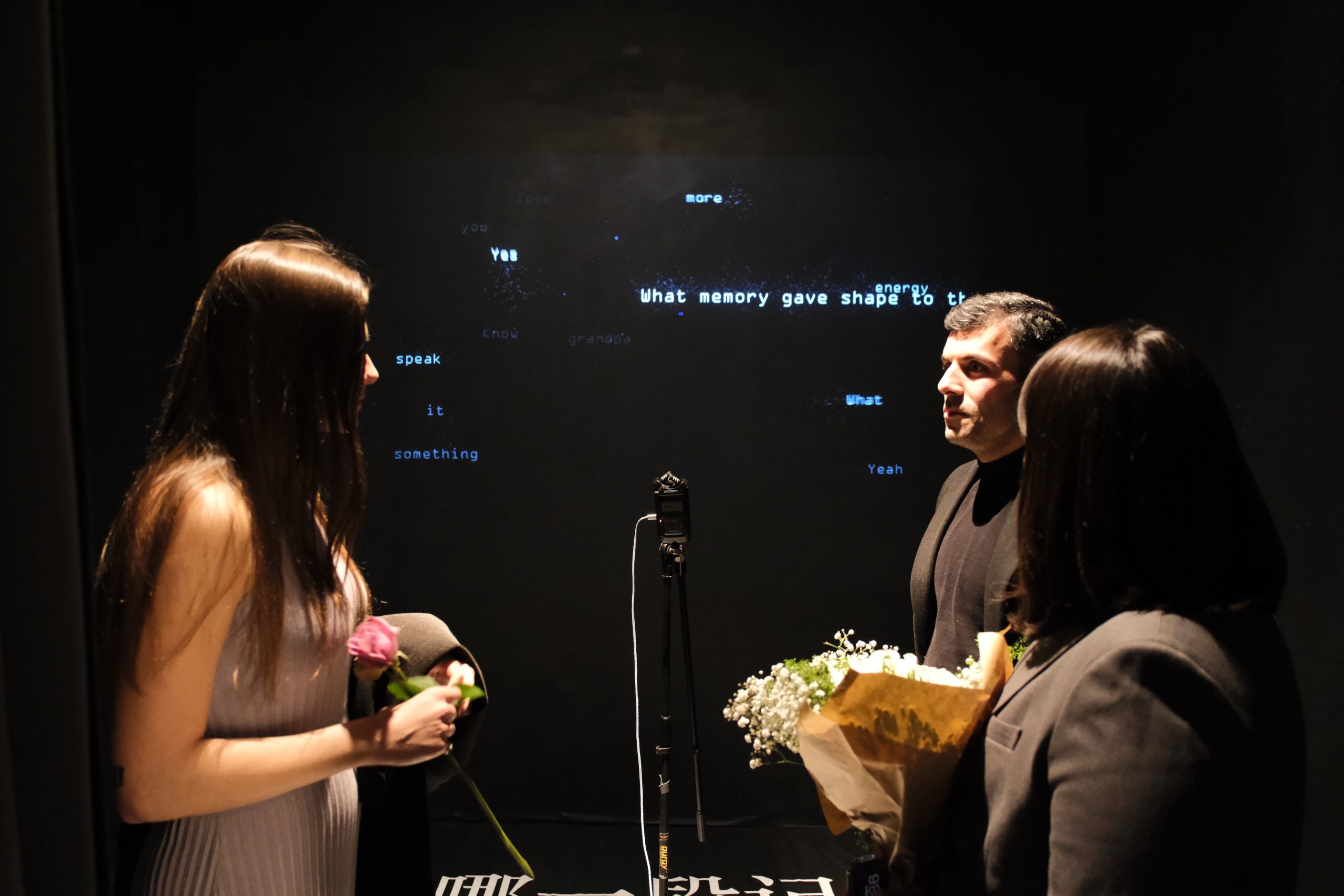
This digital art project transforms live sound into visual form using real-time interaction. Audience members speak into a microphone, and their voices are translated into dynamic visual particles that slowly fade over time. Each interaction produces a unique, temporary visual result, emphasizing ephemerality, participation, and the physical presence of sound.


Asem Kiyalova

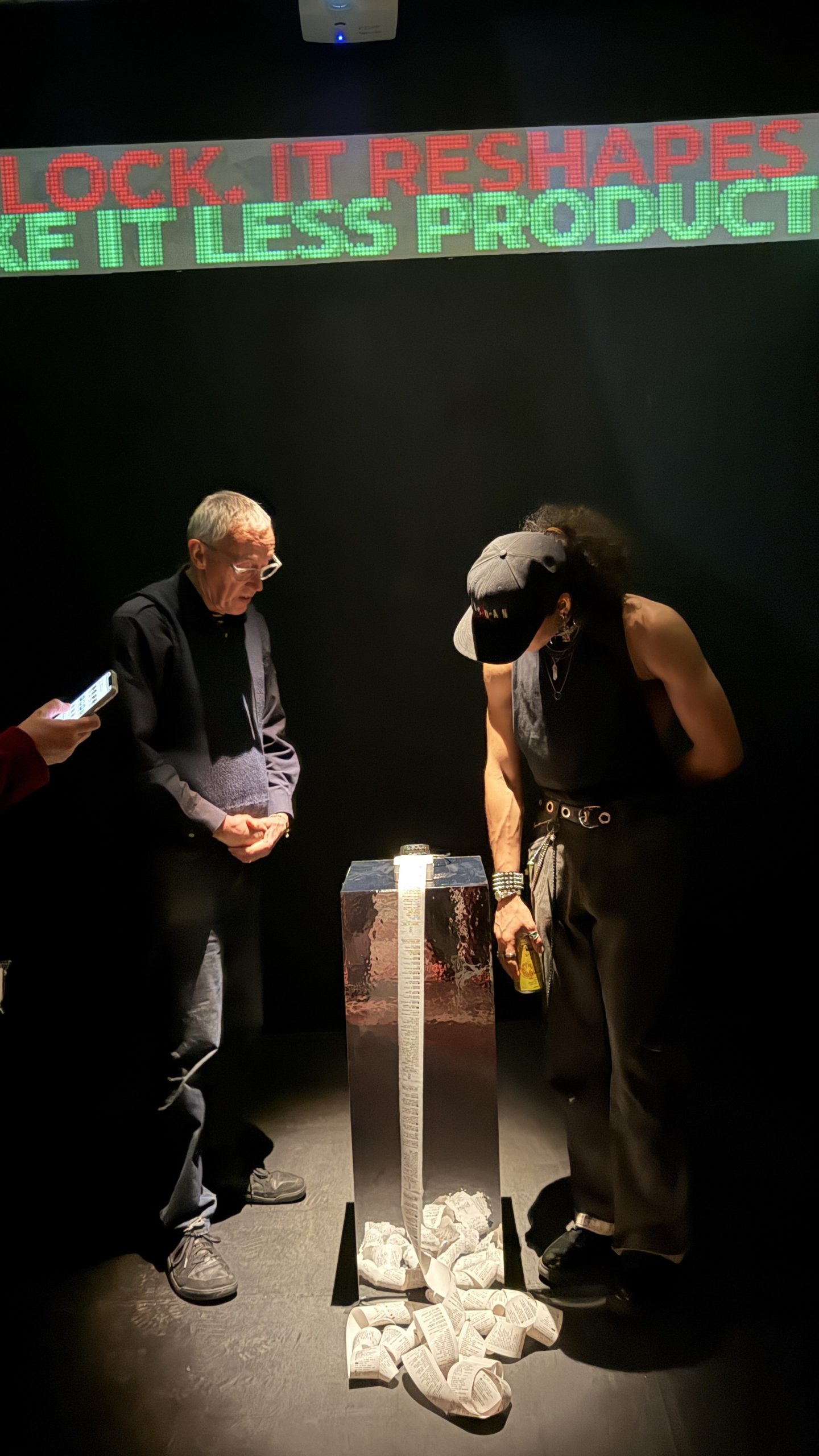
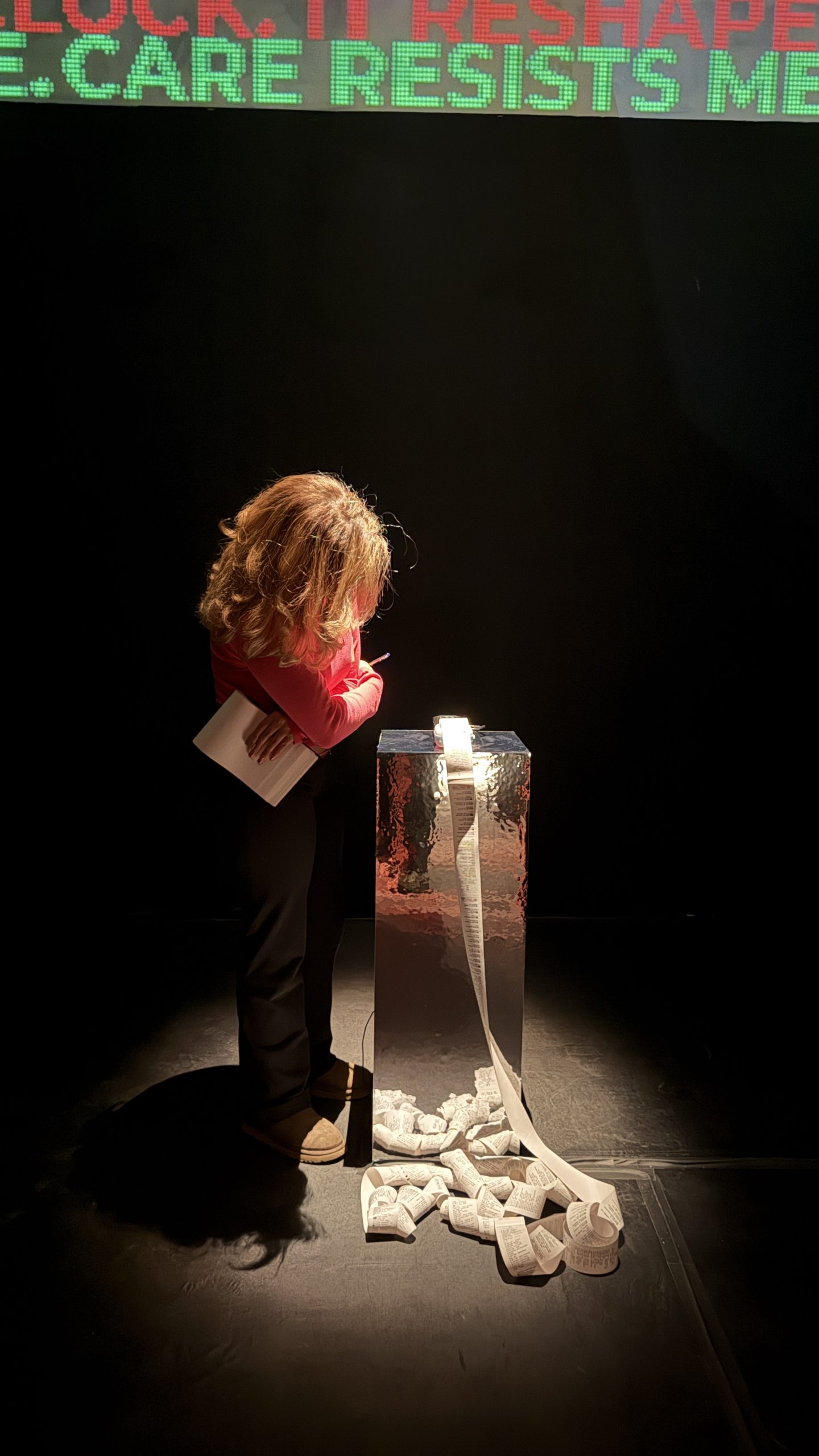
This project challenges the Western calendar’s linear, productivity-driven structure of time. By questioning how time is measured and organized, the work invites audiences to imagine alternative, shared, and more intuitive ways of marking life. The calendar becomes a speculative space for rethinking planning, value, and connection beyond capitalist frameworks.


Mahsa Masoumi

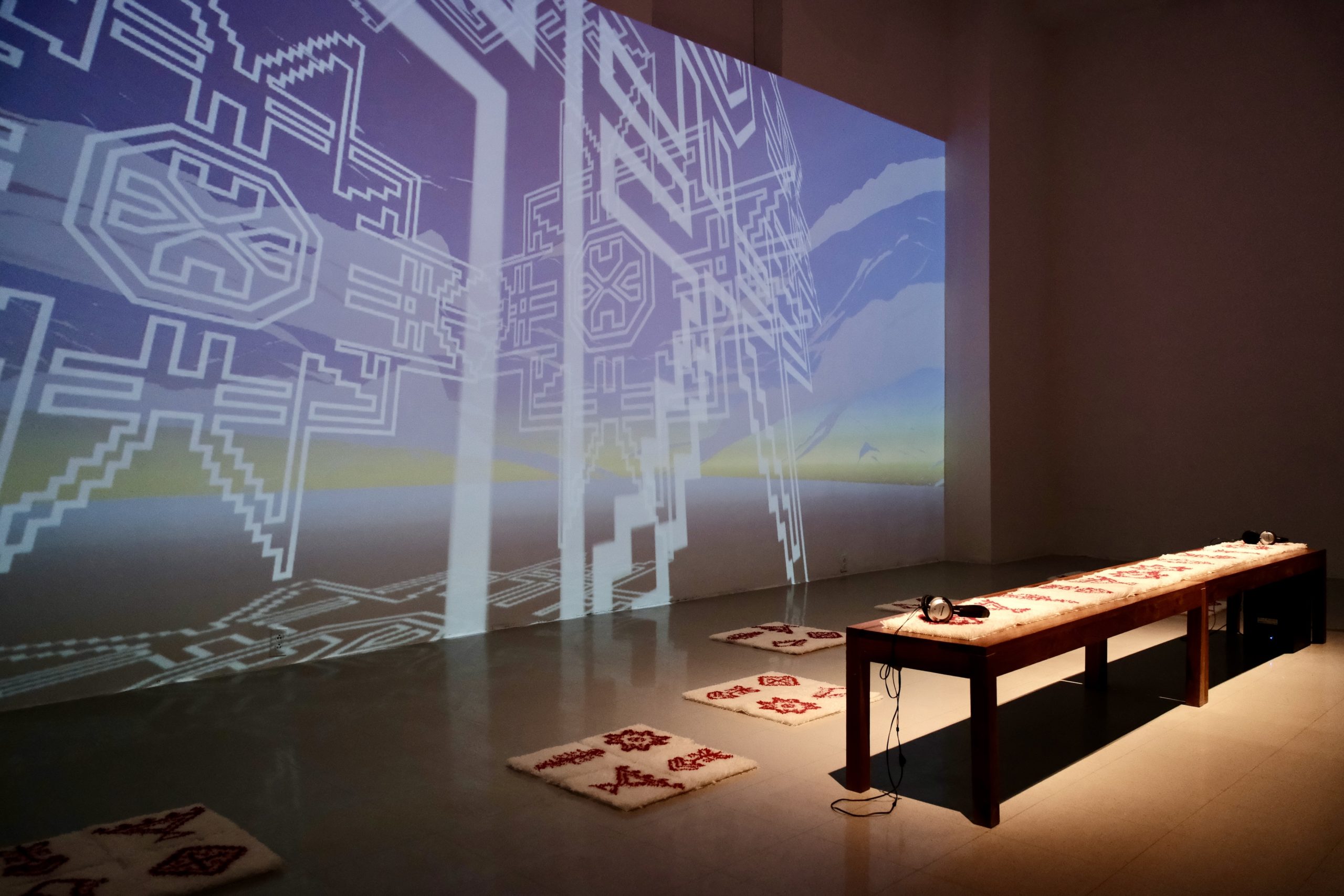
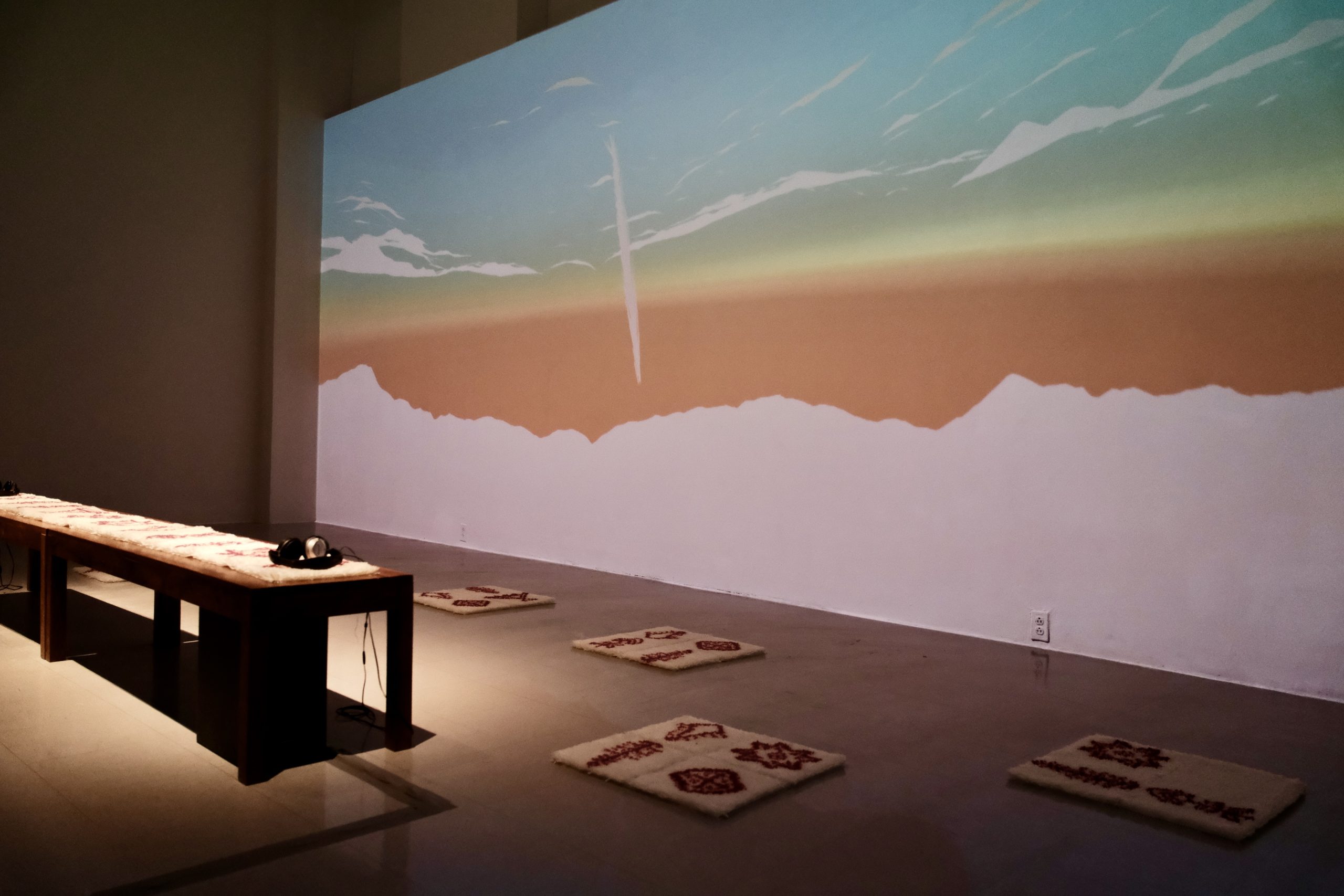
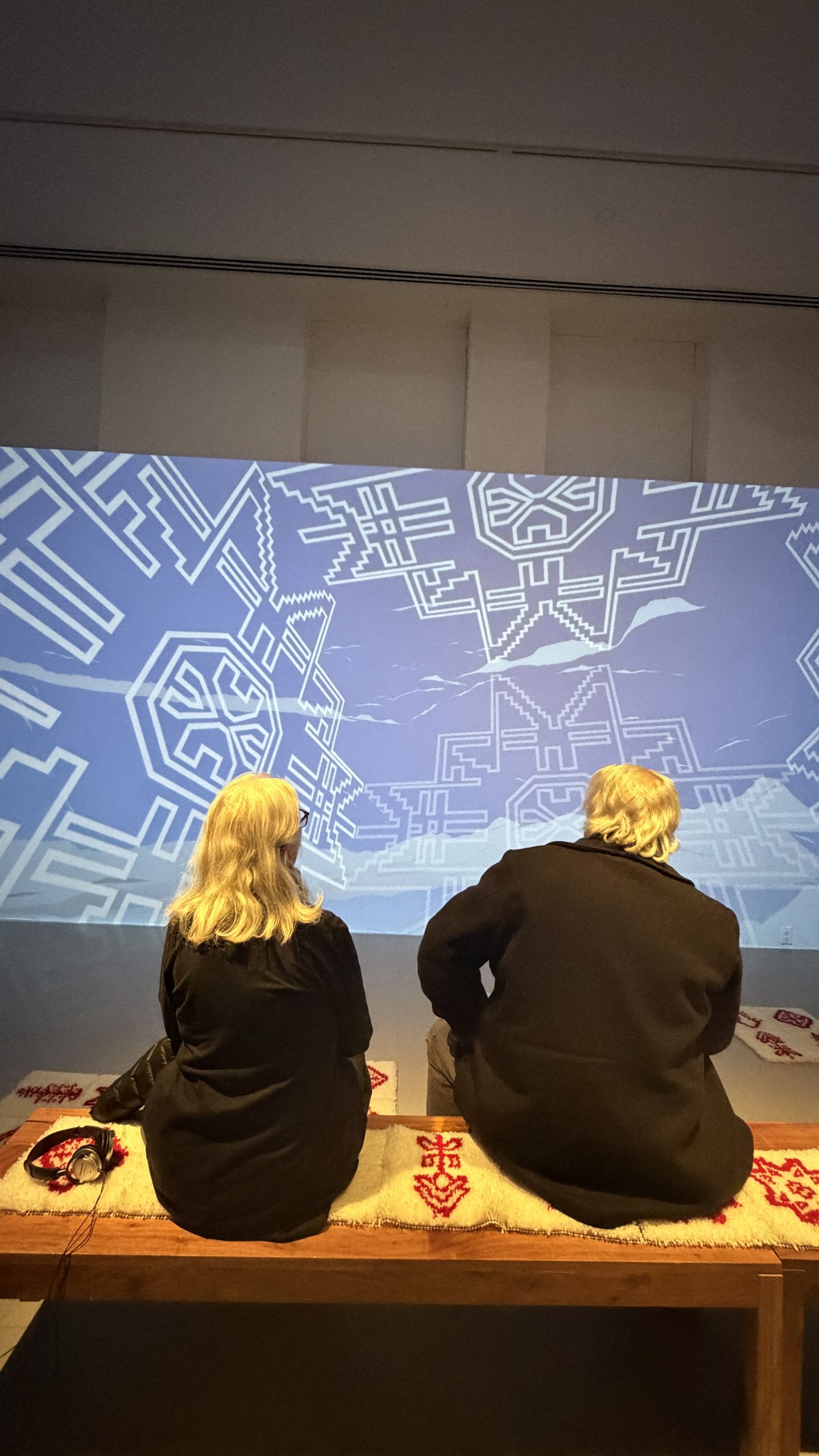
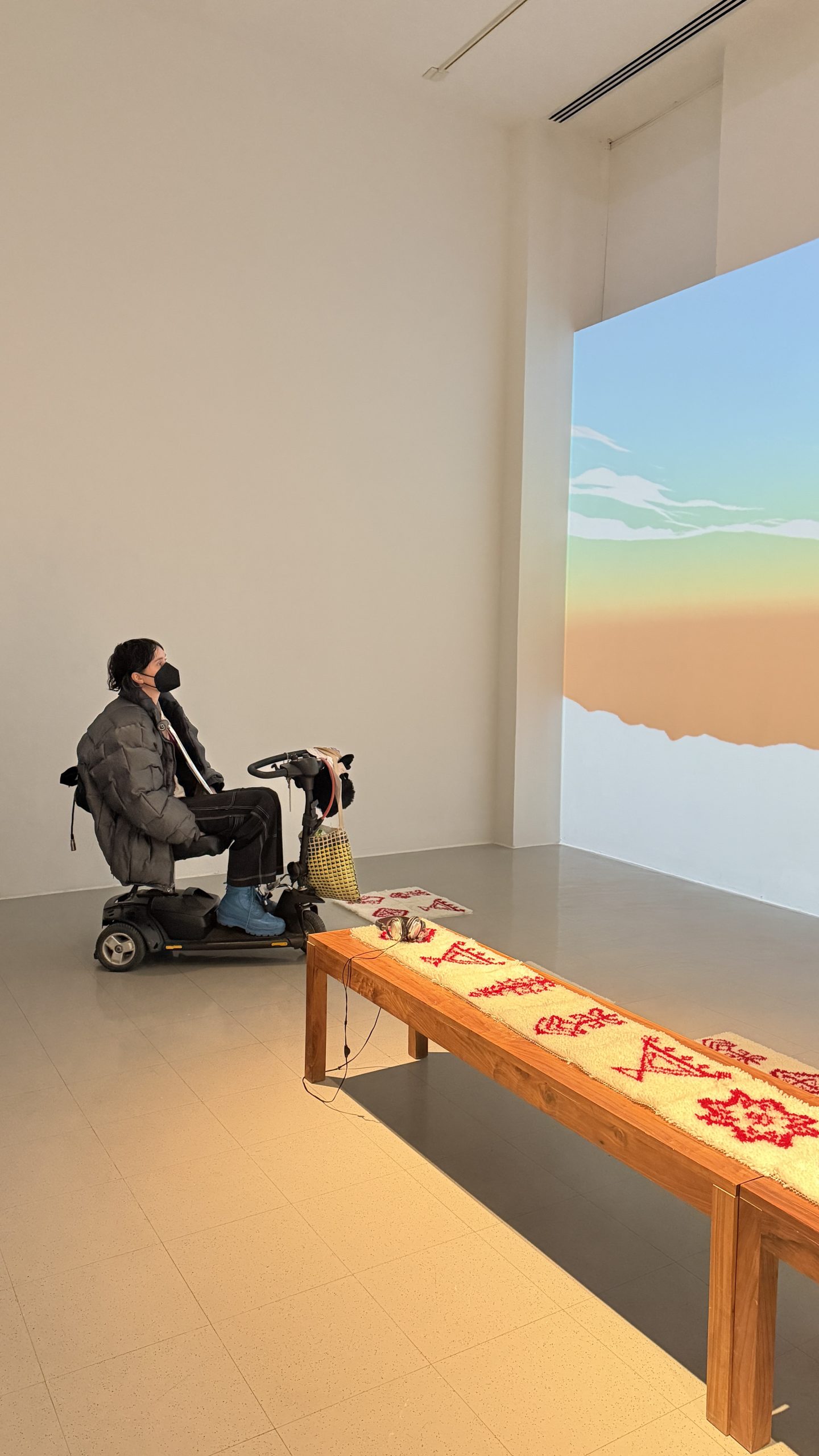
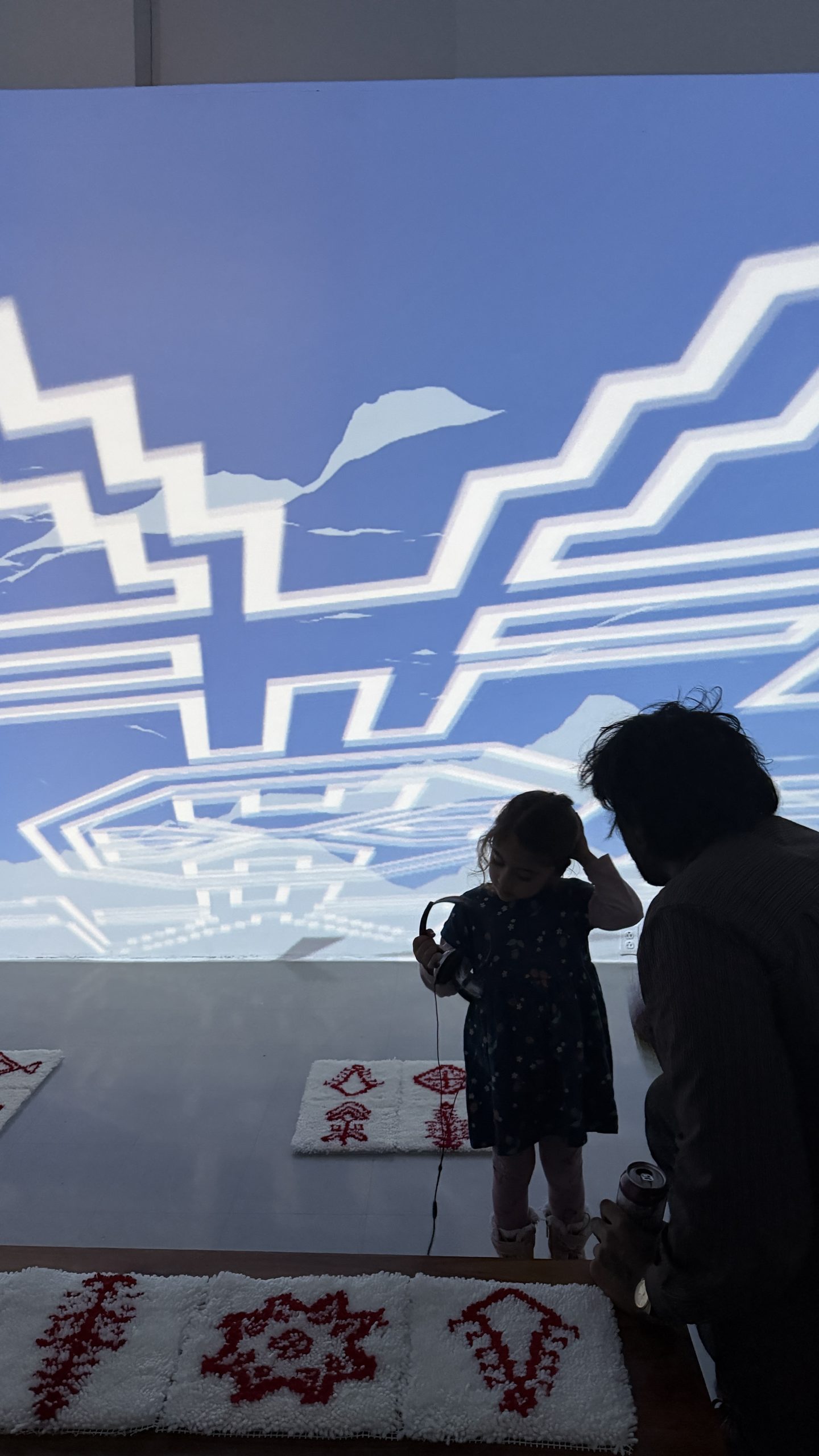
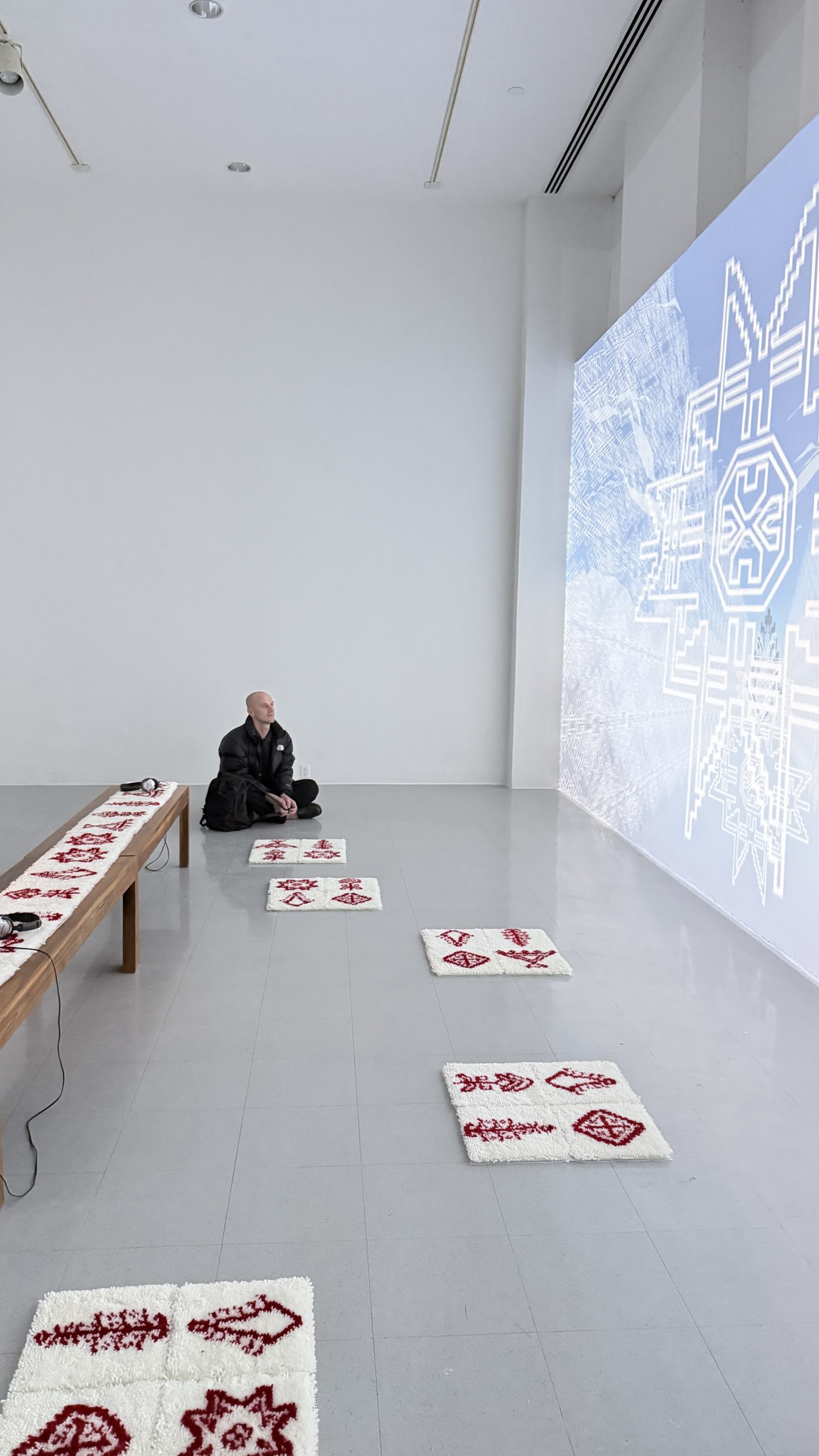
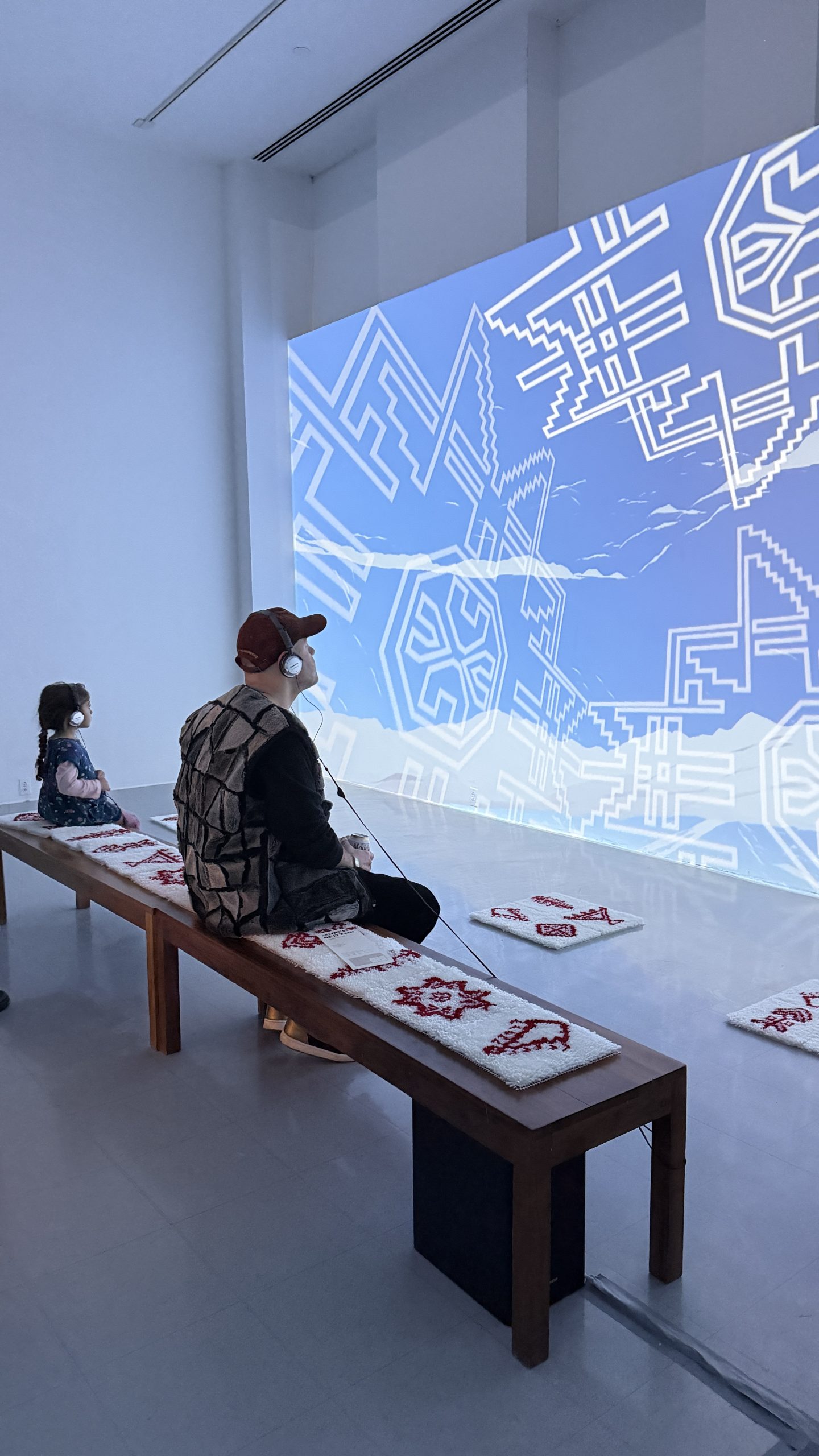
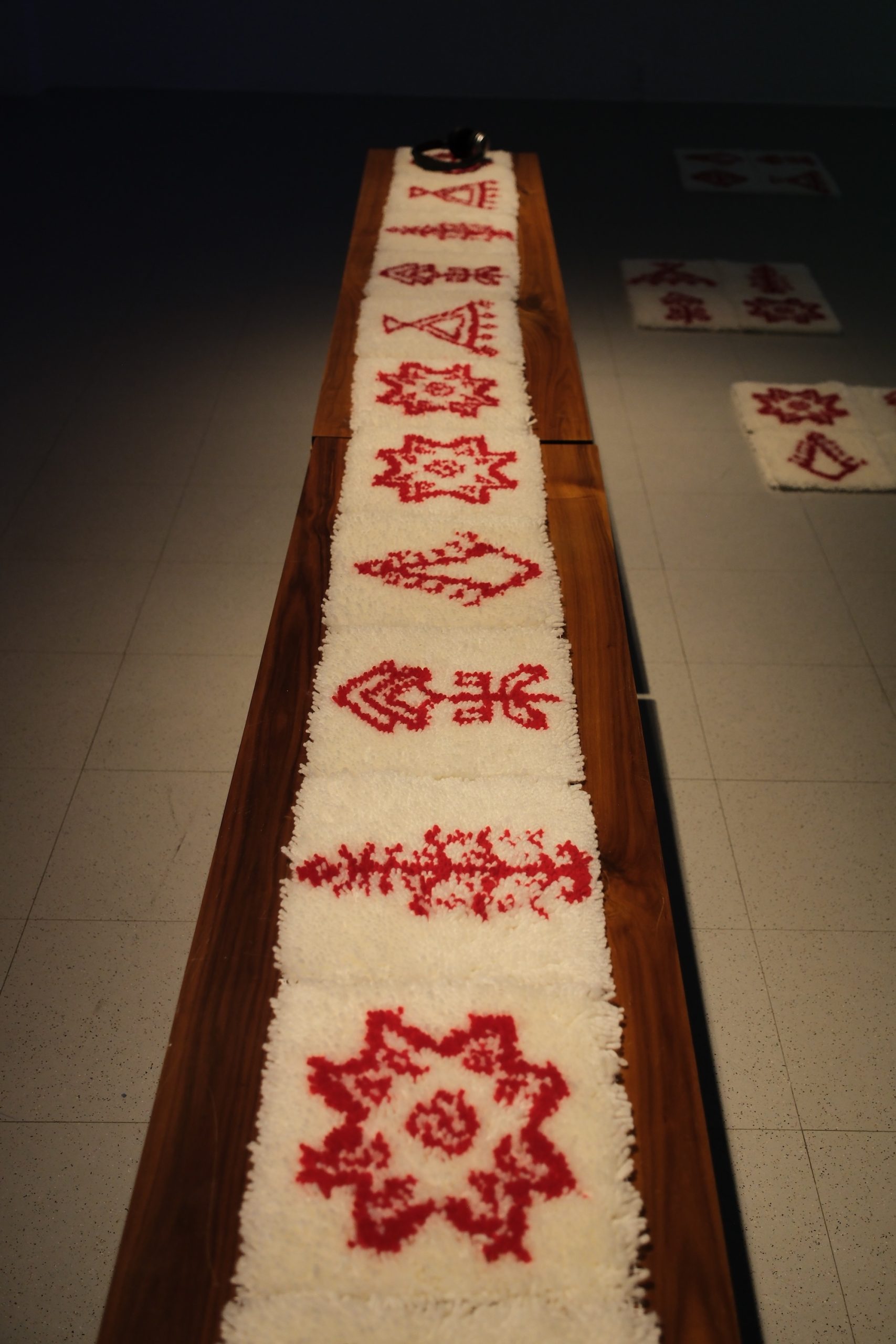
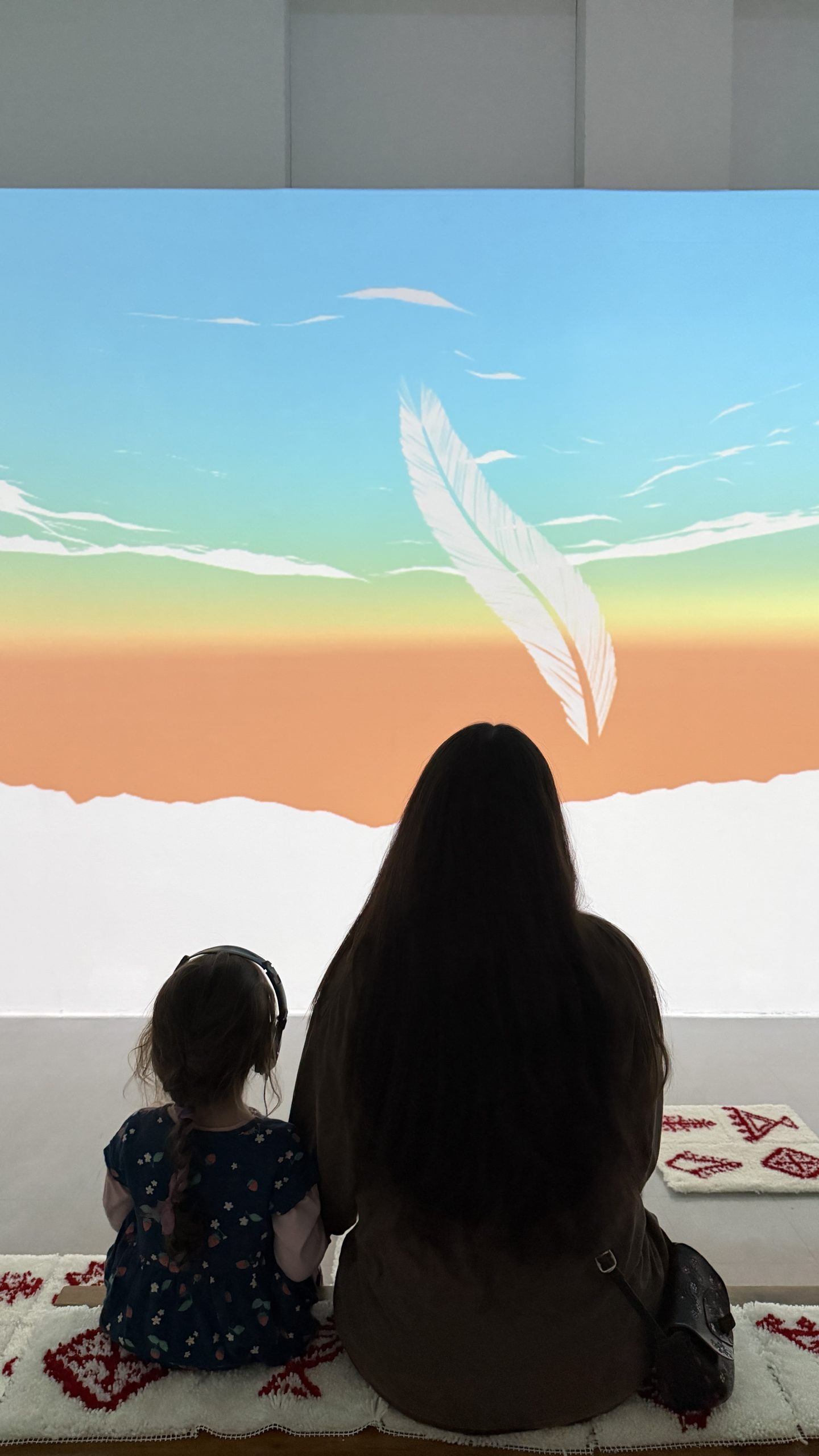
Sabr explores patience as a transformative force through storytelling with Persian carpet motifs. Anchored in the Persian epic of Zaal and Simorgh, the project weaves cultural symbolism, material practice, and narrative into a contemporary design context. The work examines how time, care, and repetition shape both stories and objects.

Design Lecture Series: Burak Arikan

Art After Manufactured Certainty : November 4, 2025


On November 4, the Mason Gross Design community hosted Burak Arikan, an artist, designer, and researcher whose work investigates how predictive systems shape culture, behavior, and power, and how art can intervene. Arikan’s practice spans network mapping, data politics, and collective intelligence, exposing the invisible economies and infrastructures that govern our digital lives. His projects have been exhibited at MoMA, the Museum of Contemporary Art Tokyo, and major biennials in Venice, Berlin, Istanbul, and São Paulo. He is also the founder of Graph Commons, a collaborative platform for mapping complex data networks.
Arikan began his talk by tracing the shift from 20th-century mass media: newspapers, television, radio, to today’s algorithmic platforms. What once appeared as an open social web has transformed into an economy of prediction, where every click, post, and search is harvested to anticipate future behavior. “Speech is still free,” he said. “The problem is that cognition is engineered.” For Arikan, this condition of manufactured certainty defines our current era: a system that turns uncertainty into confidence, not to inform us, but to control us.
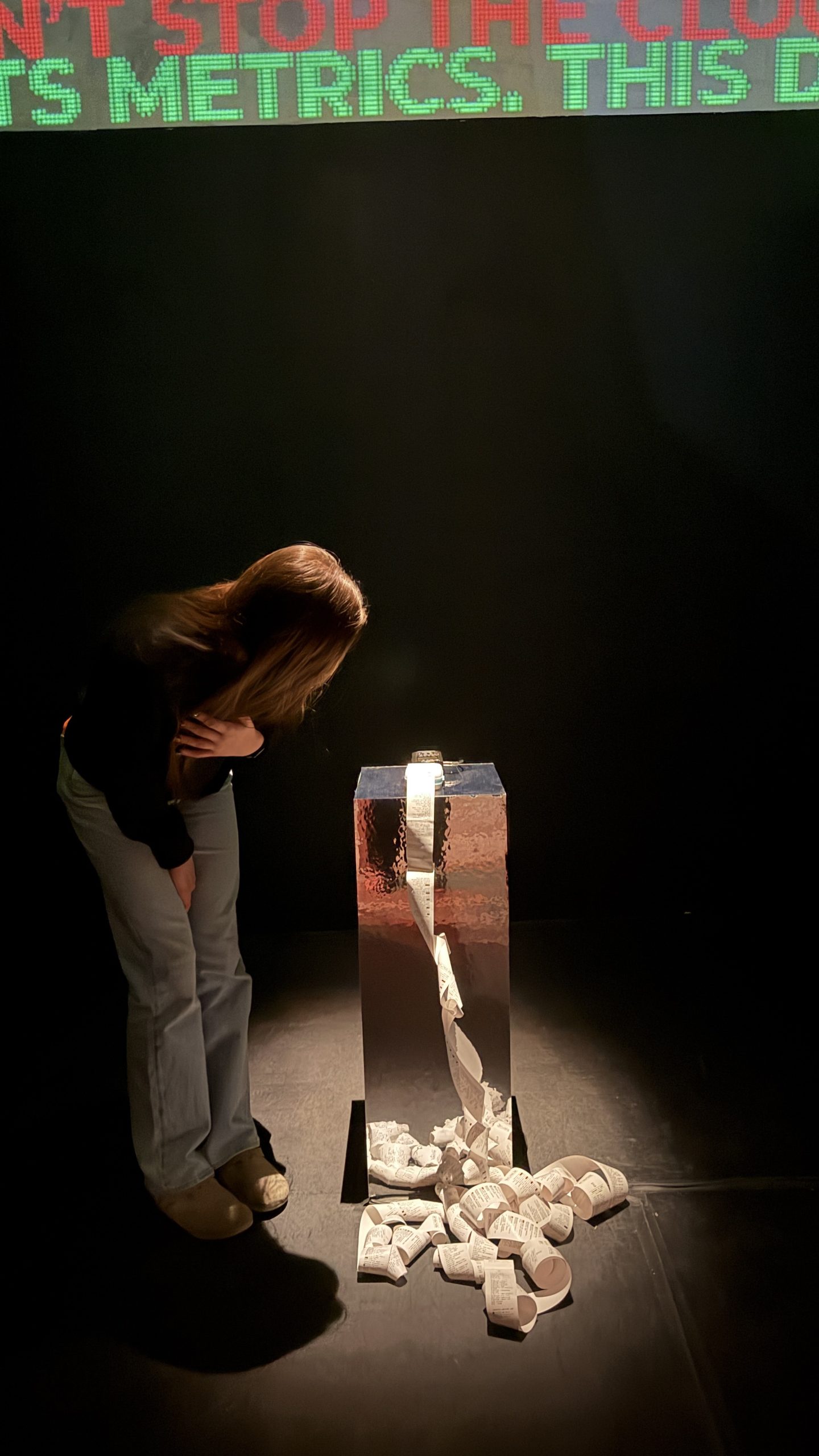
Through his projects, Arikan turns these predictive systems into artistic material. In one work, he developed software to forecast his own bank transactions, stamping each receipt with the algorithm’s probability. By following its predictions, he demonstrated how predictive systems can fabricate the very futures they claim to foresee. In another project, he built a platform that allowed users to “IPO themselves,” issuing shares of their identities in a speculative social marketplace. Friendship, labor, and visibility became currency, reflecting how social media monetizes our relationships.

Arikan also discussed Social Contracts (2013), a project that used blockchain technology long before NFTs became mainstream. Instead of treating digital tokens as collectibles, he framed them as social sculptures, publicly visible, constantly evolving networks of ownership and connection. Each transfer of an artwork generated new relationships, mapping the circulation of power within digital culture.

Across his body of work, Arikan outlined four key principles that guide his practice: prediction, feedback, transparency, and critical friction. Together, these form what he calls Predictive Realism, an artistic approach that examines and reshapes the predictive mechanisms embedded in everyday life. His work draws from traditions of Institutional Critique, Social Sculpture, and Fluxus, expanding them for a world governed by data and algorithms.

Arikan closed with a reflection on uncertainty as a space of freedom. If our futures are being pre-written by machines, art can restore ambiguity, reintroducing the unknown as a site of imagination and agency. “Art can reveal the infrastructures that claim to predict us,” he said, “and widen the futures we are allowed to have.”

MFA Design alumni reflect

Corina Coughlan, MFA ‘24
Fellow, Public Policy Lab

Developing human-centered design initiatives to improve public services through conducting user research, developing service design strategies, and collaborating with interdisciplinary teams to prototype and test solutions.

The MFA Design transformed my approach to design and research, encouraging me to ask deeper questions, challenge conventions, and use design as a tool for cultural critique. One of the most rewarding aspects was its interdisciplinary nature, which allowed me to collaborate across university departments and integrate diverse perspectives into my research. This process was instrumental in shaping both my voice as a designer and the direction of my practice.

My MFA research stemmed from a desire to challenge how we see, measure, and communicate lived experience and explore how data can become more human and accessible through visual storytelling and immersive experiences. My thesis exhibition translated these ideas into immersive storytelling through sound, video, and text, offering a more embodied way of understanding movement and data.

Sanaz Feizi, MFA ‘23
Assistant Professor, University of Memphis

Interdisciplinary designer, educator, and researcher whose practice explores the intersection of socio-cultural, biomedical, and biopolitical frameworks.

What I found most valuable about the program was being part of a supportive and collaborative community where faculty were genuinely invested in each student’s growth. The program fostered an environment of mutual encouragement while ensuring we were equipped with the most current and relevant design knowledge. This combination of academic rigor and community support created a unique learning experience that empowered me to develop my own research and creative practice.

My research investigating menstrual stigma and gender inequality, I developed the MAKE TALK Workshop—a research-driven, participatory methodology that leverages dialogic exchange and creative self-expression to surface and challenge normative narratives surrounding menstruation.

Leona Cheung, MFA ‘23
Freelance Designer

Designer and educator based in Los Angeles, working in print and digital projects from branding to websites.

The program allowed us to freely explore many avenues of research relating to our personal interests of study. It was a wonderful experience to develop ideas alongside peers with backgrounds and interests that were diverse, thus creating a rich environment for collaboration. I’m grateful for the support of the faculty, their generosity in sharing knowledge and resources. Not only was it a space to grow my practice and expand the skills for both traditional and contemporary applications of design, but it also taught me how to view things through the lens of greater sensitivity to critical issues.

Sophie Auger, MFA ’21
Visiting Professor, Université du Québec à Montréal

Alongside teaching also works independently and in collaboration with artists, curators, and publishers on exhibitions, publications, and websites.

I was part of the inaugural cohort of the MFA in Design program at Rutgers, and one of only two students. This extraordinary context was both challenging and rewarding: the intimacy of the cohort allowed for individualized engagement, while the generous and dedicated faculty and access to great resources at Rutgers made it a very fruitful experience. The program encourages experimentation in design, art, technology, and interdepartmental research; all of which have enriched my interdisciplinary practice.

My research explored the paradox of the NFT, cryptographically unique yet not interchangeable. This coupled with the intangible nature of a new technology still in the making, fed my thesis work and research. The resulting exhibition explored the aesthetic experience of the NFT, as well as its impact on notions of archiving.


Design Lecture Series: Livia Foldes

Silence, Fear, and Urgency in Design Practice: October 21, 2025

What do I look like to a machine? Computer vision algorithms “see” me as a series of boxes that can be recognized and named, a group of points whose relationship to one another predicts my emotional state, and so on. 

A series of self portraits attempts to reclaim my image from this reductive algorithmic gaze, while prompting additional questions: what ways of knowing are illegible to a machine? In what ways do I want to be known, to myself and to others?

On October 21, the Mason Gross Design community welcomed Livia Foldes, a Brooklyn-based cultural worker whose practice explores gender, labor, intimacy, and power across art, design, technology, and activism. Her work asks how and why machines are taught to understand, and often misunderstand, our bodies and the identities they carry. Livia’s projects have been supported by The Photographers’ Gallery, NEW INC, and the Goethe Institut, reflecting her deep commitment to using design as a tool for critical reflection and social change.

In her talk, Livia traced her journey from working in San Francisco during the height of the tech boom—when rapid growth and gentrification transformed the city, to pursuing graduate studies in Design and Technology at Parsons. These experiences grounded her practice in ethics and activism, and led her to question the systems that shape our digital lives.

Livia shared a range of projects that examined bias in machine vision, erased internet histories, and the overlooked contributions of sex workers to digital culture. Through works such as Machine Portraits and Browser Histories, she revealed how technology mirrors structures of power, determining who is visible and who is rendered invisible.

Reflecting on her teaching and creative process, Livia spoke about the need to build design practices that balance urgency and sustainability, to challenge injustice without burning out, and to critique systems while caring for oneself and one’s community.

She closed her lecture with a meditation on fear and silence, reminding students that design exists in tension: between art and commerce, critique and complicity, innovation and responsibility. The real work of design, she suggested, begins when we find the courage to speak, to question, and to act with both empathy and conviction.

Design Lecture Series: Eli Rosenbloom

The Movie Was About a Movie: October 7, 2025

On October 7, the Mason Gross Design community welcomed Eli Rosenbloom, designer, editor, and founder of the digital library New Reader, for a thought-provoking lecture exploring the intersections of print, film, and digital media. Eli previously served as art director of the experimental publication Visionaire, and his practice examines how traditional print culture evolves within the landscape of new media. His collaborations include projects with Prada, Burberry, Rizzoli, the Judd Foundation, and the National Museum of Norway.

In his talk, Eli shared a series of works that questioned how publishing and exhibition design can merge into new forms of storytelling. He described publication as a space for experience, where a book might unfold like an exhibition and an exhibition might read like a book. Through restrained visuals and precise sequencing, his work demonstrates how design can contain time, memory, and narrative.

A key reference point in his lecture was the assigned reading The Movie Was About a Movie, which traced how the shift from watching films in theaters to viewing them on VCRs and through video rentals changed our collective relationship with media. Eli connected this transition to his own practice, showing how the formats of media—print, screen, or projection—reshape how we see, collect, and share stories.

By moving between design, editing, and curation, Eli’s work invites us to consider how the mediums we use to store and circulate images influence what we remember and how we tell stories. His lecture reminded the audience that in every format—page, screen, or archive—design is a form of storytelling that keeps visual culture alive.