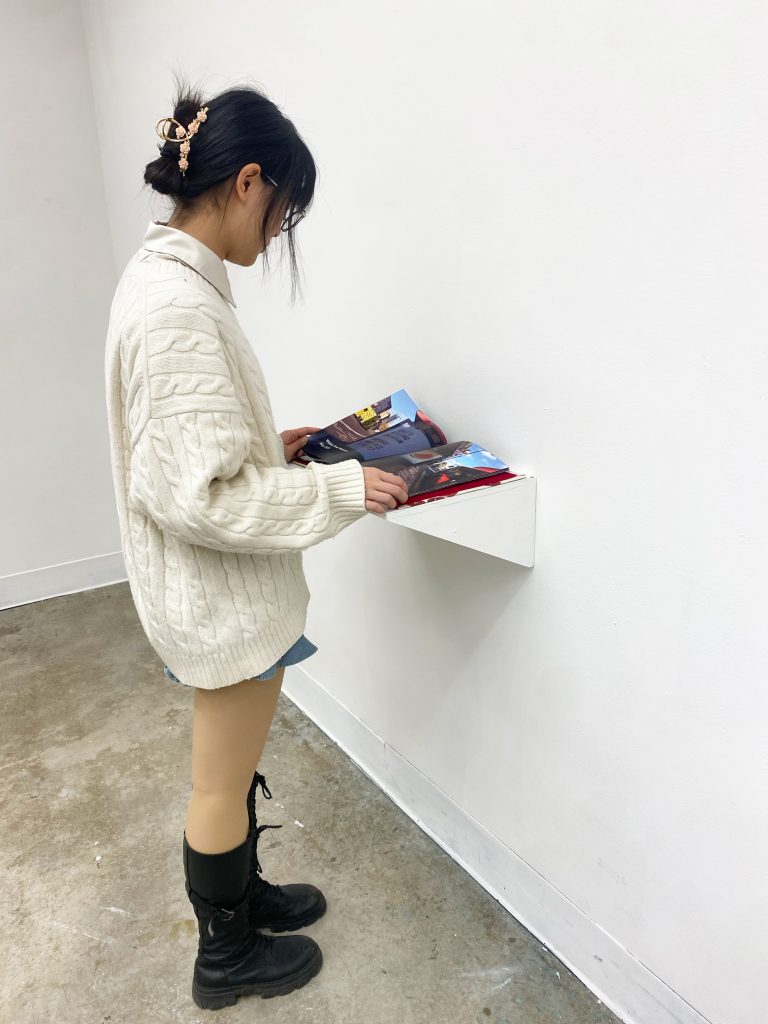
On December 8, 2025 the MFA Design first year candidates held their semester review, focused on projects completed in Design Studio 1 taught by Sue Huang. The goal of this review was for candidates to receive feedback from design faculty on their chosen project.
Qing Zeng (she/her)
LUNE is a third person 3D narrative game that explores how individuals with social anxiety disorder (S.A.D.) can learn, practice, and internalize social coping strategies through game play, and how these learned strategies may help them regulate emotions and navigate real-world social interactions.
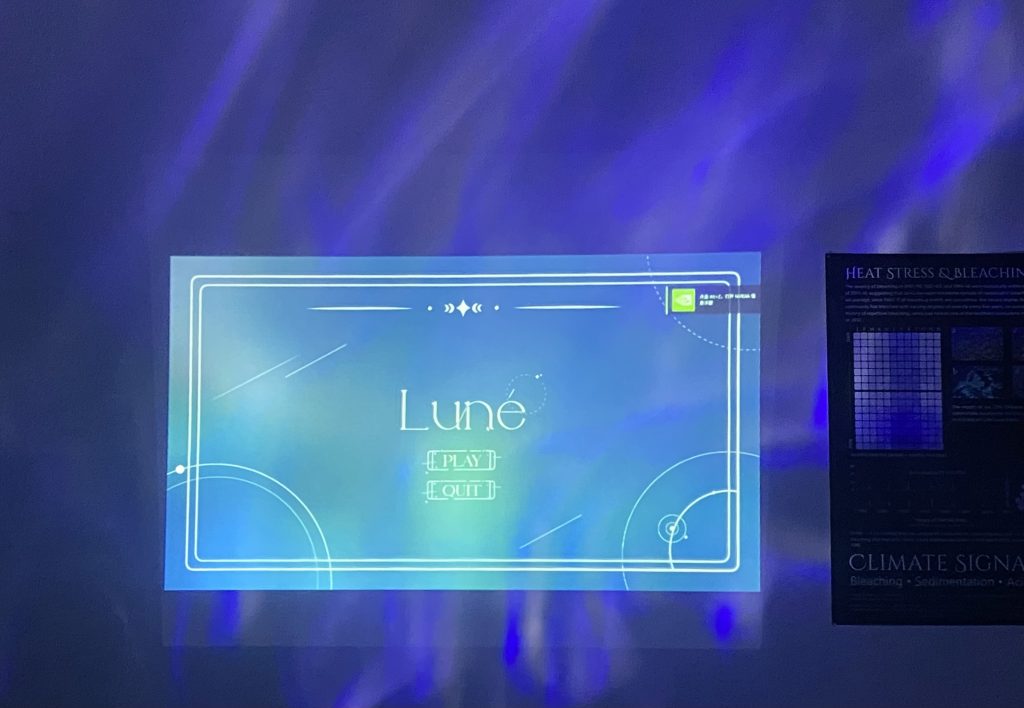
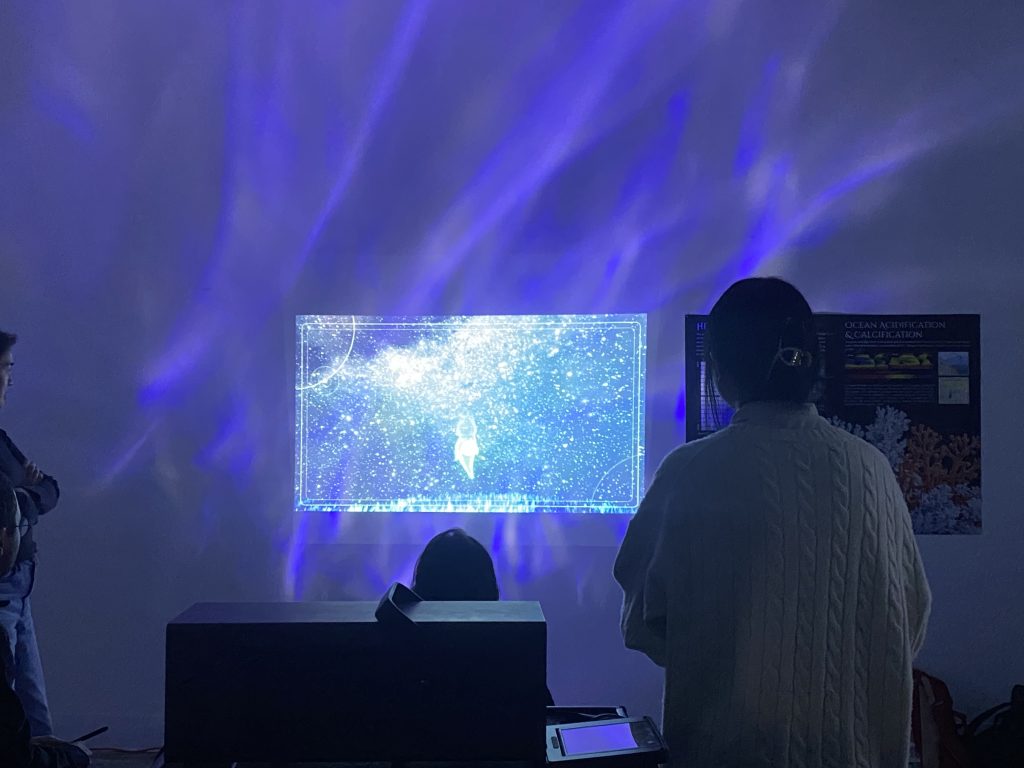
Developed in Unreal Engine 5, the game combines interactive mechanics, environmental storytelling, and character-driven encourates to simulate moments of social tension, uncertainty, and emotional overload. Players engage with others through systems such as color -based resonances, gradual trust building, and keyword collection, which was inspired by cognitive behavioral therapy (C.B.T.) and exposure based coping techniques.
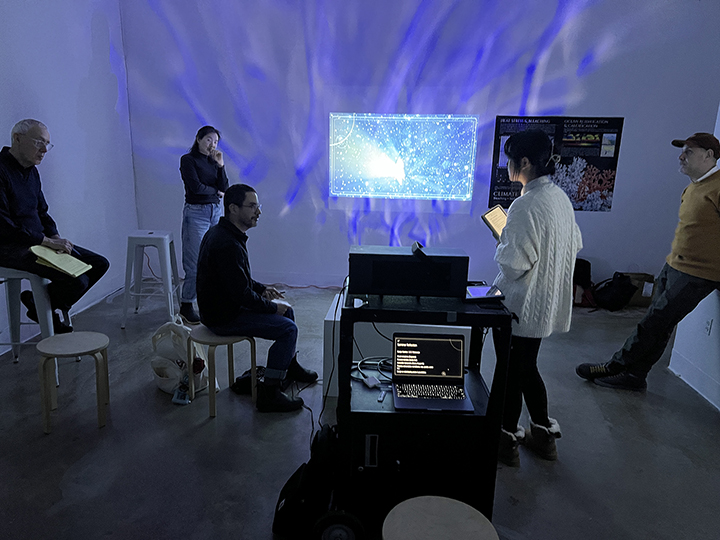
The visual assets were partially created in blender, with emphasis on symbolic character design and atmospheric environments that externalize internal emotional states. Rather than positioning S.A.D. as something to be “fixed,” LUNE frames it as as ongoing process of adaptation, learning, and self acceptance, using play as a low pressure space for emotional rehearsal and reflection.
Jung A Huh (she/her)
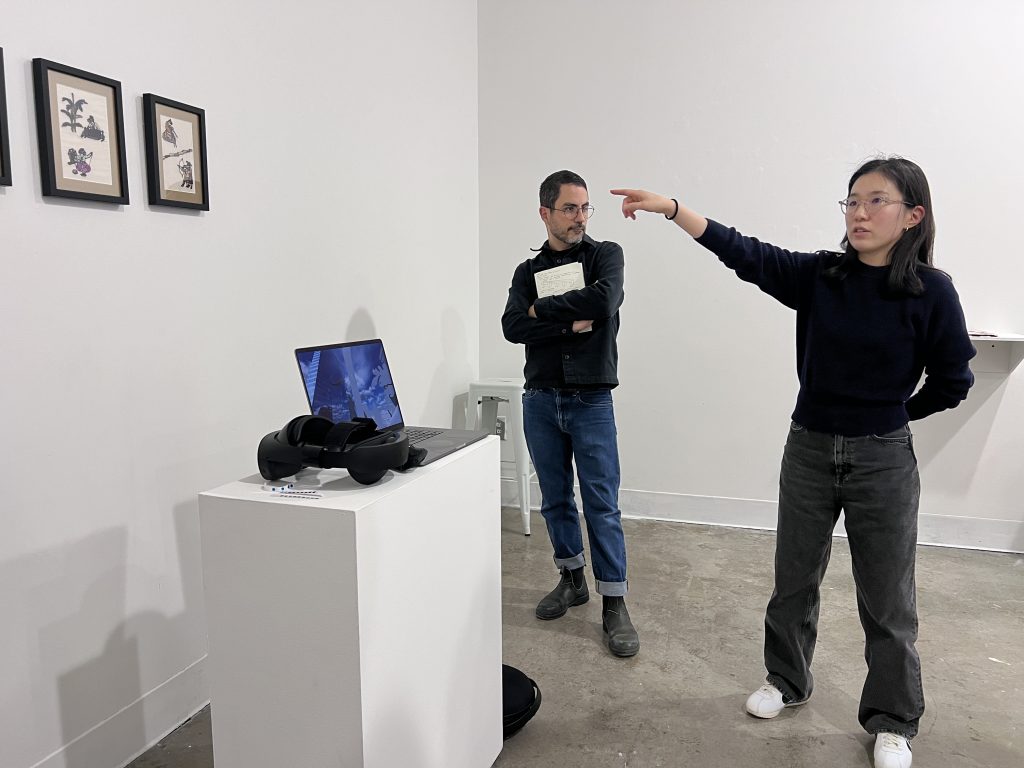
The Leisure Archive explores how notions of leisure have shifted from the Joseon Dynasty to the digital age by re-imagining historical figures through contemporary technologies. Using digital embroidery, A. I. image generation, A-Frame, and V.R., the work bridges past and future forms of leisure, questing how humans experience rest, play, and imagination across time.
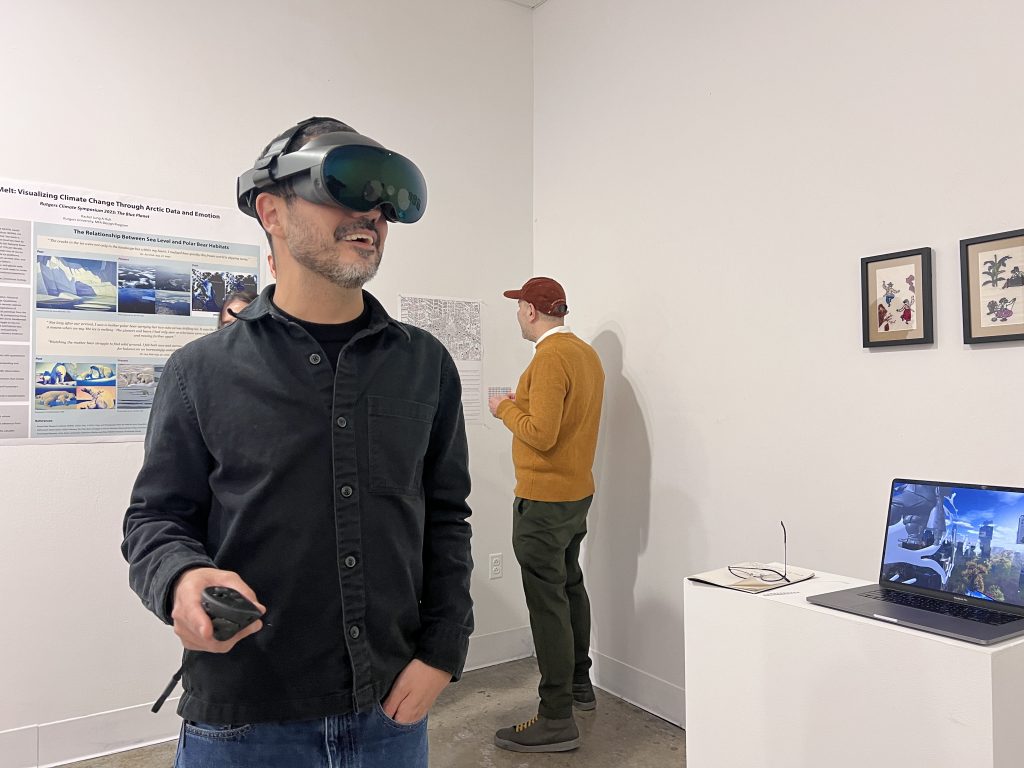
The project combines handcrafted textures with virtual environments to create a hybrid space where embroidered bodies and digital worlds coexist. Through this process it reflects on the evolving relationship between human senses, craft, and machine-mediated experiences.
Ali El-Chaer (they/he)
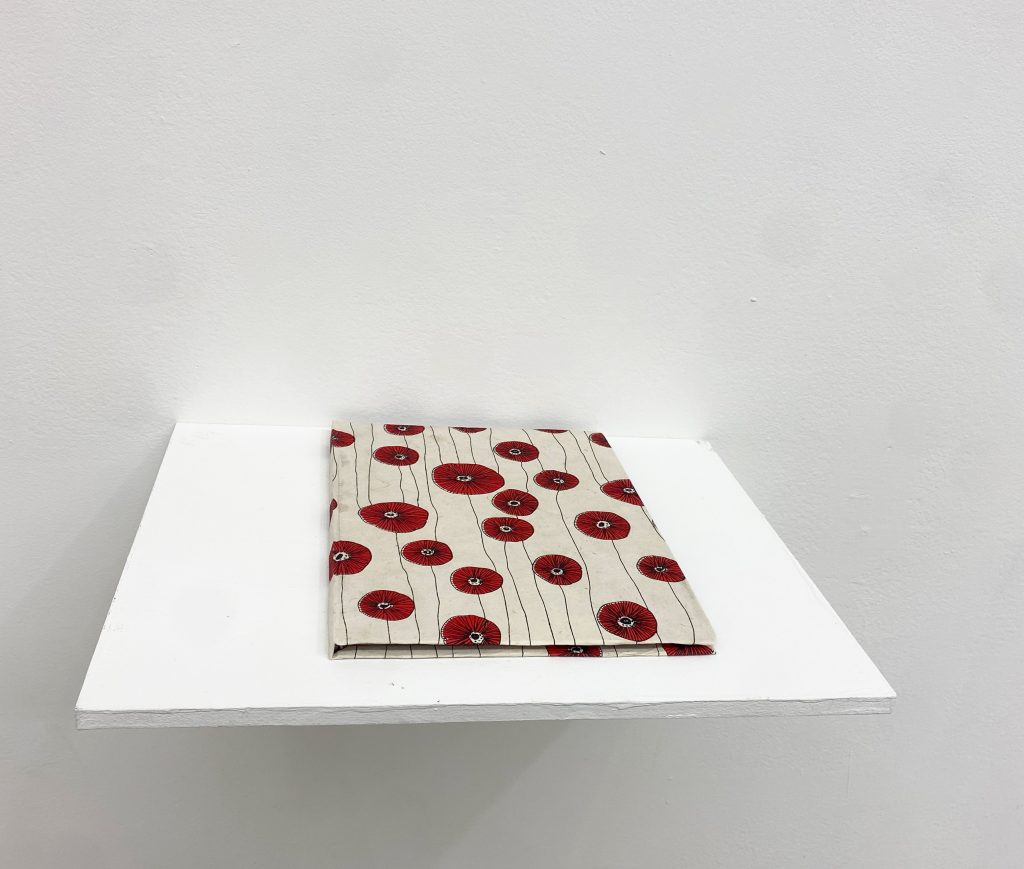
Ali El-Chaer completed a short form publication, Tomorrow’s Grief, that compiled text, news articles, and posters about Palestine and Lebanon from 1982 to 2025. This publication was designed using Adobe InDesign. The intention was to collect and distribute the political posters and stories from or on the topic of Palestine and Lebanon as a way questioning our responsibility to people now.
Furthermore, El-Chaer held the goal of understanding dialectical materialism or historic materialism, as a means to understand the superstructures that distract us from real change and show opposition to the economic systems that continue to suffocate freedom. And perhaps by changing the future through new technologies and material change rather than by ideas alone, this remembered historical materialism and knowledge will inform us on how to change the nature of the past as well.