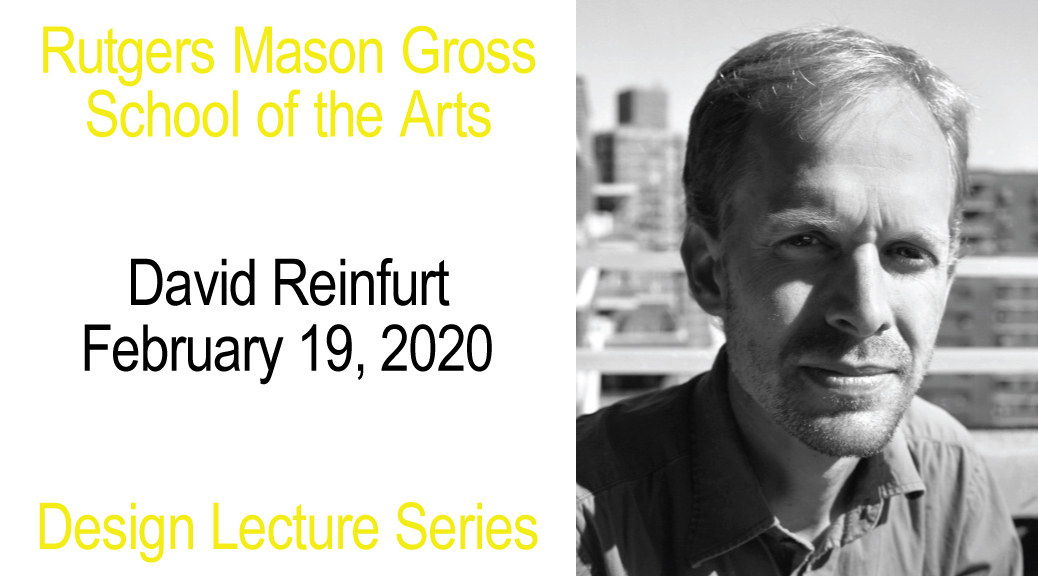
An independent graphic designer in New York City, David Reinfurt introduced the study of graphic design at Princeton University in 2010. In late September 2019, Inventory Press and D.A.P. published a book based on his teaching, A New Program for Graphic Design, a do-it-yourself textbook that synthesizes the pragmatic with the experimental and builds on mid- to late-twentieth-century pedagogical models to convey advanced principles of contemporary design, rooted in three courses (Typography, Gestalt, and Interface).
As a co-founder of O-R-G, Dexter Sinister, and The Serving Library, Reinfurt has developed several models that have reimagined graphic design and publishing in the twenty-first century. He was 2016–17 Mark Hampton Rome Prize Fellow in Design at the American Academy in Rome and is the co-author of Muriel Cooper (MIT Press, 2017).
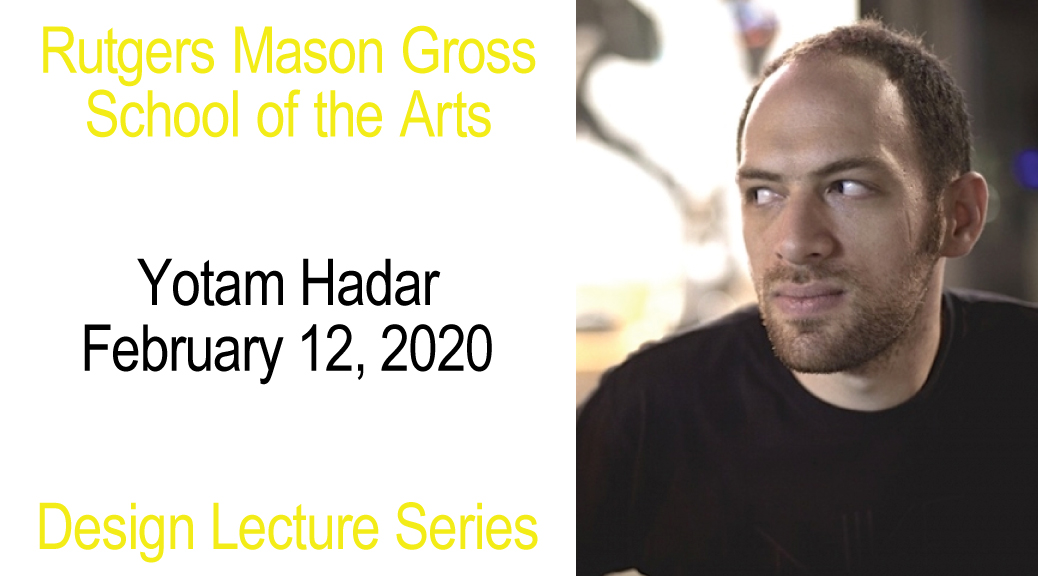
New York-based designer Yotam Hadar has over a decade of experience collaborating with studios, agencies, and clients in leading concept-driven projects in typography, print, branding, environmental and interactive media for clients in culture, retail, media, education, government, and tech. Past experience includes Nike NY, 2×4, Pentagram, Project Projects, Sagmeister & Walsh, Hugo & Marie, Mother Design, among others. A design educator since 2009, Yotam taught design and typography at Yale School of Art, Pratt Institute, Parsons School of Design and Rutgers University.
New York-based graphic designer Kristian Henson is part of the publishing imprint, Hardworking Goodlooking (with Dante Carlos, Czar Kristoff, Clara Balaguer). They recently spoke to the Walker about how cultural work can be used as a critical tool through various platforms, especially publishing, which they explore through a transnational collaboration: Henson works in New York; Carlos, in Portland; Kristoff and Balaguer in the Philippines.
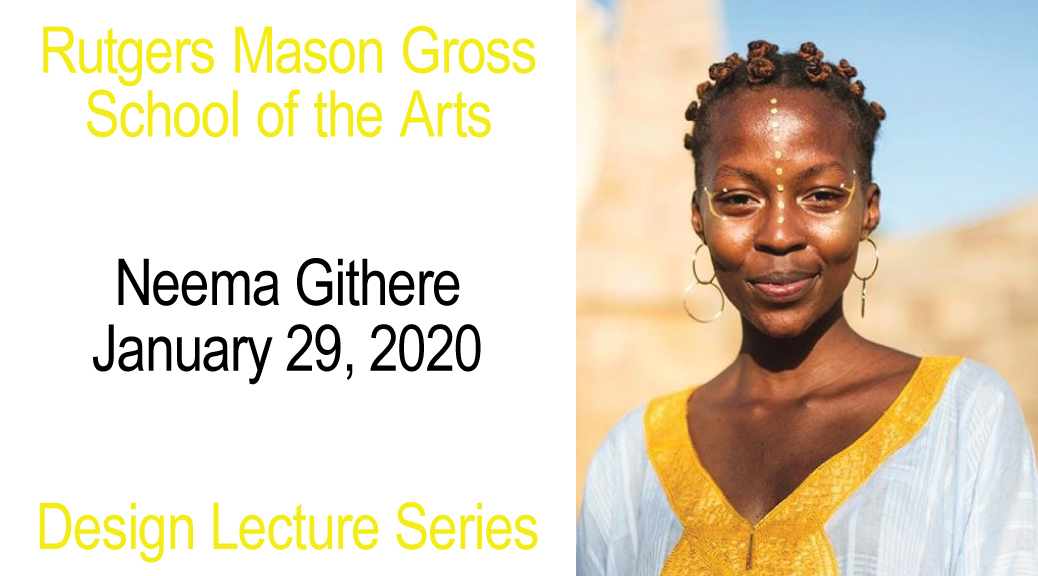
Neema Githere is a curator and guerrilla educator/performance artist based in the #digitaldiaspora. She is part of the collective Data Healing which seeks to illuminate + activate the intersections between nature, spirituality, and technology. Her new site Presentism2020 is a manifestation of her ongoing theories, projects and relationships: afropresentism, #healingimagery, radical love, #divestfrominstagram, and data healing.
“It may feel as if the internet is up in the clouds, but in actual
fact it’s at the bottom of the ocean, in the form of 880,000 kilometers
of fiber-optic cables. These cables make up the essential infrastructure
for sending all our emails, websites, photos, films and of course
emoticons. Beneath the waves, our wireless life is very bound up with
physical wires—it’s the virtual made physical. Among the submerged
cities, drowned sailors and hidden histories, the ocean is home to a
complex communications network. Here, the technologies controlled by the
West expand along the old colonial routes, so in a way the cables are
the hardware of a new, electronic imperialism. Deep Down Tidal is a
video essay in typical net.art style, weaving together cosmological,
spiritual, political and technological narratives about water and its
role in communication, then and now. It’s about how this cable network
can facilitate the retention and expansion of power. It also reminds us
that water doesn’t forget.”
This session will be a reflection-based workshop around the concept
of data healing. Terms of interest: data trauma, data healing, cyber
doula. As students read the assigned text, I encourage them to reflect
upon & attempt to self-define the above terms, which will frame our
conversation in class.
Design Seminar: Contemporary Practice invites designers to share their practice, methods, and references. When asked to describe themselves, these practitioners often list multiple titles—creative directors, art directors, book designers, web designers, interaction designers, industrial designers, programmers, writers, researchers, technologists, ethicists, educators—reflecting the multidisciplinarity in the field today. Their subjects of study range include publishing, materiality, machine learning, sensing, data healing, and more… Through presentations, reading discussions, writing, and weekly engagements with different designers, this semester-length seminar will introduce students to a variety of contemporary practices.
Dimensionism: Modern Art in the Age of Einstein, on view at the Zimmerli Museum through January 5, 2020, is a groundbreaking exhibition that explores how modern art was influenced by advances in science, from Einstein’s theory of relativity to newly powerful microscopic and telescopic lenses.
Dimensionism.Space is a microsite conceptualized, designed and developed by the Design Practicum Fall 2019 class at the Art & Design department at Mason Gross School, Rutgers University, New Brunswick, on the occasion of this exhibition. The Designers in this class wanted to promote this seminal exhibition across the campus through a contemporary and computational lens by way of reflecting on the work of their choice and creating a digital avatar or a tribute to that in the form of code and its visual reflection. This microsite is designed and produced by, Jennifer Aguirre, Elyssa Feerrar, Conor Finn, Lau Krystal, Tyler Lee, Kathleen Makar, Jillian Mulhern, Rushika Raman, Sara Reed, Francesca Stoppa, Maya Tillman, and the project is mentored by Donna Gustafson, Thomas Sokolowski and Atif Akin.