Global Diplomacy to Game Design

UI/UX/UN

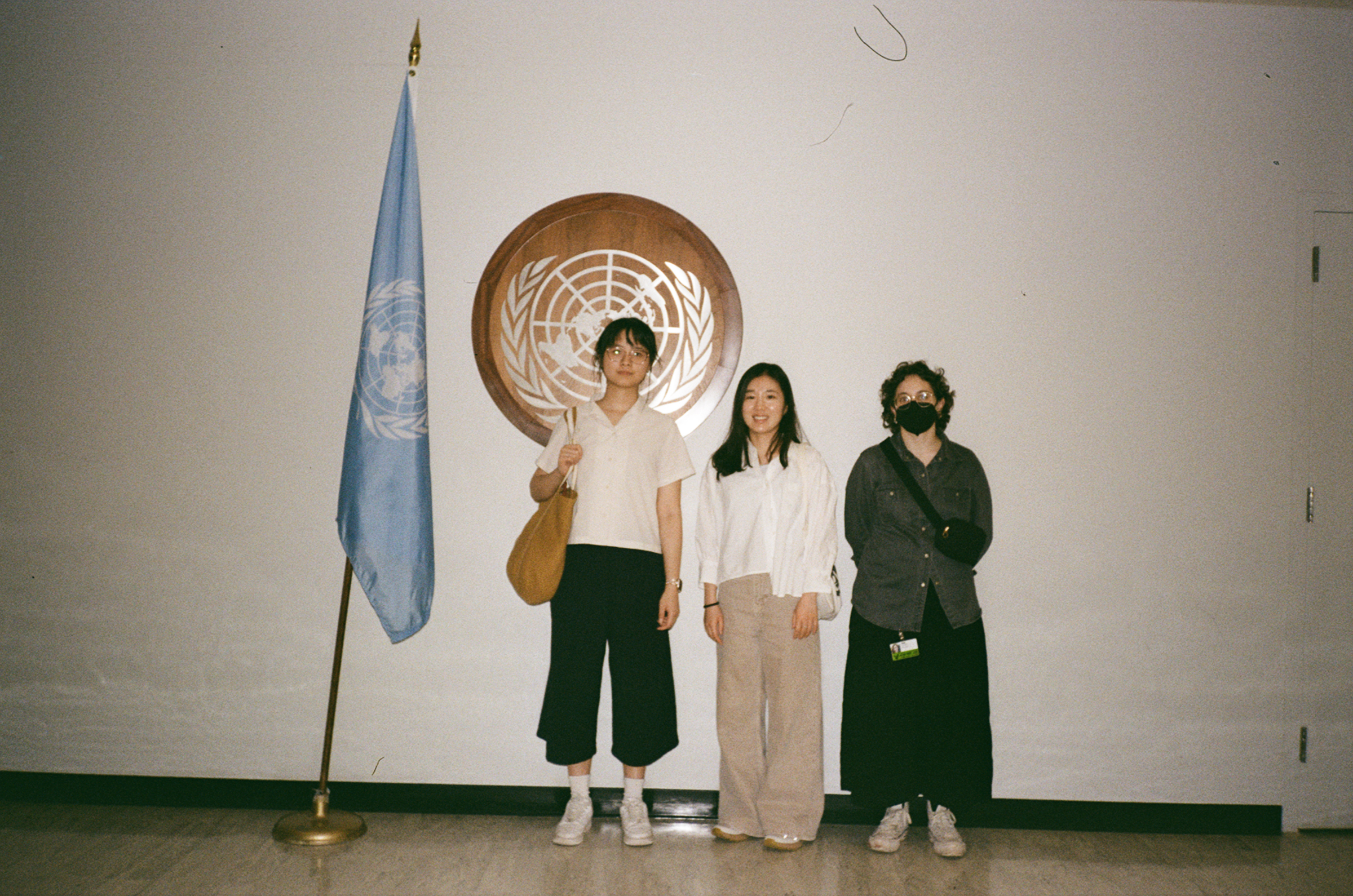
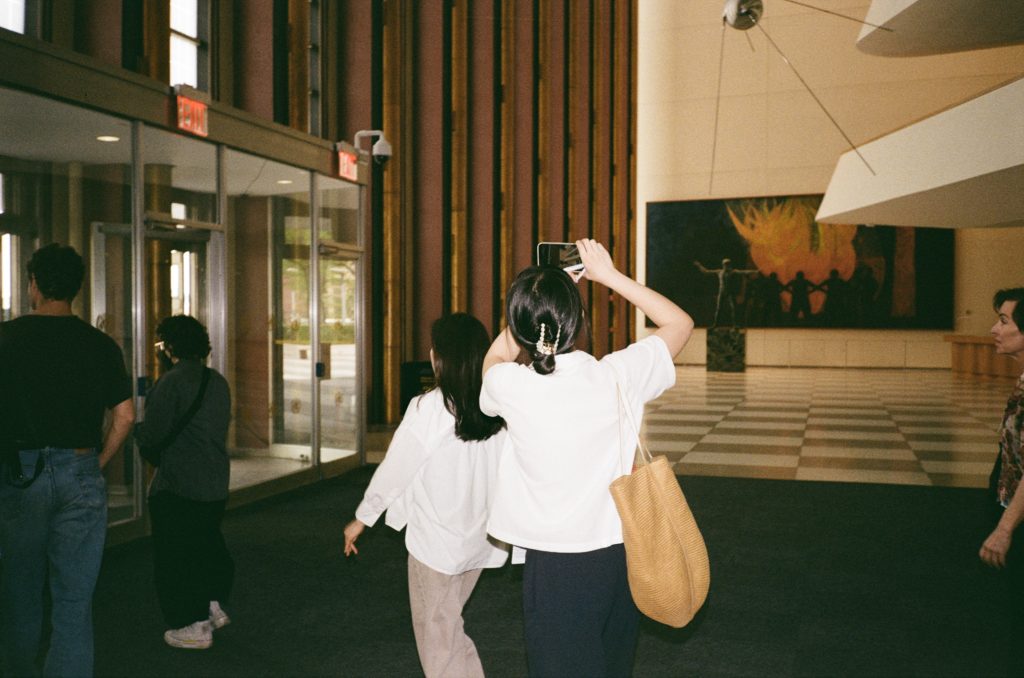
On April 16, 2026 the MFA Design first year cohort, Qing Zeng, Jung A Huh, and Ali El-Chaer, conducted field research across two distinct institutional spaces in New York City: the United Nations Headquarters and the New Museum. The objective was to investigate the intersection of global governance, architectural systems, and contemporary curation, resulting in a game that maps interactions onto the digital interface.

The morning began at the United Nations Headquarters, delving into the operational architecture of the UN: This track examined the institutional mechanisms and systemic frameworks of the UN, focusing on how global diplomacy is structured, executed, and maintained across international boundaries. The second tour spoke on the physical architecture: This track explained the design of the headquarters, investigating how the physical forms, materials, and spatial layouts reflect or challenge the UN’s foundational mandates of transparency, unity, and international cooperation. In the afternoon, the class visited the New Museum, engaging with current exhibitions, such as New Humans: Memories of the Future, and explored the new extension built to the New Museum. 
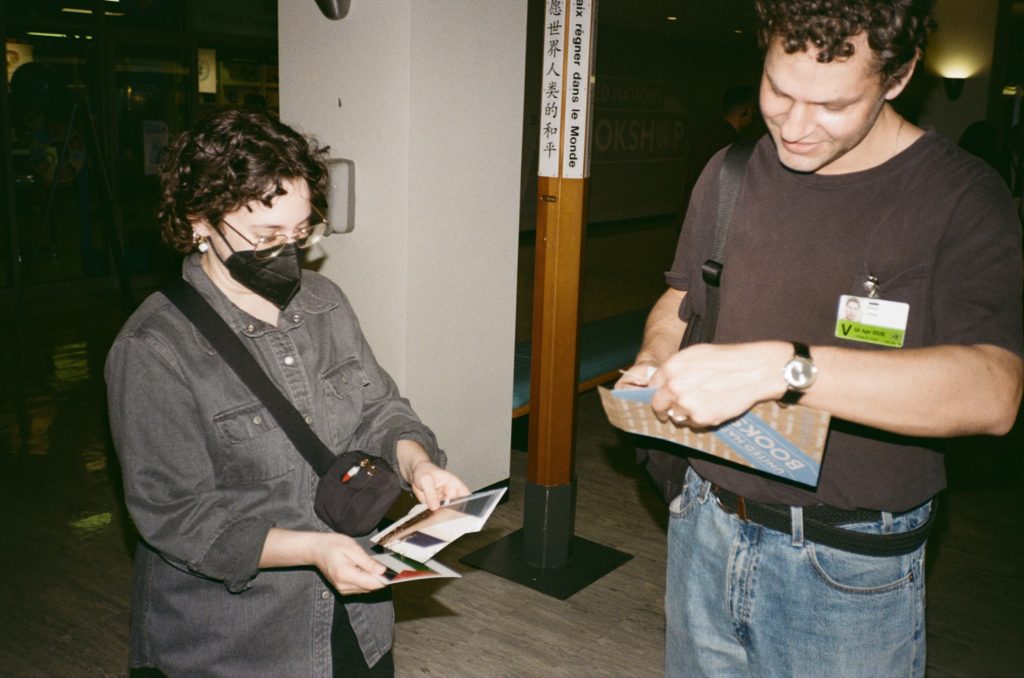
Throughout the field study, students used their phone cameras to observe and document “interactions”—the unintended or intended visual traces of human presence in spaces. Rather than documenting the monuments themselves. Back in the studio, these photographs served as the material for digital experimentation. Using Figma, the cohort translated the images into a tablet-based, interactive layout.

The game operates on a geometric repetition. At the beginning, the user selects one of three primary shapes: a triangle, a circle, or a rectangle. This choice initiates a path, requiring the player to follow the steps of the selected shape as it reoccurs, morphs, and embeds itself within the documentation of the UN space. By restructuring the field research into a responsive UI/UX system, the project challenges the boundary between passive observation and active navigation, architecture, and complex systems.

Special thanks to Atif Akin for facilitating this research expedition and taking photos.

on Sue Huang’s Bodies of Flora

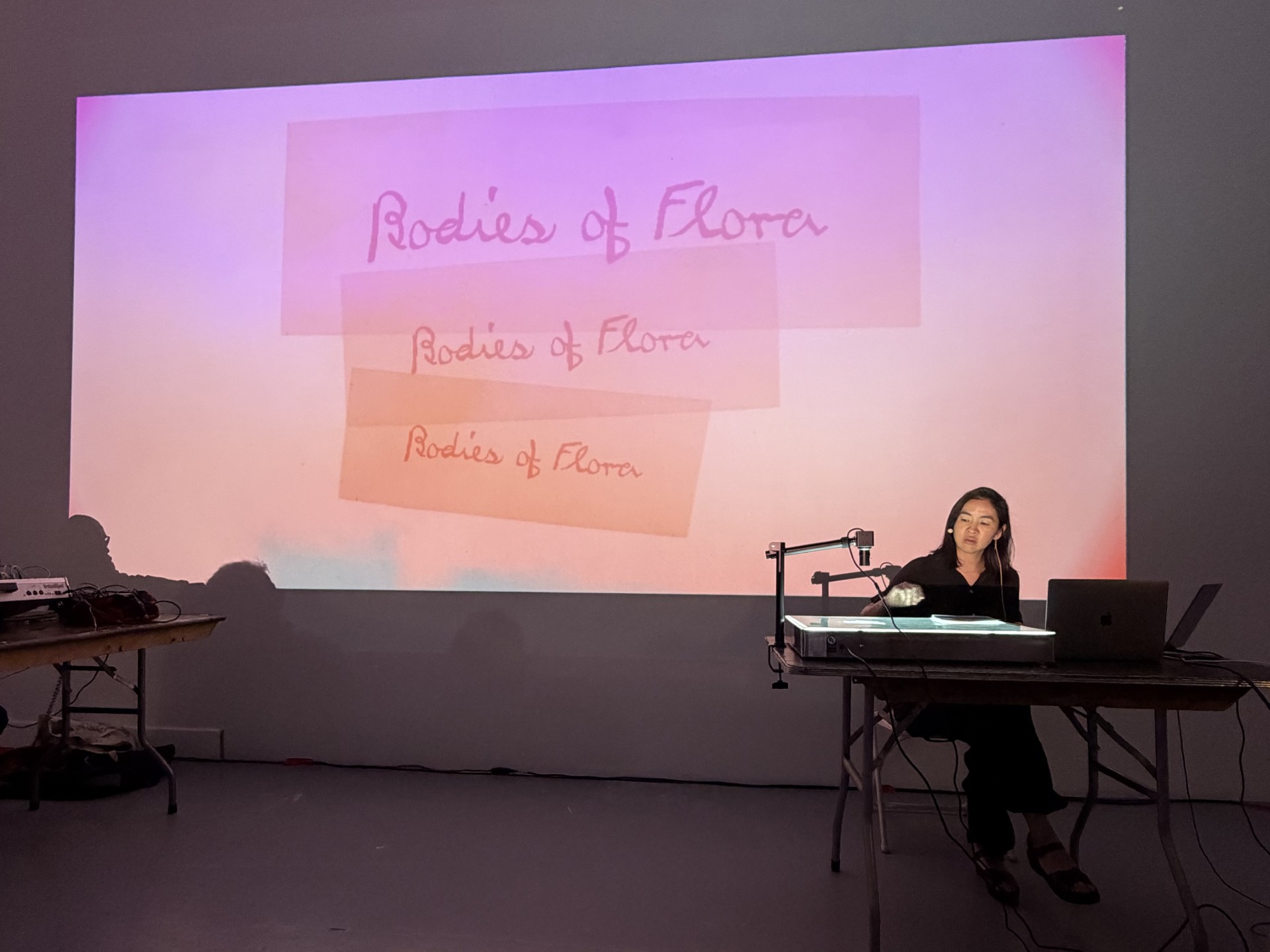
It was such a great pleasure to see Sue Huang’s Bodies of Flora last Friday evening at MANA Contemporary. It’s a brilliant collage in real time, gracefully put together, moving with ease between scientific inquiry and personal reflection, and also between archive and storytelling, preservation and memory.

Lorraine Daston writes that botanical nomenclature is “an art of transmission that makes a certain kind of science possible.” Daston’s work kept resonating in my mind while watching Sue’s performance. The naming, cataloging, and preservation of plant life are not simply scientific acts; they are also about memory and cultural practice. Bodies of Flora brings scientific record, autobiography, and artistic interpretation into the same live physical A/V space.

Using an electronic overhead projector, a lightbox with an overhead camera (10x zoom industrial camera often used for scientific magnification), layered with a video channel, Sue created a live visual field where analog and digital image-making sat comfortably together. The setup to evoked the conventional classroom teaching tools and also it was a visual and technical reference to the lightbox at the herbarium, that is the main device for digitizing the specimens. Transparencies contained printed and copied content at scales recalling 4×5 negatives, herbarium sheets, and library stack cards. Sue moved and composed through light by hand. Their tactile archival quality blurred the line between specimen and memory, between scientific preservation and personal reflection. Projection wasn’t used as spectacle, but as a working surface—a place where fragments could be handled, layered, narrated, and transformed. The sound design by Lee Tusman set the atmosphere with a restrained ambient drone. Sue’s storytelling voice, paired with her live gestures on the overhead surface, created a calm but deeply engaging rhythm that pulled the audience in.
It was also so nice to see the broader community around the project. There were roughly twenty-five participants, including MFA in Design students from the last three cohorts. Among them was Asem Kiyalova, who also worked on the project as Sue’s assistant, alongside Anukriti Kaushik. Their contributions make visible another important aspect of Bodies of Flora that is transmission through teaching, collaboration, and shared making.

Carl Linnaeus defined the botanist as someone who can give one particular plant the right name, in a language understood around the world. Bodies of Flora gently expands that idea. It reminds us that our relationship to botanical life is shaped not only by naming, but also by image, touch, story, memory, and care.

Sue has created something intellectually rigorous, elegant, and quietly moving.

for more information about the project and the process:

A Botanical Resurrection: Professor to Visualize a Return of Vanished Flora


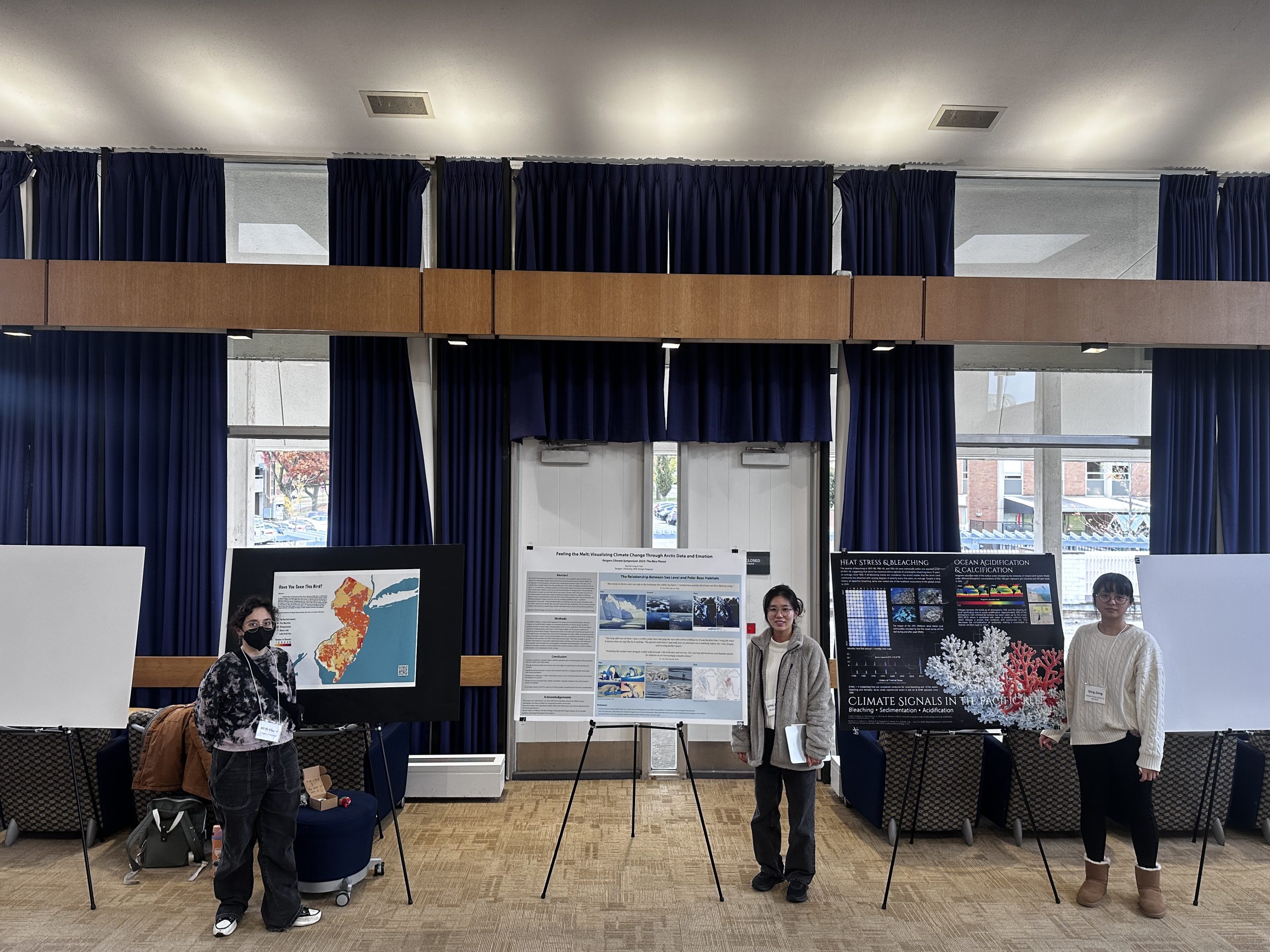
Art & Design Department and MFA in Design Program at the Climate Symposium at Rutgers-New Brunswick

As part of the interactive poster sessions, three MFA students in Design—Ali El-Chaer, Rachel Jung A. Huh, and Iris Qing Zeng—presented research-driven projects developed in their Research Methods course, which emphasizes the integration of quantitative data and qualitative narratives as a framework for climate communication.

Ali El-Chaer’s project explored the disappearance of bird species in New Jersey, combining ecological datasets with regional folk tales to situate biodiversity loss within lived cultural memory. Rachel Jung A. Huh’s work traced her father’s journey to the Arctic, bringing together family photographs and scientific measurement imagery to connect personal experience with large-scale climate observation and data collection. Iris Qing Zeng focused on color bleaching as a visual and material signal of environmental stress, translating scientific phenomena into perceptible visual language.

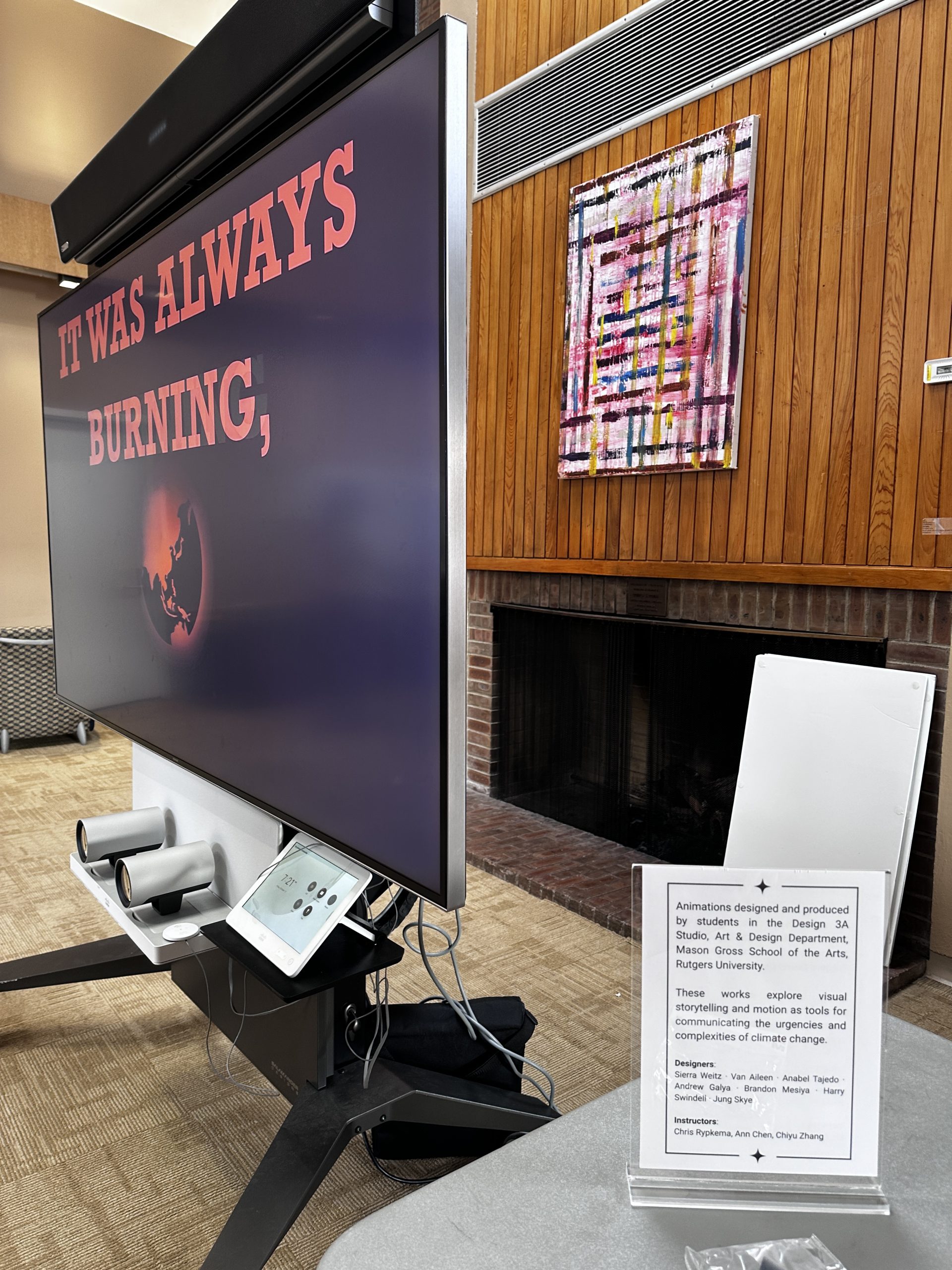
Together, these projects demonstrated how design-led approaches to data visualization and storytelling can make climate science legible, affective, and socially grounded, aligning with RCEI’s emphasis on the human dimensions of climate change. In parallel, animations addressing climate change created by undergraduate design students were also on display, highlighting how design education at multiple levels contributes to innovative, interdisciplinary climate communication.

Poetries Politics

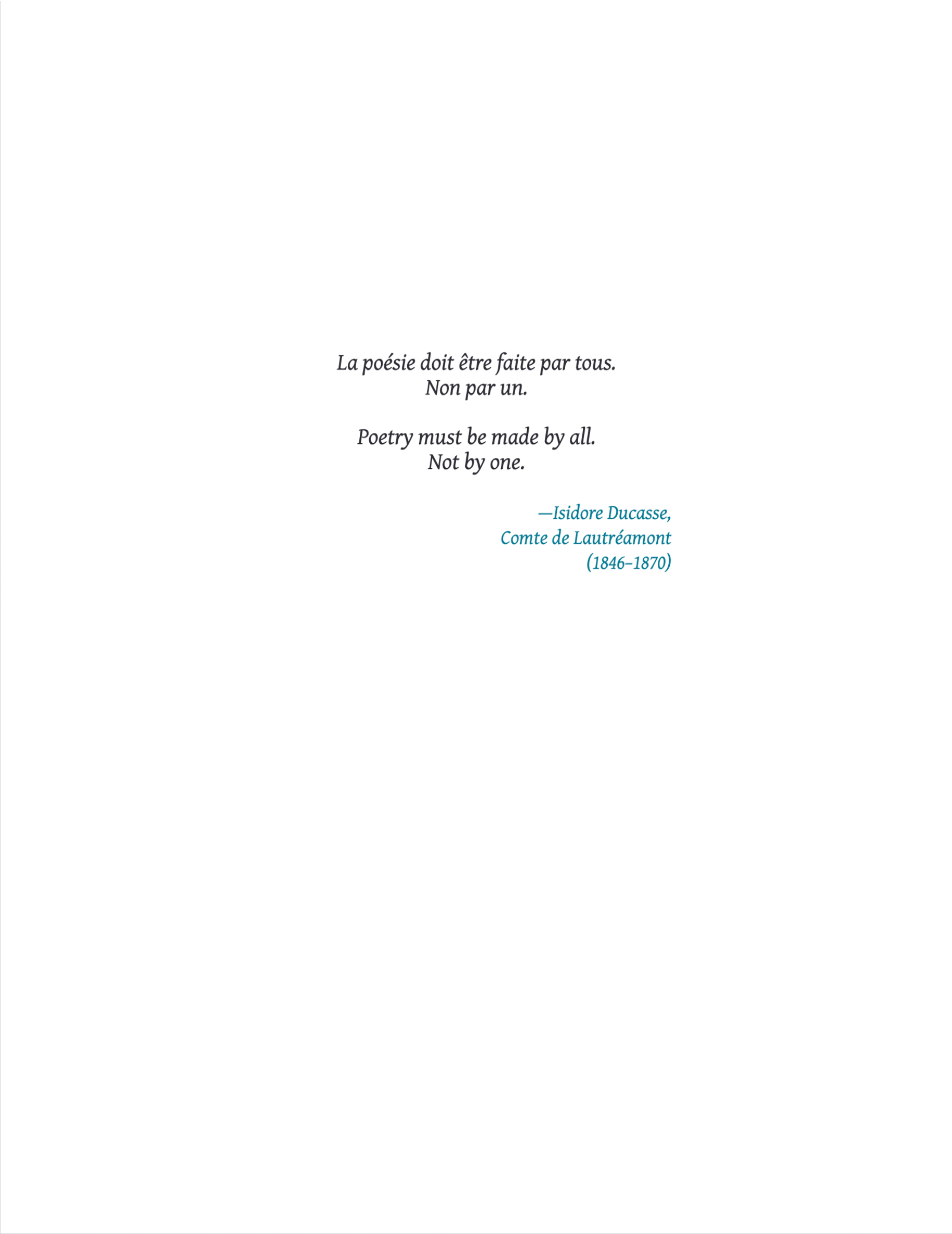
Poetry must be made by all. 

Not by one.

– Isidore Ducasse. Comte de Lautréamont

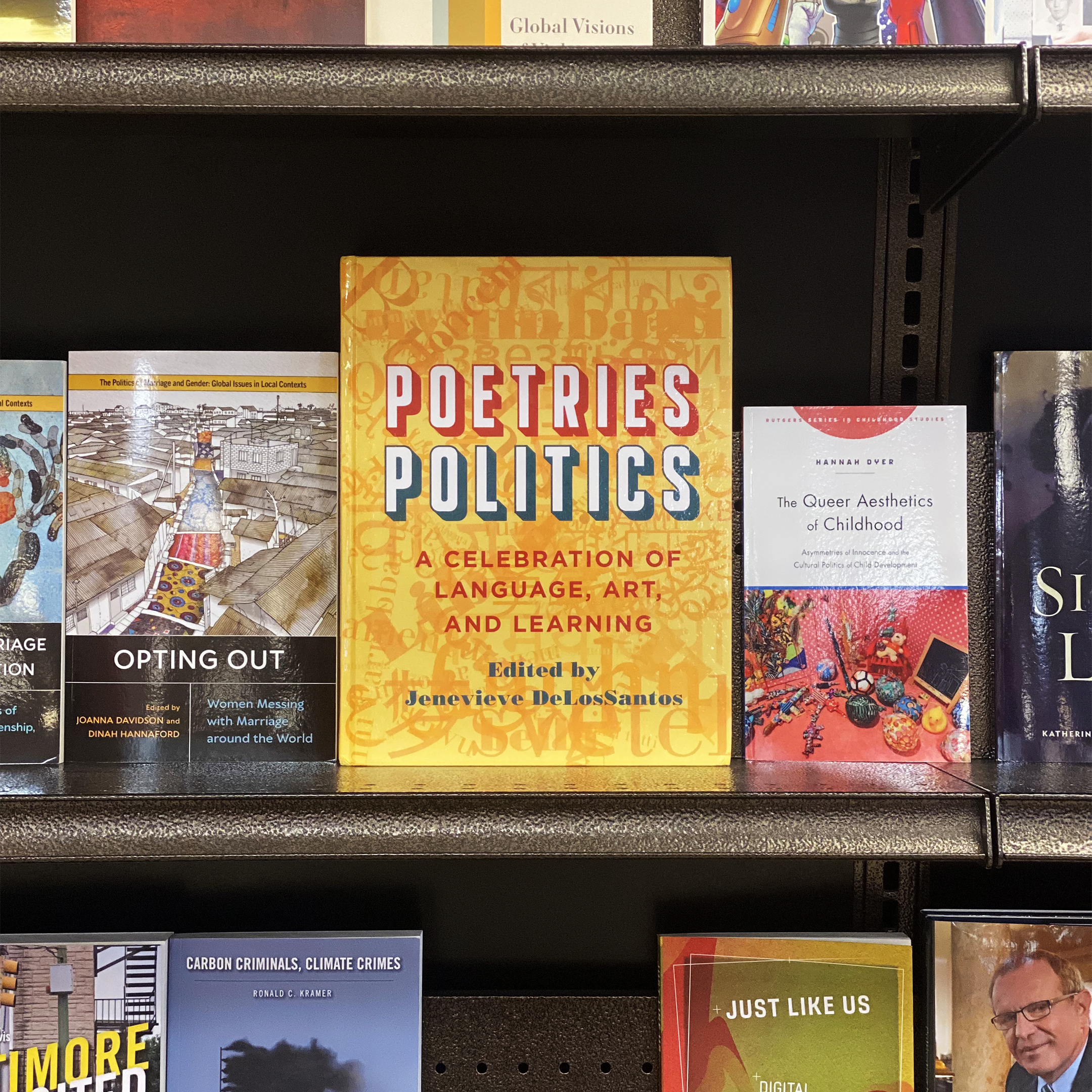
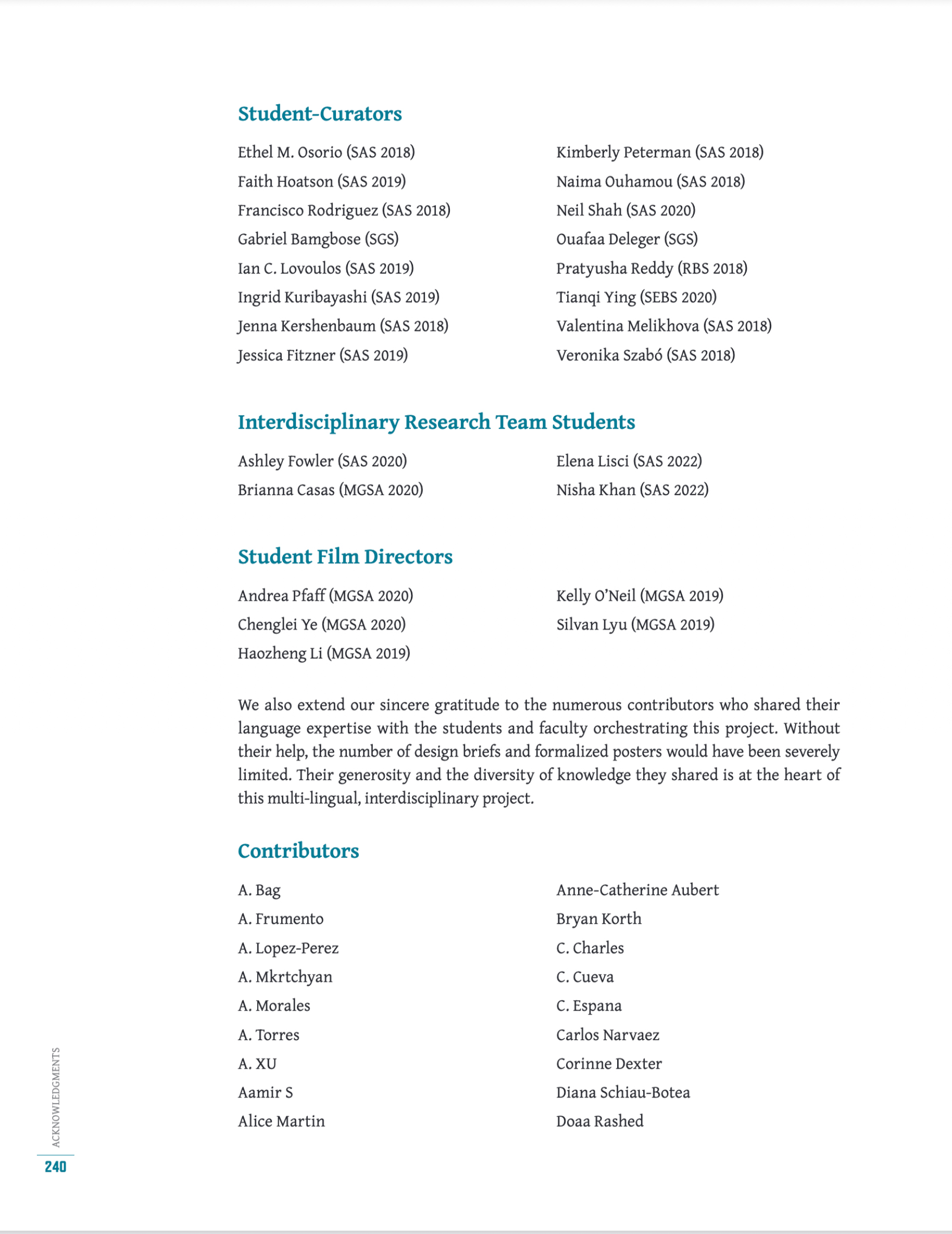
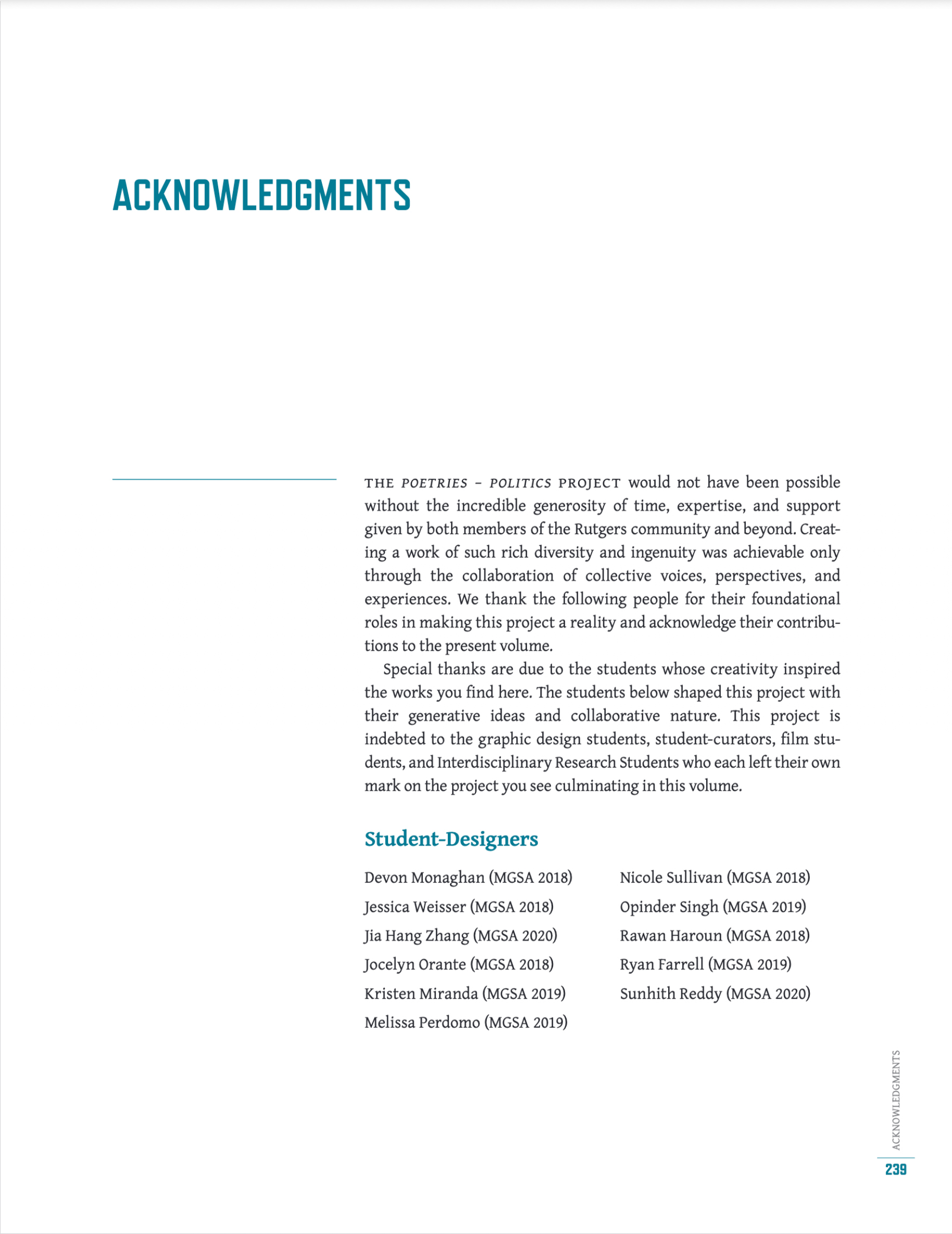
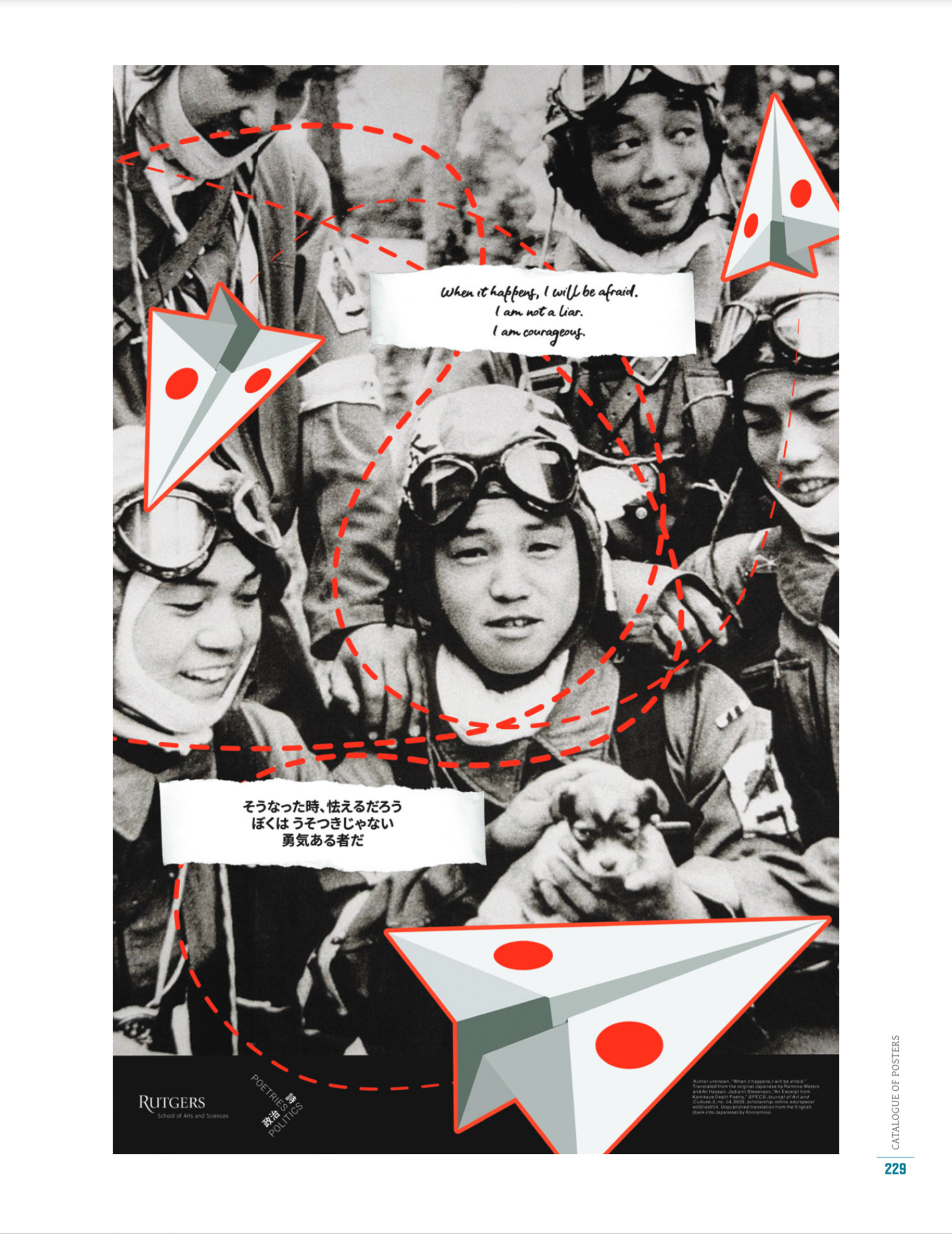
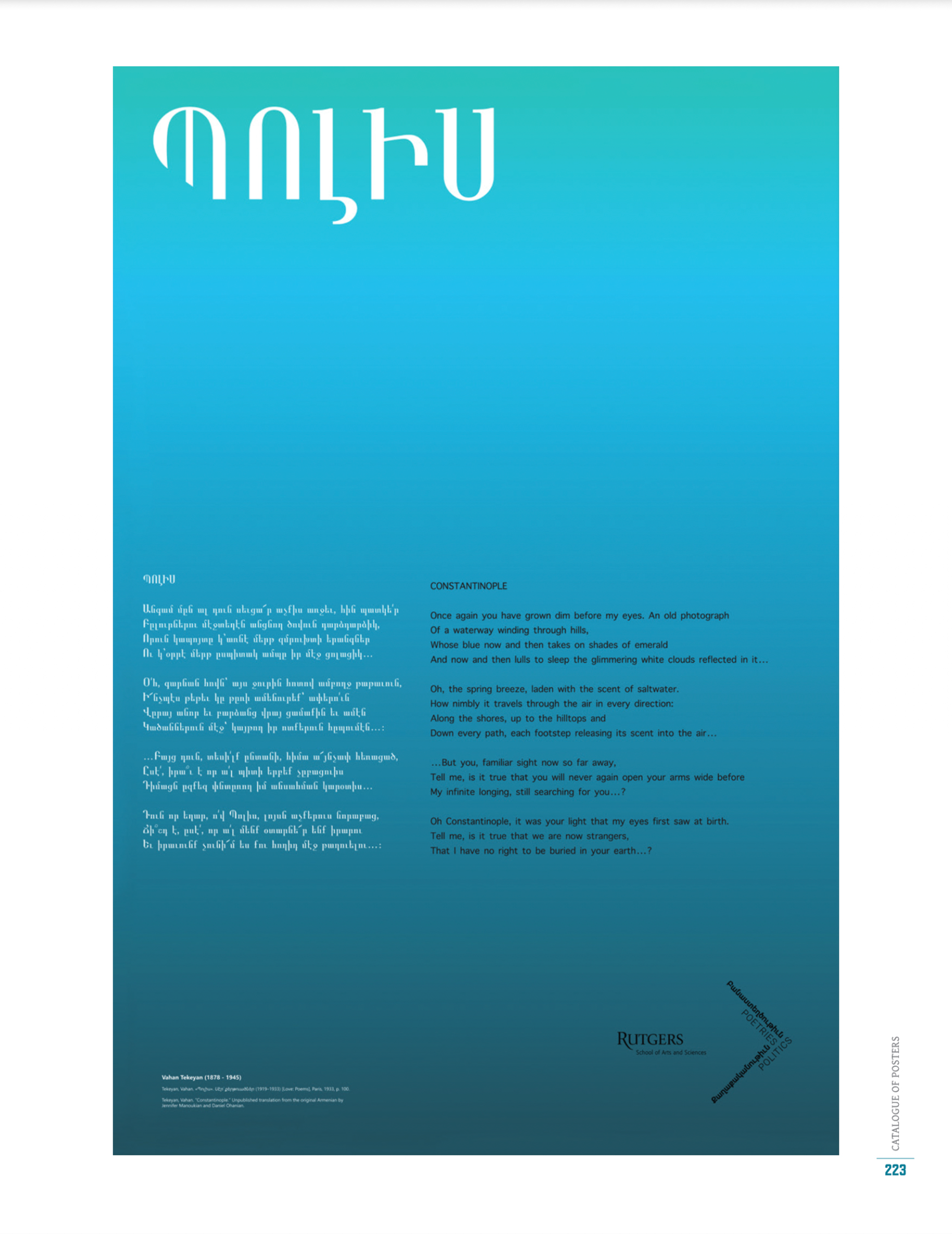
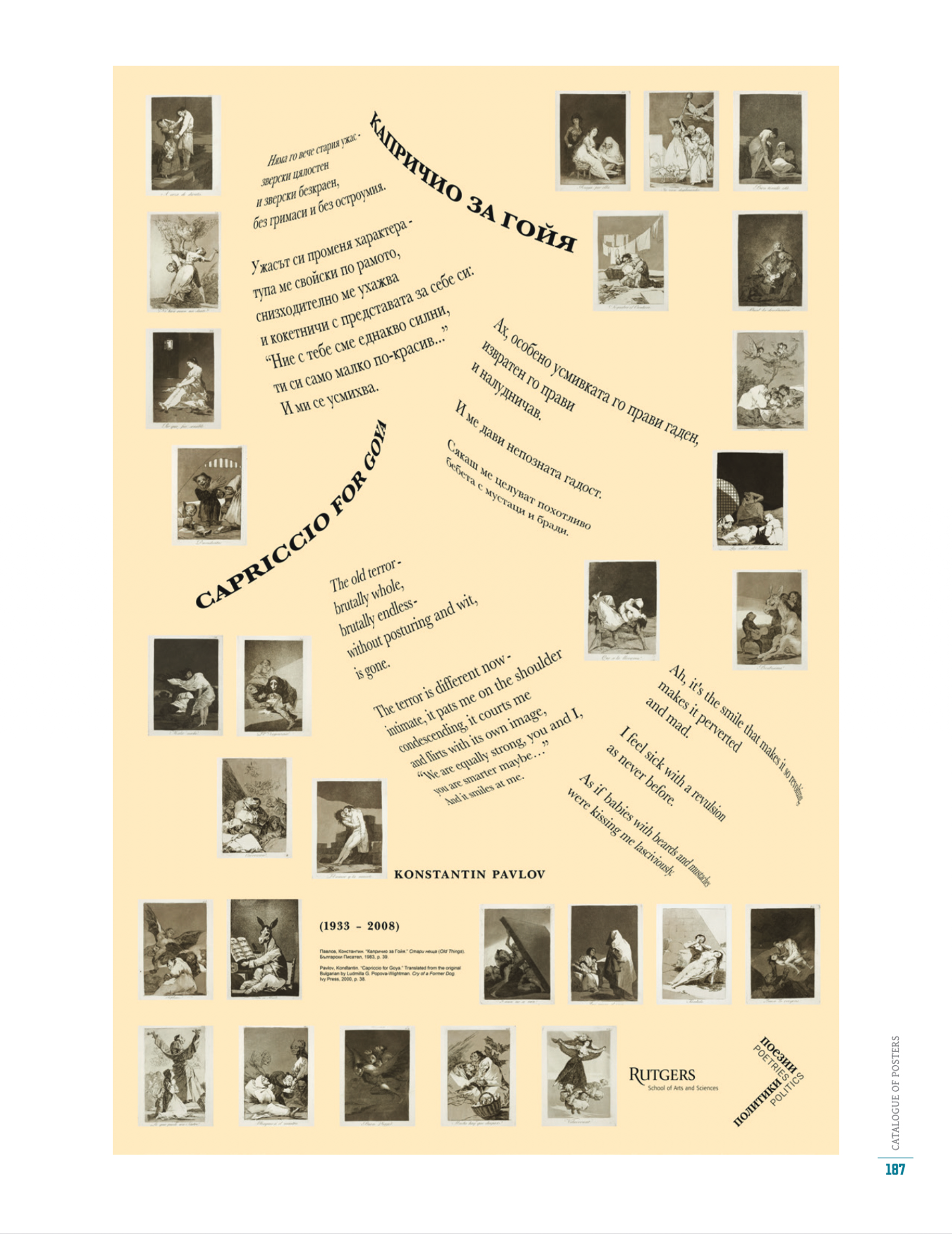
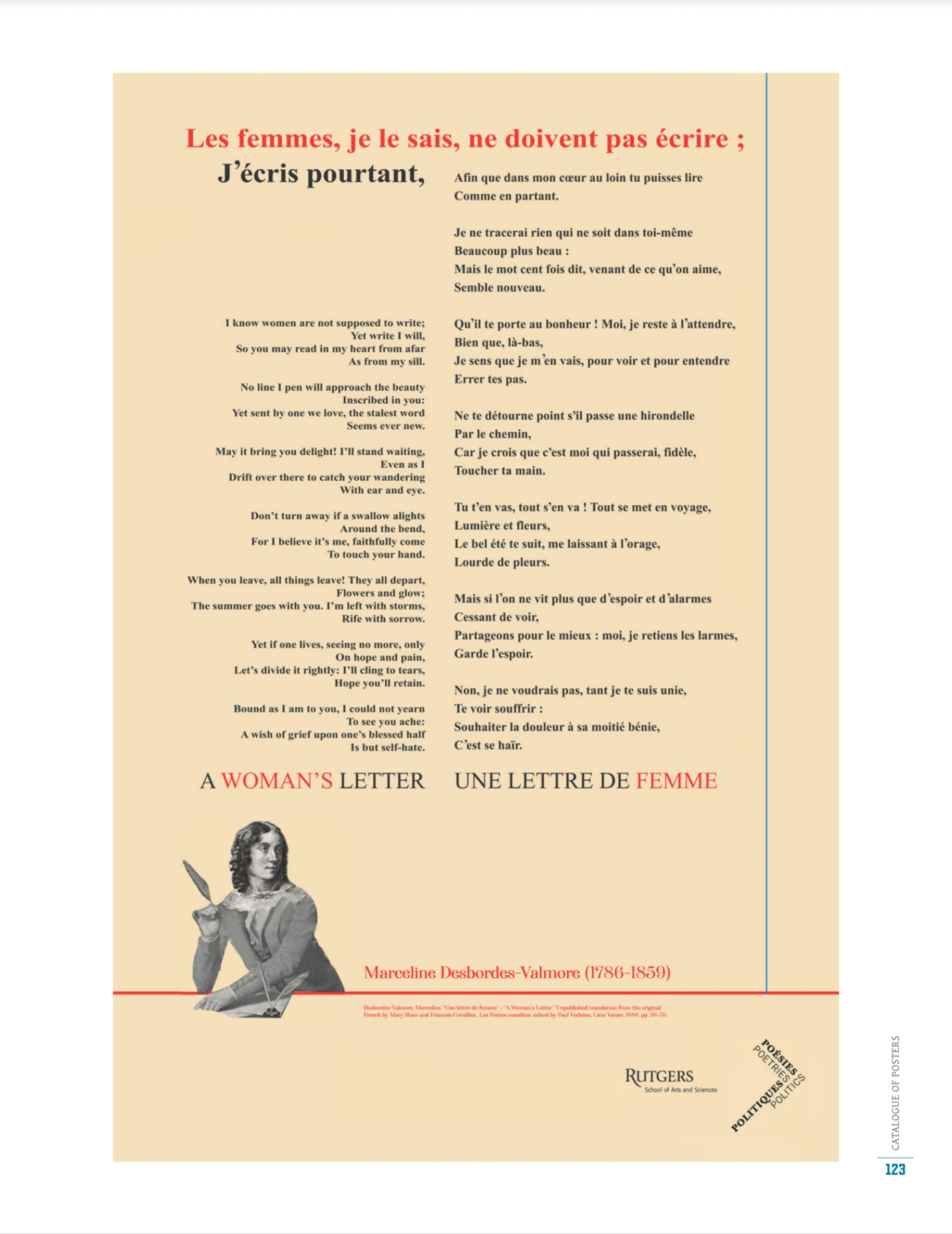
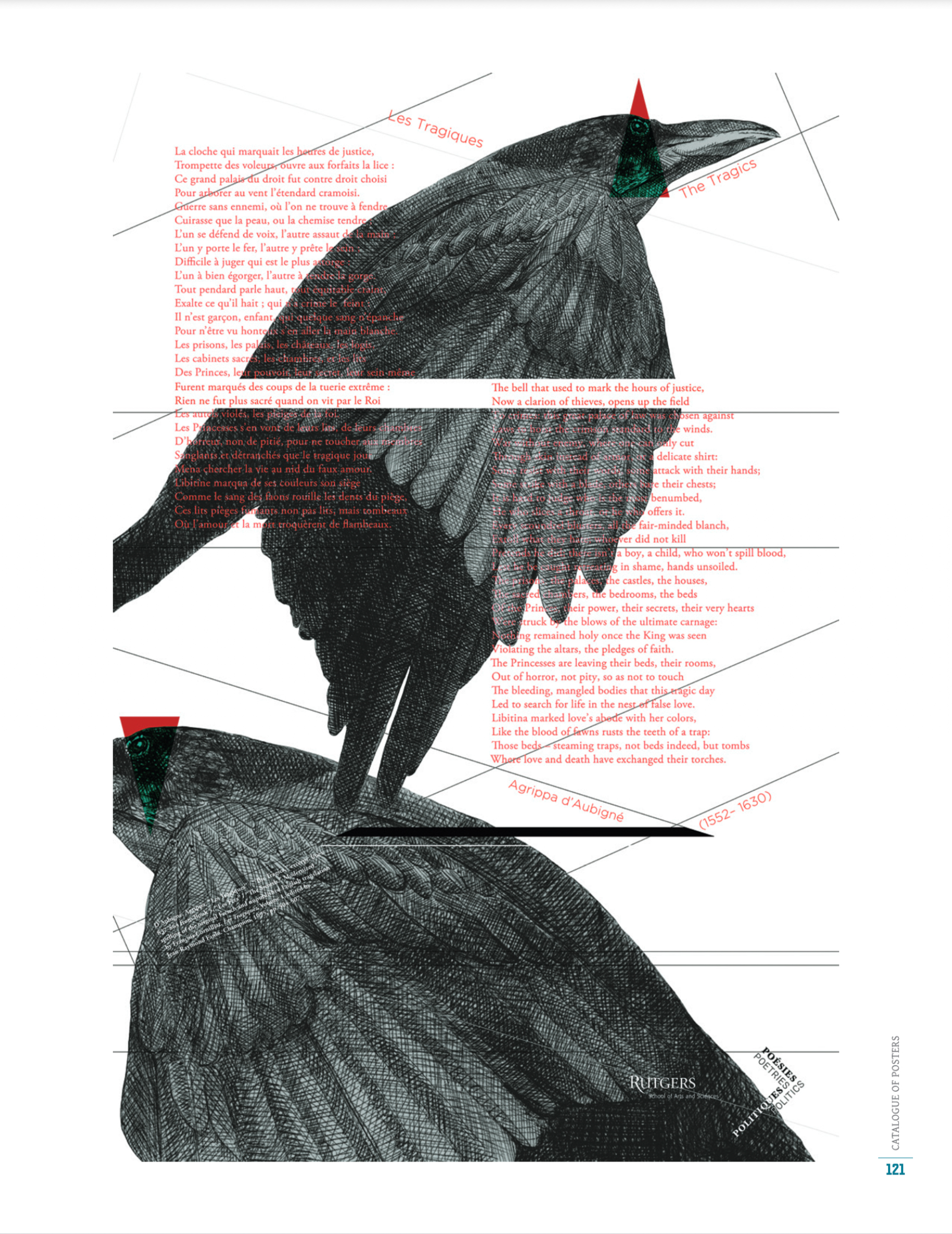
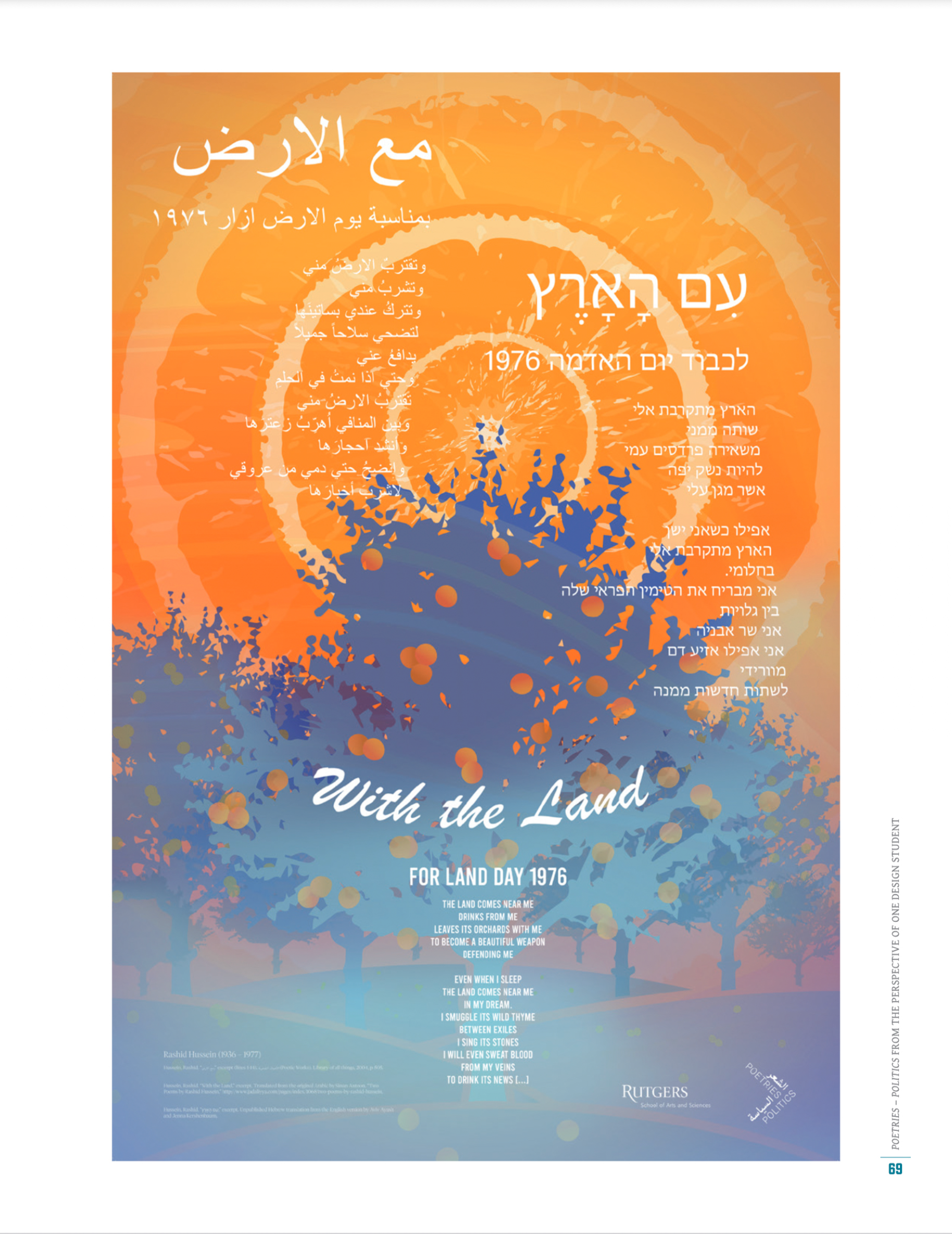
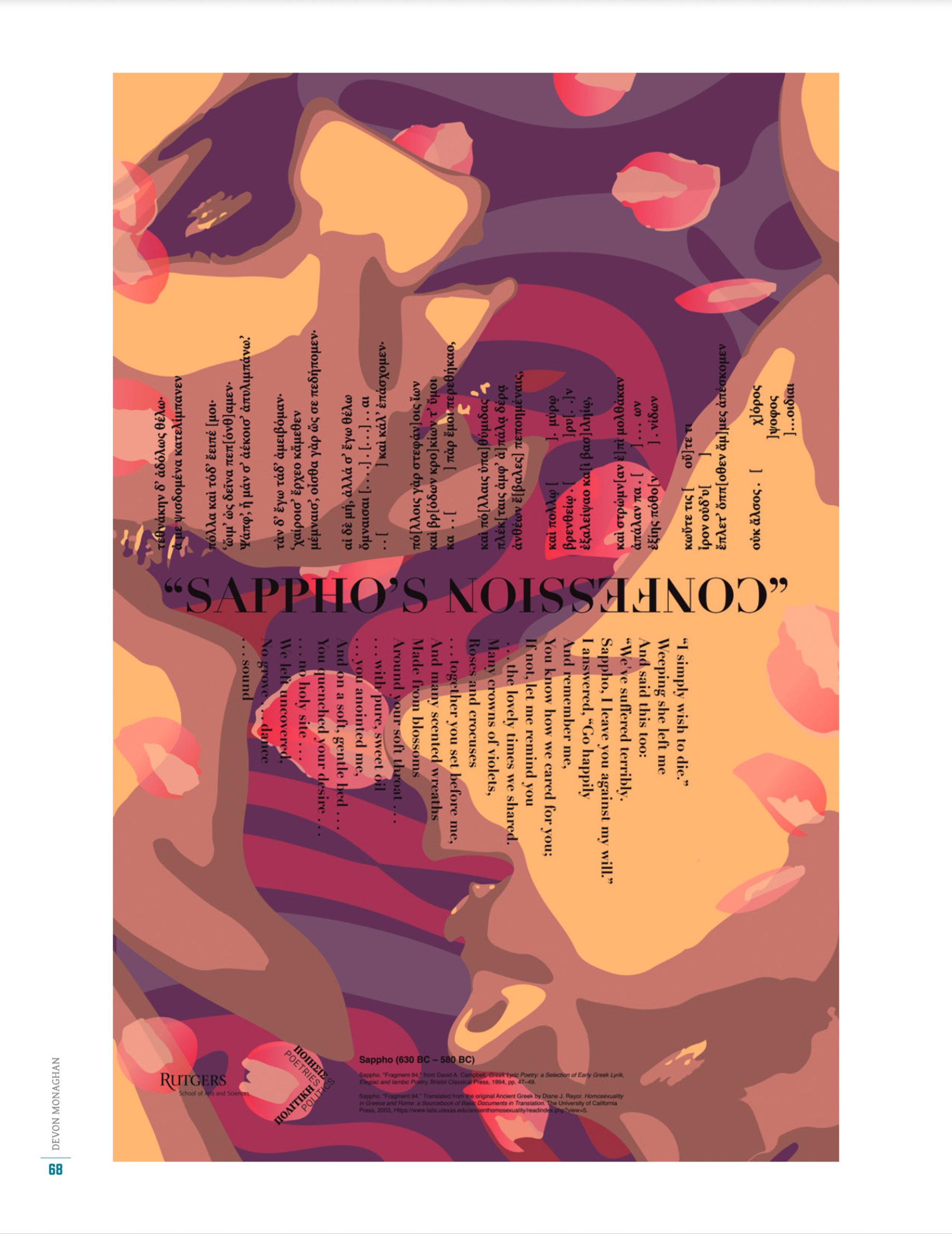
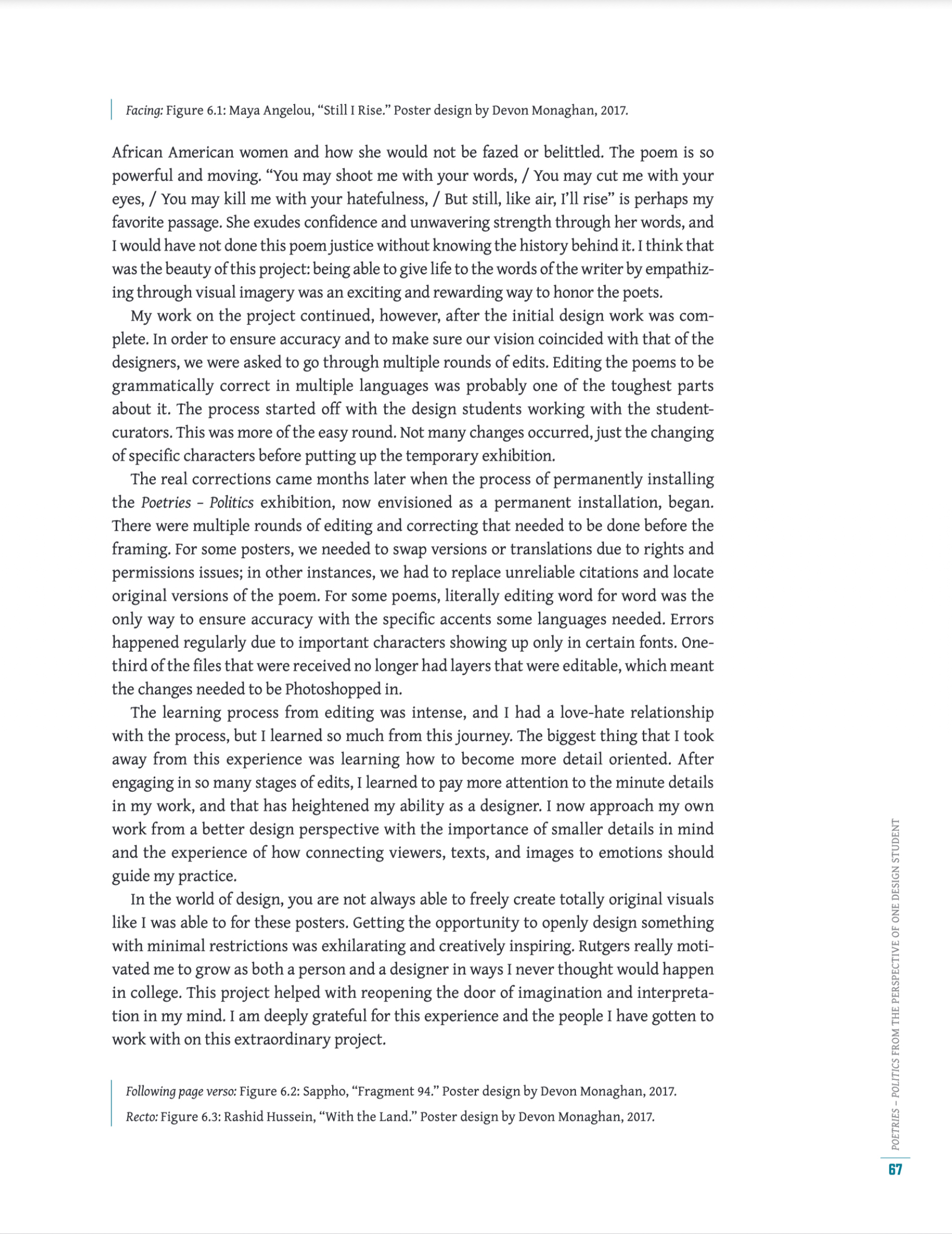
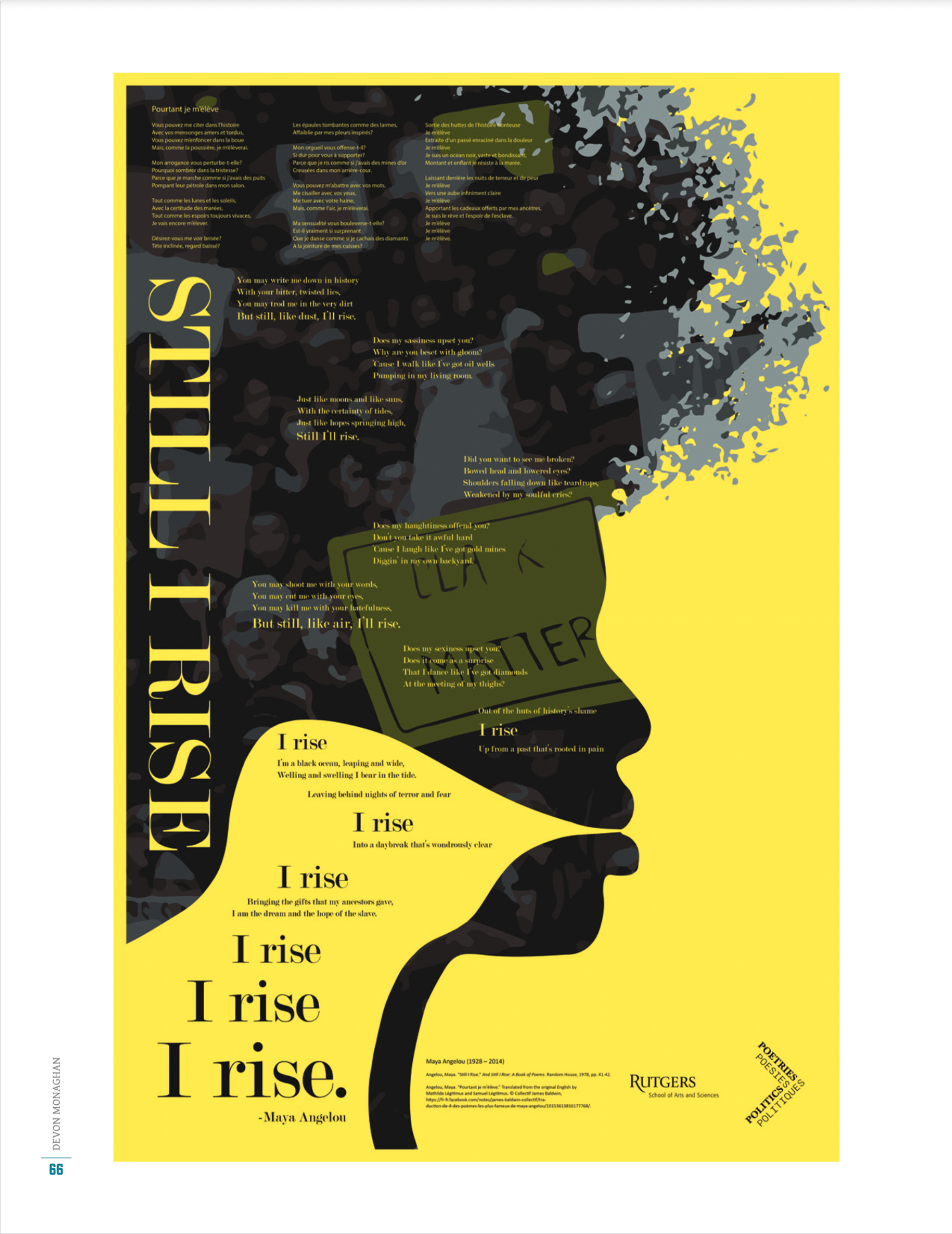
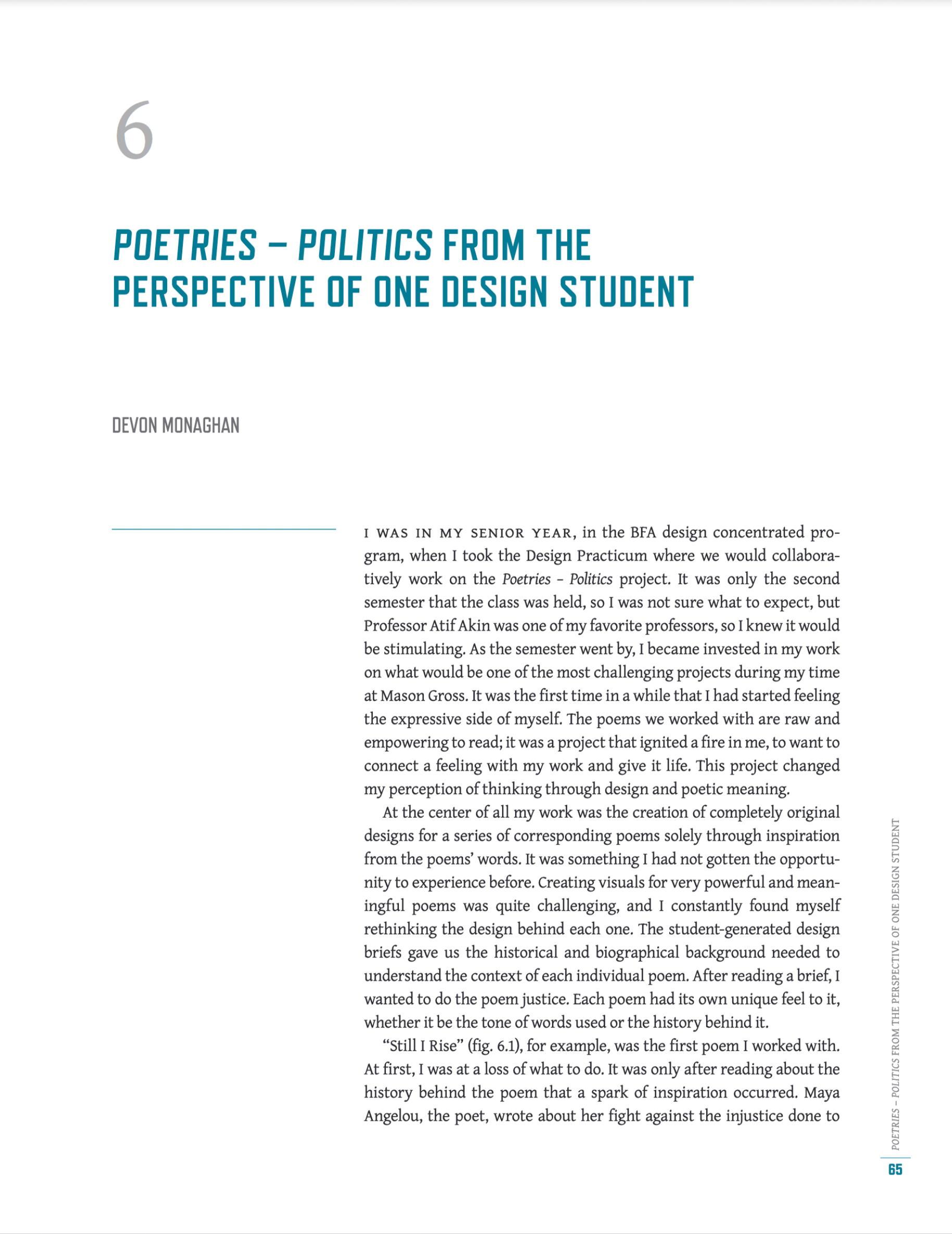
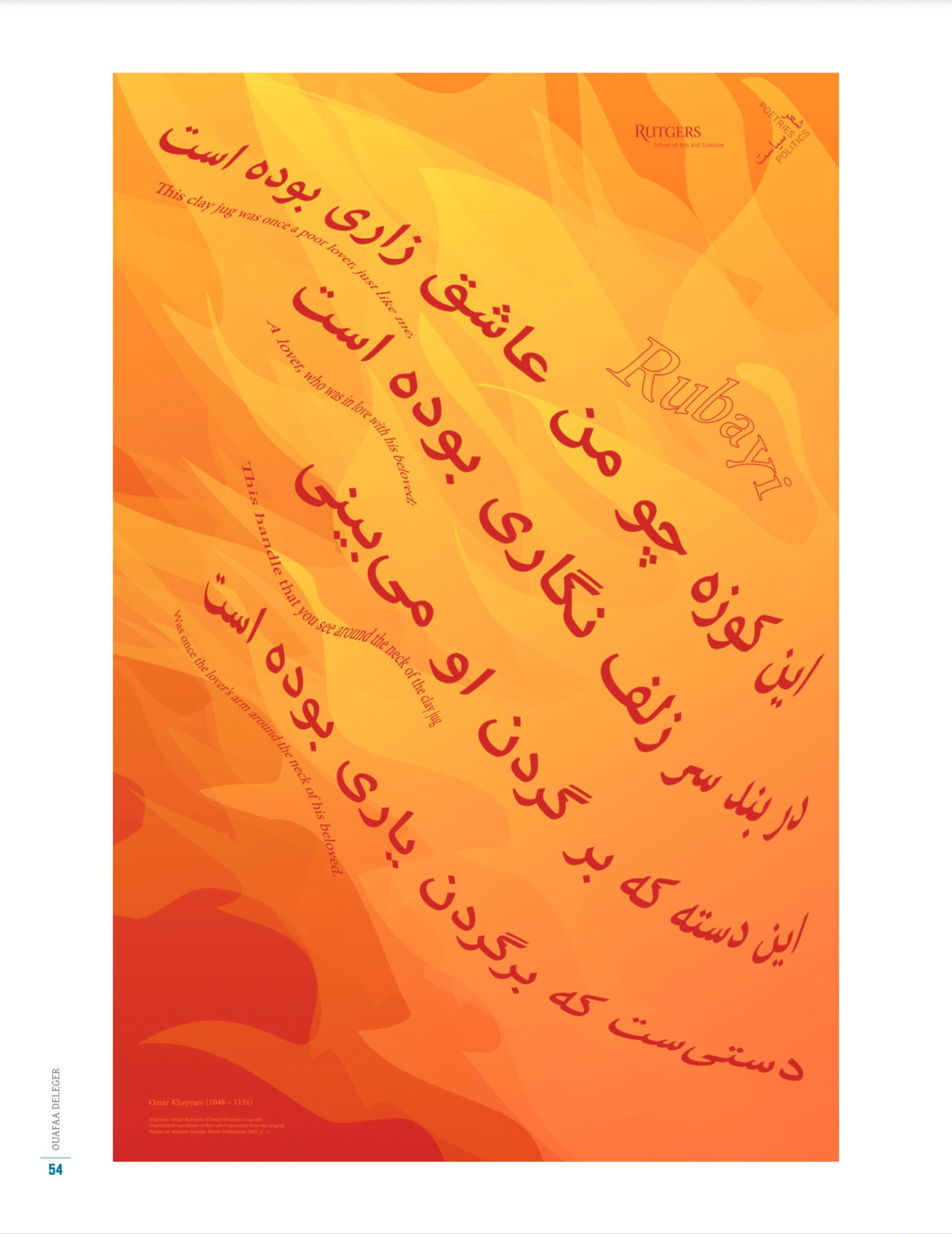
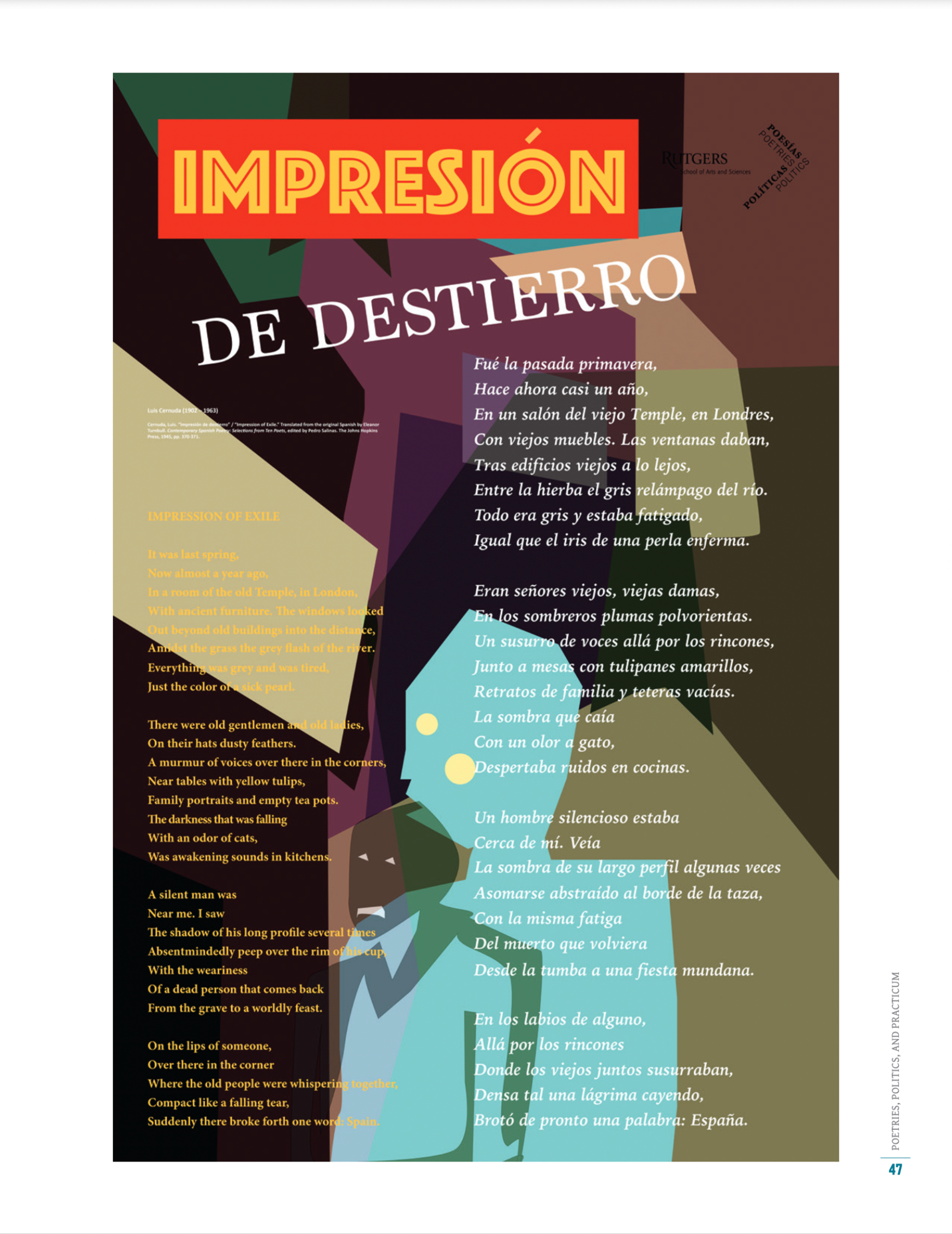
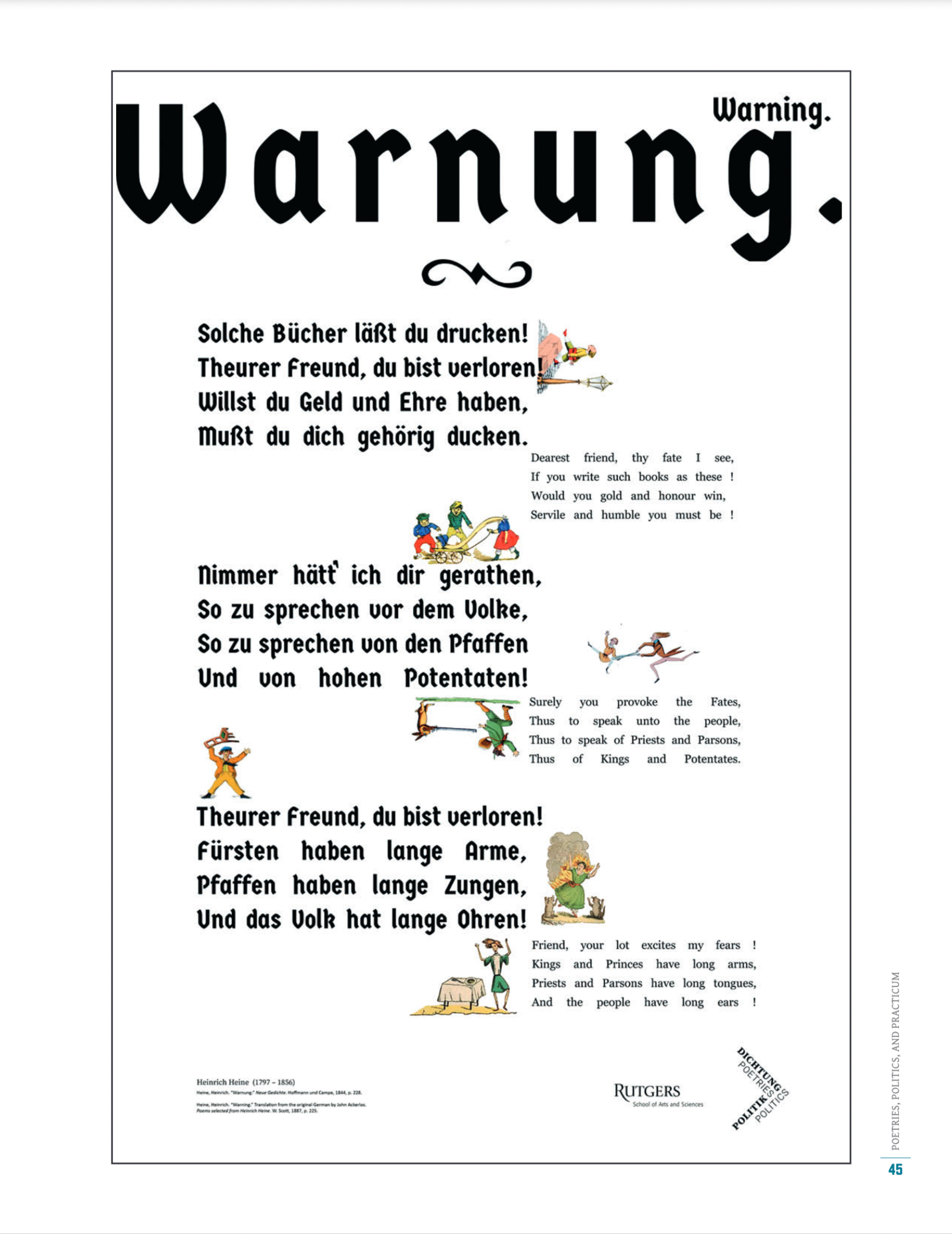
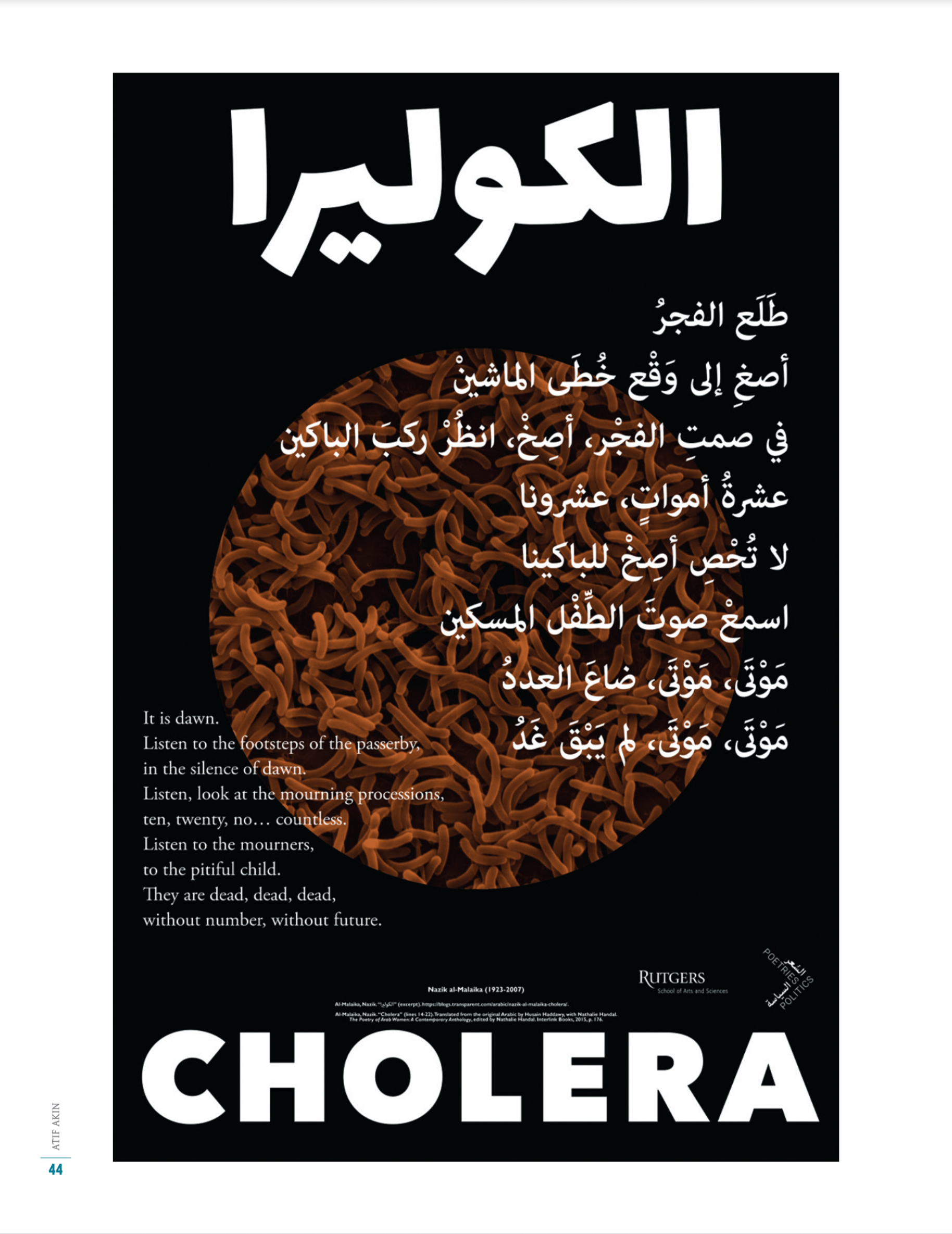
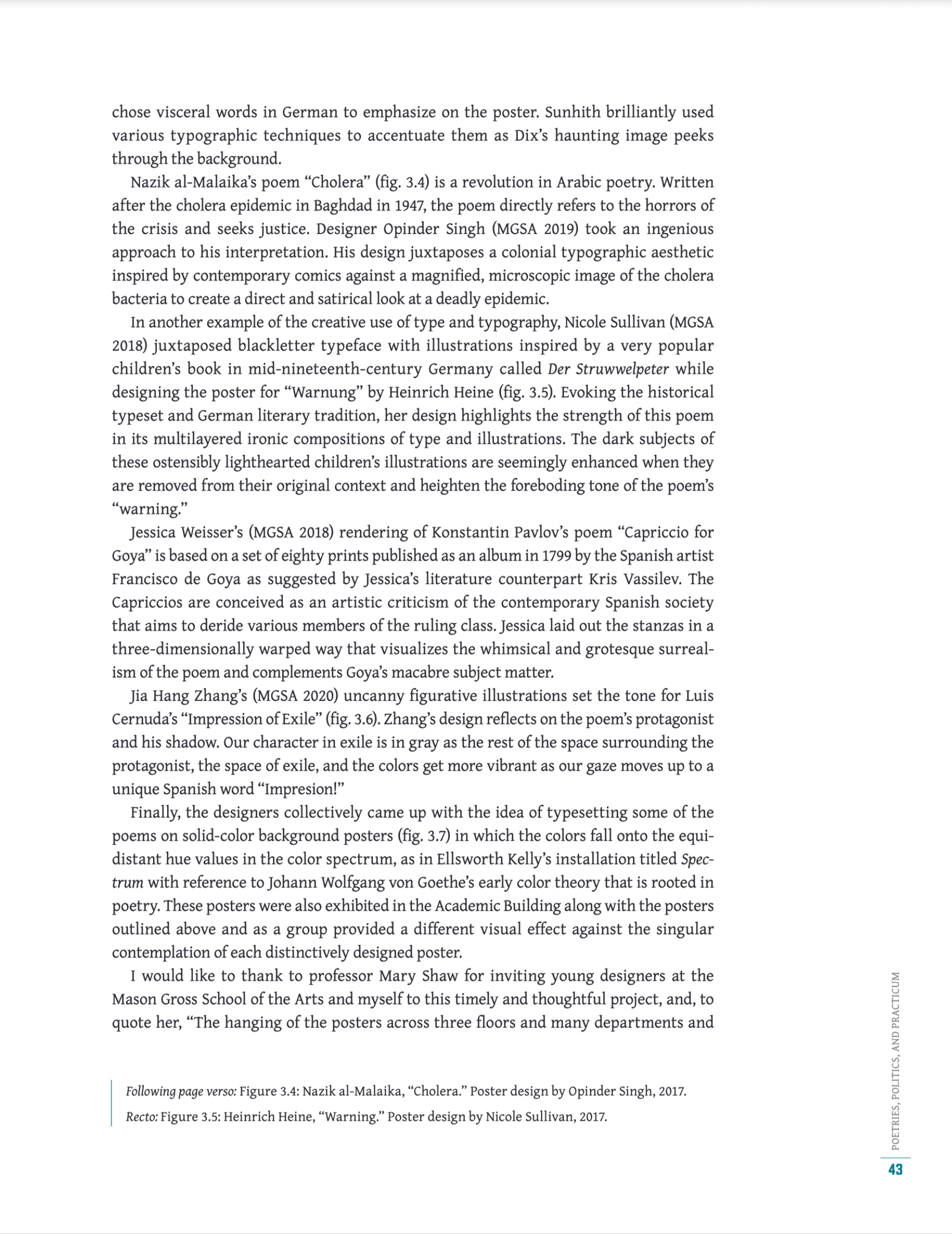
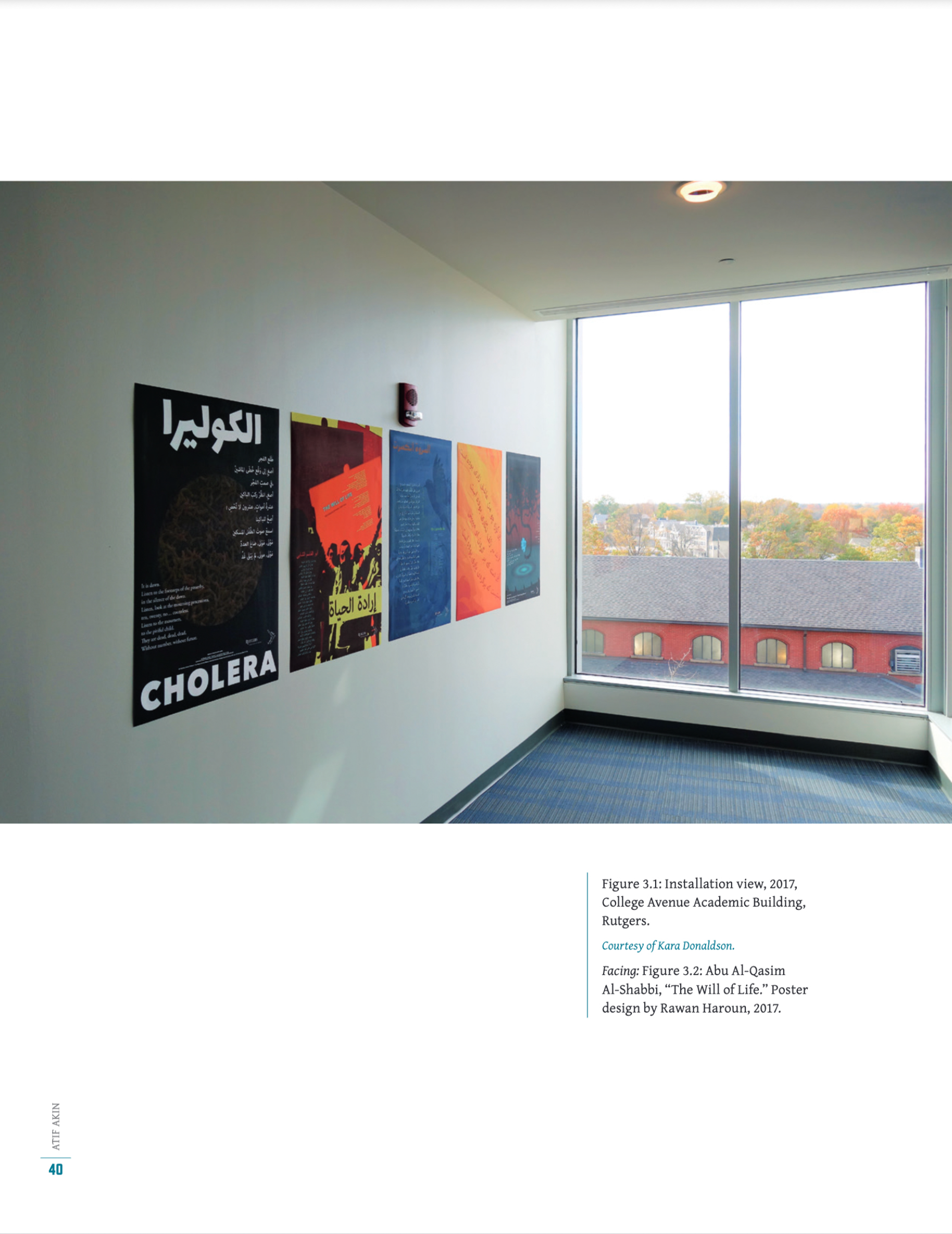
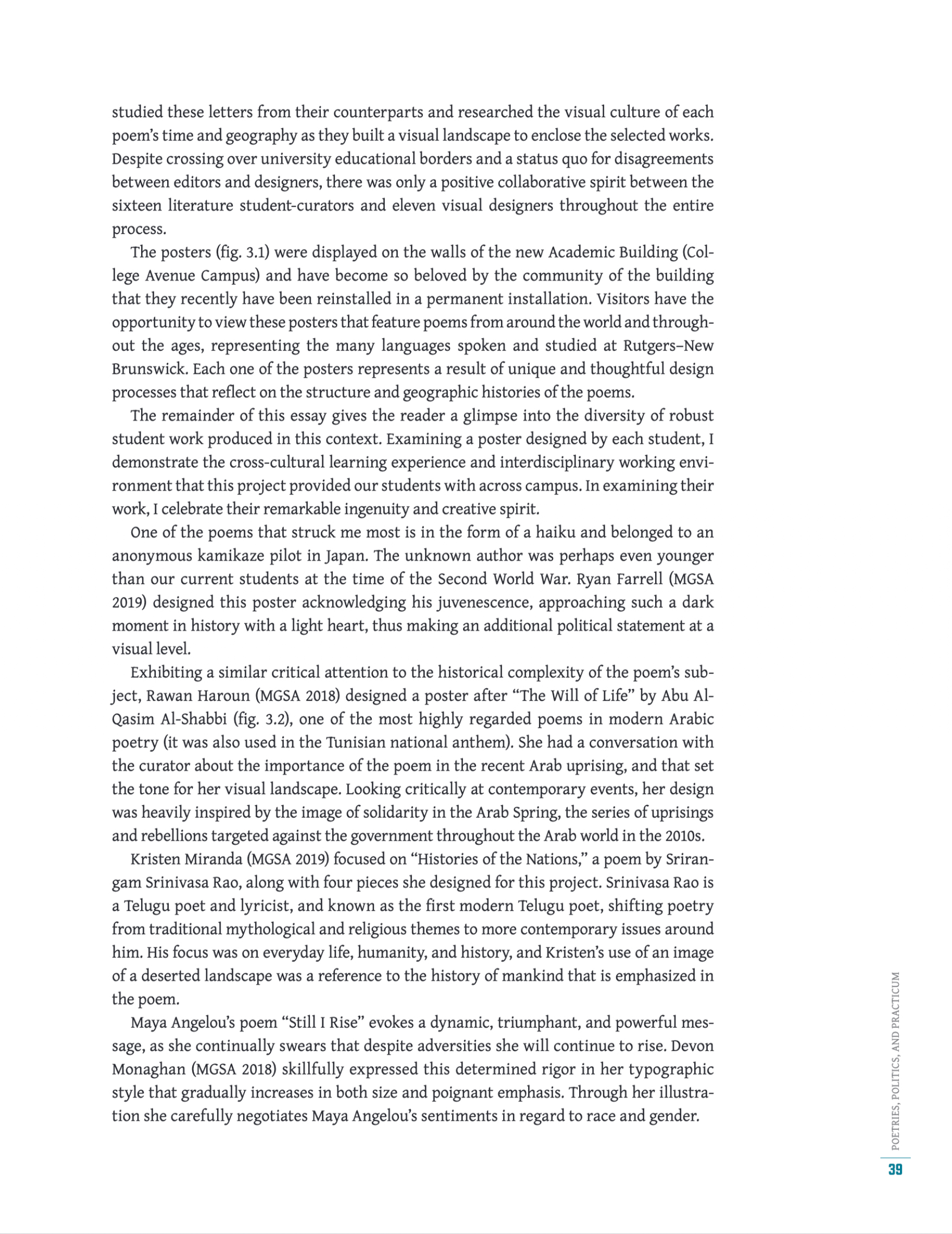
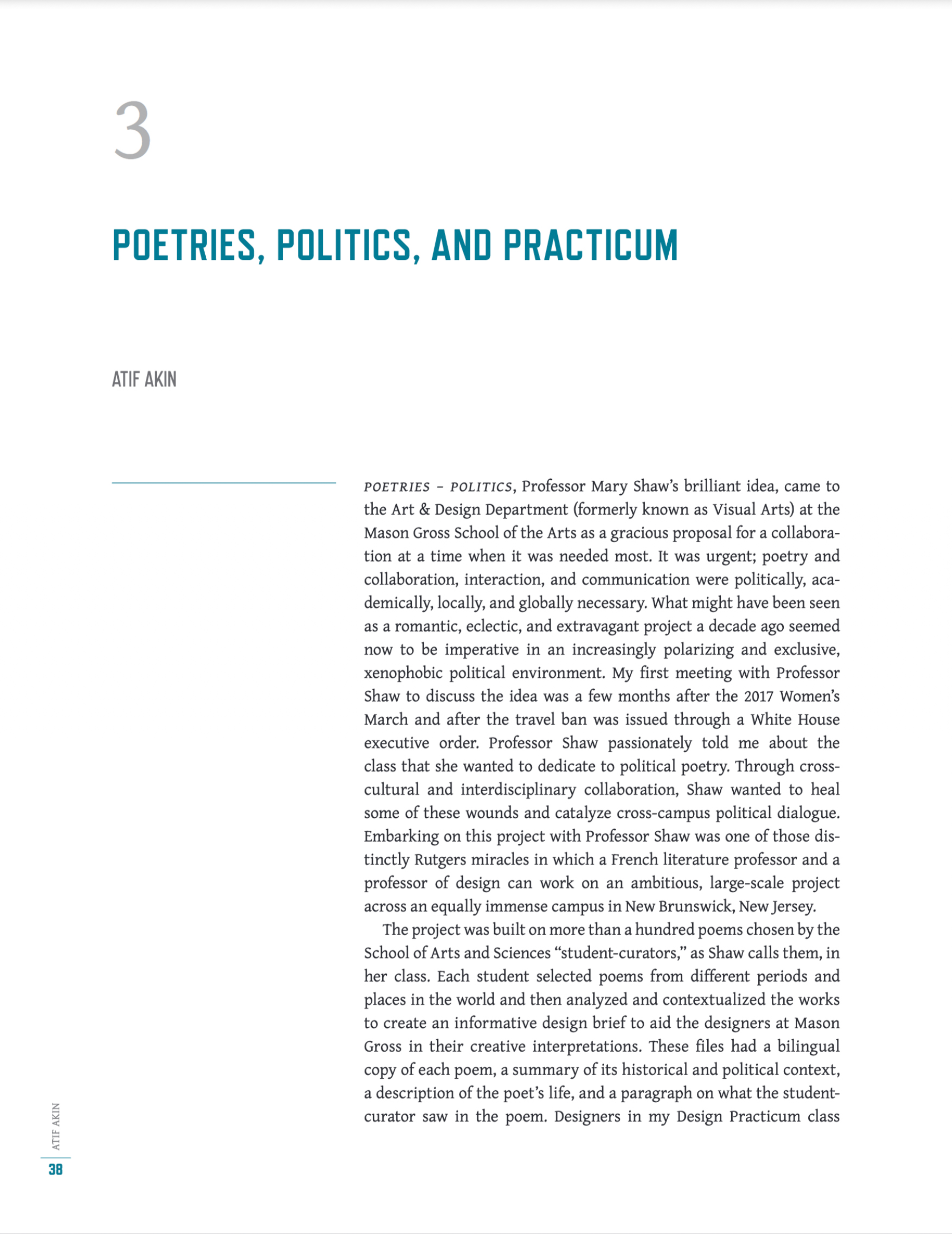
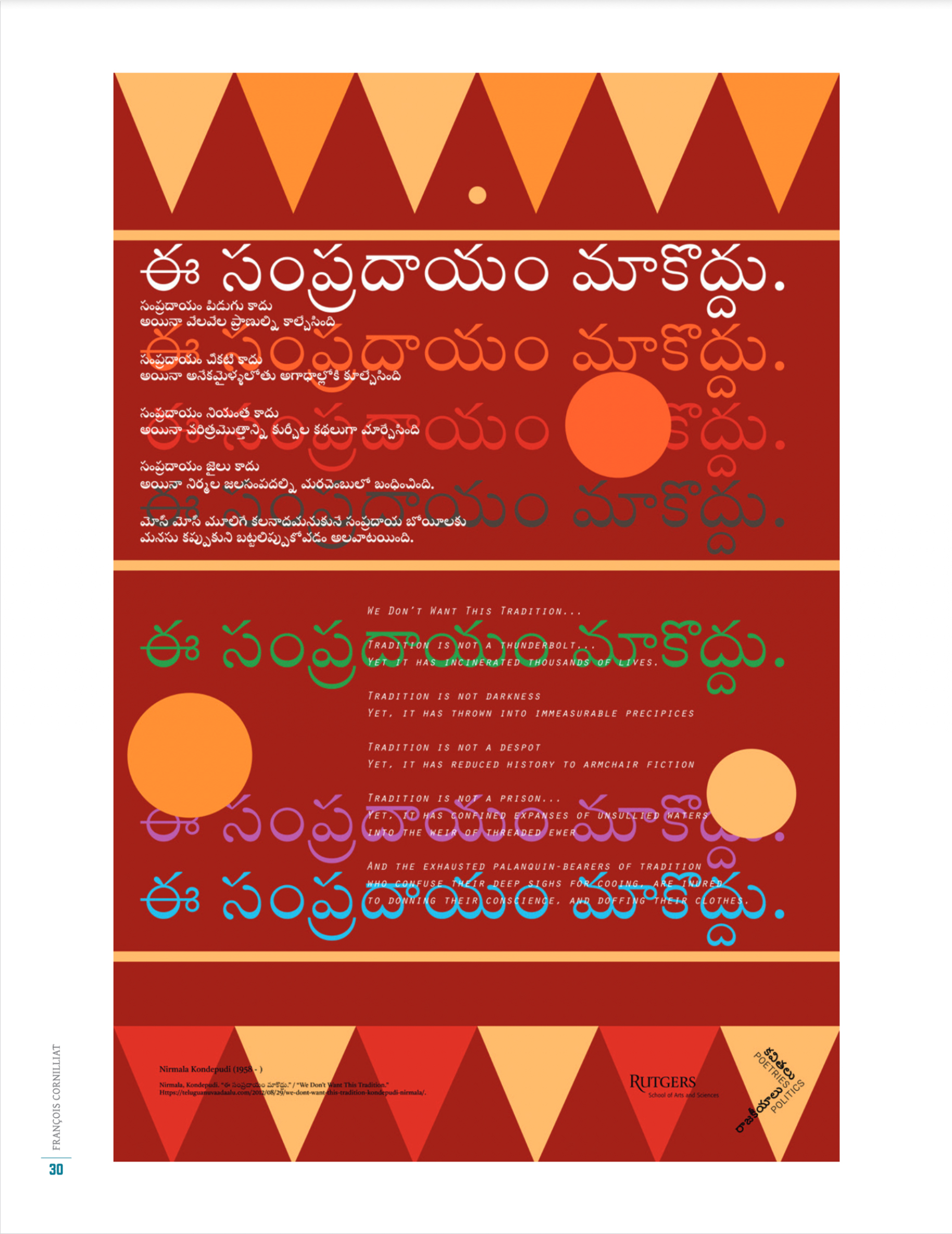
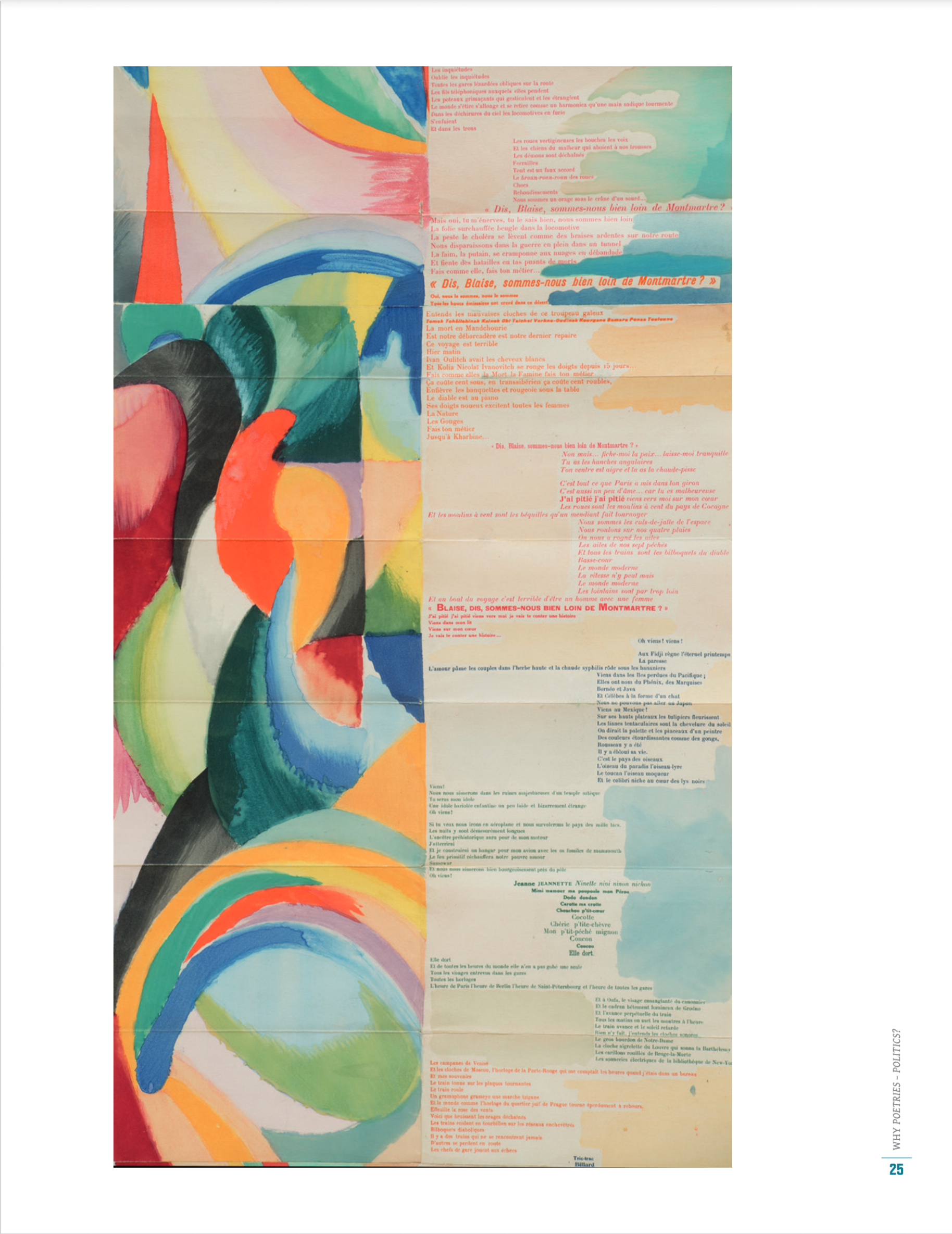
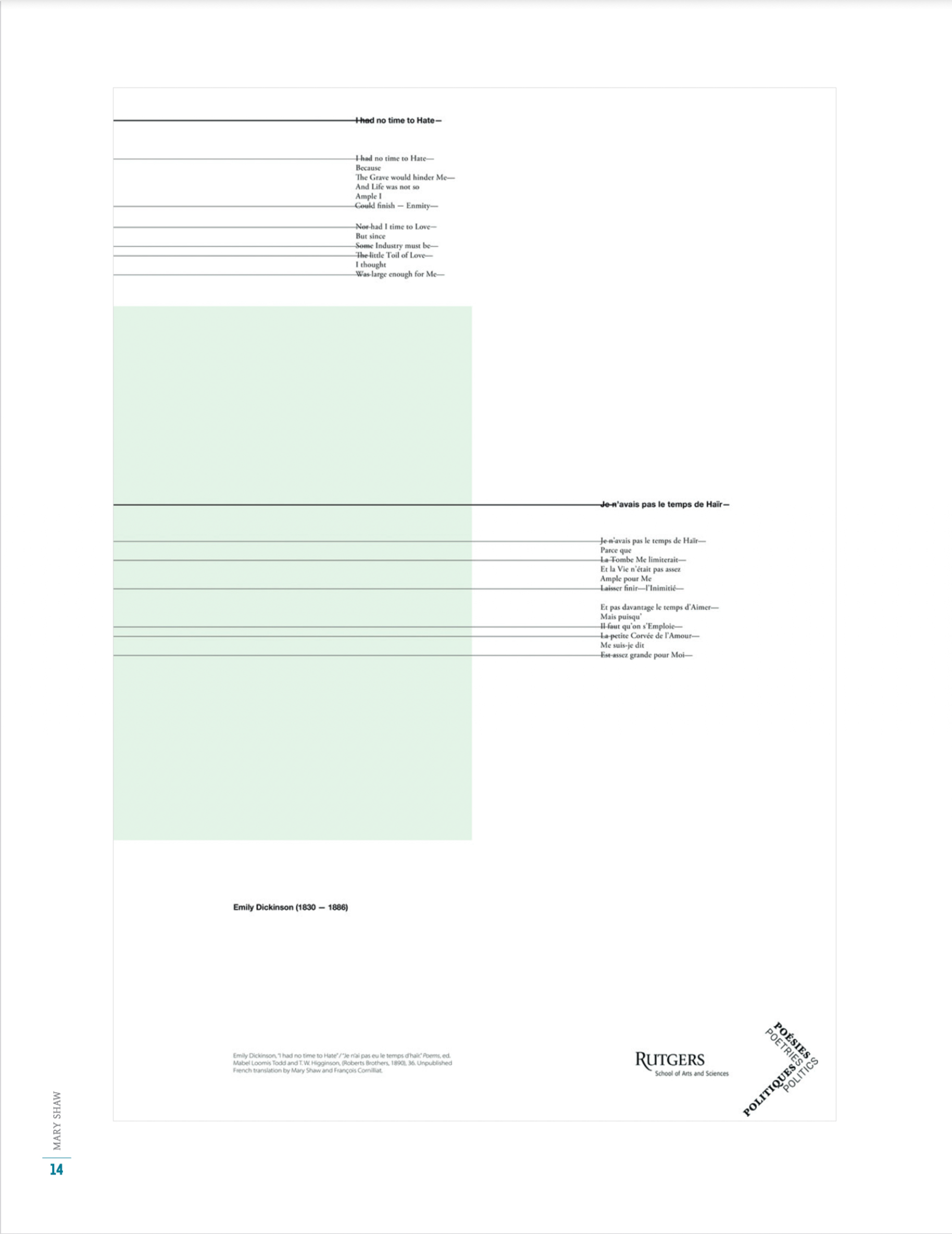
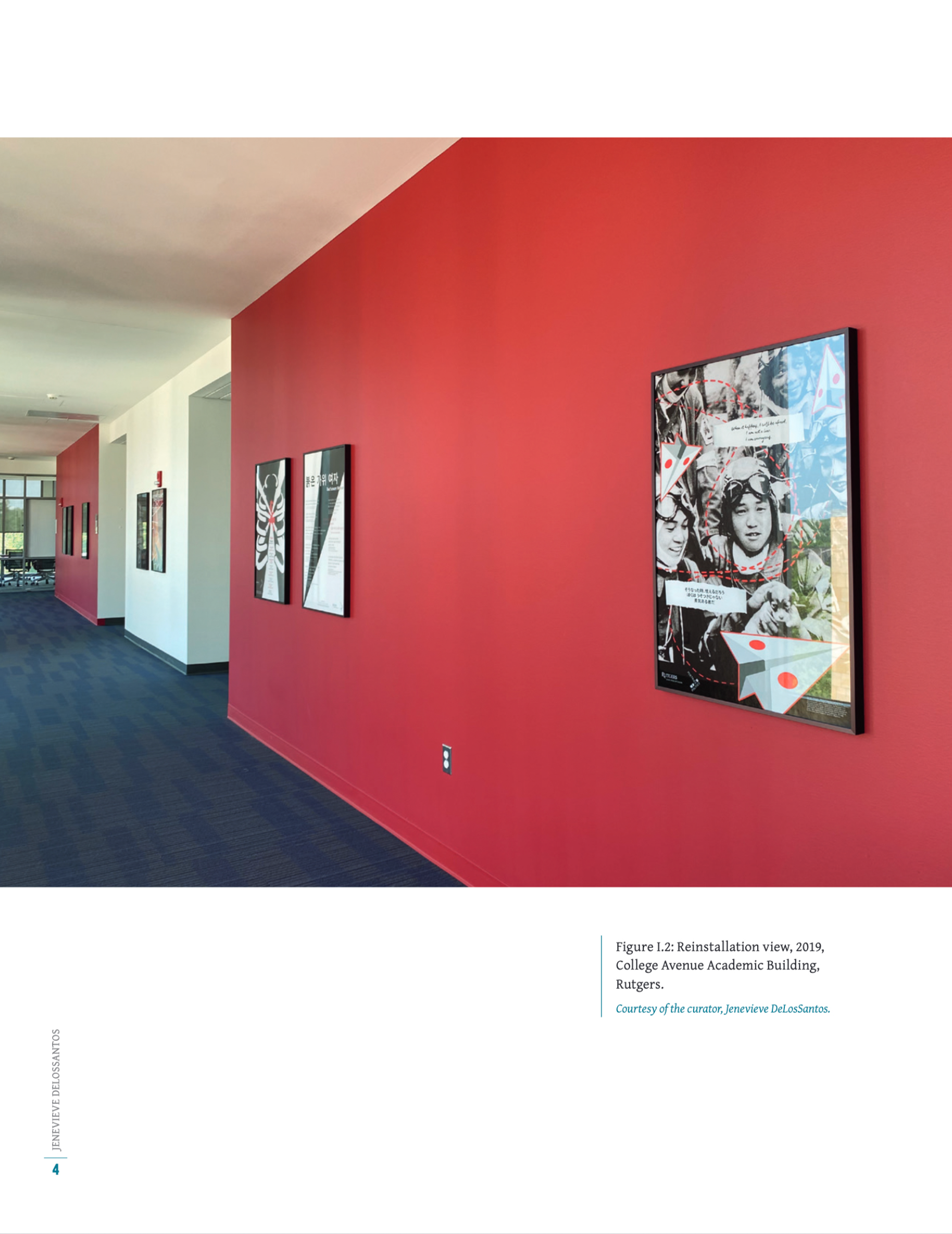
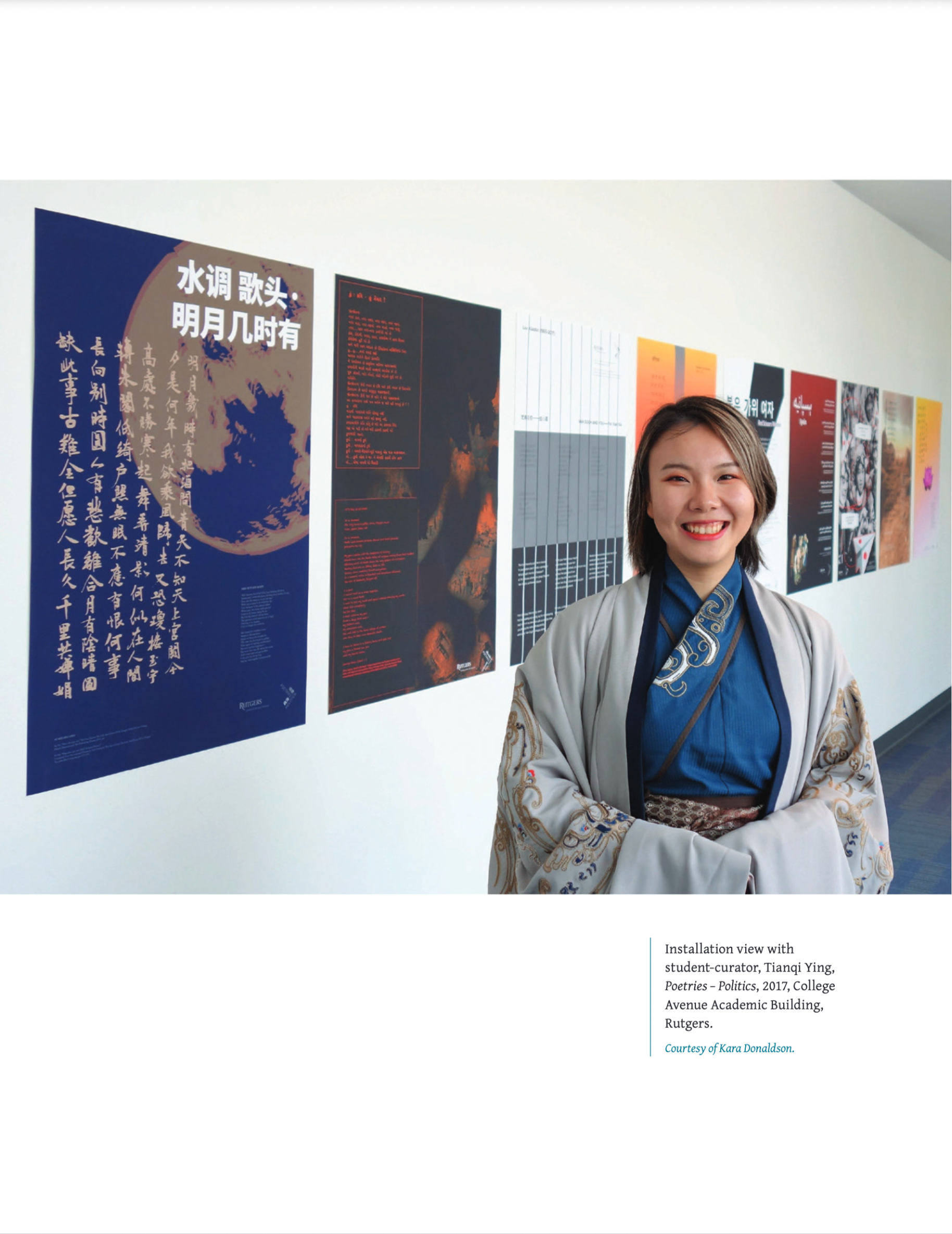
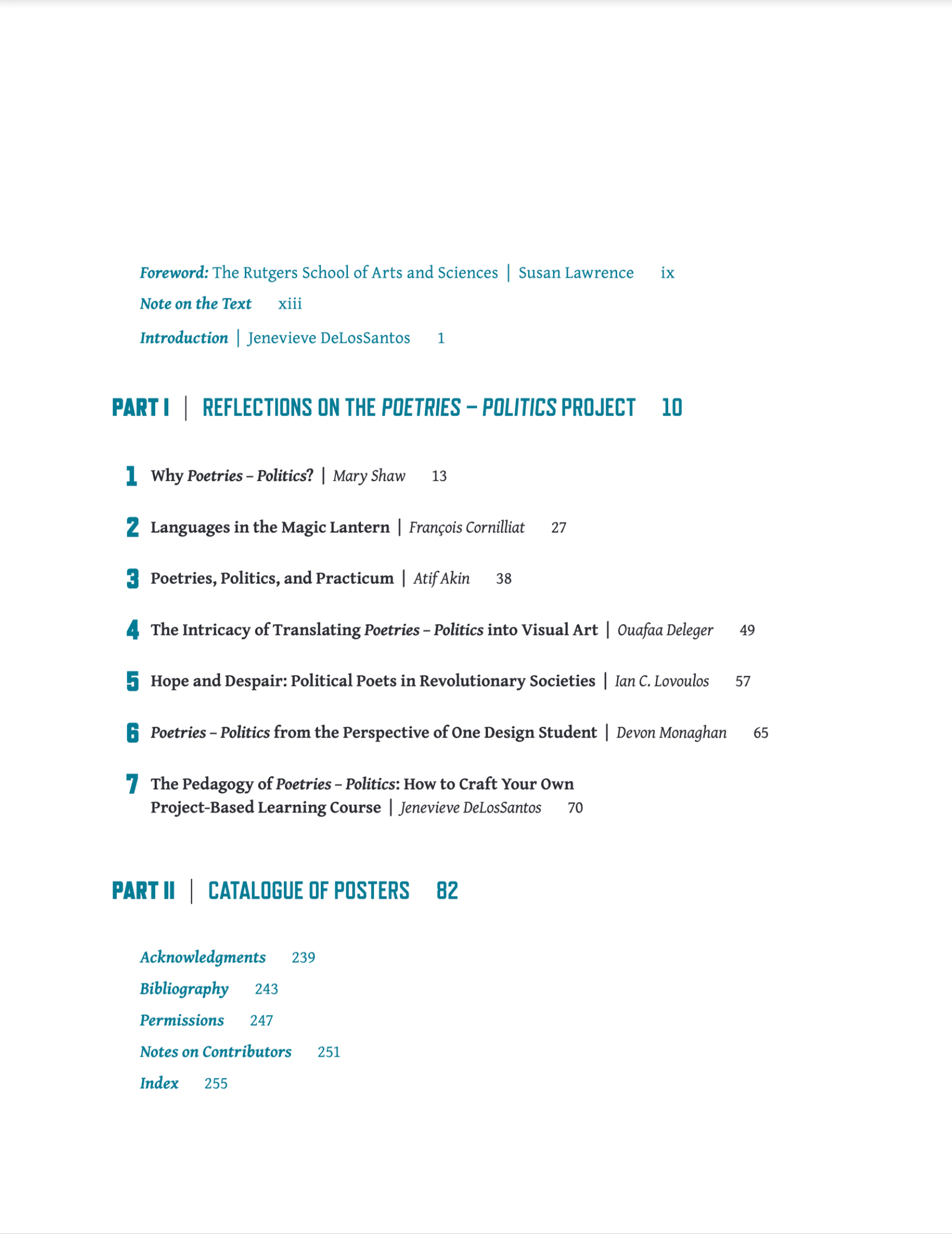
The book that you see on the shelf, Poetries – Politics: A Celebration of Language, Art, and Learning is recently published by Rutgers Press. It is the outcome of a collaboration between design students at Mason Gross and SAS students. Professor of French Literature Mary Shaw and I co-taught a practicum class in 2017 that then culminated as an exhibition at the Academic Building. The book features posters that display politically charged poems from around the world that are selected by SAS students and designed bilingually by Mason Gross students. 

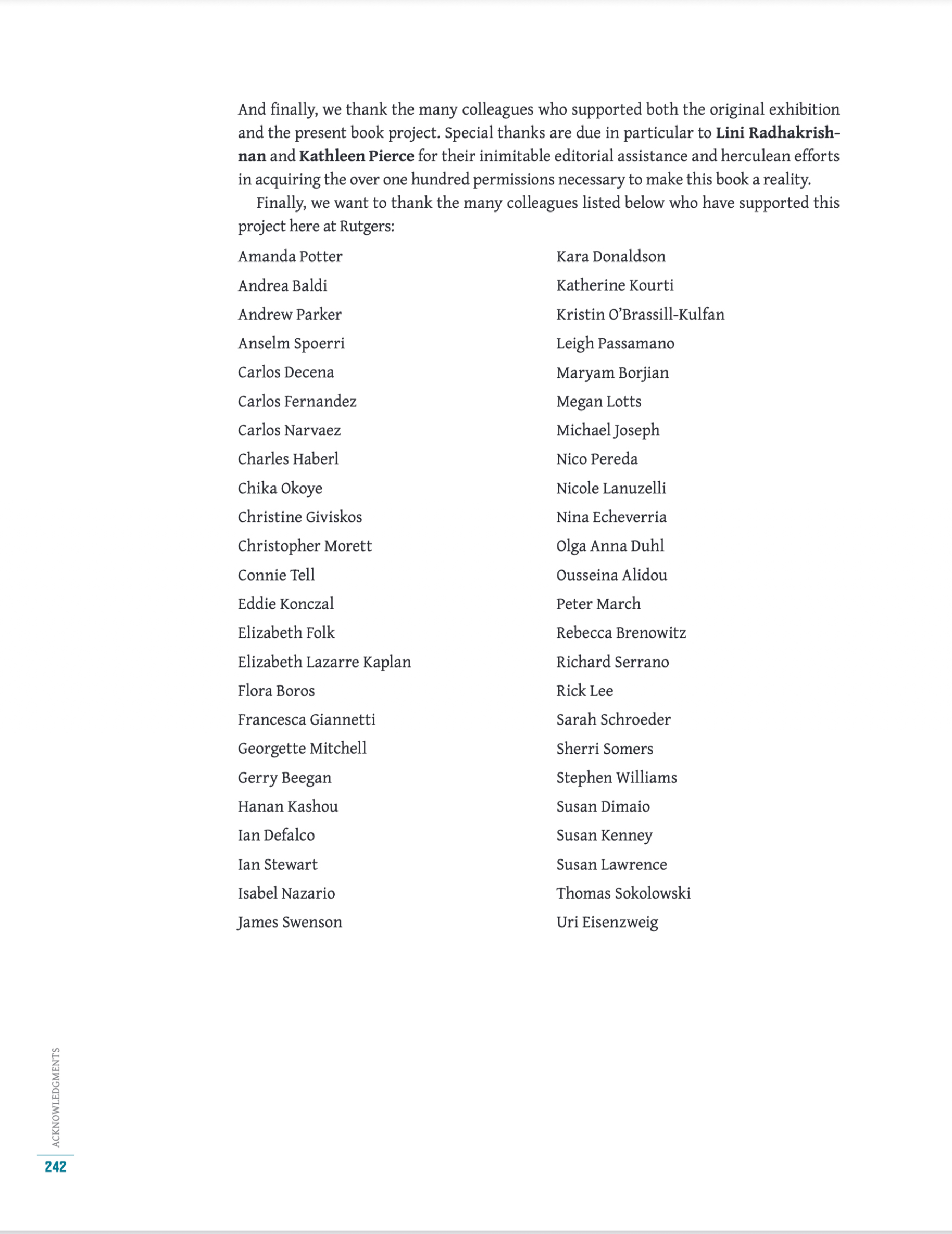
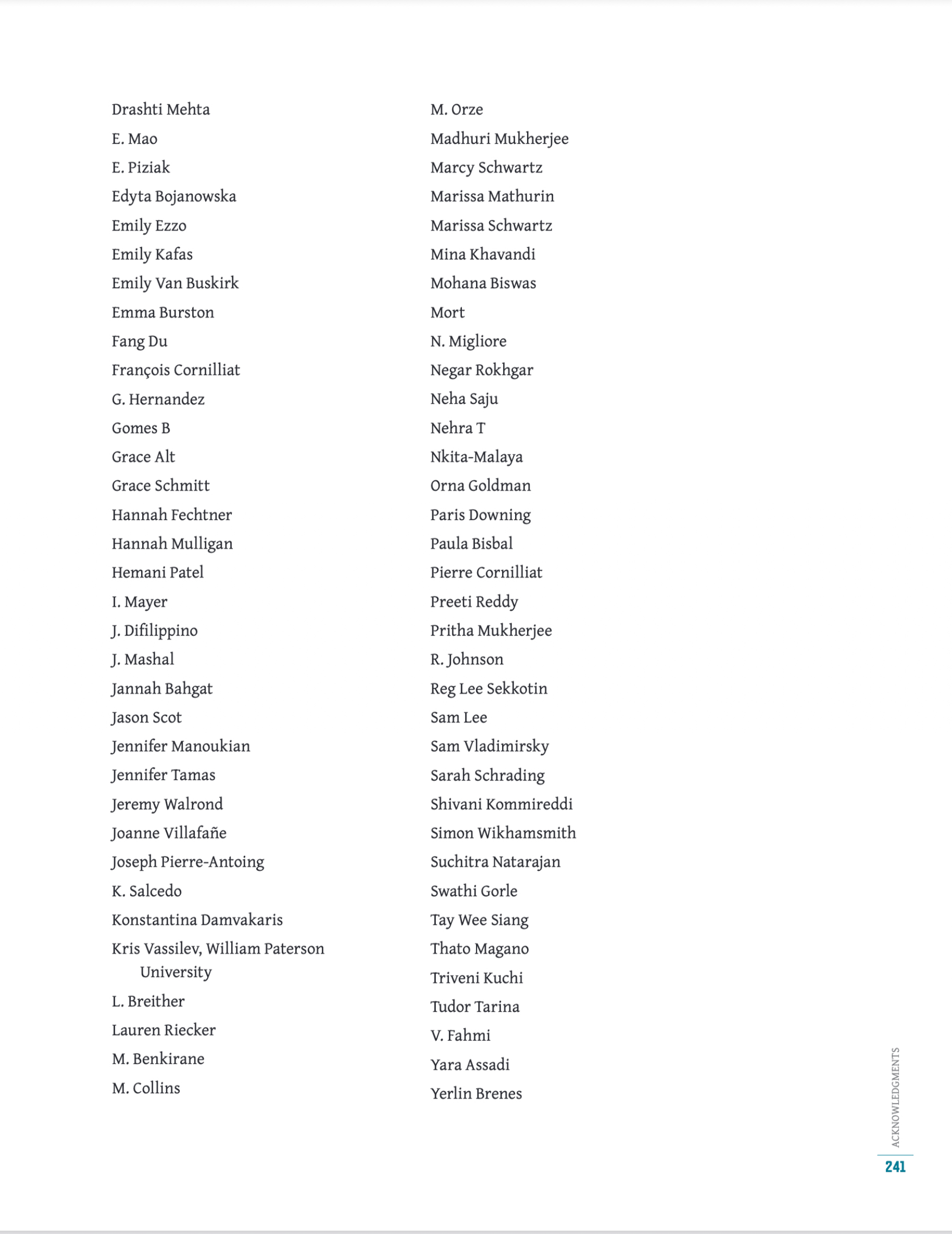
Poetries – Politics is edited by Jenevieve DeLosSantos, Associate Teaching Professor & Director of Special Projects, and designed by Devon Monaghan, a design alum. I have included here a PDF of sample pages from the book along with Devon’s and my articles. All the students and other contributors are listed in the PDF. It is a coffee table book with good reproductions of great collaborative student work. It is available on amazon and at Barnes & Noble next to the train station in New Brunswick, in the faculty author section.

Design Practicum Fall 2019 Animations on The Anthropocene Screened in Istanbul

December 2019, Istanbul

The anthropocene is a term that describes the current geological era. This term describes a period in which humanity is the leading force in geologically shaping the planet earth. While some scientists argue that this era began with organized agriculture in the 16th century, there are different views on its beginning, some associate it with the industrial revolution in the 19th century, or some argue that this era began in the 20th century in parallel with nuclear history. Regardless of the beginning of this period, today, climate change, which is one of the most catastrophic consequences of the present anthropocene era, is the top priority of the global agenda.

11 young designers who were in the Design Practicum class at Mason Gross School of the Arts, Rutgers University, in the state of New Jersey lead by design professor Atif Akin, approached this historical concept from different point of views and all visualized quantitative or encyclopedic data to create poetic meaning in the context of short animations. From microplastics to chicken bones, from political protocols to microscopic imaging techniques, from plastic bags to melting glaciers, they designed animations ranging from 30 to 60 seconds each. These animations are displayed at a whale size 39 feet LED screen at the Zorlu Performance Center in Istanbul

Katie Makar visualizes the sound recordings of the melting glaciers in the form of a wave and also points out the relationship between the melting glaciers and the rising sea level. Conor Finn deals with the aesthetics of the crisis screens of computer operating systems, adapting it to an animation that criticizes the environmental stalemate of the planet and its policies. Although it does not seem to have a very important place in the seriousness of the subject, 60 billion chickens produced and consumed each year and their bones are important in anthropocene research in the academic field. Taking this into account, Maya Tillman visualizes this striking data in fast food aesthetics. Francesca Stoppa, on the other hand, draws attention to the particle density in the atmosphere by acting with the data published by NASA in 2019. Animations there is also a small Turkish surprise inside, in limiting the use of plastic bags in Turkey, the United States a lot of the state from the early measures taken has learned that Sara Reed slightest a Turkish proverb, using the iconic New York plastic bag design. Tyler Lee not only experimented with electromicroscopic images that imply the technological advancement of humanity in. Poetic way, he also designed and implemented the visual identity of the project on behalf of his classmates. Elyssa Feerrar changes our point of view from the surface to the deep ocean and she created a cartoony looking dystopic underwater ocean view. While Jennifer Aguirre points our attention to urban deforestation, she uses images from both New York and Istanbul high rises. Both Lau Krystal and Jillian Mulhern were so much interested in the risk of microplastic pollution in the oceans, they took different ways of visualizing the phenomenon, while Jillian was interested in the consumer products Lau chose to literally and visually represent the microparticles on this whale size screen. Rushika Raman visualized number of chemical substances used in the plastic industry and their IUPAC names in a typographic animation that all started with “Poly-“.

For this international collaboration, organized by Deniz Akgüllü, director of digilogue sponsored by Zorlu Holding, we found this concept worth considering and scrutinizing as it is an issue of equal concern to everyone on the planet, from Istanbul to New Brunswick, New Jersey.  

You can also view and download the whole animation in its original format: