Categories
art history design design museum DIY history research Uncategorized

Down and out @ the Met 2026

Text and photos by Miyls Bleu Hill

First year graduate students Cara Gidden, Miyls Hill, Dyanne Horgan, and Aftan spent an exciting and informative day outside the classroom at the Met Museum accompanied by MFA Design Director and Research Methods professor Atif Akin.

The class/trip consisted of tours developed by each student following two and half weeks of research, we were tasked to attend and observe the Met Museum and formulate a curation of what was inside informed by our interests. 

From learning about the lack of expansive southern art at the museum and reconstruction period From Dyanne to Cara taking us down a rabbit hole that began with the Medieval arts section looking at various depictions of Jesus and ended with learning about J. Pierpont Morgan and his infamous legacy tied to the Metropolitan Museum.

The merit of the exercise was in allowing each student to think critically and use research based thinking, for example Aftan’s guide explored how gender is classified and identified in artifacts at the Met. Drawing on Judith Butler’s essay ‘Gender Complexity and the Limits of Identification’, he took us on a tour to examine how bodily features, artistic conventions and museum documentation shape the classification of figures, particularly those artifacts whose gender identification are uncertain, contradictory or difficult to establish.

 Through the guide we explored ways gender can become legible through systems of classification, and the limitations of categories that are revealed when we encounter objects that have been difficult to fully understand or identify.

My guide was inspired by  Beatriz Colomina’s “Split Wall” essay,  Walter Benjamin, Power, Taste, and Archways. The tour was a bit unconventional since it didn’t necessarily focus on objects within the museum but the space of the museum itself as an architectural body of power, after my tour I held an activity for all of us to think of the different ways of entering the space and the interiority of museums. 

The practice of curation was an exciting skill to sharpen, and each student benefited from the practice of investigation, research, and developing alternative ways of seeing.
Categories
art history

Carla Yanni – Campus Tour (October 2, 2026)

Text and photos by Miyls Bleu Hill.

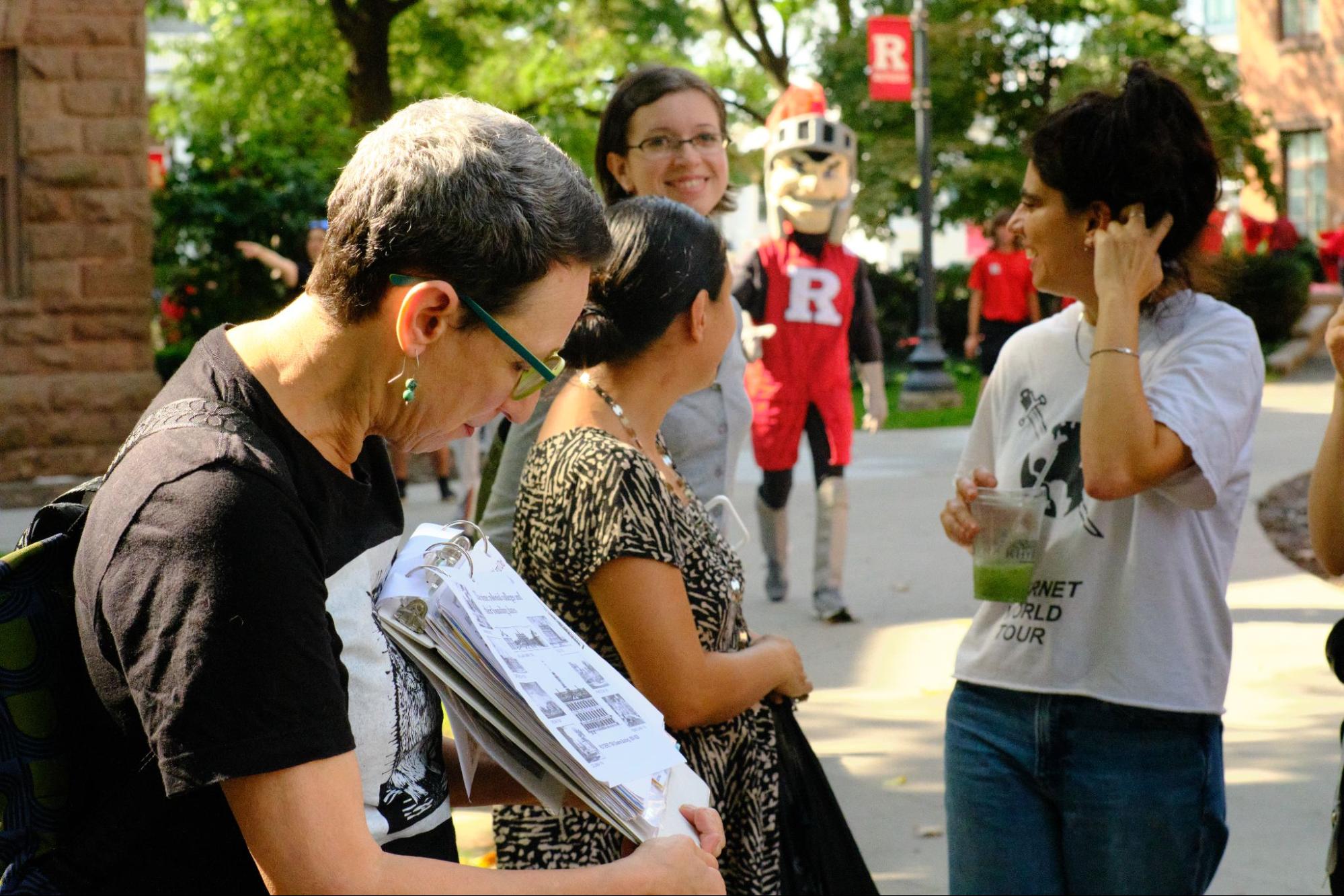
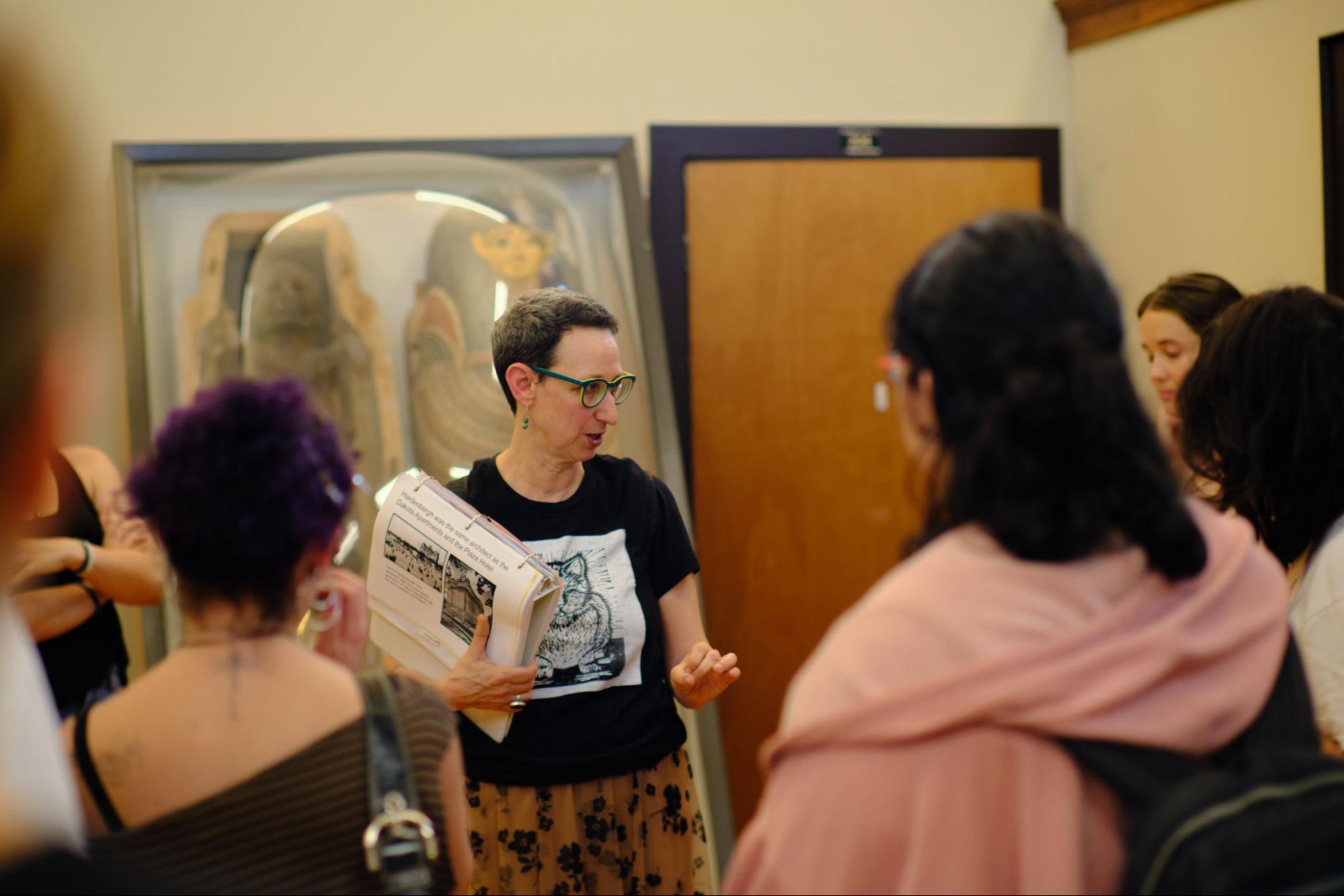
On Friday, October 2nd, Carla Yanni, Professor and Rutgers Art History Department Chair, led us across the New Brunswick campus. Gathered at Old Queens, students from visual arts, design, and art history departments began to embark on a tour where some of us got to know our school better geographically,  but ultimately where we all learned about the rich architectural history of Rutgers University.

The Observatory is our first stop, and it sets the pace. We gather close, ears tuned to Carla, and begin to see the campus as something built and layered rather than something we simply walk through. Then we make our way to the Geology Museum.

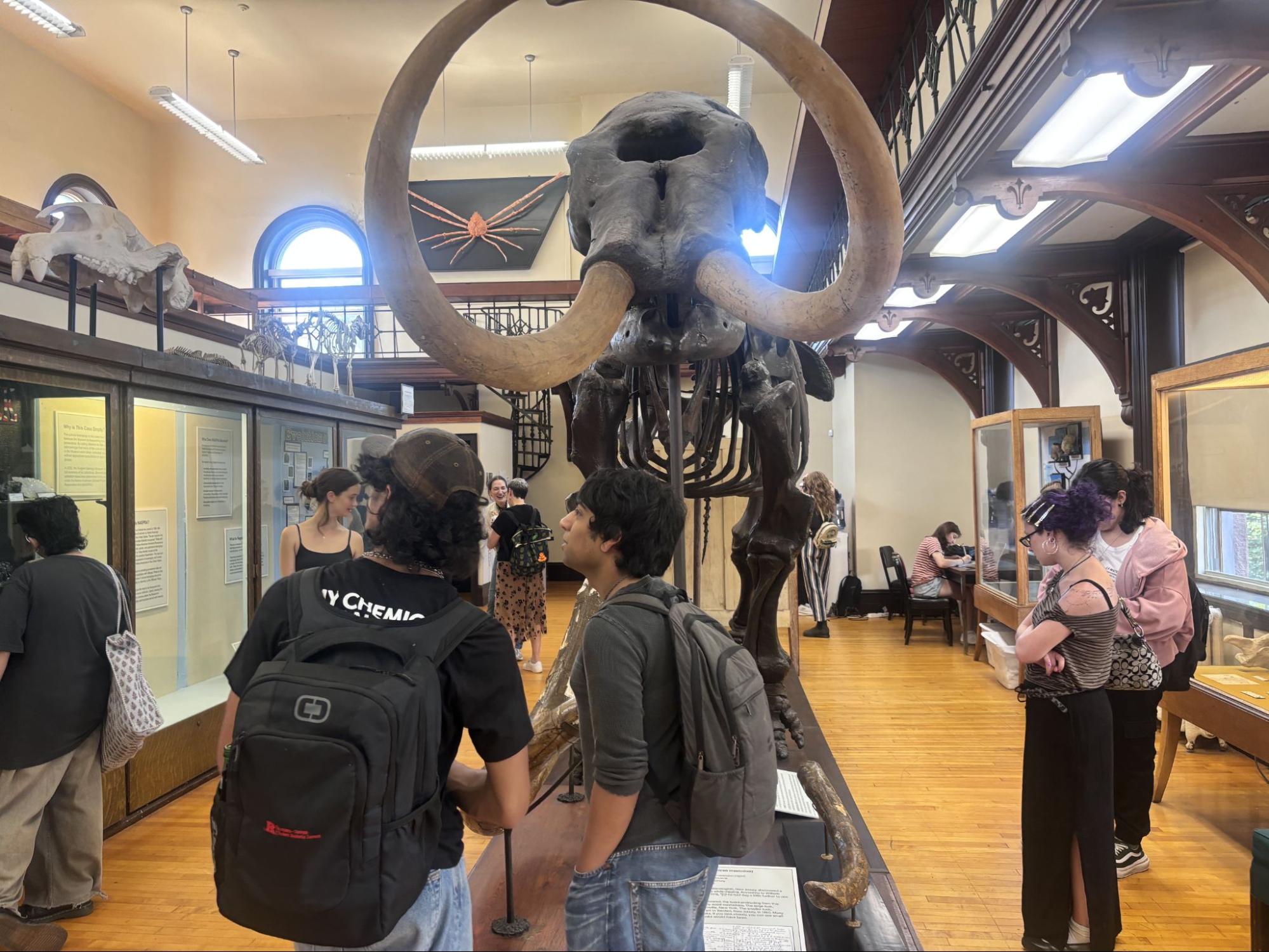
We stood in the geology museum,  where my ears hung on every word by Carla. Through the windows, you hear the Rutgers marching band outside, almost in competition. A democratic wonder falls over so many adults in one room as they look through the cases at old specimens.

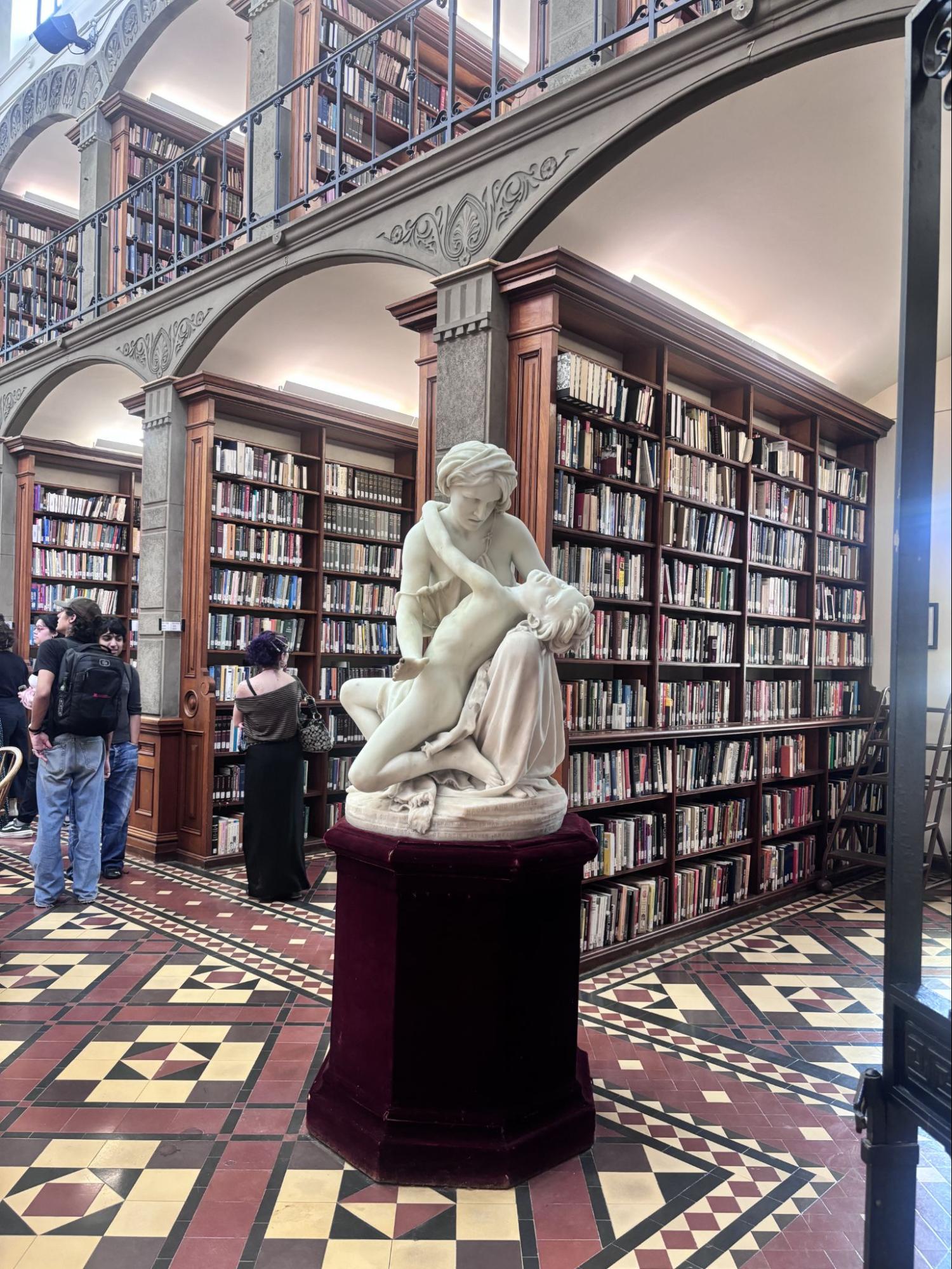
From there, we carry that wonder to the Gardner A. Sage Library. With multiple departments in one group. As we walked around exploring the beautiful and very quiet room I noticed each student fixated on something different, from the actual books to the space itself. Conversation follows with Carla in a whisper speaking of the architectural and somewhat political significance of the theological library.

When the library tour ends, we keep walking. Outside, Carla points to the tilework on the buildings around us, an ode to Rutgers’ long history with ceramic technology. For a group of artists, designers, and art historians, it feels like the right ending. The history of this campus is not only in the plans and facades, but in the materials themselves.

Categories
art art history design rutgers

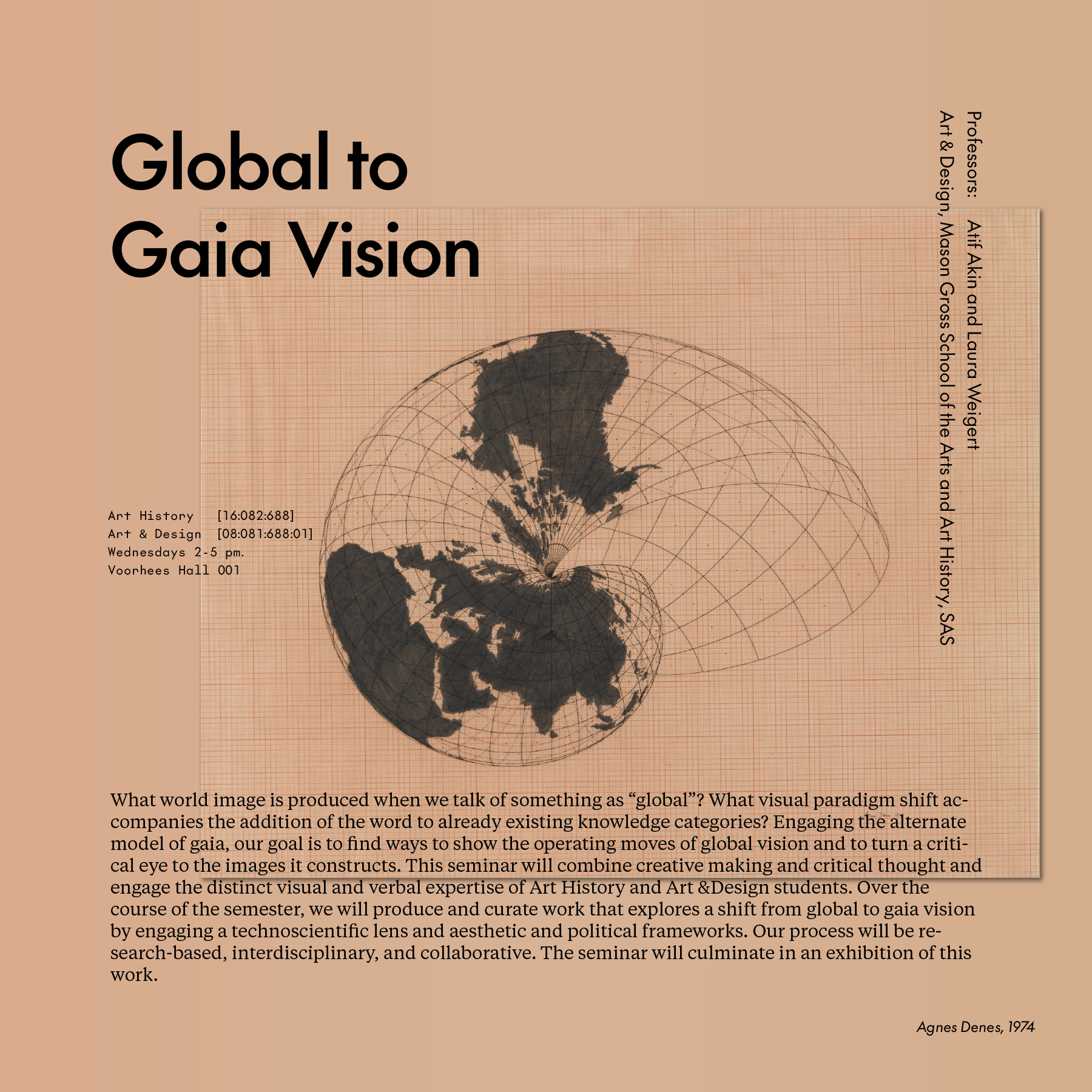
Global to Gaia Vision

Categories
art history documentary new jersey photography rutgers

Documentary Photography Today

This symposium will reflect on how and why we use the term “documentary” to
describe photography today. In what ways are artists, scholars, and curators thinking
about documentary photography? How are photographers dealing with the
evidentiary function of their pictures while notions of authenticity and truth are
broadly challenged by political conflicts and new media? How do those pictures shape
our understanding of contemporary human rights, and their violations, across the
globe? Might we also speak of documentary photography as a style unlinked to the
medium’s social functions? Participants will include photographer Nina Berman, Mary
Panzer (NYU), and Sharon Sliwinski (University of Western Ontario), with respondent
Diane Neumaier (Rutgers).

www.developingroom.com

Friday, December 7, 2012
10 a.m.–1 p.m.
Alexander Library
Teleconference Lecture Hall
169 College Avenue

Categories
art art history conference cyberculture new york talk technology

Digital Art History

Digital Art History (November 30 – December 1, 2012)
Organized by Jim Coddington


Live streaming by Ustream

The impact of digital technology on the practice of the humanities has been a subject of considerable discussion, debate and even consternation. In the context of art history the integration of digital tools and processes has lagged, in varying degrees, in comparison to other disciplines like archaeology and literary studies. Some approaches have been fruitful, such as computational subjects like image processing for technical art history, virtual environments, visualization, use of GIS data in archaeology and others.

http://www.nyu.edu/gsas/dept/fineart/research/mellon/mellon-digital.htm