Richard Hollis

This event has no image but a special remark from Gerry, I’d definitely consider attending.
http://artistsspace.org/exhibitions/richard-hollis/
///////////////////////////////////////
September 21 – November 10, 2013
Opening: Friday, September 20, 6 – 8pm

Artists Space : Books & Talks
55 Walker Street

British graphic designer Richard Hollis (born London, 1934) is a seminal figure in postwar design and communication. Working consistently since the 1950s as a freelance designer, Hollis has also authored influential books on design history and theory. His practice has placed emphasis on close collaboration with those commissioning his design, including writers, editors, artists, curators and architects. An overriding concern for the effective and economic communication of the client’s message has been consistent throughout his work.

This exhibition, curated by design historian Emily King with designer Stuart Bailey, is the first overview of Hollis’ work in the US. Consisting of over 150 items drawn from the designer’s personal archive including finished pieces, layouts, and notes, it reflects his entire professional life. Hollis was greatly influenced in the 1950s and 60s by travels to Zurich, Paris and Cuba, his production during this time revealing the impact of Swiss modernist design and Concrete art, alongside that of left-wing politics. In the mid-1960s he co-founded with Norman Potter a new School of Design at West England College of Art, based on experimental teaching principles, and worked as art director and designer of journals including New Society and Modern Poetry in Translation, the last of which Hollis went on to design for a period of 40 years.

Over these four decades, Hollis also worked for numerous publishers, including freelance for Penguin, and as art director at the left-wing publisher Pluto Press. In 1972 Hollis was one of the team of five that produced the book of John Berger’s BBC TV series Ways of Seeing. This significant project crystallized ideas around the ideological function of visual images, forming a critique of representation that was extended into the innovative relations between image and text in the publication. Hollis also collaborated with Berger on the design of the novel G. (1972) and the study of migrant workers A Seventh Man (1975), produced with the photographer Jean Mohr.

For a period of seven years in the 1970s and 80s, Hollis worked for the Whitechapel Gallery in London establishing a coherent system of communication for the gallery that has subsequently become a touchstone for the manner in which art institutions adopt a graphic identity. Since then he has worked for many other public and private art galleries, and along the way forged long-standing relationships and collaborations with several artists, most significantly British Op artist Bridget Riley. Consistent across his five decades of work as a designer has been a commitment to writing on design, including the key text Graphic Design: A Concise History, published by Thames & Hudson in 1994, and Swiss Graphic Design published by Laurence King in 2006. His writing for magazines, journals and newspapers, alongside letters and lecture outlines, have recently been compiled into About Graphic Design, published by Occasional Papers in April 2012.

Richard Hollis is curated by Emily King with Stuart Bailey. Exhibition furniture design by Simon Jones. The exhibition was first presented at Gallery Libby Sellers, London, in 2012, and toured to ECAL, Lausanne and Centre Pompidou, Paris.

Related Programs:

A Video Lecture
Richard Hollis
Sunday, September 22, 3pm

The Truth About Hollis
Stuart Bailey
Thursday, September 26, 7pm

This exhibition is supported by Graham Foundation for Advanced Studies in the Fine Arts; The New York State Council on the Arts, a State Agency; public funds from the New York City Department of Cultural Affairs, in partnership with the City Council; and The Friends of Artists Space.

http://artistsspace.org/exhibitions/richard-hollis/

Ignorance

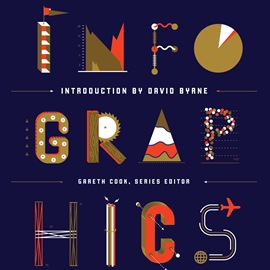
What we know about the world is increasingly shaped by infographics — from the blue state–red state divide to an analysis of history’s best basketball players and a gorgeous portrait of New York City’s Twitter traffic. To launch the debut of a new annual series, The Best American Infographics, editor Gareth Cook explains why this medium is experiencing a golden age and uncovers its deep roots in art, cartography, and the brain’s natural visual intelligence. Several top designers involved in the project — Nicholas Felton, John Grimwade, Nigel Holmes, Fernanda Viégas and Martin Wattenberg — will engage the audience in discussions of some of the works being considered for next year’s volume.

“When infographics work…they take you somewhere no other medium can go; they allow and facilitate intuitive insights; and they reveal the hidden patterns buried in mountains of data.”

— David Byrne, from the Introduction to The Best American Infographics 2013

The program will be followed by a book signing and public reception with many of the winning artists.

About the Speaker
Gareth Cook is the series editor of The Best American Infographics. He is a Pulitzer Prize–winning journalist, a regular contributor to NewYorker.com, and the editor of Mind Matters, Scientific American’s neuroscience blog.

Seeking Autumn Fellows and Intern

Rhizome is offering a range of professional development opportunities for the fall semester: an Editorial Fellowship, an ArtBase Curatorial Fellowship, and a Program Internship. Each of these individuals will join a small team and play a central role in shaping the organization and its core program as it deepens its collections and expands its program internationally.

Through its internship and fellowship programs, Rhizome has a track record in cultivating individuals who have gone on to play an important role in the fields of art and technology.

1) EDITORIAL FELLOWSHIP

The Editorial Fellowship is a unique opportunity for a developing writer with a dedication to the fields of contemporary art and technology to further develop professional skills and build up a portfolio seen by a large audience.

The Fellow will spend 50% of their time researching and writing articles, and 50% working on related editorial tasks. They may edit and fact-check other writers’ contributions, contribute to art direction decisions, help manage the posting process, and help with ongoing administrative tasks such as maintaining the editorial calendar and producing Rhizome’s weekly newsletter.

QUALIFICATIONS: The Editorial Fellow may work remotely, but must commit to 16 hours of work per week, for 3-4 months, beginning in fall 2013. This position is unpaid, but academic credit may be arranged and is highly encouraged. The candidate must have very strong writing, editing, and analytical skills, and very high internet literacy. They must also have a high level of familiarity with contemporary art and technology. Education or advanced experience beyond the undergraduate level is preferred.

2) ARTBASE CURATORIAL FELLOWSHIP

The ArtBase Curatorial Fellowship is an ideal opportunity for a graduate-level researcher in a field such as curatorial studies or contemporary art history to shape the development of an important archive of new media art. The Fellow will conduct research, including artist interviews by email and in-person, in order to enrich the public understanding of works in the ArtBase. They will write new descriptions based on primary-source research, as well as identifying gaps and make recommendations about artists to approach for future inclusion.

QUALIFICATIONS: The Curatorial Fellow must be based in New York and must be able to commit to 16 hours of work per week, for 3-4 months, beginning September 15, 2013. This position is unpaid, but academic credit may be arranged and is highly encouraged. The Curatorial Fellow will work directly with artists and be overseen by senior Rhizome staff. Education or advanced experience beyond the undergraduate level is preferred. Experience with CollectiveAccess is a plus.

3) PROGRAM INTERNSHIP

Rhizome seeks a highly organized, responsible and mature Program Intern. Responsibilities will vary and engage with all areas of the organization: assisting with the daily administrative upkeep; research and production support of the Rhizome website; coordination of organizational projects; correspondence with artists, members, and press; management of various social media platforms and more. Interns must be familiar with contemporary art and savvy with the web and new technologies.

QUALIFICATIONS: The Program Intern must be based in New York and must be able to commit to 16 hours of work per week, for 3-4 months, beginning September 15, 2013. This position is unpaid, but academic credit may be arranged. Candidates must be possess strong administration and organization skills, and a confident, proactive and problem-solving nature. As this position will provide a broad entry point into the workings of a non-profit, a positive disposition and willingness to undertake any task with a positive attitude is key. Self-starting candidates who can spot areas to be improved in the organization, and set about improving them, will thrive. Knowledge of Microsoft Office software is required, and other creative software (Adobe CS i.e.) is a benefit.

TO APPLY: Please email a cover letter (written in the body of the email) and resume to jobs(at)rhizome.org, making reference to the position in the subject line.

Fellowship applications must include 2-3 short writing samples as PDF attachment. Deadline for all positions is August 22, 2013, and will start at a negotiated date in September or early October. Review of applications will begin immediately.